The Impact of Dietary Water Hardness on Cat Intake Volume
1. Why this nutrition topic matters for cat health
Many cat owners work hard to choose high-quality food, yet overlook a daily “ingredient” that can meaningfully influence hydration, urinary health, and even appetite: water. Beyond how much water a cat drinks, the mineral content of that water—often described as water hardness—can affect how willingly a cat drinks, how much total moisture they consume, and how their urine chemistry behaves over time.
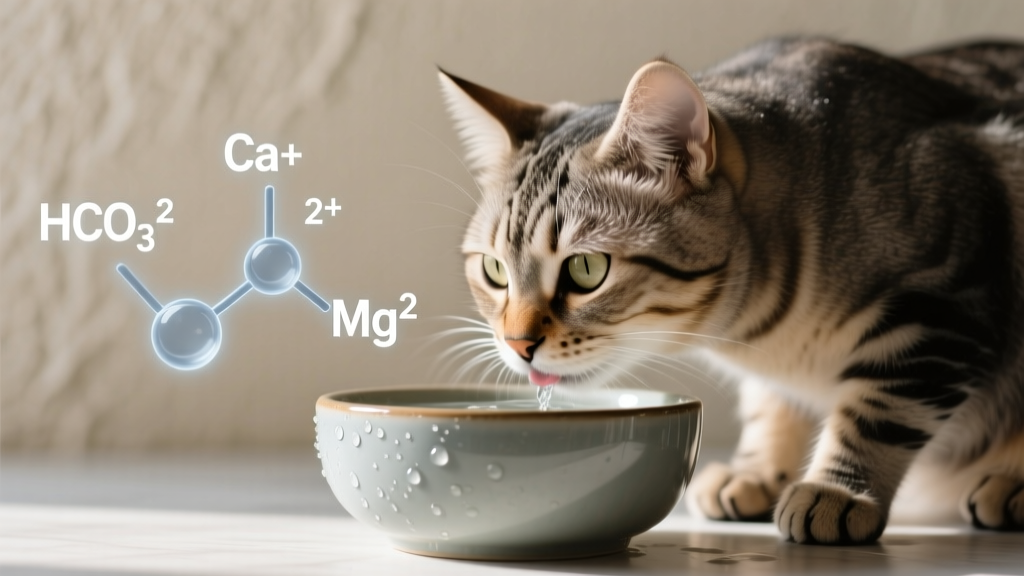
“Hard” water typically contains higher levels of minerals such as calcium and magnesium. Those minerals aren’t inherently “bad,” but the combination of taste, mineral load, and a cat’s naturally low thirst drive can shift daily intake volume. For cats prone to lower urinary tract disease (FLUTD), urinary crystals, constipation, or chronic kidney disease (CKD), small changes in water consumption can have outsized effects.
2. Scientific background: feline nutritional needs and obligate carnivore biology
Cats are obligate carnivores. Their metabolism and feeding behavior evolved around prey that is naturally high in moisture (often 60–75% water). Compared with many other species, cats tend to have:
- Lower thirst drive when eating dry food, because their physiology expects water to come with food.
- Concentrated urine as an adaptation to conserve water.
- Sensitivity to diet composition affecting urine pH and mineral excretion (key factors in crystal risk).
This matters because “hydration” for cats is not only about a water bowl. It’s a whole-diet issue: total water intake comes from drinking water plus the moisture in wet food, broths, and water added to meals.
For most healthy adult cats, adequate hydration supports:
- Kidney function and waste elimination
- Normal stool moisture and regularity
- Urinary tract health (dilute urine helps reduce crystal-forming conditions)
Any factor that decreases voluntary drinking—taste, bowl placement, stress, or water hardness—can subtly lower total moisture intake and raise risk in susceptible cats. Always ask your veterinarian for guidance if your cat has urinary signs (straining, frequent trips, blood in urine) or changes in drinking habits.
3. Detailed analysis: how water hardness can affect intake volume
What “water hardness” means
Water hardness is usually measured as mg/L (ppm) of calcium carbonate (CaCO3), reflecting dissolved calcium and magnesium. While exact categories vary, a common scale is:
| Hardness (ppm as CaCO3) | Category | Typical meaning for taste/minerals |
|---|---|---|
| 0–60 | Soft | Lower mineral taste; fewer scale deposits |
| 61–120 | Moderately hard | Often acceptable taste; moderate minerals |
| 121–180 | Hard | More noticeable mineral taste; scaling common |
| >180 | Very hard | Higher mineral load; taste/scale effects more obvious |
Mechanism 1: Palatability and drinking behavior
Cats can be surprisingly selective about water. Hard water may taste different due to mineral content and can also pick up flavors from plumbing. Some cats will drink less if water tastes “off,” especially if they already have a low thirst drive. Even a small reduction in drinking can matter for cats eating mostly dry food.
Practical takeaway: if your cat drinks minimally and you live in a hard-water area, hardness may be one variable affecting daily volume—especially if the cat is otherwise healthy but “never seems thirsty.”
Mechanism 2: Mineral intake and urinary chemistry
Hard water contributes additional dietary minerals, primarily calcium and magnesium. For most healthy cats, this may not cause problems. However, for cats with urinary issues, overall mineral balance and urine concentration are key.
- Calcium can influence the risk of calcium-based stones in susceptible individuals.
- Magnesium is one factor in struvite crystal formation, though modern urinary diets manage magnesium alongside urine pH and dilution.
- Urine concentration matters: if hard water reduces drinking, urine becomes more concentrated, which can promote crystal formation regardless of mineral source.
Current veterinary nutrition thinking emphasizes that urine dilution (more water intake) is a major protective factor, particularly for cats prone to FLUTD. This is why wet diets and water encouragement strategies are so commonly recommended by veterinarians.
Mechanism 3: Limescale, bowls, and “stale” water effects
Hard water leaves mineral deposits (limescale) in bowls and fountains. Those deposits can:
- Make water smell or taste different over time
- Increase biofilm buildup if cleaning is inconsistent
- Reduce fountain performance (slower flow), which can reduce interest
Cats that prefer moving water may drink less if a fountain becomes partially clogged or develops odor. Hardness doesn’t just change the water; it changes the maintenance demands of your water setup.
What the evidence suggests (and what it doesn’t)
Veterinary research consistently supports the benefits of increased moisture intake for urinary health, particularly for cats with FLUTD tendencies. The direct link between water hardness alone and specific urinary outcomes is less straightforward because many variables interact (diet type, urine pH, genetics, environment, stress).
What is evidence-based and actionable:
- Higher total water intake generally supports urinary tract health by diluting urine.
- Wet diets reliably increase total water intake compared with dry diets.
- Water palatability affects drinking behavior, and some cats show preferences that can be influenced by mineral taste and freshness.
If your cat is prone to urinary issues, ask your veterinarian whether adjusting water source or using a therapeutic urinary diet is appropriate.
4. Practical recommendations for cat owners
The goal is not to “chase perfect water,” but to maximize total moisture intake in a safe, realistic way. Start with the highest-impact steps:
- Feed more wet food (or add a wet meal daily). This typically has the biggest effect on total water intake.
- Offer multiple water stations (quiet locations, away from litter boxes and noisy appliances).
- Try different water sources if your area has hard water and your cat drinks poorly:
- Filtered tap water (carbon filter pitchers or faucet filters)
- Bottled water (temporary test to see if intake improves)
- Fresh cold tap water changed frequently
- Use a fountain if your cat prefers moving water; clean it more often in hard-water areas.
- Add water to meals (especially canned food) to increase intake without relying on bowl drinking.
5. Comparing options: water sources and approaches
| Option | Pros | Cons | Best for |
|---|---|---|---|
| Unfiltered tap water (hard) | Convenient, low cost | May reduce palatability; more scale in bowls/fountains | Cats that drink well and have no urinary history |
| Carbon-filtered tap water | Often improves taste/odor; easy to implement | Doesn’t always reduce hardness dramatically; filter upkeep | Picky drinkers; owners wanting a simple first step |
| Reverse osmosis (RO) water | Very low minerals; consistent taste; reduces scaling | Cost; may require remineralization for humans; logistics | Hard-water homes; cats that respond to “cleaner” taste |
| Bottled water (spring/purified) | Useful for a short trial; portable | Cost; environmental impact; mineral content varies | Testing whether water source affects intake |
| Adding water to wet food | Highly effective for total moisture intake | Some cats dislike texture changes; spoilage if left out | Most cats, especially those eating some dry food |
Practical “trial” strategy: If you suspect hardness affects drinking, run a 7–14 day comparison: offer your cat the usual water in one station and filtered/RO water in another, measure which bowl empties more, and track litter box clumps (size and frequency). Bring observations to your veterinarian, especially if your cat has urinary history.
6. Common mistakes and misconceptions to avoid
- Myth: “Hard water causes urinary crystals in all cats.”
Reality: Urinary crystals and stones are multifactorial. Total water intake, urine concentration, urine pH, diet formulation, stress, and anatomy all matter. Hard water may contribute minerals and affect drinking behavior, but it’s rarely the only factor. - Mistake: Switching water and food at the same time.
Reality: If you change everything at once, you won’t know what helped (and some cats respond with stress or appetite changes). Change one variable, observe, then adjust. - Mistake: Assuming a fountain fixes hydration automatically.
Reality: Some cats love fountains, others avoid them. In hard-water areas, fountains require more frequent cleaning to prevent scale and odors that reduce drinking. - Myth: “Cats will drink when they’re thirsty, so hydration isn’t a concern.”
Reality: Cats can maintain chronic mild under-hydration, especially on dry diets. Many urinary issues are linked to concentrated urine over time. - Mistake: Overusing flavored waters or broths with salt/onion/garlic.
Reality: Onion and garlic are toxic to cats, and high sodium can be risky in some health conditions. Use only veterinarian-approved options.
7. How to implement changes safely (transition tips)
Cats thrive on routine. Sudden changes can reduce intake—exactly what you’re trying to avoid. Use these low-stress transitions:
- Water source transition: Offer the new water in a second bowl first. If your cat prefers it, gradually replace the old source.
- Increase moisture in food gradually: Start by adding 1–2 teaspoons of water to wet food, then increase as tolerated.
- Wet food introduction: Mix a small amount of wet food into the current diet and increase over 7–10 days. If your cat has medical conditions, ask your vet for a tailored timeline.
- Keep water fresh: Change bowls daily; in hard-water homes, scrub bowls to prevent mineral film buildup that can alter smell/taste.
- Monitor output: Watch litter box changes. Larger urine clumps and more frequent urination can be a positive sign of increased water intake. Any straining, blood, or repeated trips without output is an emergency in male cats and warrants immediate veterinary care.
8. Special considerations (age, health conditions, activity level)
| Cat type | Why hardness/intake matters | Best next steps |
|---|---|---|
| Kittens | Growth needs are high; hydration supports digestion and overall health | Prioritize balanced kitten diets; offer fresh water; avoid unnecessary supplements |
| Senior cats | Higher risk of CKD and dehydration; appetite changes common | Discuss kidney screening; consider wet diets; test if filtered water increases drinking |
| Cats with FLUTD/urinary crystals history | Urine dilution is a major protective factor; stress also plays a role | Vet-guided urinary diet, increased wet food, multiple water stations, consider water source trials |
| Cats with CKD | Hydration and appropriate mineral/protein management are crucial | Work closely with a vet; don’t change mineral intake or water source without guidance |
| Highly active cats | May have higher fluid needs; still may not drink much on dry diets | Increase dietary moisture; refresh water often; use fountains if preferred |
If your cat has heart disease, kidney disease, or is on a therapeutic diet, consult your veterinarian before making major changes to water source, sodium intake, or food moisture strategies.
9. FAQ
1) How can I tell if my water is “hard”?
Check your city’s water quality report (often available online), look for hardness listed in ppm (mg/L) as CaCO3, or use an inexpensive aquarium/test strip kit. Visible scale on faucets or in kettles is also a clue.
2) Will switching to filtered water definitely make my cat drink more?
Not always. Some cats show a clear preference and drink more, while others don’t care. A simple at-home test—offering two bowls side-by-side for 1–2 weeks—can show whether your cat has a preference that affects intake volume.
3) Is reverse osmosis (RO) water safe for cats?
Generally, RO water is considered safe. It’s low in minerals and often tastes “cleaner,” which may increase drinking in some cats. If your cat has medical conditions (especially CKD) or you’re making multiple diet changes, confirm with your veterinarian.
4) Does hard water cause urinary blockages in male cats?
Blockages are complex and can be life-threatening. Hard water alone is not considered a sole cause. Low total water intake (leading to concentrated urine), stress, diet factors, and individual susceptibility play major roles. If your cat strains to urinate or produces only drops, seek emergency veterinary care immediately.
5) Is wet food better than changing water type?
For increasing total moisture intake, wet food is usually the most reliable tool. Water-type changes can help picky drinkers, but many cats still don’t drink enough on dry-only diets. Combining wet food with appealing water options often works best.
6) How much should my cat drink per day?
There’s no single perfect number because moisture from food changes the need to drink. Cats eating mostly wet food may drink very little. If your cat eats mostly dry food and drinks minimally, discuss hydration strategies with your veterinarian—especially if there’s a urinary or kidney history.
Bottom line: If your cat’s drinking seems low, water hardness may affect both taste and bowl/fountain cleanliness, which can reduce intake volume. The most evidence-based approach is to boost total moisture intake (often with wet food), offer appealing clean water options, and tailor strategies to your cat’s health status with your veterinarian’s guidance.
For more cat nutrition guides—wet vs. dry feeding strategies, urinary health nutrition, and hydration-boosting tips—explore the latest articles on catloversbase.com.