Cat Food Artificial Colorings: Do Cats Even See Them?
Do cats care what color their food is?
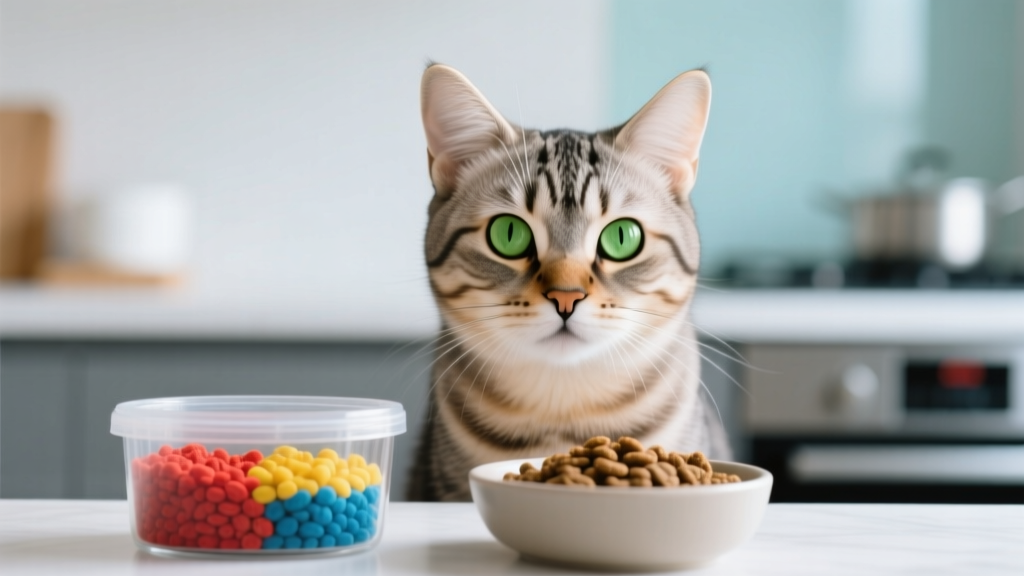
Most cats don’t. Cats have limited color vision and usually respond more to aroma, fat content, and texture. Color is primarily a marketing feature for humans.
Are artificial dyes harmful to cats?
Approved color additives are generally regulated for use in foods, and many cats eat them without obvious problems. Still, dyes provide no nutritional benefit and can be reasonable to avoid, especially for cats with sensitive GI tracts or when you and your veterinarian are troubleshooting allergies or intolerances.
Is dye-free cat food always higher quality?
No. Some excellent diets contain no dyes, and some mediocre diets also contain no dyes. Use dye-free as one filter, then confirm the food is complete and balanced for your cat’s life stage and appropriate for any medical conditions.
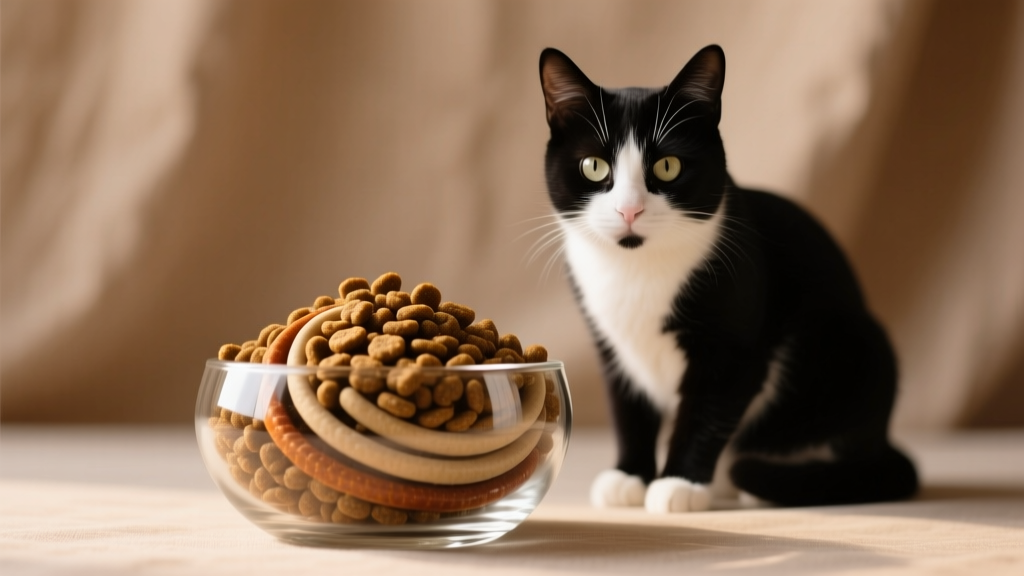
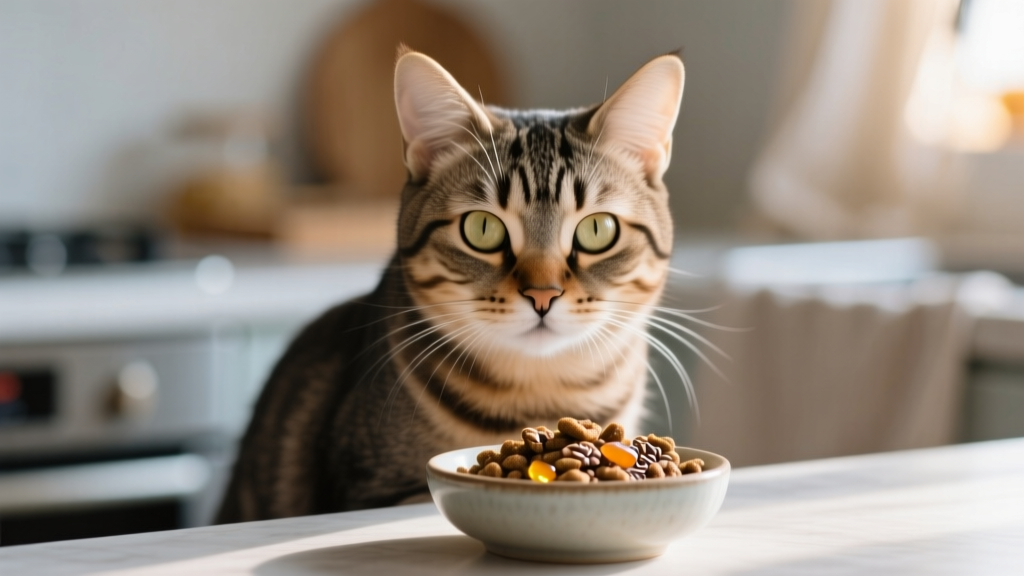
My cat eats only brightly colored kibble—what should I do?
Preference is usually about smell, texture, and the flavor coating—not the color. Transition gradually, consider a dye-free version with a similar texture, and talk with your vet if your cat is very selective or has any weight loss, vomiting, or diarrhea.
Are “natural colors” better than artificial colors?
“Natural” color sources still don’t add nutrition. They may align with an owner’s preference to reduce synthetic additives, but the overall diet quality (nutrient balance, digestibility, calories, moisture) matters more.
Should I switch my cat’s food just to avoid colorings?
If your cat is thriving and the diet is complete and balanced, switching solely for color avoidance isn’t mandatory. If you want a simpler ingredient profile, are managing a medical issue, or prefer fewer non-essential additives, a careful transition to a dye-free diet can be reasonable—check with your veterinarian, especially if your cat has health conditions.
Bottom line: Cats don’t need artificial colorings, and they likely don’t perceive many of the colors the way humans do. Focus on complete, species-appropriate nutrition, hydration support, and medical needs first—then use “no artificial colors” as a practical bonus feature rather than the main goal.
For more cat-feeding tips, label-reading help, and evidence-based nutrition guides, explore the latest articles on catloversbase.com, and partner with your veterinarian to tailor the best plan for your individual cat.