Cat Food High-Pressure Processing: HPP Raw Food Safety
1) Why this topic matters for cat health
Many cat owners are drawn to raw diets because cats are obligate carnivores and often thrive on animal-based nutrition. The biggest concern is safety. Raw meat can carry pathogens such as Salmonella, Listeria, and pathogenic E. coli. These organisms can make cats sick, but they can also infect people in the household through food handling, contaminated surfaces, litter box exposure, and kisses from cats that recently ate contaminated food.
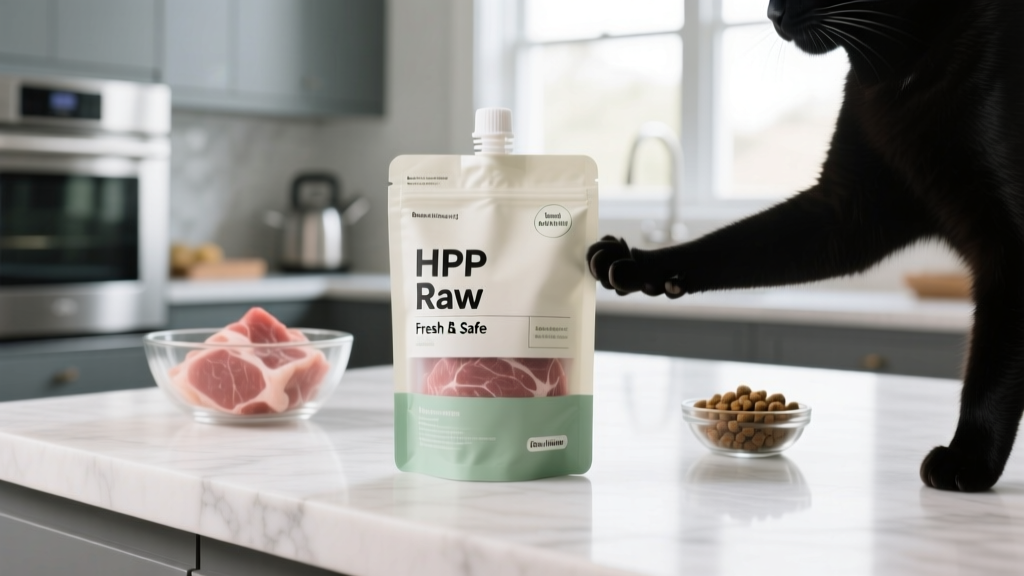
High-pressure processing (HPP) has become a common tool used by some commercial raw pet food brands to reduce bacterial contamination without “cooking” the food. Cat owners see “HPP-treated” on labels and reasonably wonder: Is it safer? Does it change nutrition? Is it enough to protect my cat and my family? This guide breaks down what HPP does, what it does not do, and how to make evidence-based decisions if you’re considering raw or minimally processed diets.
2) Scientific background: feline nutritional needs and obligate carnivore biology
Cats are true obligate carnivores. Their metabolism is adapted for a prey-based pattern of nutrition: high protein, moderate fat, minimal carbohydrate. They have unique nutrient requirements that differ from dogs and humans, including:
- Taurine (essential amino sulfonic acid): critical for heart function, vision, and reproduction. Deficiency can cause dilated cardiomyopathy and retinal degeneration.
- Preformed vitamin A (retinol): cats can’t efficiently convert beta-carotene to vitamin A.
- Arachidonic acid: an essential omega-6 fatty acid for cats; cannot be synthesized adequately from linoleic acid.
- High protein needs: cats have limited ability to downregulate protein metabolism, so consistent adequate dietary protein matters.
- Mineral balance: calcium-to-phosphorus ratio, magnesium, sodium, and urine pH influence urinary tract health.
- Thiamine (vitamin B1): sensitive to processing errors and certain ingredients; deficiency can be serious and rapid.
These needs can be met with many diet formats (wet canned, dry kibble, gently cooked, raw), but they must be met consistently and in the right proportions. Homemade and poorly formulated raw diets carry higher risk of nutrient imbalances than complete-and-balanced commercial diets formulated to AAFCO or FEDIAF standards.
3) Detailed analysis: what HPP is, how it works, and what the evidence suggests
What is high-pressure processing (HPP)?
HPP is a non-thermal food safety technology. Sealed packages of food are placed in a chamber and exposed to extremely high hydrostatic pressure (often in the range of 300–600 MPa) for a short time. The pressure can disrupt bacterial cell membranes and cellular processes, reducing viable bacteria while the food remains essentially “raw” in texture and appearance.
What HPP can do
- Reduce levels of many vegetative bacteria (actively growing forms), including common foodborne pathogens.
- Extend shelf life by reducing spoilage organisms, especially when combined with freezing and good cold-chain control.
- Lower (not eliminate) risk compared with untreated raw foods, when manufacturing and handling are done correctly.
What HPP cannot reliably do
- Guarantee sterility: “HPP-treated” does not mean “pathogen-free.” Risk is reduced, not erased.
- Reliably inactivate bacterial spores: spore-forming bacteria can be more resistant.
- Prevent recontamination: contamination can occur after processing if hygiene or packaging integrity fails.
- Fix formulation problems: HPP is a safety intervention, not a nutrition guarantee.
HPP and nutrition: does it change nutrients?
Because HPP is non-thermal, it generally preserves the “raw-like” characteristics and tends to have less impact on heat-sensitive nutrients than cooking. That said, no processing method is nutritionally neutral. The bigger nutrition risks in raw diets are usually:
- Formulation imbalances (calcium, iodine, copper, vitamin D, taurine, etc.)
- Ingredient variability (different fat levels, bone content, organ proportions)
- Grinding and oxidation (fat oxidation can increase with time; storage and packaging matter)
Safety isn’t only about the cat
Healthy adult cats may tolerate low-level exposure to certain pathogens better than humans, but they can still get sick (vomiting, diarrhea, fever, lethargy). More importantly, cats can shed organisms in stool, creating exposure risk for:
- Children under 5
- Older adults
- Pregnant people
- Anyone immunocompromised (chemotherapy, transplant recipients, uncontrolled diabetes, chronic kidney disease, etc.)
Veterinary and public health organizations commonly caution against raw feeding in higher-risk households. If you’re in a higher-risk group, HPP may reduce risk but may not reduce it enough to make raw feeding a prudent choice.
Quality control matters as much as the technology
HPP is only one component of a food safety system. The safest commercial raw products tend to be made by companies that use multiple controls:
- Ingredient sourcing standards and supplier verification
- Environmental monitoring in the plant
- Hazard Analysis and Critical Control Points (HACCP) plans
- Routine pathogen testing (raw materials and finished products)
- Strict temperature control during storage and transport
- Clear handling instructions and robust packaging
5) Comparison: HPP raw vs other diet approaches
| Approach | Food safety (pathogens) | Nutrient reliability | Convenience | Best fit for |
|---|---|---|---|---|
| Untreated commercial raw | Highest risk; depends heavily on company practices | Varies; some are complete-and-balanced, some are not | Moderate (freezer space, thawing) | Households without high-risk humans, owners committed to strict hygiene |
| HPP-treated commercial raw | Lower risk than untreated raw; not zero | Varies; verify “complete and balanced” claim | Moderate | Owners wanting raw format with additional safety steps |
| Gently cooked / pasteurized refrigerated or frozen | Often lower risk than raw; depends on process and handling | Often strong if formulated to AAFCO/FEDIAF | Moderate | Owners prioritizing safety while avoiding kibble-only diets |
| Canned wet food | Very low (commercial thermal processing) | High when complete-and-balanced | High | Most cats; great for hydration and urinary health support |
| Dry kibble | Generally low, but recalls can occur | High when complete-and-balanced | Highest | Budget/feeding ease; consider adding wet food for moisture |
| Homemade raw | Variable; can be high without validated controls | Highest risk of deficiencies/excesses without a veterinary nutritionist recipe | Low (time, cost, storage) | Only with expert formulation and strict handling; not for high-risk homes |
4) Practical recommendations for cat owners
- Prioritize “complete and balanced” (AAFCO/FEDIAF statement) for your cat’s life stage. Many raw products are “supplemental” or “intermittent” and should not be the main diet.
- Choose brands with transparent safety practices. Look for published testing standards, HACCP programs, and clear storage/handling instructions.
- Consider safer alternatives if you want “fresh” without raw risk: canned wet food, gently cooked diets, or a hybrid plan (wet food base + some fresh toppers that are cooked).
- Match the diet to the household: if anyone is immunocompromised or very young/old, discuss non-raw options with your veterinarian.
- Watch urinary tract health: many cats benefit from higher-moisture diets. Wet food can support hydration and may help reduce urinary issues in some cats.
6) Common mistakes and misconceptions to avoid (myth-busting)
- Myth: “HPP makes raw food completely safe.”
Fact: HPP can reduce bacterial loads, but it does not guarantee the absence of pathogens. Safe handling is still required. - Myth: “Cats can eat anything raw because they’re carnivores.”
Fact: Cats are adapted to animal-based diets, but modern cats live longer, often have chronic conditions, and share homes with humans. Pathogen exposure is a household issue, not just a feline biology issue. - Myth: “Raw diets automatically clean teeth.”
Fact: Dental health depends on genetics, oral microbiome, and plaque control. Some textures may reduce tartar in some cats, but many cats still develop periodontal disease. Brushing and veterinary dental care remain the gold standard. - Myth: “Grain-free raw is always better.”
Fact: Cats don’t need grains, but “grain-free” is not a measure of quality, digestibility, or safety. Nutrient balance and ingredient quality matter more. - Myth: “A little bone is fine; it’s natural.”
Fact: Bone content needs to be precisely balanced for calcium/phosphorus. Too much can contribute to constipation and mineral imbalance; too little risks calcium deficiency.
7) How to implement changes safely (transition tips)
Cats can be sensitive to abrupt diet changes. Transition gradually over 7–14 days (longer for picky cats or those with GI history). If your cat has a medical condition, consult your veterinarian before changing diets.
| Day | New food | Current food |
|---|---|---|
| 1–3 | 10–25% | 75–90% |
| 4–6 | 25–50% | 50–75% |
| 7–10 | 50–75% | 25–50% |
| 11–14 | 75–100% | 0–25% |
Hygiene protocol for HPP raw feeding
- Thaw safely: thaw in the refrigerator in a sealed container, not on the counter.
- Use dedicated tools: separate cutting board, utensil, and bowl for pet raw food if possible.
- Wash hands with soap and water after handling; sanitize surfaces.
- Limit time at room temperature: discard uneaten raw food after 20–30 minutes (or sooner in warm rooms).
- Clean bowls daily with hot, soapy water; consider dishwasher-safe stainless steel.
- Litter box hygiene: scoop daily, wash hands, and keep immunocompromised people away from litter duties.
8) Special considerations: age, health conditions, activity level
Kittens
- Higher nutrient demands: growth requires precise levels of calcium, phosphorus, DHA, and overall calories.
- Stronger recommendation: choose diets labeled complete-and-balanced for growth (AAFCO “growth” or “all life stages”) or FEDIAF “kitten.”
- Extra caution with raw: kittens are more vulnerable to dehydration from diarrhea and may be more impacted by nutritional imbalance.
Seniors
- Many seniors benefit from higher moisture and highly digestible protein.
- Screen for kidney disease, hyperthyroidism, dental pain, and arthritis, which can all affect feeding choices.
- Raw feeding in seniors should be discussed with a veterinarian due to potentially higher risk if the cat has underlying disease.
Chronic kidney disease (CKD)
- CKD diets focus on controlled phosphorus, appropriate protein quality/amount, and supporting hydration.
- Many raw diets are not appropriate due to higher phosphorus and variable mineral content.
- Work with your veterinarian to select a therapeutic diet or a properly formulated alternative.
Diabetes and obesity
- Many cats do well on higher-protein, lower-carbohydrate wet diets for weight and glucose management, alongside a veterinarian-supervised plan.
- Raw is not required to achieve a low-carb profile; many canned foods meet this goal with lower safety risk.
Food allergies or inflammatory bowel disease (IBD)
- True food allergy in cats exists but is less common than owners think.
- Veterinary elimination trials typically use hydrolyzed or novel protein diets with controlled manufacturing, which may be more reliable than raw for diagnosis.
- Some cats with GI sensitivity do better with cooked, highly digestible diets.
Multi-cat households and high-traffic homes
- The more pets and people, the more opportunities for cross-contamination. Strongly consider safer diet formats or be exceptionally consistent with hygiene and storage.
9) FAQ: common questions about HPP raw cat food
Does HPP kill salmonella in raw cat food?
HPP can significantly reduce Salmonella and other bacteria, but results depend on pressure level, hold time, product composition, and starting contamination levels. It reduces risk; it does not guarantee elimination. Continue strict hygiene and follow storage guidelines.
Is HPP raw food nutritionally better than canned food?
Not automatically. Nutritional quality depends on formulation, ingredient quality, digestibility, and whether the diet is complete-and-balanced for your cat’s life stage. Many canned diets offer excellent nutrition with very low pathogen risk.
Can my cat get sick from HPP raw food?
Yes. Even with HPP, cats can experience GI upset from diet changes, high fat content, or residual pathogens. If you see vomiting, diarrhea, lethargy, refusal to eat, or fever, contact your veterinarian promptly.
Is HPP raw safe for households with kids or immunocompromised people?
It may be safer than untreated raw, but it’s still not considered low-risk. In higher-risk households, many veterinarians recommend avoiding raw feeding altogether and choosing canned or cooked options. Discuss your household situation with your veterinarian.
How can I tell if a raw diet is complete and balanced?
Look for an AAFCO nutritional adequacy statement (or FEDIAF compliance in Europe) specifying the life stage (growth/kitten, adult maintenance, all life stages). If it says “intermittent or supplemental feeding only,” it should not be the main diet.
Should I make homemade raw if I buy an HPP raw sometimes?
Homemade raw is much harder to do safely and correctly. If you want a homemade approach, ask your veterinarian for a referral to a board-certified veterinary nutritionist to design a complete recipe and food safety plan.
Choosing the best path for your cat
HPP is a meaningful safety step for commercial raw diets, but it’s not a magic shield. For many cats, the “best diet” is one that is complete-and-balanced, supports hydration, fits the cat’s medical needs, and is practical for the household to handle safely. Your veterinarian can help you evaluate whether an HPP raw diet makes sense for your cat’s age, health status, and your family’s risk profile.
If you want more practical, cat-health-focused nutrition guidance, explore our other feeding and diet articles on catloversbase.com.