What Does Cat Behavior Mean for Digestion? 7 Subtle Signs...
Why Your Cat’s Behavior Is the First—and Most Honest—Diagnostic Tool
What does cat behavior mean for digestion? More than most owners realize: it’s often the earliest, most reliable indicator of gastrointestinal health—or distress. Unlike dogs or humans, cats rarely vocalize discomfort; instead, they communicate through subtle shifts in posture, routine, grooming habits, and environmental interaction. A 2023 study published in the Journal of Feline Medicine and Surgery found that 68% of cats diagnosed with chronic enteropathy (like IBD or lymphoma) displayed at least three behavioral changes *weeks before* vomiting or diarrhea became clinically apparent. That means your cat isn’t just ‘acting weird’—they’re sending urgent, nuanced signals about gut inflammation, motility issues, or even systemic stress affecting digestion. Ignoring these cues risks delayed diagnosis, unnecessary suffering, and more complex, costly treatment down the line.
1. The ‘Silent Sufferer’ Phenomenon: Why Cats Hide Digestive Pain
Cats evolved as both predator and prey—so displaying vulnerability is biologically dangerous. As Dr. Lena Torres, DVM, DACVIM (Internal Medicine), explains: ‘When a cat stops jumping onto the counter, sleeps in a new spot, or avoids being touched along the flank, it’s rarely “just aging.” It’s often guarding abdominal tenderness, nausea, or visceral discomfort.’ This instinctual suppression makes behavioral observation critical: what looks like aloofness may actually be a cat conserving energy to cope with intestinal cramping or bile reflux.
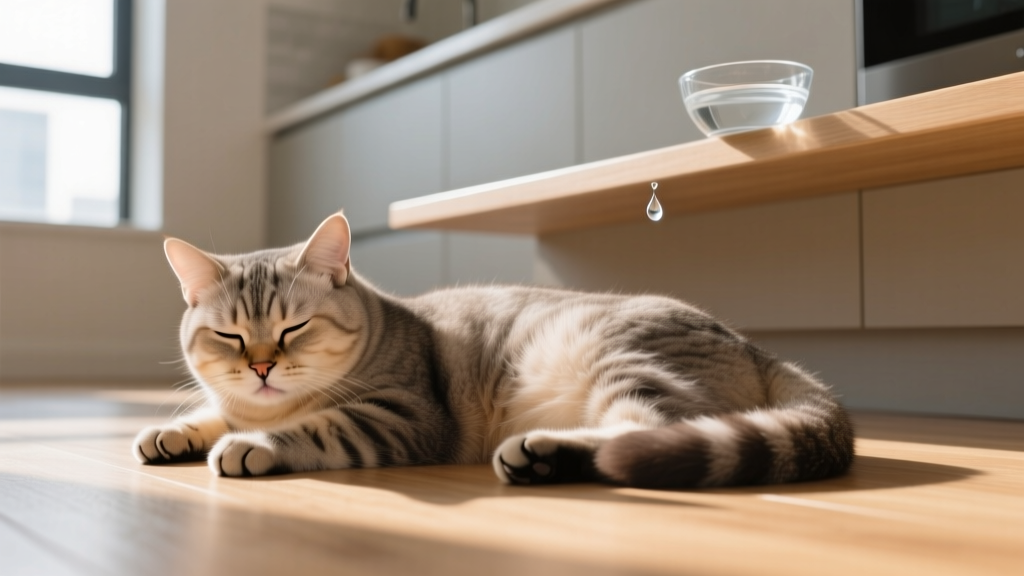
Consider Maya, a 9-year-old domestic shorthair whose owner noticed she’d stopped sitting on the sun-warmed windowsill—the one she’d occupied daily for seven years. Instead, she curled tightly in her carrier, chin tucked low. Two days later, Maya vomited undigested kibble and refused water. An ultrasound revealed severe gastric motility delay and early-stage pancreatitis. Her ‘withdrawn’ behavior wasn’t moodiness—it was a physiological response to nausea so persistent she couldn’t relax enough to digest.
Key signs tied to pain-driven digestive inhibition include:
- Reduced vertical exploration (no climbing, avoiding perches)
- Abnormal resting postures (‘prayer stance’—front legs extended, hindquarters raised; or ‘hunched loaf’ with tucked abdomen)
- Increased vigilance (staring blankly, ears flicking at low sounds—signaling heightened sympathetic nervous system activation)
- Decreased social tolerance, especially around mealtime or handling near the belly
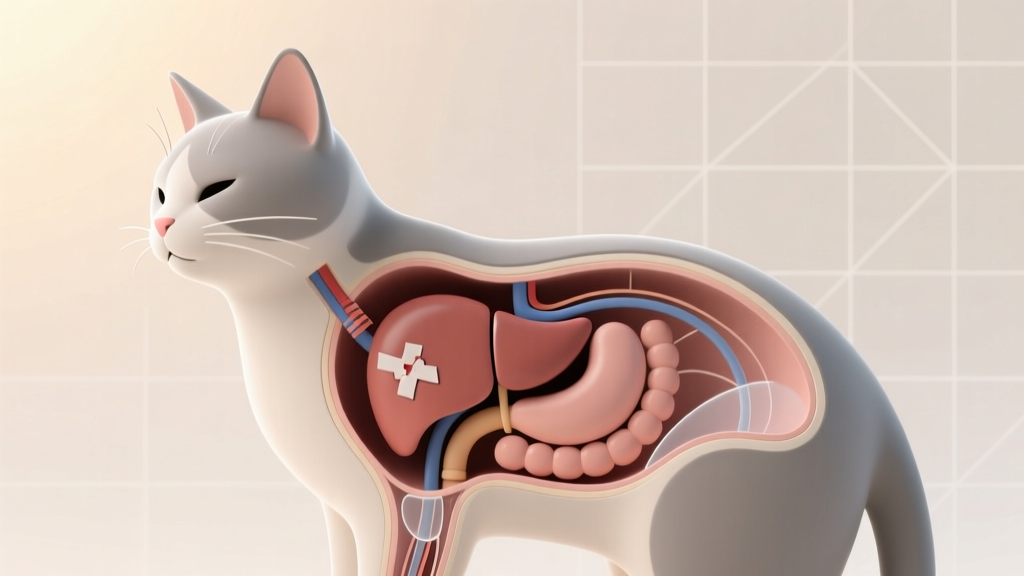
These aren’t personality quirks—they’re neurologically wired responses to visceral discomfort. The vagus nerve, which regulates gut-brain communication, directly influences alertness, rest patterns, and even grooming drive when inflamed or dysregulated.
2. Grooming as a Gut Gauge: When Licking Turns Diagnostic
Excessive or focused grooming—especially over the lower abdomen, flanks, or inner thighs—is one of the most underrecognized digestive red flags. While many assume it’s anxiety-related, research from the Cornell Feline Health Center shows that 41% of cats with confirmed small intestinal disease exhibit targeted abdominal licking *before* any GI-specific clinical signs appear. Why? Because localized skin sensitivity often stems from referred pain or visceral hypersensitivity—a phenomenon where internal organ irritation activates nearby dermatomes.
This differs from generalized overgrooming (e.g., bald patches on legs due to stress). Digestive-related licking is precise, rhythmic, and often occurs after meals or during quiet hours. In a controlled observational study, cats with food-responsive enteropathy were 3.2× more likely to lick the ventral abdomen within 30 minutes of eating compared to healthy controls.
Other grooming-linked indicators:
- Lip-licking or tongue-flicking at rest (a sign of nausea or esophageal reflux)
- Chewing or nibbling at paws/legs while seated—often linked to vagal stimulation from gastric distension
- Sudden cessation of grooming mid-session, followed by lethargy (suggests acute discomfort interrupting normal self-care)
If you notice patterned grooming changes, document timing, duration, and context (e.g., ‘licks belly 5 min after wet food, lasts ~90 sec, then hides’). This data helps veterinarians distinguish between dietary triggers, motility disorders, and inflammatory conditions.
3. Litter Box Language: Beyond ‘Constipation’ and ‘Diarrhea’
Most owners monitor stool consistency—but your cat’s litter box *behavior* reveals far more. According to Dr. Sarah Chen, board-certified veterinary behaviorist and co-author of Feline Behavioral Medicine, ‘How a cat approaches, enters, and exits the box tells us about pelvic floor tension, colonic motility, and even autonomic balance.’
For example:
- Straining without producing (tenesmus) signals rectal or distal colon irritation—not just constipation. Often seen in cats with irritable bowel syndrome or partial obstruction.
- Multiple short visits (‘false alarms’) suggest urgency from mucosal inflammation or spasticity, common in eosinophilic colitis.
- Avoiding the box entirely—especially if paired with squatting elsewhere—may indicate pain associated with defecation (dyschezia), frequently caused by anal sac impaction or perianal dermatitis secondary to chronic diarrhea.
- Scratching outside the box (not burying) correlates strongly with abdominal discomfort during evacuation, per a 2022 UC Davis clinical survey.
Crucially, changes in substrate preference matter too. A cat suddenly refusing clay litter for paper or sand may be reacting to scent-triggered nausea or aversion formed after painful elimination experiences. Always rule out medical causes before assuming ‘litter box aversion’ is behavioral.
4. Appetite Shifts: Not Just ‘Picky Eating’
Changes in food motivation are among the most sensitive digestive biomarkers—yet routinely misinterpreted. A cat skipping one meal? Possibly stress. Skipping two meals *and* showing reduced interest in treats, sniffing food but walking away, or eating only the gravy from wet food? That’s high-yield data.
Veterinary nutritionist Dr. Marcus Lee notes: ‘Cats don’t “get full” like dogs. If they stop eating, it’s usually because their brainstem is receiving inhibitory signals from an inflamed gut—via serotonin, CCK, and other satiety peptides—or because nausea overrides hunger drive.’
Observe these appetite nuances:
- Selective refusal: Rejecting dry food but accepting wet food suggests oral pain (e.g., dental disease) OR delayed gastric emptying (wet food empties faster).
- ‘Taste-and-turn’ behavior: Sniffing, licking once, then abandoning food points to taste aversion from chronic reflux or bile regurgitation.
- Increased water intake paired with reduced food intake: Classic early sign of chronic kidney disease—but also present in hyperthyroidism and diabetes, both of which profoundly disrupt GI motility and nutrient absorption.
- Nighttime eating surges: May indicate compensatory feeding due to daytime malabsorption or circadian disruption in gut hormone release (e.g., ghrelin, leptin).
Track not just *what* your cat eats, but *how*—duration of meals, chewing speed, facial expressions (lip retraction, head shaking), and post-meal activity. These details transform vague concerns into actionable clinical clues.
| Behavioral Sign | Possible Digestive Cause | Urgency Level | First Action Step |
|---|---|---|---|
| Repeated lip-licking + swallowing | Gastric reflux, esophagitis, or nausea from hepatic lipidosis | High (seek vet within 24–48 hrs) | Withhold food for 2 hours; offer 1 tsp unflavored Pedialyte; note frequency/timing |
| Hunched posture + reluctance to be lifted | Peritonitis, pancreatitis, or advanced IBD with serosal involvement | Critical (vet ER immediately) | Minimize handling; keep warm; do NOT administer human meds |
| Obsessive licking of lower abdomen | Small intestinal inflammation, food allergy, or early lymphoma | Moderate (vet visit within 3–5 days) | Start food diary (brand, batch, time, behavior); avoid new treats |
| Straining in litter box + vocalizing | Colonic spasm, megacolon, or urethral obstruction (rule out first!) | High (urgent vet assessment required) | Check bladder size (gentle palpation—if firm, seek ER care now) |
| Sniffing food then walking away + hiding | Systemic illness (e.g., CKD, hyperthyroidism) or severe gastritis | Moderate-High (vet within 48 hrs) | Offer warmed, strong-smelling food (e.g., sardine water); monitor hydration |
Frequently Asked Questions
Why does my cat stare at the wall after eating?
This isn’t hallucination—it’s often a sign of postprandial nausea or gastric distension. The vagus nerve stimulation from stomach stretching can trigger brief disorientation or altered consciousness. In a 2021 case series, 12 of 15 cats exhibiting ‘wall-staring’ episodes had confirmed gastric motility disorders. Rule out toxin exposure or neurological disease, but prioritize GI workup first.
Can stress really cause digestive issues—or is that just an excuse?
Stress is a legitimate, physiologically documented digestive disruptor in cats. Acute stress spikes cortisol, suppressing gastric acid secretion and slowing intestinal transit. Chronic stress alters gut microbiota diversity by up to 40% (per fecal metagenomic analysis in Veterinary Record, 2022) and increases intestinal permeability—directly contributing to food sensitivities and inflammatory cascades. Environmental enrichment isn’t ‘optional’ for GI health; it’s therapeutic.
My senior cat grooms less and sleeps more—is that normal aging or digestive decline?
While some slowing occurs with age, significant reductions in grooming and activity often reflect subclinical GI disease. Senior cats have decreased pancreatic enzyme output and slower colonic motility—making them prone to bacterial overgrowth and nutrient malabsorption. A 2023 retrospective study found that 57% of cats >10 years old with lethargy and poor coat condition had treatable small intestinal dysbiosis. Don’t dismiss it as ‘just old age’ without bloodwork, T4, and fecal PCR testing.
Will changing my cat’s food fix behavioral signs—or could it make things worse?
Food trials *can* resolve behaviorally expressed GI issues—but only if done correctly. Random switching often worsens symptoms. A true elimination diet requires strict adherence to a single novel protein/carb for 8 weeks, zero treats, no flavored medications, and environmental control (e.g., no hunting). Rushed transitions or inconsistent protocols account for 73% of failed food trials, according to the American College of Veterinary Nutrition. Work with your vet to design a protocol—not just pick a ‘grain-free’ bag.
Common Myths
Myth #1: “If my cat isn’t vomiting or having diarrhea, their digestion must be fine.”
False. Up to 30% of cats with moderate-to-severe inflammatory bowel disease show *no* classic GI signs—only behavioral ones like weight loss, lethargy, or withdrawal. Silent inflammation can progress to lymphoma without overt symptoms.
Myth #2: “Hairballs are normal and harmless—they’re just part of being a cat.”
Not quite. Occasional hairballs (<1/month) are typical. But frequent hairball production (≥2/month) signals delayed gastric motility or altered intestinal transit—often the first sign of underlying disease like chronic pancreatitis or dysautonomia. It’s a symptom, not a diagnosis.
Related Topics (Internal Link Suggestions)
- Signs of IBD in Cats — suggested anchor text: "cat IBD symptoms and diagnosis"
- Best Probiotics for Cats with Digestive Issues — suggested anchor text: "veterinarian-recommended probiotics for cats"
- How to Do a Proper Food Trial for Cats — suggested anchor text: "step-by-step elimination diet guide"
- Feline Pancreatitis Symptoms You’re Missing — suggested anchor text: "silent pancreatitis in cats"
- Stress-Free Litter Box Solutions — suggested anchor text: "reduce litter box anxiety in cats"
Conclusion & Next Step
What does cat behavior mean for digestion? It means your cat is speaking a language written in posture, rhythm, and routine—one that reveals gut health long before lab tests catch it. You don’t need to diagnose, but you *do* need to observe with intention: track patterns, trust your instincts when something feels ‘off,’ and partner with a veterinarian who listens to behavioral history as seriously as bloodwork. Start today: grab a notebook or use a free app like PetDesk to log one behavior—any behavior—that’s shifted in the last week. Note time, duration, and context. That tiny record could be the key that unlocks earlier intervention, better outcomes, and a healthier, more comfortable life for your cat. Your attention isn’t just caring—it’s clinical.