Cat Brachial Plexus Avulsion: Front Leg Nerve Injury
1. Why this topic matters to cat owners
Cats are athletic, curious, and quick—traits that make them wonderful companions, but also put them at risk for injuries. A sudden front-leg limp or a “dangling” paw after trauma can be scary to see. One serious cause is brachial plexus avulsion, a nerve injury that can change how a cat uses their front leg and how they feel pain.
Understanding what brachial plexus avulsion is, how it happens, and what veterinary care looks like helps you respond quickly and compassionately. Early assessment also protects your cat from secondary problems like paw wounds, chronic pain, and falls.
2. Overview: what is brachial plexus avulsion?
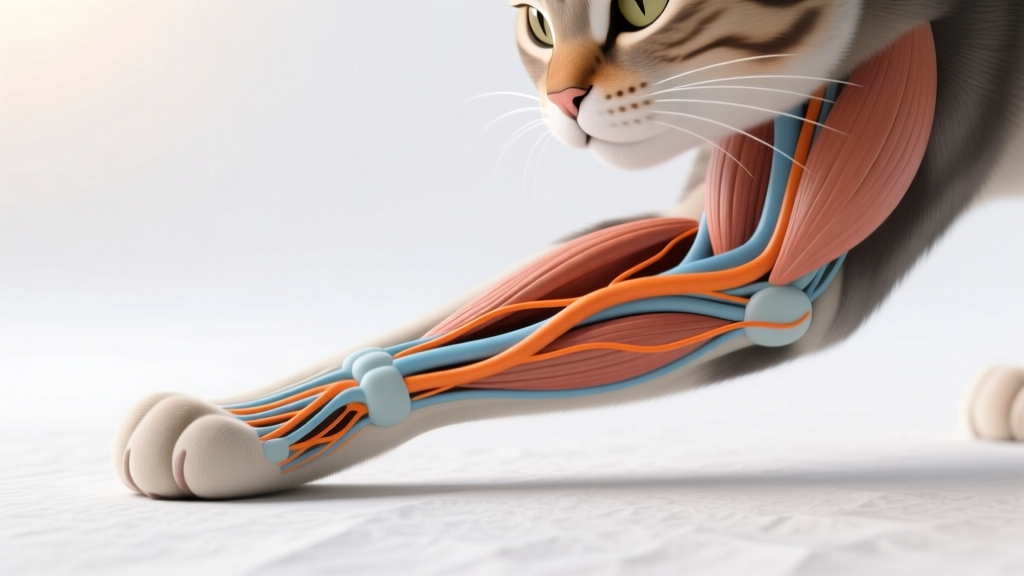
The brachial plexus is a network of nerves that originates from the spinal cord in the neck and upper chest area and travels into the front leg. These nerves control:
- Movement of the shoulder, elbow, wrist, and toes
- Sensation (feeling) in the leg and paw
- Reflexes that help the leg respond to touch and positioning
An avulsion means the nerves are stretched severely or torn away from where they connect near the spinal cord. This is usually caused by a strong force pulling the front leg backward or away from the body—most commonly during trauma.
Brachial plexus injuries can range from mild nerve stretching (which may recover) to partial tearing or complete avulsion (which may not recover fully). Because nerves heal slowly, improvement—when it happens—often takes weeks to months.
3. Symptoms and warning signs to watch for
Signs vary depending on which nerves are affected and how severely. Many cats show problems immediately after an accident, but some signs become clearer over the next day as swelling and pain settle.
Common symptoms
- Sudden inability to bear weight on one front leg
- “Dropped” paw/knuckling (walking on the top of the paw)
- Limp, floppy limb that seems to swing rather than step
- Reduced or absent sensation in part of the paw or lower leg
- Muscle weakness or shrinking (atrophy) over time
- Paw dragging leading to scrapes on the toes or top of the foot
Signs that suggest a more severe injury
- No ability to extend the elbow or support the leg
- No pain response when the toes are gently pinched (your vet tests this safely)
- Horner’s syndrome on the same side as the injury (droopy eyelid, smaller pupil, sunken-looking eye). This can happen if nearby sympathetic nerves are affected.
- Self-trauma (licking/chewing the paw) due to abnormal nerve sensations
What you can do at home right away
- Keep your cat confined in a small room or carrier to prevent further injury.
- Prevent chewing/licking with an e-collar if your cat is fixated on the paw.
- Do not give human pain medication (many are toxic to cats).
- Schedule urgent veterinary evaluation, especially if trauma occurred.
4. Causes and risk factors
Brachial plexus avulsion is most often related to trauma. The injury occurs when the leg is forcefully pulled, stretching the nerve bundle.
Common causes
- Vehicle accidents (being hit by a car is the most common scenario)
- Falls from heights (balconies, windows, stairs)
- Cat fights or bites that involve severe twisting or pulling
- Getting a limb trapped (fences, doors, or narrow spaces) and struggling free
Risk factors
- Outdoor roaming (traffic exposure and fights)
- Unsecured balconies/windows (especially in young, curious cats)
- High-energy cats that leap and climb frequently
- Multi-cat tension increasing fight risk
5. Diagnosis: what to expect at the vet
Your veterinarian’s first priority is to assess overall stability—especially after trauma. Nerve injuries can occur alongside fractures, internal injuries, or lung bruising.
Typical veterinary evaluation
- Full physical exam (heart, lungs, abdomen, temperature, hydration)
- Orthopedic exam to check for fractures, joint injuries, and pain
- Neurologic exam to assess:
- Ability to move the shoulder, elbow, and wrist
- Reflexes and paw positioning
- Deep pain sensation in the toes
- Muscle tone and symmetry
Tests your vet may recommend
- X-rays to look for fractures, shoulder dislocation, or spinal trauma
- Chest X-rays if a car accident is suspected (to check lungs and ribs)
- Ultrasound/abdominal imaging if internal injury is possible
- Advanced imaging (CT or MRI) in some cases to evaluate nerve roots and nearby structures
- Electrodiagnostics (EMG/nerve conduction studies) at specialty hospitals to help define severity and prognosis
Ask your vet to explain whether the injury appears to be mild stretching versus severe avulsion. One key prognostic factor is whether deep pain sensation is present in the paw.
6. Treatment options: medical, surgical, and home care
Treatment depends on severity, whether the cat is painful, and whether the limb can recover enough function to be safe and comfortable. Many cats need a combination of medical management, rehabilitation, and careful home support.
Medical management
- Pain control: Your vet may prescribe medications such as opioids, gabapentin, or other cat-safe options. Nerve pain can feel “burning” or unpredictable, so controlling it matters for comfort and healing.
- Anti-inflammatory therapy: May be used depending on the situation and your cat’s overall health.
- Wound care: If the paw is scraped from dragging, your vet may clean, bandage, and prescribe antibiotics if infection is present.
Rehabilitation and supportive care
- Strict activity restriction early on to prevent falls and further trauma.
- Physical therapy (guided by your vet): gentle range-of-motion exercises to keep joints flexible and reduce stiffness.
- Assisted mobility: non-slip rugs, blocking stairs, and using a small room to limit running/jumping.
- Paw protection: booties or protective bandaging may help prevent abrasions, but they must be monitored closely to avoid rubbing or swelling.
Surgical options
Surgery is not always recommended for brachial plexus avulsion, but it can be appropriate in certain cases. Your veterinarian may refer you to a veterinary surgeon or neurologist.
- Amputation: Considered when the limb has no meaningful function, no deep pain sensation, repeated injuries occur from dragging, or chronic pain cannot be controlled. While this sounds overwhelming, many cats do extremely well as tripods and regain excellent mobility.
- Specialty nerve procedures: In select cases at referral centers, advanced techniques may be discussed, but outcomes can be variable and depend on timing and injury pattern.
Home care checklist you can start today (after veterinary guidance)
- Confine your cat to a quiet recovery space with a low-sided litter box.
- Use soft bedding and keep food/water within easy reach.
- Check the paw daily for redness, swelling, broken nails, or abrasions.
- Prevent jumping with blocked furniture access and step-stools if needed.
- Give medications exactly as prescribed; call your vet if sedation, vomiting, or appetite loss occurs.
7. Prevention strategies and early detection tips
Not every accident is preventable, but many risk factors can be reduced with practical changes.
Prevention
- Keep cats indoors or use supervised outdoor time (catio, harness/leash) to reduce vehicle and fight injuries.
- Secure windows and balconies with sturdy screens and barriers.
- Use breakaway collars only, and avoid situations where a limb could get trapped.
- Reduce household slipping hazards with runners or non-slip mats.
- Manage multi-cat conflict: provide multiple resources (litter boxes, feeding stations, resting areas) and consider behavior support if tension is ongoing.
Early detection
- After any fall or accident, monitor for knuckling, dragging, or inability to bear weight.
- Look for new toe scuffs or worn fur on the top of the paw—often a clue your cat is dragging it.
- Pay attention to eye changes (droopy eyelid/small pupil) on the same side as the injured leg.
- If your cat is suddenly hiding, growling when touched, or not eating after trauma, schedule a veterinary exam.
8. Prognosis and quality of life considerations
Prognosis depends on how badly the nerves were damaged and whether deep pain sensation is present. Nerves regenerate slowly, and some cats regain partial function over time. Others may have permanent weakness or a non-functional limb.
Factors that influence recovery
- Severity of nerve injury (stretching vs partial tear vs avulsion)
- Deep pain sensation in the paw (often linked to better functional potential)
- Associated injuries (fractures, chest trauma)
- Protection from secondary damage (preventing paw wounds from dragging)
Quality of life
Many cats can live comfortably with:
- Partial recovery and mild gait changes
- Long-term management (paw protection, periodic rehab, pain control when needed)
- Amputation when the limb is a source of injury or pain
Tripod cats often return to running, climbing, and playing—especially when kept at a healthy weight and provided with easy-access climbing options (pet stairs, low cat trees).
9. When to seek emergency veterinary care
Seek emergency care immediately if your cat has any of the following:
- Known or suspected car accident or significant fall
- Trouble breathing, open-mouth breathing, or blue/pale gums
- Uncontrolled bleeding or a cold, limp, or severely swollen paw
- Severe pain (crying out, panting, aggression when touched)
- Complete inability to move the limb or the paw is dragging with rapid skin damage
- Shock signs: extreme weakness, collapse, very low temperature, glassy eyes
Even if your cat seems “okay” after an accident, internal injuries can be delayed. A same-day veterinary evaluation is the safest choice.
10. FAQ: Common questions from cat owners
Can a cat recover from brachial plexus avulsion?
Some cats recover partially or significantly if the injury is a stretch or partial tear. If the nerves are completely avulsed (torn away), full recovery is less likely. Your veterinarian will use the neurologic exam, especially deep pain sensation, plus imaging and follow-up exams to estimate recovery potential.
How long does nerve healing take in cats?
Nerves heal slowly. When improvement happens, it’s often measured in weeks to months. Your vet may recheck your cat regularly to track return of function and to prevent complications like joint stiffness and paw wounds.
Is this injury painful?
It can be. Some cats have obvious pain immediately after trauma, while others have reduced sensation in the limb but develop uncomfortable “pins-and-needles” nerve pain. Pain control is a key part of treatment, and you should contact your vet if your cat seems distressed, restless, or stops eating.
Why is my cat knuckling or walking on the top of the paw?
Knuckling happens when nerves that control paw positioning and wrist/toe extension aren’t working properly. It’s a common sign of neurologic injury and can quickly cause abrasions. Protecting the paw and getting veterinary care promptly helps prevent infections and deeper wounds.
Will my cat need amputation?
Not always. Amputation is considered when the limb has poor function, repeatedly gets injured from dragging, or causes ongoing pain. While the decision is emotional, many cats do very well after amputation and enjoy an active, comfortable life.
What should I do if I suspect this injury at home?
Confine your cat, prevent licking/chewing, and arrange an urgent veterinary visit—especially if trauma occurred. Avoid home splints unless your veterinarian instructs you; an incorrect splint can cause swelling, sores, or worsen circulation.
If your cat is dealing with a front leg nerve injury, you don’t have to navigate it alone. Partner closely with your veterinarian, focus on comfort and safety, and take recovery one day at a time. For more caring, practical cat health guidance, visit catloversbase.com.