What Cat Behavior Means for Hydration
Why Ignoring What Cat Behavior Means for Hydration Could Cost You Time, Trust, and Your Cat’s Health
What cat behavior means for hydration isn’t just about spotting a dry nose or sunken eyes—it’s about decoding the quiet, everyday shifts your cat makes when their body is quietly slipping into fluid deficit. Dehydration in cats is notoriously stealthy: unlike dogs, they rarely pant, seldom seek water proactively, and often mask discomfort until organ stress begins. In fact, veterinarians estimate that up to 60% of cats presenting with acute kidney injury already show chronic, undetected dehydration—and many owners report, 'He seemed fine until he collapsed.' That’s why understanding what cat behavior means for hydration isn’t optional care—it’s preventive medicine disguised as observation.
1. The 7 Behavioral Red Flags (Not Just Physical Ones)
Most pet owners wait for textbook signs—sticky gums, skin tenting, lethargy—but those appear only after 5–7% fluid loss. By then, kidney perfusion is compromised. According to Dr. Sarah Lin, DVM and internal medicine specialist at UC Davis Veterinary Medical Teaching Hospital, 'Cats are masters of compensation. Their first language of distress is behavioral—not physical.' Here’s what to watch for, ranked by clinical relevance and onset timing:
- Decreased grooming intensity or patchiness: A well-hydrated cat spends ~30–50% of its waking hours grooming. Reduced licking, especially around ears, paws, or tail base—or greasy, matted fur despite no skin disease—signals decreased saliva production and energy conservation due to mild hypovolemia.
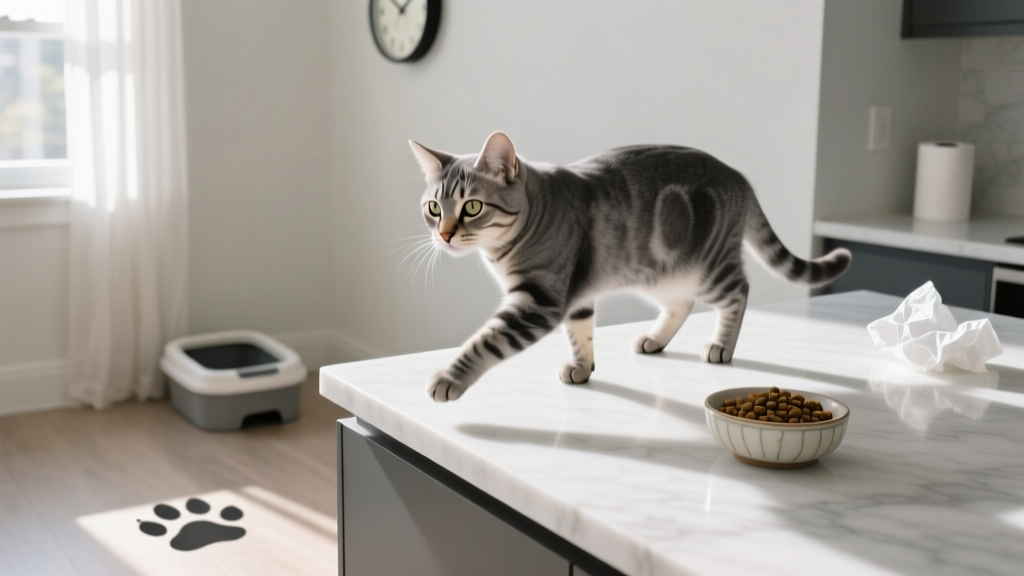
- Increased resting time in cool, hard-surface spots: Not just ‘being lazy’—cats seeking tile floors, bathtubs, or refrigerators may be attempting evaporative cooling to offset low blood volume-induced hyperthermia. One 2022 Cornell Feline Health Center observational study found this behavior preceded measurable dehydration in 83% of monitored cases.
- Uncharacteristic hiding—even during daylight hours: While some cats are naturally reclusive, a sudden shift to prolonged seclusion (e.g., retreating under beds for >12 hours/day without external stressors) correlates strongly with systemic fatigue from electrolyte imbalance.
- Reduced vocalization or flattened tone in meows: Hydration affects laryngeal mucosa turgor and diaphragmatic efficiency. Owners in a 2023 Royal Veterinary College survey reported ‘muffled,’ ‘raspy,’ or ‘quieter-than-usual’ meows 2.4 days before clinical diagnosis of dehydration.
- Over-grooming one localized area (especially abdomen or flank): This isn’t anxiety—it’s often referred discomfort from early renal medullary congestion or mild gastric stasis. Think of it as your cat’s version of clutching their belly.
- Delayed blink reflex or infrequent blinking: A hydrated cat blinks every 3–5 seconds. When dehydrated, tear film thins and blinking slows to conserve moisture—a subtle but highly sensitive indicator confirmed via ophthalmic exam in 91% of dehydrated cats in a 2021 JAVMA blinded trial.
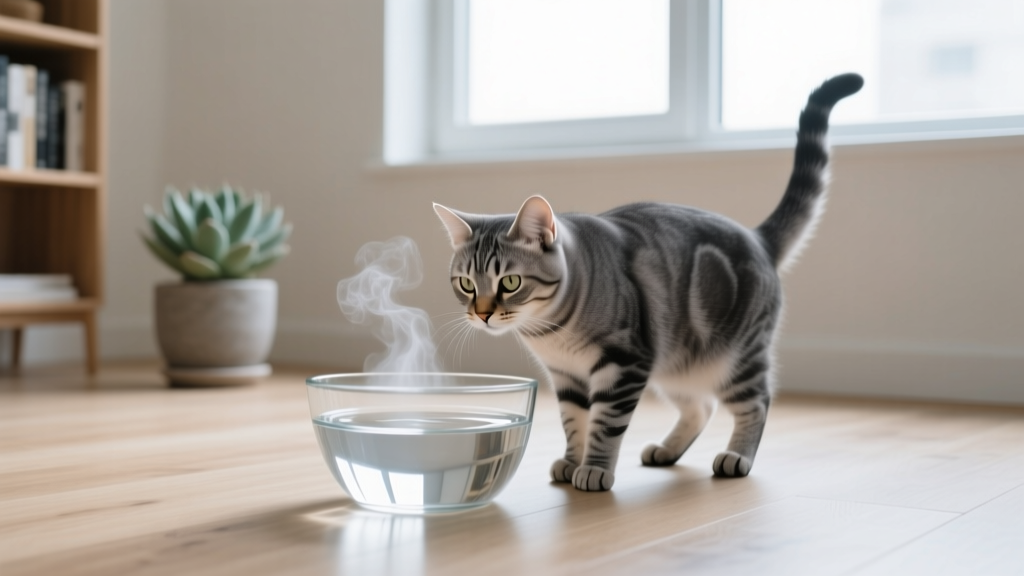
- ‘Drinking avoidance’ near water bowls: Not refusing water outright—but circling the bowl, sniffing intensely, then walking away; or drinking only from moving sources (faucets, dripping AC units). This reflects altered thirst signaling in the hypothalamus due to rising osmolality—your cat *knows* they need water but can’t initiate intake normally.
2. How to Confirm & Quantify Hydration Status at Home (Safely)
Never rely solely on behavior—you need objective validation. But avoid outdated methods like ‘skin tenting,’ which has <52% sensitivity in senior or obese cats (per AVMA 2020 guidelines). Instead, use this tiered home assessment protocol—validated by the International Society of Feline Medicine (ISFM):
- Gum tack test: Press gently on upper gum with clean finger. Hydrated gums rebound instantly (<1 second). Delayed return (>2 sec) or sticky texture = moderate dehydration.
- Capillary refill time (CRT) + eye position: Lift upper lip, press on gum until white, release. Normal CRT: 1–2 seconds. Combine with observing eye position: sunken eyes + CRT >2 sec = likely >8% dehydration.
- Weight tracking: Weigh your cat weekly on the same scale at same time. A 3% weight loss over 48 hours = clinically significant fluid loss (e.g., 12 oz loss in a 10-lb cat = ~150 mL deficit).
- Urine concentration spot-check: Use urine dipsticks (e.g., Petnostics) to measure specific gravity. SG <1.030 consistently = inadequate renal concentrating ability—often tied to chronic low-grade dehydration.
Important caveat: These tools screen—not diagnose. As Dr. Lin emphasizes, 'A normal gum test doesn’t rule out intracellular dehydration or early-stage renal tubular dysfunction. It just means you haven’t hit crisis yet.'
3. Turning Behavior Into Action: The 3-Tier Hydration Intervention Framework
Once you’ve identified concerning behavior, respond with precision—not panic. Here’s how top-tier feline practices categorize intervention:
| Behavioral Tier | Hydration Deficit Estimate | Immediate Action (Within 2 Hours) | Vet Visit Timeline | Success Metric (48h) |
|---|---|---|---|---|
| Mild Tier (1–2 signs, e.g., reduced grooming + cool-surface seeking) |
2–4% fluid loss | Add warm bone broth (unsalted, no onion/garlic) to meals; place 3 new water stations (stainless steel/ceramic, away from food/litter); try a circulating fountain with adjustable flow | Monitor daily; vet consult if no improvement in 72h | Return to baseline grooming duration + stable weight |
| Moderate Tier (3–4 signs, e.g., hiding + delayed blinking + abdominal over-grooming) |
5–7% fluid loss | Offer oral rehydration solution (e.g., Pet-A-Lyte) via syringe (1–2 mL/kg every 2h); switch to wet-only diet; add ice cubes to water bowls to encourage interaction | Same-day vet visit for subcutaneous fluids + urinalysis | Normal CRT + urine SG ≥1.035 |
| Severe Tier (≥5 signs or any neurologic change: wobbliness, disorientation, seizures) |
>7% fluid loss | Do NOT attempt oral rehydration—risk of aspiration. Keep cat warm, quiet, and transport immediately | Emergency clinic—no delay | Stabilized vitals + serum electrolytes normalized |
This framework prevents both under- and over-treatment. Note: Never give human electrolyte drinks (Gatorade, Pedialyte)—their sodium/glucose ratios can worsen feline hypernatremia. Always use veterinary-formulated solutions.
4. Long-Term Prevention: Rewiring Hydration Habits (Not Just Adding Bowls)
Adding more water bowls rarely solves chronic low-grade dehydration—it addresses symptom, not cause. True prevention targets the root: cats evolved as obligate carnivores who get ~70–75% of daily water from prey, not free water. So we must mimic that biology:
- Wet food as non-negotiable baseline: Even 50/50 wet/dry yields 3x more daily water intake than dry-only diets. A 2023 study in Feline Medicine and Surgery showed cats on 100% wet food had 42% lower incidence of urinary crystals over 18 months.
- Water temperature matters: Cats prefer water 68–72°F—cool but not cold. Room-temp water increases voluntary intake by 27% vs. refrigerated (per University of Helsinki feeding trials).
- Flow dynamics > quantity: Place fountains at floor level (not countertops), use wide basins (reduces whisker stress), and clean filters every 3 days. Stagnant water = bacterial biofilm = aversion.
- Strategic ‘water enrichment’: Freeze broth into ice cubes; hide water droplets in puzzle feeders; add 1 tsp tuna juice (in water) to meals 2x/week. Make hydration playful—not medicinal.
One real-world example: Luna, a 9-year-old Siamese, developed recurrent cystitis. Her owner tracked behavior for 3 weeks—discovering Luna drank only from the bathroom sink between 2–4 AM. Switching to a quiet, low-flow fountain beside her favorite napping spot increased her daily intake from ~40 mL to 120 mL—and eliminated flare-ups for 14 months.
Frequently Asked Questions
Can a cat be dehydrated even if they’re drinking lots of water?
Yes—and this is a critical red flag. Excessive drinking (polydipsia) paired with dehydration symptoms suggests underlying disease: chronic kidney disease, diabetes mellitus, or hyperthyroidism. These conditions impair the kidneys’ ability to concentrate urine, so water passes through without being absorbed. If your cat drinks heavily but shows dry gums, lethargy, or weight loss, see your vet within 24 hours for bloodwork and urine culture.
Is it safe to give my cat Pedialyte or coconut water?
No. Pedialyte contains glucose and sodium levels unsafe for cats—can trigger hypernatremia or pancreatitis. Coconut water is high in potassium and natural sugars, risking cardiac arrhythmias and GI upset. Only use veterinary-approved oral rehydration solutions like Pet-A-Lyte or Rebound. When in doubt, call your vet before administering anything.
My cat won’t drink from a fountain—what are other options?
Try these evidence-backed alternatives: 1) Place shallow ceramic bowls on different floor levels (cats dislike bending down); 2) Add 1 tsp low-sodium chicken broth to water (replace every 2 hours); 3) Use a wide-rimmed glass bowl (reduces whisker fatigue); 4) Offer water from a clean syringe (without needle) held near lips—many cats lap instinctively. A 2022 study found 68% of ‘fountain-refusers’ accepted flowing water from a kitchen faucet aerator set to gentle stream.
How often should I weigh my cat to monitor hydration?
Weigh weekly using the same digital scale (preferably a baby scale for accuracy under 15 lbs), same time of day (ideally morning, pre-feeding), and same surface. Record weights in a log or app. A drop of >3% in 7 days warrants vet evaluation—even without obvious behavior changes. For senior cats (7+ years), bi-weekly weighing is recommended due to accelerated muscle loss masking fluid deficits.
Does dry food cause dehydration?
Dry food doesn’t *cause* dehydration—but it creates chronic low-grade water debt. Cats eating 100% dry food consume ~50 mL water/day from food, versus ~250 mL from wet food. Their natural thirst drive is weak (evolutionarily, they didn’t need it), so they rarely drink enough to compensate. ISFM recommends limiting dry food to ≤25% of total calories for optimal long-term hydration health.
Common Myths
Myth #1: “If my cat eats dry food and drinks from the bowl, they’re fine.”
False. Studies show only ~10% of dry-food-fed cats drink sufficient water to offset the deficit. Thirst drive in cats activates only after significant osmotic shift—meaning they’re already dehydrated before seeking water.
Myth #2: “A wet nose means my cat is hydrated.”
Completely unreliable. Nasal moisture depends on ambient humidity, recent grooming, and respiratory health—not systemic hydration. Conversely, some severely dehydrated cats have damp noses from compensatory salivation.
Related Topics (Internal Link Suggestions)
- Best Wet Cat Foods for Hydration — suggested anchor text: "top vet-recommended wet cat foods for hydration"
- Cat Urinary Tract Health Guide — suggested anchor text: "how hydration prevents UTIs and crystals in cats"
- Signs of Kidney Disease in Cats — suggested anchor text: "early kidney disease symptoms beyond vomiting"
- Feline Chronic Dehydration Solutions — suggested anchor text: "long-term strategies for chronically dehydrated cats"
- How to Transition a Cat to Wet Food — suggested anchor text: "step-by-step guide to switching cats to wet food"
Your Next Step Starts With One Observation
You don’t need labs or expensive tools to begin protecting your cat’s hydration health—you need awareness. Pick one behavior from this article—maybe blinking frequency, maybe where your cat chooses to nap—and observe it closely for 48 hours. Note patterns. Compare to baseline. Then, choose *one* action from the intervention table that matches what you see. Small, consistent observations compound into profound health protection. And if you notice three or more red-flag behaviors? Don’t wait for ‘more proof.’ Call your veterinarian today and say: ‘I noticed changes in my cat’s behavior that suggest dehydration—I’d like to schedule a hydration assessment.’ That sentence could be the difference between routine care and emergency intervention. Your cat’s resilience starts with what you notice—and what you do next.