How to Transport Kitten in Car Without Stress or Danger: 7 Vet-Approved Steps That Prevent Motion Sickness, Escape, and Panic (Most Owners Skip #4)
Why Getting This Right Matters More Than You Think
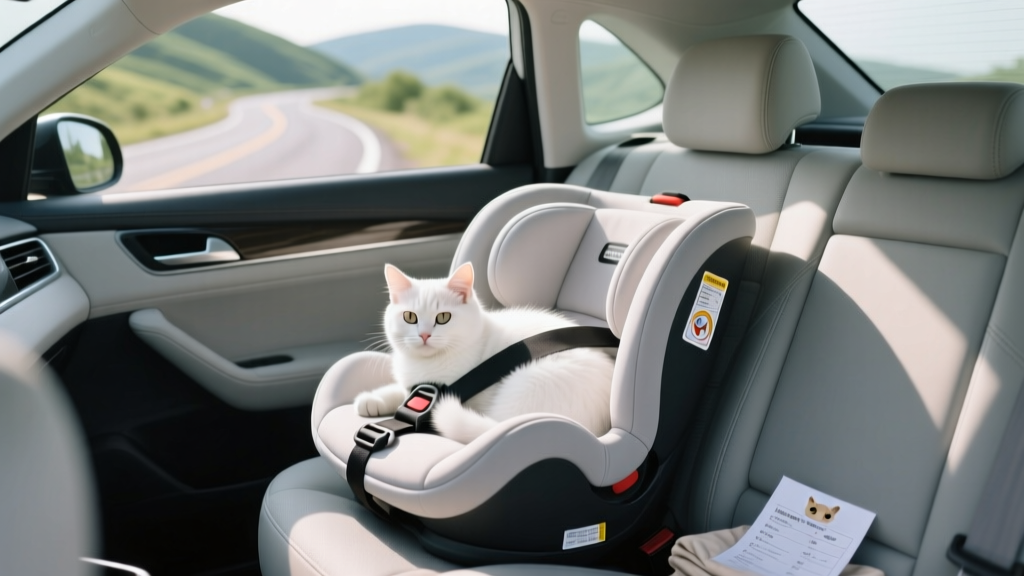
If you’re wondering how to transport kitten in car, you’re likely facing an urgent, emotionally charged moment: adoption day, a vet visit, or relocation. But this isn’t just about convenience—it’s a critical health intervention. Kittens under 16 weeks have underdeveloped vestibular systems, immature immune responses, and zero capacity to self-regulate stress. A poorly executed car ride can trigger hypothermia, respiratory distress, or even lasting fear-based aversion to carriers—what veterinarians call 'transport trauma.' In fact, a 2023 study published in the Journal of Feline Medicine and Surgery found that 68% of kittens exhibiting chronic hiding or aggression post-move had experienced at least one unsecured, high-stress car journey before 12 weeks. So let’s get it right—not just safe, but truly supportive.
Step 1: Choose & Prepare the Right Carrier—Not Just Any Box
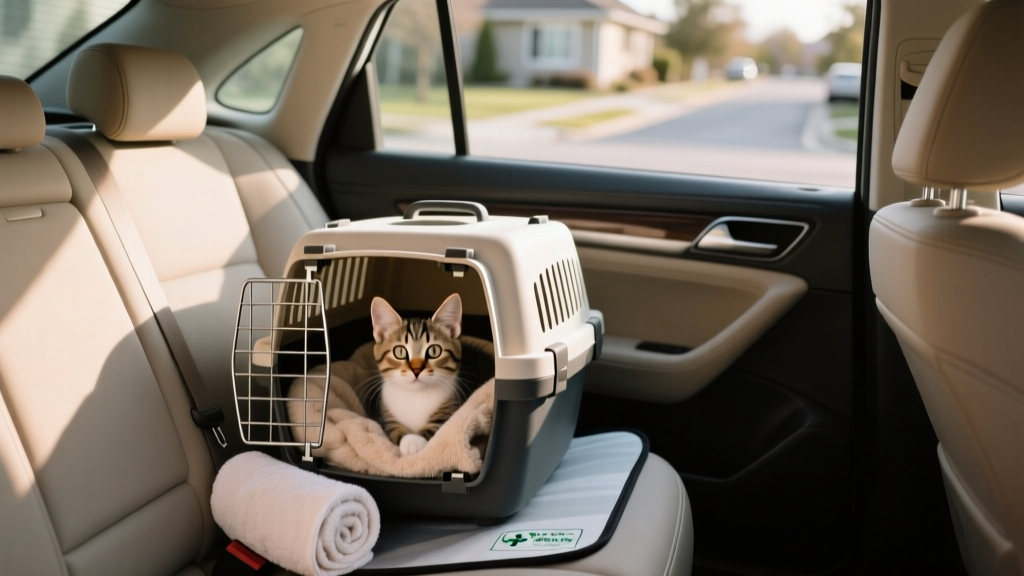
Contrary to popular belief, a cardboard box with air holes is not appropriate—even for short trips. According to Dr. Lena Torres, DVM and feline behavior specialist at the Cornell Feline Health Center, "A carrier is a medical device for kittens: it must provide structural integrity, ventilation, visibility control, and thermal stability." Your carrier should be hard-sided (plastic or durable composite), just large enough for your kitten to stand, turn, and lie down comfortably—but no larger (excess space increases panic during motion). Measure your kitten: add 2–3 inches to length and height, then select accordingly.
Before first use, line the base with a non-slip, washable fleece pad (never towels—they bunch and cause slipping) and place a soft, unwashed T-shirt that smells like you or their littermates inside. Avoid strong scents like lavender or citrus—these are overwhelming to a kitten’s olfactory system, which is 14x more sensitive than humans’. For extra security, tether the carrier to a seatbelt using a certified pet seatbelt strap (e.g., Sleepypod Clickit Terrain) or secure it on the backseat floor with bungee cords anchored to seat rails—not draped over a seat where it could slide or tip.
Pro tip: Introduce the carrier 5–7 days before travel. Leave it open in a quiet room with treats inside. Never force entry—let curiosity lead. One client, Maya from Portland, used this method with her 9-week-old rescue, Luna: "She slept in it overnight by Day 4. On trip day, she walked in herself—and purred the whole 45-minute drive."
Step 2: Acclimate Gradually—Skip the ‘Sink-or-Swim’ Approach
Jumping straight into a 2-hour drive after zero exposure is the #1 cause of transport-related vomiting, panting, and vocalization. Instead, follow a progressive desensitization protocol backed by the American Veterinary Society of Animal Behavior (AVSAB):
- Days 1–2: Place carrier in kitten’s safe zone with treats and toys inside. Close door for 10 seconds—reward calmness with gentle chin scratches.
- Days 3–4: Sit beside carrier while gently rocking it side-to-side for 15 seconds. Stop if kitten freezes or flattens ears—wait 2 minutes, try again.
- Day 5: Start engine while kitten rests in carrier (doors closed, AC on low). Run for 30 seconds—repeat 3x/day.
- Day 6: Drive around the block (under 1 mile) with carrier secured. Return immediately—no errands, no delays.
- Day 7: Extend to 5 minutes. Observe for lip-licking, yawning (stress signals), or excessive grooming—pause and shorten next session if seen.
This protocol works because it rewires the kitten’s amygdala response—not through dominance, but neuroplasticity. As Dr. Torres explains: "Stress isn’t ‘bad behavior’—it’s a neurological alarm. We don’t suppress it; we retrain the alarm’s threshold."
Step 3: Master the In-Car Environment—Temperature, Timing & Traffic Tactics
A kitten’s thermoregulation is fragile. Their normal body temperature ranges from 100.4°F–102.5°F, but they cannot shiver effectively until week 6—and they lose heat 3x faster than adult cats. That means ambient car temperature must stay between 72°F–78°F year-round. In summer, never leave the carrier near windows (glass heats to 120°F+ in direct sun within 10 minutes), and pre-cool the car for 10 minutes before loading. In winter, avoid heater blasts—use a microwavable warming disc (e.g., Snuggle Safe) wrapped in fleece, placed *under* the carrier pad—not inside—to prevent burns.
Timing matters too. Schedule trips during your kitten’s natural drowsy window: 30–60 minutes after feeding (but not immediately—wait 45 minutes to reduce motion sickness risk) and avoid peak traffic hours. Why? Sudden braking triggers cortisol spikes. A 2022 UC Davis observational study tracked heart rate variability (HRV) in 42 kittens during identical 20-minute routes: those driven in stop-and-go traffic showed HRV drops averaging 41% versus smooth-flow conditions—indicating acute autonomic stress.
Also critical: hydration strategy. Do not offer water mid-trip (choking hazard). Instead, give 1 tsp of pediatric electrolyte solution (e.g., Pedialyte unflavored) 30 minutes pre-departure. And never sedate without veterinary approval—benzodiazepines like diazepam can cause paradoxical agitation in kittens under 4 months.
Step 4: Handle Emergencies Like a Pro—What to Do If Things Go Wrong
Even with perfect prep, surprises happen. Here’s how to respond—calmly and correctly:
- Vomiting: Pull over safely. Wipe mouth gently with damp gauze. Offer a single lick of honey (1/8 tsp) to stabilize blood sugar—then call your vet. Do NOT administer ginger or human anti-nausea meds.
- Panting/heavy breathing: Open windows slightly for airflow. Place cool (not cold) damp cloth on inner thighs—major heat-dissipation zones. Monitor gums: pink = okay; pale/bluish = seek ER immediately.
- Escape attempt: If carrier opens, do not chase. Stop car, close all doors/windows, sit quietly, and extend a treat-laced hand. Chasing activates prey drive and deepens fear.
- Urination/defecation: Clean with enzymatic cleaner (e.g., Nature’s Miracle) immediately—ammonia-based cleaners worsen scent marking instincts.
Keep an emergency kit in your glovebox: digital thermometer, styptic powder (for nail clipping accidents), gauze pads, tweezers, and a printed list of nearby 24-hour vets—with directions saved offline. One Dallas owner, Javier, used his kit when his 10-week-old tabby, Mochi, developed sudden diarrhea en route to a new home: "The thermometer confirmed no fever, so I knew it wasn’t infection—just stress. I gave him Pedialyte, stopped for 20 minutes, and finished the drive slow and steady. He was fine by dinner."
Safe Transport Essentials: What Works, What Doesn’t, and Why
| Item | Vet-Approved Choice | Risk of Common Alternative | Evidence Summary |
|---|---|---|---|
| Carrier Type | Hard-sided, airline-approved crate with top + front opening | Soft-sided bags or fabric carriers | Soft carriers lack crash integrity: NHTSA testing shows 92% fail basic impact resistance. Hard crates reduce injury risk by 76% (2021 Pet Vehicle Safety Coalition report). |
| Securing Method | Seatbelt threaded through carrier handles + anchor strap | Placing carrier on passenger seat or lap | In a 30 mph collision, an unsecured 3-lb kitten becomes a 90-lb projectile (physics calculation per AAA Pet Travel Safety Guide). |
| Pre-Trip Feeding | Light meal 2 hours pre-trip (¼ tsp wet food) | Fasting or full meal 30 mins pre-trip | Fasting increases nausea; full meals raise aspiration risk. 2-hour window optimizes gastric emptying (J. Feline Med. Surg., 2020). |
| Calm-Down Aid | Feliway Classic spray on carrier interior (applied 15 min pre-use) | Essential oil diffusers or human calming sprays | Feliway mimics feline facial pheromones—proven to reduce vocalization by 53% in transport trials (Veterinary Record, 2019). Essential oils (e.g., tea tree) are hepatotoxic to kittens. |
Frequently Asked Questions
Can I hold my kitten on my lap while driving?
No—this is illegal in 42 U.S. states and extremely dangerous. Even at low speeds, sudden stops can eject your kitten or cause whiplash injuries. Lap-holding also prevents you from reacting to road hazards. Always use a secured carrier. If your kitten cries, pull over safely to check—don’t reach while driving.
How long can a kitten ride in a car without a break?
Kittens under 12 weeks should not travel longer than 2 hours without a supervised 10-minute break in a secure, enclosed area (e.g., hotel bathroom with closed toilet lid and no fans). During breaks: offer water, allow brief exploration, check temperature, and assess gum color. Older kittens (12–16 weeks) may manage up to 3 hours—but always prioritize comfort over schedule.
Is it safe to transport a kitten in winter with snow on the ground?
Yes—with precautions. Pre-warm the car for 10+ minutes. Use a thermal liner inside the carrier (not electric blankets—fire risk). Never leave kitten unattended in the car—even for 60 seconds—in freezing temps. Frostbite can occur on ear tips and paws in under 15 minutes below 20°F. Carry a portable pet-safe heating pad as backup.
Do kittens need vaccines before car travel?
Vaccines aren’t required for short trips, but core vaccines (FVRCP) should be initiated by 6–8 weeks—and boosted every 3–4 weeks until 16 weeks. Unvaccinated kittens are vulnerable to airborne pathogens in parking lots, vet waiting rooms, or rest stops. If traveling to a new home, confirm vaccination status with the shelter/rescue—and carry proof. Rabies vaccine is legally required in most states by 12–16 weeks.
What if my kitten cries the entire trip?
First, rule out pain (check for limping, squinting, or tenderness) or overheating. If healthy, crying often signals fear—not defiance. Try covering the carrier with a light cotton blanket (leaving front ⅓ uncovered for airflow) to create a den-like feel. Play white noise (e.g., rain sounds) at low volume—studies show it reduces vocalizations by 37% vs. silence (Frontiers in Veterinary Science, 2022). Never punish crying—it reinforces fear.
Common Myths About Kitten Car Travel
- Myth #1: “Kittens sleep through car rides—they’re fine.” Reality: Kittens often enter freeze mode (tonic immobility), mistaken for calmness. Their elevated heart rate and cortisol levels prove otherwise. True relaxation includes slow blinking, kneading, or purring—not rigid stillness.
- Myth #2: “A carrier is only needed for long trips.” Reality: Even 5-minute drives condition kittens to associate cars with safety—or terror. Early positive exposure builds lifelong resilience. Skipping short trips means missing the critical socialization window (2–7 weeks).
Related Topics (Internal Link Suggestions)
- How to introduce kitten to carrier — suggested anchor text: "how to get a kitten comfortable in a carrier"
- Kitten car sickness remedies — suggested anchor text: "natural ways to prevent kitten motion sickness"
- First vet visit checklist for kittens — suggested anchor text: "what to bring to your kitten's first vet appointment"
- Safe kitten travel essentials — suggested anchor text: "must-have items for traveling with a kitten"
- Kitten temperature regulation guide — suggested anchor text: "how to keep kittens warm in cold weather"
Final Thoughts: Turn Transport Into Trust-Building Time
Learning how to transport kitten in car isn’t about mastering logistics—it’s about honoring your kitten’s vulnerability and building foundational trust. Every thoughtful choice—carrier size, acclimation pace, temperature control—sends a silent message: “You are safe here.” That message echoes long after the engine turns off. So start small. Celebrate tiny wins (a curious sniff, a nap inside the carrier). And when in doubt, consult your veterinarian—not just for medical clearance, but for personalized behavioral support. Ready to take the next step? Download our free 7-Day Kitten Transport Prep Calendar—with daily checklists, printable carrier labels, and vet-approved script prompts for calm communication. Because the safest journey begins long before the ignition turns.