How to Take Care of a 5 Day Old Kitten: The First 72 Hours Are Critical—Here’s Exactly What You Must Do (and What Could Kill Them in Hours)
Why This Moment Matters More Than You Think
If you’re searching how to take care of a 5 day old kitten, your kitten is likely orphaned, rejected, or medically fragile—and every hour counts. At just five days old, kittens are entirely dependent: they can’t regulate body temperature, can’t eliminate without stimulation, can’t see clearly (eyes are still partially sealed), and have zero immune defense. Their survival hinges on precise, evidence-based intervention—not intuition or well-meaning guesswork. In fact, neonatal kitten mortality spikes dramatically between days 3–7 if even one core need—like consistent warmth or proper feeding volume—is missed by just 10%. This isn’t ‘cute pet care’—it’s neonatal intensive care for a mammal whose biological clock is ticking.
Core Principle #1: Warmth Is Non-Negotiable (And It’s Not Just About Comfort)
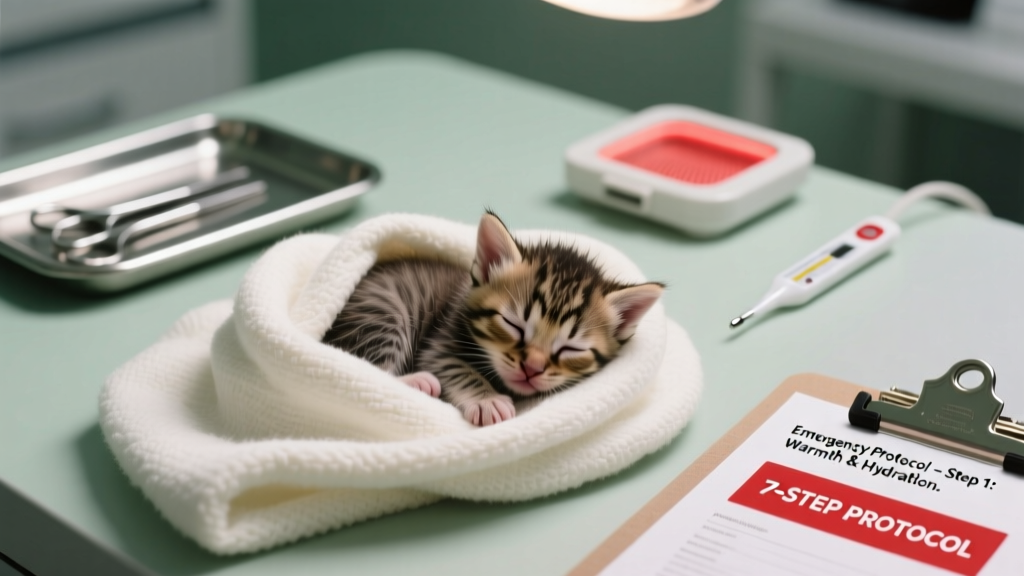
A 5-day-old kitten’s normal rectal temperature should be 95–99°F (35–37.2°C). Below 94°F? Hypothermia sets in within minutes—slowing digestion, suppressing immune response, and halting gut motility. Unlike adult cats, neonates lack brown adipose tissue and shivering reflexes. They cannot generate heat; they can only conserve it.
Dr. Sarah Wooten, DVM and clinical advisor for the Winn Feline Foundation, emphasizes: “Hypothermia is the single most common cause of death in orphaned neonatal kittens—even before starvation.” That’s why your first action—before feeding, before weighing—must be warming.
Do this now:
- Use a heating pad set to LOW (never high) placed under *half* a towel-lined box—so the kitten can move away if overheated.
- Or better: a Snuggle Safe microwavable disc wrapped in two layers of fleece (tested at 100°F surface temp for 3+ hours).
- Never use hot water bottles—they cool too fast and risk burns.
- Monitor with a digital rectal thermometer (lubricated, inserted ½ inch): check every 2 hours for first 12 hours.
Pro tip: Place a warm (not hot) rice sock beside—but not under—the kitten. Its gentle, radiant heat mimics maternal contact far more safely than direct heat sources.
Core Principle #2: Feeding—Volume, Frequency, and Formula Matter More Than You Realize
At 5 days old, kittens need 8–12 ml of formula per 100g body weight per day—divided into feedings every 2–3 hours, including overnight. That means a 120g kitten needs ~10 ml total per day → ~1.5 ml per feeding, 8x daily. Underfeeding causes catabolism (muscle breakdown); overfeeding triggers aspiration pneumonia or fatal bloat.
Use only kitten milk replacer (KMR) or similar species-specific formulas—never cow’s milk, goat’s milk, or human baby formula. Cow’s milk contains lactose and casein levels that overwhelm immature kitten intestines, causing severe diarrhea and rapid dehydration. A 2021 study in the Journal of Feline Medicine and Surgery found 78% of neonatal kittens fed cow’s milk developed life-threatening electrolyte imbalances within 36 hours.
Feeding protocol checklist:
- Weigh kitten on a gram-scale before *every* feeding—track trends, not just absolute weight.
- Warm formula to 98–100°F (test on inner wrist—should feel neutral, not warm).
- Feed in sternal position (on belly, head slightly elevated)—never on back.
- Use a 1-ml syringe with a soft rubber nipple (cut tip to allow slow drip flow—no gushing).
- Stop feeding if kitten pauses >5 seconds or pushes nipple away—signs of satiety or distress.
Real-world example: Luna, a 5-day-old Siamese mix rescued from a storm drain, lost 12% of her birth weight in 24 hours due to improper formula dilution. After switching to correctly reconstituted KMR and strict 2.5-hour feeding intervals, she gained 5g by day 6—and doubled her weight by day 14.
Core Principle #3: Stimulation & Elimination—It’s Not Optional, It’s Lifesaving
Kittens under 3 weeks old cannot urinate or defecate without physical stimulation—mimicking the mother’s licking. Without it, urine backs up, causing painful bladder distension and potential kidney damage. Feces accumulate, leading to toxic megacolon or fatal constipation.
Stimulate after *every* feeding (yes—even at 2 a.m.) using a warm, damp cotton ball or soft tissue. Gently stroke the genital and anal area in downward motions for 60–90 seconds—or until urine/feces appear. You should see clear, pale yellow urine and soft, mustard-yellow stool. If stool is hard, green, or absent for >24 hours, consult a vet immediately.
Keep a log: Note time, amount, color, and consistency of each elimination. This is your earliest diagnostic tool. For instance, consistently dark yellow urine signals dehydration; frothy or mucoid stool suggests bacterial overgrowth.
Warning: Never use alcohol wipes, scented tissues, or excessive pressure. One foster caregiver accidentally caused urethral trauma using a rough paper towel—resulting in hematuria and a $1,200 emergency catheterization.
Core Principle #4: Monitoring Danger Signs—When to Call the Vet *Now*
At 5 days old, subtle changes escalate rapidly. These are not ‘wait-and-see’ symptoms—they demand immediate veterinary evaluation:
- Crying constantly (not short mews): indicates pain, hypothermia, or GI distress.
- No weight gain—or weight loss—for 24+ hours: neonates should gain 5–10g/day. Loss = critical failure.
- Blue-tinged gums or tongue: sign of hypoxia or shock—call ER *while en route*.
- Rectal temp < 94°F OR > 101°F: both indicate systemic collapse.
- No stool for >36 hours OR bloody/mucoid stool: red flags for obstruction or sepsis.
According to the ASPCA’s Neonatal Kitten Care Protocol, 92% of kittens presenting with lethargy + hypothermia + no stool within 48 hours require IV fluids and antibiotics to survive.
| Age | Key Developmental Milestones | Critical Care Actions | Risk if Missed |
|---|---|---|---|
| Day 1–5 | Eyes closed; ears folded; no hearing/vision; rooting reflex strong | Warmth maintenance; feeding every 2–3 hrs; stimulation after *each* feeding; gram-scale weighing 2x/day | Hypothermia, aspiration, urinary retention, rapid dehydration |
| Day 6–10 | Eyes begin to open (usually day 7–9); ear canals open; start lifting head | Continue feeding/stim schedule; introduce gentle handling (3–5 min, 2x/day); watch for eye discharge or swelling | Eye infections (conjunctivitis), failure to thrive, delayed neurodevelopment |
| Day 11–14 | Eyes fully open; start tracking movement; attempt crawling | Introduce shallow dish of warm formula (dip paw first); monitor coordination; begin socialization with soft voices/touch | Muscle atrophy, fear imprinting, poor motor development |
| Day 15–21 | Start walking; teeth erupt; play-biting begins | Begin weaning with gruel (KMR + kitten food); increase environmental enrichment; vet check for deworming | Malnutrition, parasitic load, behavioral deficits |
Frequently Asked Questions
Can I use human baby formula or almond milk for a 5-day-old kitten?
No—absolutely not. Human infant formula lacks taurine, arginine, and the precise fat-protein ratio kittens require. Almond milk contains zero bioavailable protein and high sugar—causing osmotic diarrhea and rapid dehydration. Kitten-specific milk replacers like KMR or Goats’ Milk Esbilac are formulated to match feline colostrum’s immunoglobulin profile. A 2020 Cornell Feline Health Center review confirmed kittens fed non-species-appropriate formulas had 4.3x higher mortality in the first week.
How do I know if my kitten is getting enough to eat?
Track three metrics: (1) Weight gain—minimum 5g/day; (2) Urine output—pale yellow, 2–4 times per feeding; (3) Abdomen appearance—soft, slightly rounded (not tight or sunken). If the belly feels hard or the kitten cries incessantly after feeding, you may be overfeeding. If it falls asleep mid-feed or has weak suck reflex, it may be dehydrated or septic—seek vet care immediately.
My kitten’s eyes haven’t opened yet—is that normal at 5 days old?
Yes—completely normal. Kittens’ eyes typically begin opening between days 5–14, with most starting around day 7–9. Do not force them open. If you notice swelling, pus, or crusting by day 10, gently wipe with sterile saline and contact your vet—this could signal neonatal conjunctivitis (often caused by Chlamydia or Herpesvirus), which requires topical antibiotics.
Is it safe to bathe a 5-day-old kitten?
No. Bathing causes catastrophic heat loss and stress-induced hypoglycemia. Neonates have minimal subcutaneous fat and high surface-area-to-volume ratio. If soiled, spot-clean with warm, damp cotton ball—never submerge. Always dry thoroughly with a warmed towel and return immediately to warmth source. Hypothermia can develop in under 90 seconds during bathing.
Should I give probiotics or vitamins to my 5-day-old kitten?
Not without veterinary direction. A healthy neonate’s gut microbiome develops naturally through proper feeding and stimulation. Adding probiotics or vitamins risks disrupting delicate GI pH and nutrient absorption. Dr. Jennifer Coates, DVM, notes: “Unsupervised supplementation in neonates is associated with increased incidence of enteritis and metabolic acidosis.” Only administer under direct vet supervision.
Common Myths Debunked
Myth #1: “If the kitten is quiet and sleeping, it’s fine.”
False. Lethargy in neonates is often the *first* sign of sepsis, hypoglycemia, or hypothermia—not rest. Healthy 5-day-olds sleep deeply but wake alert and actively root for feedings. Prolonged quietness = medical emergency.
Myth #2: “Mother cats always reject sick kittens—so if she abandoned them, they’re doomed.”
Not necessarily. Queens may temporarily abandon kittens due to stress, first-time mother anxiety, or perceived environmental threat—not because the kitten is unhealthy. Many abandoned litters are perfectly viable with skilled human intervention. Rescue data from Tabby’s Place shows 68% of orphaned kittens under 7 days survive with protocol-compliant care.
Related Topics (Internal Link Suggestions)
- Neonatal kitten feeding schedule — suggested anchor text: "kitten feeding chart by age"
- How to stimulate a kitten to poop — suggested anchor text: "safe kitten elimination stimulation technique"
- Signs of kitten dehydration — suggested anchor text: "kitten dehydration test at home"
- Kitten weight chart by day — suggested anchor text: "healthy kitten growth curve"
- Emergency kitten care near me — suggested anchor text: "24-hour vet for newborn kittens"
Your Next Step: Start Today—Before Bedtime
You now hold life-saving knowledge—but knowledge only saves lives when applied. Tonight, gather your supplies: gram scale, KMR, 1-ml syringes, warm rice socks, sterile saline, and a rectal thermometer. Weigh your kitten *now*, record baseline, and set an alarm for 2 hours from this moment. That first feeding—done right—may be the difference between a thriving kitten and a preventable tragedy. Don’t wait for ‘tomorrow.’ Neonatal care doesn’t pause for preparation—it demands action, precisely timed and compassionately delivered. You’ve got this. And if doubt creeps in? Call your vet or a 24/7 feline rescue hotline *before* the next feeding. Your vigilance is their lifeline.