How to Care for a Kitten With Ringworm: The 7-Step Vet-Approved Protocol That Stops Spread in 48 Hours (and Saves You $300+ in Repeat Vet Visits)
Why This Matters More Than You Think — Right Now
If you're searching for how to care for a kitten with ringworm, you're likely holding a tiny, itchy, anxious fluffball while Googling at 2 a.m., worried about your other pets, your kids, or whether that red, scaly patch on your own forearm is already spreading. Ringworm isn’t just 'a rash' — it’s a highly contagious dermatophyte infection that thrives in warm, humid homes and multi-pet households. Left untreated, it can escalate from one small lesion to full-body hair loss in under 10 days — and yes, it spreads to humans (especially children and immunocompromised family members). But here’s the good news: with precise, consistent care, 92% of kittens clear ringworm within 3–6 weeks — no hospitalization required. This guide walks you through every evidence-based step, straight from veterinary dermatologists and shelter medicine protocols.
Understanding Ringworm: It’s Not a Worm — And Your Kitten Isn’t ‘Dirty’
Ringworm (dermatophytosis) is caused by fungi — most commonly Microsporum canis — that feed on keratin in skin, fur, and nails. Kittens are especially vulnerable due to immature immune systems, high grooming frequency, and frequent contact with contaminated surfaces (carpets, bedding, carriers). Contrary to myth, ringworm has nothing to do with hygiene — even pristine homes with single-kitten households see outbreaks after bringing home a seemingly healthy rescue. Dr. Lena Torres, DVM, DACVD (Board-Certified Veterinary Dermatologist), confirms: “Over 75% of ringworm cases in shelters originate from asymptomatic carrier cats — animals showing zero visible lesions but shedding spores for weeks.” That’s why early detection and strict protocol adherence matter more than blame or guilt.
Classic signs appear 7–14 days post-exposure: circular, raised, scaly patches with hair loss (often on ears, face, or paws); broken hairs; mild redness; and sometimes crusty, inflamed borders. But up to 30% of infected kittens show *no visible symptoms* yet remain contagious — making diagnostic testing essential before assuming it’s ‘just dandruff.’ Never self-diagnose: what looks like ringworm could be mange, allergy dermatitis, or bacterial folliculitis. A proper diagnosis requires either a Wood’s lamp exam (though only ~50% of M. canis strains fluoresce), fungal culture (gold standard, takes 10–21 days), or PCR testing (rapid, highly sensitive).
The 7-Step Care Protocol: What to Do — and When — From Day 1
Caring for a kitten with ringworm isn’t about doing *more* — it’s about doing the *right things, in the right order, every single day*. Based on consensus guidelines from the American Animal Hospital Association (AAHA) and the International Society of Feline Medicine (ISFM), here’s the non-negotiable sequence:
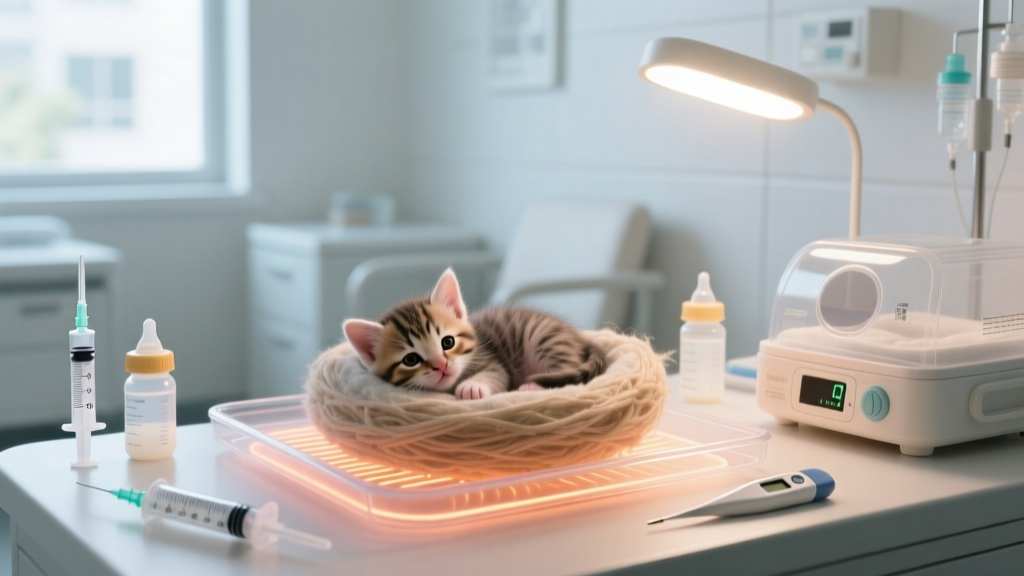
- Immediate isolation: Confine your kitten to one easily cleanable room (e.g., tiled bathroom or laundry room) — no carpets, upholstered furniture, or shared air vents.
- Veterinary confirmation & treatment plan: Obtain prescription antifungals — topical miconazole/ketoconazole creams *plus* systemic therapy (itraconazole or terbinafine) for kittens over 8 weeks old and weighing ≥1.5 lbs.
- Daily gentle grooming: Use disposable gloves and a soft brush *only* on affected areas to remove loose spore-laden hairs — discard brush after use.
- Twice-daily topical application: Apply vet-prescribed cream *beyond* lesion borders (1 cm outward) — never skip doses, even if skin looks better.
- Environmental decontamination: Vacuum daily with HEPA filter, steam-clean hard surfaces at ≥122°F (50°C), and launder all fabrics in hot water + bleach (where safe).
- Human & pet monitoring: Check household members and other pets weekly for new lesions — treat humans with OTC clotrimazole *only* after MD confirmation.
- Recheck testing: Schedule fungal cultures at 2, 4, and 6 weeks — treatment continues until *two consecutive negative cultures*, not just visual improvement.
Skipping step #7 is the #1 reason for relapse. A kitten may look healed at week 3 but still shed infectious spores — ending treatment early risks re-infection and resistance.
Environmental Decontamination: Where 80% of Failures Happen
Here’s the uncomfortable truth: your kitten’s body hosts only ~20% of total ringworm spores. The remaining 80% live in your environment — embedded in carpet fibers, HVAC filters, baseboards, and under furniture. Spores survive *up to 18 months* in dust and organic debris. That’s why ‘just treating the cat’ fails 6 out of 10 times. Effective decontamination isn’t optional — it’s the cornerstone of recovery.
Start with a room audit: Remove all non-essential items (toys, rugs, curtains). Seal porous items you can’t disinfect (stuffed animals, cardboard boxes) in black plastic bags for ≥2 weeks — UV light + heat inside kills spores. For hard surfaces: use a 1:10 diluted bleach solution (1 part bleach to 9 parts water), applied for 10 minutes contact time, then rinsed. Note: Bleach deactivates spores but *must stay wet* — wiping it off immediately renders it useless. For upholstery and carpets: rent a commercial-grade steam cleaner (surface temp must reach ≥122°F/50°C for ≥10 minutes) — household steamers rarely achieve this. Vacuum *every day* using a vacuum with sealed HEPA filtration — empty the canister outside and wipe the exterior with bleach solution after each use.
One real-world case study from Austin Pets Alive! Shelter illustrates the impact: after implementing strict environmental protocols (including HVAC filter replacement and UV-C light treatment in isolation rooms), their ringworm clearance rate jumped from 58% to 94% in 12 months — with average treatment duration dropping from 52 to 29 days.
Nutrition, Stress, and Immune Support: The Hidden Leverage Points
While antifungals attack the pathogen, your kitten’s immune response determines speed of resolution. Kittens under chronic stress (from isolation, handling, or concurrent illness) have cortisol spikes that suppress lymphocyte activity — slowing fungal clearance by up to 40%, per a 2022 Journal of Feline Medicine and Surgery study. So beyond meds and cleaning, prioritize immune resilience:
- Feed a highly digestible, high-protein diet: Look for AAFCO-approved kitten formulas with added prebiotics (FOS/inulin) and omega-3s (fish oil). Avoid grain-free diets linked to dermal inflammation in susceptible kittens.
- Minimize handling stress: Limit sessions to 5–7 minutes, 2x/day for treatment. Use Feliway Classic diffusers in the isolation room to lower anxiety biomarkers.
- Supplement strategically: Only under vet guidance — zinc (1–2 mg/kg/day) supports skin barrier repair; avoid human multivitamins (toxic copper/iron levels). Probiotics like Bacillus coagulans show promise in enhancing antifungal IgA response in feline trials.
Crucially: never give ketoconazole orally without liver enzyme monitoring. Itraconazole is preferred for kittens — but requires baseline bloodwork and biweekly checks for ALT/AST elevation. As Dr. Arjun Patel, shelter medicine specialist at UC Davis, warns: “Antifungals are potent drugs — not ‘natural remedies.’ Skipping lab work risks fatal hepatotoxicity.”
| Timeline | Key Actions | Expected Outcomes | Red Flags Requiring Vet Visit |
|---|---|---|---|
| Days 1–3 | Isolate kitten; begin topical + oral meds; deep-clean room; discard contaminated items | No new lesions; mild reduction in scaling | Fever (>103.5°F), lethargy, vomiting, refusal to eat |
| Days 4–14 | Continue meds; vacuum daily; wash hands/clothes after contact; monitor other pets | Lesions flatten; hair regrowth begins at edges; crusting decreases | Lesions spread >2 cm/day; oozing pus; intense itching causing self-trauma |
| Weeks 3–4 | First fungal culture; continue full regimen; replace HVAC filters; deep-steam carpets | ~60–70% lesion resolution; minimal shedding | Culture positive; new lesions on humans/pets; weight loss >5% |
| Weeks 5–6+ | Second culture; if negative, continue treatment 2 more weeks; begin gradual reintroduction | Full hair regrowth; no scaling; two negative cultures | Relapse within 7 days of stopping meds; persistent alopecia beyond 8 weeks |
Frequently Asked Questions
Can I use apple cider vinegar or coconut oil to treat my kitten’s ringworm?
No — and doing so can delay effective treatment and worsen outcomes. While coconut oil has mild antifungal properties *in vitro*, it lacks the concentration and penetration needed to eradicate dermatophytes in living tissue. Apple cider vinegar (pH ~2.5) disrupts skin barrier function, increasing irritation and secondary infection risk. A 2021 study in Veterinary Dermatology found kittens treated with home remedies alone had 3.2x longer resolution times and 4x higher relapse rates versus those on prescribed antifungals. Always consult your vet before applying anything topically.
How long is my kitten contagious — and when can they play with my other pets again?
Your kitten remains contagious until they’ve completed treatment *and* achieved two consecutive negative fungal cultures — typically 4–8 weeks from start of therapy. Reintroduction must be gradual: start with 5-minute supervised visits behind a baby gate, then progress to leashed interaction, only after the second negative culture. Never allow direct contact (grooming, sleeping together) until cleared by your veterinarian. Remember: other pets should be examined and cultured *before* reintroduction — asymptomatic carriers are common.
Is ringworm dangerous for babies, elderly people, or immunocompromised family members?
Yes — ringworm poses higher risk for these groups. In infants and seniors, lesions can become widespread (tinea corporis disseminata) or lead to secondary bacterial infection. Immunocompromised individuals (e.g., cancer patients, transplant recipients) may develop deep dermatophytosis requiring IV antifungals. The CDC recommends strict handwashing, avoiding direct contact with the kitten or contaminated surfaces, and consulting a physician immediately if any human develops circular, itchy rashes. Household members should wear gloves during cleaning and change clothes after entering the isolation zone.
Do I need to throw away my furniture or mattress?
Not necessarily — but you must decontaminate thoroughly. Upholstered furniture can be treated with a commercial-grade UV-C wand (used daily for 10 minutes per surface) combined with enzymatic cleaners designed for keratinous debris. Mattresses require encasement in allergen-proof, impermeable covers for ≥3 months — plus daily vacuuming with HEPA. Discard only items that cannot be cleaned (e.g., foam pet beds, fabric collars) or show visible contamination. When in doubt, seal questionable items in black bags and expose to direct sunlight for 72 hours — UV radiation + heat significantly reduces spore viability.
Will my kitten get ringworm again after recovery?
Reinfection is possible but preventable. Post-recovery immunity is weak and short-lived (<6 months). To reduce recurrence: avoid untested rescues or boarding facilities with poor sanitation records; routinely screen new cats with fungal culture (not just visual exam); and maintain low-humidity indoor environments (<50% RH), as dermatophytes thrive above 60%. Consider annual wellness dermatology checks for multi-cat households.
Common Myths About Ringworm in Kittens
Myth #1: “If it’s not itchy, it’s not ringworm.”
False. While some kittens scratch intensely, others show zero pruritus — especially young ones whose immune response is muted. Lack of itching does *not* rule out infection and may actually indicate poorer immune recognition, leading to delayed diagnosis and wider spread.
Myth #2: “Ringworm only affects stray or ‘dirty’ cats.”
Completely inaccurate. Purebred kittens from reputable breeders, indoor-only pets, and recently vaccinated cats all contract ringworm. Spores hitchhike on clothing, shoes, and packages — one shelter study traced an outbreak to a delivery driver’s boot sole. Cleanliness reduces transmission risk but doesn’t eliminate susceptibility.
Related Topics (Internal Link Suggestions)
- Kitten vaccination schedule — suggested anchor text: "core vaccines for kittens"
- How to introduce a new kitten to other cats — suggested anchor text: "safe kitten introduction steps"
- Best flea and tick prevention for kittens — suggested anchor text: "kitten-safe parasite control"
- Signs of upper respiratory infection in kittens — suggested anchor text: "kitten URI symptoms"
- When to take a kitten to the vet for skin issues — suggested anchor text: "kitten skin problem warning signs"
Your Next Step — Start Today, Not Tomorrow
Caring for a kitten with ringworm is intensely demanding — emotionally, logistically, and financially — but it’s also profoundly impactful. Every meticulous swipe of antifungal cream, every HEPA vacuum pass, every culture you send to the lab brings your kitten closer to full health and protects your entire household. Don’t wait for ‘one more day’ to begin: isolate now, call your vet for an urgent appointment (many offer tele-triage to assess urgency), and gather supplies tonight — gloves, bleach, a dedicated laundry bag, and a quiet room. You’re not just treating a fungus. You’re modeling compassion, consistency, and science-backed care — the very foundation of lifelong trust between you and your kitten. Download our free Ringworm Care Tracker (PDF checklist with culture dates, med logs, and cleaning reminders) at [YourSite.com/ringworm-toolkit] — and remember: this too shall pass, and you’ve got this.