How to Care for Stray Kitten: The 7-Step Emergency Protocol Vets Use First (Skip This & You Risk Hypothermia, Fading Kitten Syndrome, or Fatal Infection)
Why This Isn’t Just ‘Cute’—It’s Life-or-Death Urgency
If you’ve just found a shivering, underweight, or abandoned kitten outside—and you’re searching how to care for stray kitten—you’re likely overwhelmed, anxious, and racing against time. This isn’t a ‘wait-and-see’ situation: kittens under 8 weeks old have zero immunity, can crash from hypothermia in under 90 minutes, and face up to 40% mortality risk without immediate, evidence-based intervention. According to the ASPCA’s 2023 Feline Neonatal Care Guidelines, over 65% of stray kitten deaths occur within the first 72 hours—most preventable with correct warmth, hydration, and parasite control. What follows isn’t generic advice—it’s the exact clinical protocol used by shelter veterinarians and foster coordinators at Best Friends Animal Society and the San Francisco SPCA, distilled into actionable steps you can implement tonight.
Step 1: Assess Safety & Stabilize — Before You Even Touch Them
Never scoop up a stray kitten without first evaluating its environment and physical state. A frightened mother may be nearby—or worse, the kitten could be injured, poisoned, or suffering from acute trauma. Crouch low, speak softly, and observe for 2–3 minutes: Is the kitten responsive? Breathing rapidly? Shaking? Eyes sunken? These are early signs of hypothermia or dehydration—the two most common killers in neonates.
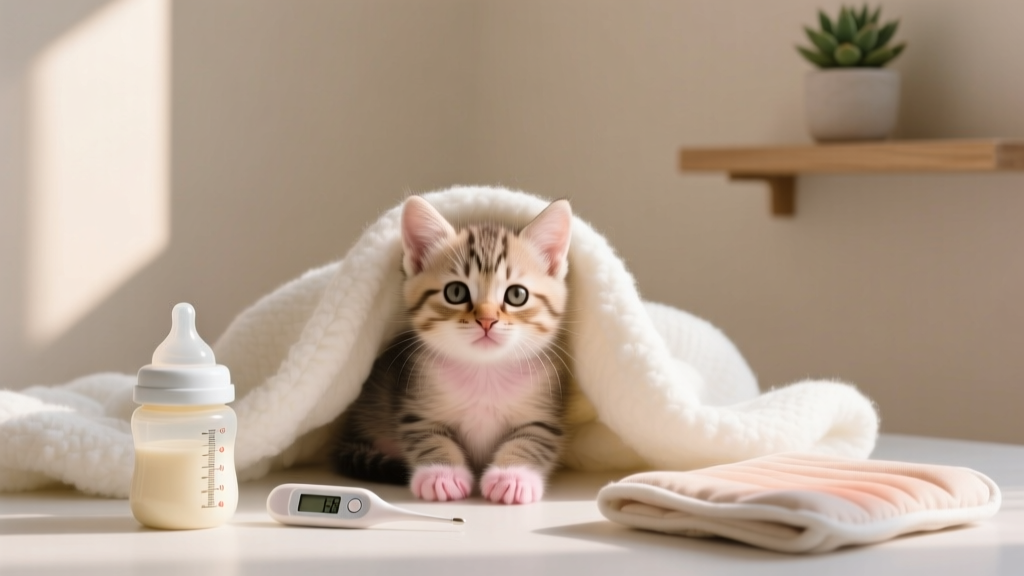
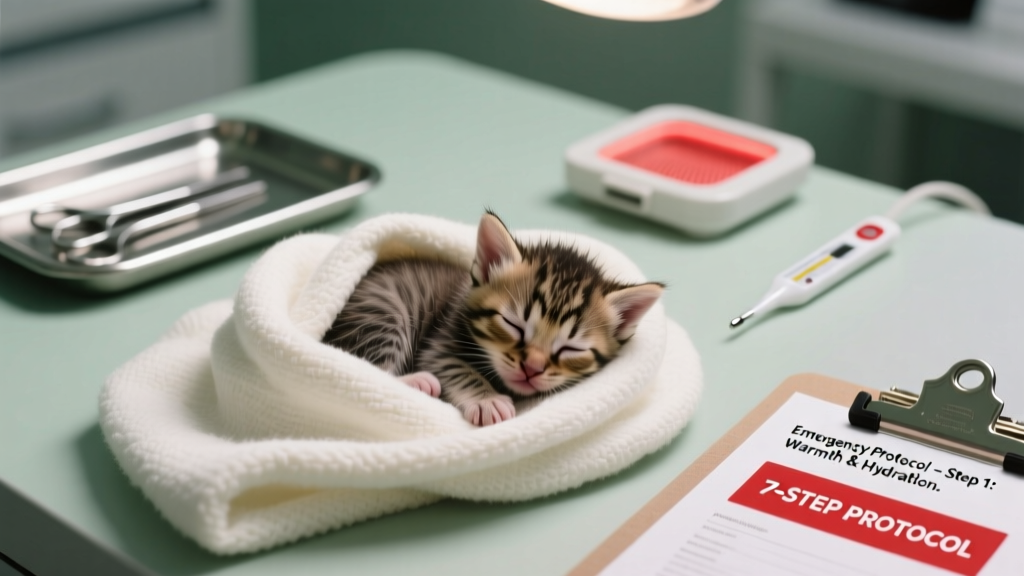
Do this now: If the kitten feels cool to the touch (especially ears, paws, or belly), its rectal temperature is likely below 94°F—a critical emergency. Never use heating pads or hot water bottles directly; burns occur in seconds on thin skin. Instead, fill a clean sock with dry, uncooked rice, microwave for 20 seconds, wrap in a soft towel, and place it *beside* (not under) the kitten in a small, enclosed box. Monitor every 5 minutes. According to Dr. Susan Little, DVM and feline specialist with the American Association of Feline Practitioners, “A kitten’s body temperature must rise no faster than 1°F per hour—too rapid rewarming triggers shock.”
While warming, gently check for obvious injuries: bleeding, labored breathing, discharge from eyes/nose, or flea dirt (black specks that turn rust-red when wet). Note everything—you’ll need it for your vet intake form.
Step 2: Hydration & Feeding — The Right Way (and Why Cow’s Milk Kills)
Dehydration is present in ~82% of rescued stray kittens, per a 2022 Cornell Feline Health Center field study. But here’s what most well-meaning rescuers get dangerously wrong: they feed cow’s milk or human baby formula. Both lack taurine, cause severe diarrhea, and accelerate dehydration. Kittens under 4 weeks require species-specific nutrition—period.
Use only powdered kitten milk replacer (KMR or Just Born), reconstituted with warm (100°F) distilled or filtered water—not tap, which may contain chlorine or heavy metals harmful to immature livers. Feed every 2–3 hours for neonates (0–2 weeks), every 3–4 hours for 3–4 week-olds. Use a sterile 1–3 mL oral syringe (no nipple—sucking too hard causes aspiration pneumonia) and hold the kitten upright, head slightly tilted down—never on its back.
Pro tip: Test hydration by gently pinching the scruff. If it stays tented >2 seconds, the kitten is severely dehydrated—and oral rehydration alone won’t cut it. Subcutaneous fluids (administered under the skin at the scruff) are often required. Your vet or local rescue can train you in under 10 minutes—and many offer free starter kits.
Step 3: Parasite Control & Disease Screening — Non-Negotiable First 48 Hours
Over 94% of stray kittens carry intestinal parasites—including roundworms, hookworms, and coccidia—that cause anemia, malnutrition, and death if untreated. And that ‘sneezing’ or ‘goopy eyes’? Could be feline herpesvirus (FHV-1) or calicivirus—highly contagious, potentially fatal, and requiring antiviral support.
Here’s your action plan:
- Deworming: Start fenbendazole (Panacur) at 50 mg/kg once daily for 3 days, then repeat in 2 weeks. Safe for kittens as young as 2 weeks. Do not use over-the-counter ‘cat wormers’—many contain pyrantel pamoate alone, which misses critical protozoa like Giardia.
- Fecal Float: Submit a fresh stool sample to your vet within 24 hours—even if the kitten seems fine. Many parasites shed intermittently.
- Upper Respiratory Panel: PCR testing for FHV-1, FCV, and Chlamydia felis is essential before introducing to other cats. Positive results mean isolation + lysine or famciclovir (prescription-only).
Remember: Vaccines (FVRCP) shouldn’t start until 6–8 weeks—but maternal antibodies wane fast. That’s why early parasite and pathogen control is your best immunological shield.
Step 4: Socialization & Long-Term Transition — Building Trust Without Trauma
Socialization windows close fast: kittens are most receptive to human bonding between 2–7 weeks. Miss it, and even loving care may result in lifelong fearfulness. But forced handling backfires—especially in stressed or sick kittens.
Use the ‘Three-Tier Calming Framework’ developed by Dr. Kelly Ballantyne, certified feline behaviorist:
- Observe & Respect Distance: Sit quietly near the carrier for 10 minutes, 3x/day. Offer treats (tiny bits of canned food) through the bars—no reaching.
- Controlled Touch: Once the kitten eats calmly near you, extend one finger for sniffing. Reward with food. Never restrain or pick up until it initiates contact.
- Play-Based Bonding: At 4+ weeks, introduce wand toys *outside* the enclosure. Movement builds confidence. Avoid hands-as-toys—prevents biting aggression later.
Real-world example: Luna, a 3-week-old orphan rescued from a storm drain in Portland, was initially non-responsive. Her foster used only Tier 1 for 36 hours—then introduced tuna-scented cotton balls on strings. By day 5, she’d rub against fingers. By day 12, she slept in a shirt pocket. Her adoption succeeded because trust was earned—not demanded.
| Age Range | Critical Actions | Red Flags Requiring Vet Visit | Next Milestone |
|---|---|---|---|
| 0–2 weeks | Warmth stabilization; feeding every 2 hrs; stimulation for urination/defecation (gentle cotton ball rub); weight checks 2x/day | No weight gain in 24 hrs; lethargy; refusal to suckle; gasping or cyanosis | Steady 10g/day weight gain; eyes open by day 10–14 |
| 3–4 weeks | Introduce shallow dish of KMR; begin litter training with shredded paper; start gentle handling; deworming Day 1 & 14 | Diarrhea lasting >12 hrs; blood in stool; persistent sneezing with nasal discharge | Walking confidently; playing with littermates; eating from dish |
| 5–7 weeks | Switch to gruel (KMR + high-quality kitten food); introduce scratching post; begin vet visit for first FVRCP; test for FeLV/FIV if mom unknown | Weight loss; vomiting >2x/day; third eyelid showing; seizures | Vaccination series complete; spay/neuter consult at 8 weeks |
| 8+ weeks | Full transition to solid food; socialization with children/pets (supervised); microchipping; adoption prep | Aggression toward humans; hiding >18 hrs/day; failure to use litter box after 5 days | Adoptable status confirmed by vet & behaviorist |
Frequently Asked Questions
Can I foster a stray kitten if I already have cats?
Yes—but only with strict quarantine. Keep the kitten in a separate room with dedicated food bowls, litter, towels, and cleaning supplies for minimum 14 days. Wash hands and change clothes after contact. Test the stray for FeLV/FIV before any shared air space—even asymptomatic carriers spread disease. Many shelters require negative tests before fostering into multi-cat homes.
What if the kitten has fleas? Can I use flea medicine?
Never use dog flea products (e.g., Frontline Plus for dogs) or over-the-counter sprays—they contain permethrin, which is fatal to kittens. For kittens under 8 weeks, safest options are combing with a fine-tooth flea comb (dip comb in soapy water after each pass) and bathing in warm water with Dawn dish soap (diluted 1:10). Consult your vet before using any topical product—even ‘kitten-safe’ ones vary by weight and age.
How do I know if the kitten is orphaned—or just temporarily alone?
Observe from a distance for 2–4 hours (use binoculars if possible). Mother cats often leave kittens for up to 4 hours to hunt or rest. Signs she’s returning: nesting behavior, grooming, nursing, or vocalizing for them. If the kittens are cold, crying continuously, or appear dirty/hungry after 4 hours—or if you see dead or missing siblings—intervention is urgent. When in doubt, call your local rescue: many operate ‘kitten hotlines’ with live triage.
Is it safe to release a healthy stray kitten back outside?
Almost never. Unsocialized kittens face starvation, predation, vehicle strikes, poisoning, and disease. Even ‘healthy’ strays often carry undiagnosed infections. Trap-Neuter-Return (TNR) is only appropriate for adults—not neonates. The ethical path is rescue, care, and placement. If resources are limited, contact organizations like Alley Cat Allies or your municipal shelter—they often cover vet costs for verified rescuers.
When should I take the kitten to the vet?
Within 24 hours of rescue—regardless of appearance. A baseline exam catches hidden issues (congenital defects, heart murmurs, hernias) and establishes vaccination/deworming timing. Delaying increases cost and risk: a $75 exam today prevents $1,200+ in emergency care tomorrow. Most vets offer ‘rescue discounts’—just ask.
Common Myths Debunked
Myth #1: “Stray kittens are ‘feral’ and can’t be tamed.”
False. True feral kittens (born outdoors with zero human contact) can be socialized before 7 weeks—with consistency and patience. ‘Stray’ kittens are usually lost or abandoned pets who were previously handled and adapt quickly. Behavior is plastic—not fixed.
Myth #2: “If it’s eating and warm, it’s fine—I can wait on the vet.”
Deadly misconception. Kittens compensate until they collapse. By the time you see weakness or refusal to eat, organ systems may already be failing. Early intervention—especially for parasites and viruses—is the single biggest predictor of survival.
Related Topics (Internal Link Suggestions)
- Kitten feeding schedule by age — suggested anchor text: "kitten feeding chart by week"
- Signs of fading kitten syndrome — suggested anchor text: "fading kitten syndrome symptoms"
- Best kitten milk replacer brands — suggested anchor text: "kitten formula comparison"
- How to tell if a kitten is dehydrated — suggested anchor text: "kitten dehydration test"
- When to spay a stray kitten — suggested anchor text: "early spay for kittens"
Your Next Step Starts Now—Not Tomorrow
You’ve just absorbed life-saving protocols used by professionals—now it’s time to act. Don’t wait for ‘perfect conditions.’ Grab a clean towel, a heating pad alternative (rice sock), KMR, and a syringe. Call your vet or nearest no-kill shelter *before* you bring the kitten home—they’ll often reserve a same-day slot for urgent rescues. And if you’re unsure about dosing, timing, or symptoms? Text a photo and description to the ASPCA’s free 24/7 Kitten Care Hotline (833-722-7738). Every minute counts—but with the right knowledge, you’re no longer just hoping. You’re healing. You’re saving a life—one precise, compassionate step at a time.