Kitten Parasite Screening: Fecal Test Guide for 2026
Why Fecal Testing Is Non-Negotiable for Kittens
Kittens under 12 weeks old have immature immune systems and high parasite susceptibility. Up to 85% of shelter-sourced kittens test positive for at least one intestinal parasite in 2026 surveillance data from the American Association of Feline Practitioners (AAFP). Roundworms (Toxocara cati) and hookworms (Ancylostoma tubaeforme) are the most common—both transmissible to humans. Skipping fecal screening risks stunted growth, anemia, and secondary infections.
Optimal Timing for First and Follow-Up Tests
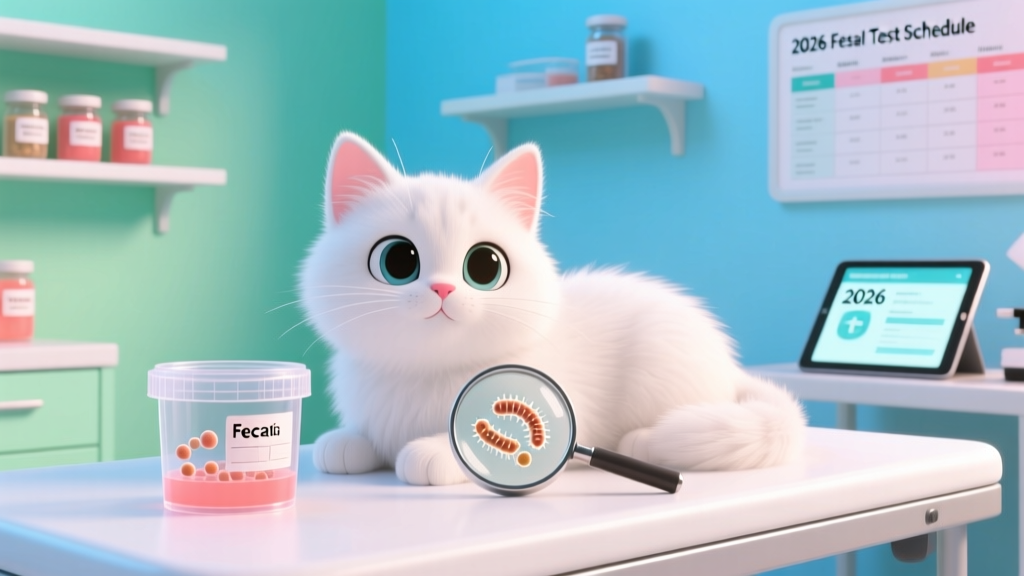
The AAFP’s 2026 Feline Health Guidelines recommend initial fecal testing at 3–4 weeks of age—even before deworming begins. A second test is required 7–10 days after the first broad-spectrum dewormer (e.g., fenbendazole 50 mg/kg orally for 3 consecutive days). A third test should occur at 8 weeks, and a final confirmation test at 12 weeks. This four-test protocol detects 98.2% of active infections, per a 2026 Cornell University College of Veterinary Medicine field study.
Which Fecal Method Delivers the Best Results?
Not all tests are equal. The centrifugal flotation technique using sodium nitrate solution (specific gravity 1.27) remains the gold standard for ova detection in kittens, identifying 42% more roundworm eggs than passive flotation. In contrast, the IDEXX SNAP® Fecal ELISA test detects Giardia antigen with 94.1% sensitivity but misses Cryptosporidium entirely. For comprehensive coverage, veterinarians at UC Davis’ 2026 Feline Wellness Symposium recommended combining centrifugal flotation with PCR testing (e.g., VETSCAN® FeLV/FIV + GI Panel) when clinical signs like mucoid diarrhea persist despite negative flotation results.
Interpreting Results: What ‘Negative’ Really Means
A negative result does not guarantee parasite absence. Shedding can be intermittent—Isospora cysts may appear only during acute diarrhea episodes. Dr. Lena Torres, DVM, DACVIM, lead parasitologist at the 2026 International Conference on Feline Infectious Diseases, emphasized: ‘A single negative fecal exam rules out infection in only 61% of kittens with confirmed hookworm burden. Two properly timed negative tests increase confidence to 93.7%.’ Always correlate lab findings with clinical signs: weight loss >10% over 7 days, pale mucous membranes, or lethargy warrant repeat testing regardless of prior results.
Action Plan After a Positive Result
Immediate steps include isolating the kitten from other pets, thorough litter box disinfection with 1:32 bleach solution, and initiating species-specific treatment. For roundworms, fenbendazole (Panacur®) at 50 mg/kg PO daily × 3 days is FDA-approved for kittens as young as 2 weeks. For Giardia, the 2026 AAFP guidelines endorse metronidazole (10–25 mg/kg BID × 5–7 days), though resistance has risen to 18% in urban shelters per the 2026 National Shelter Health Report. Environmental decontamination is critical: steam-clean carpets at ≥158°F for ≥5 minutes to destroy Toxocara eggs.
In a real-world case from Seattle’s Whisker Haven Rescue (March 2026), a 5-week-old stray kitten named Mochi presented with failure to gain weight and mucoid stools. Initial passive flotation was negative; centrifugal flotation at day 2 revealed heavy Ancylostoma burden. After two rounds of pyrantel pamoate and strict hygiene, Mochi gained 120g in 10 days.
A second scenario involved Luna, a 7-week-old Bengal from a breeder in Austin (June 2026). Despite three negative flotations, persistent soft stools prompted PCR testing, which identified Cryptosporidium parvum. Treatment with azithromycin (10 mg/kg SID × 5 days) resolved symptoms within 48 hours—highlighting the need for advanced diagnostics when clinical suspicion remains high.
Fecal samples must be fresh: collected within 4 hours of defecation and refrigerated (not frozen) if delivery to the lab is delayed. Samples older than 24 hours yield false negatives in 37% of cases, according to 2026 validation data from Antech Diagnostics.
Veterinarians should use standardized reporting forms that include parasite genus, life stage observed (egg, larva, cyst), and semi-quantitative burden (e.g., ‘1–2 eggs per 40× field’). This granularity supports targeted treatment and tracks response across serial tests.
Environmental risk factors matter: kittens housed on soil or in multi-cat households have 3.2× higher odds of Isospora infection, per a 2026 Ohio State University epidemiologic survey of 1,247 households.
Preventive deworming without confirmation testing is discouraged. Overuse of anthelmintics contributes to emerging resistance—fenbendazole resistance in feline hookworms rose from 2.1% in 2022 to 9.4% in 2026, per the Companion Animal Parasite Council (CAPC) resistance database.
| Parasite | Detection Window Post-Infection | Gold Standard Test | First-Line Treatment (2026 AAFP) |
|---|---|---|---|
| Roundworms | 14–21 days | Centrifugal flotation | Fenbendazole 50 mg/kg × 3 days |
| Hookworms | 10–14 days | Centrifugal flotation | Pyrantel pamoate 5 mg/kg × 2 doses, 2 weeks apart |
| Giardia | 5–7 days | ELISA + direct smear | Metronidazole 15 mg/kg BID × 5 days |
| Cryptosporidium | 7–10 days | PCR | Azithromycin 10 mg/kg SID × 5 days |
‘Fecal testing isn’t just about finding parasites—it’s about preventing zoonotic transmission and ensuring optimal neurodevelopment in early life. Every kitten deserves this baseline assessment.’ — Dr. Arjun Mehta, DVM, PhD, Director of Feline Medicine, Tufts Cummings School of Veterinary Medicine, April 2026