How to Give a Cat a Pill: Safe, Stress-Free Methods
Why Pill Administration Is Challenging
Cats have highly sensitive gag reflexes and acute taste receptors—especially for bitter compounds common in medications. A 2023 study in the Journal of Feline Medicine and Surgery found that 78% of cats resist oral medication due to texture, odor, or taste (Morgan et al., 2023). Their instinctive aversion protects them from toxins in the wild but complicates essential treatment for conditions like hyperthyroidism, kidney disease, or arthritis.
Preparation: Tools and Environment
Set up in a quiet, low-traffic room with non-slip flooring. Use a pill popper (e.g., MediPaw Pill Gun, FDA-cleared in 2022), high-value treats (like Greenies Pill Pockets for Cats), and a towel for gentle restraint if needed. Never use human pill cutters—cat-specific tablets (e.g., methimazole 2.5 mg scored tablets) are formulated for precise feline dosing and may crumble if mishandled.
Method 1: Pill Pockets & Food Hiding
Only 34% of cats accept pills hidden in food without detection, per a 2024 Cornell Feline Health Center survey. Success improves when using strong-smelling, moist carriers: try tuna juice-soaked kibble or warmed canned food. Avoid dairy-based options—60% of adult cats are lactose intolerant. If using Pill Pockets, press the tablet fully inside and seal the seam. Test first with an empty pocket to confirm acceptance.
Method 2: Direct Pill Placement
Restrain gently: wrap your cat in a towel, leaving only the head exposed. Tilt the head upward slightly, use your thumb and forefinger to open the jaw at the hinge (not the canines), and place the pill as far back on the tongue as possible. Close the mouth and stroke the throat or gently blow on the nose to trigger swallowing. A 2021 AVMA clinical guideline recommends holding for 10–15 seconds post-administration to prevent spit-out.
What to Do After & When to Seek Help
Offer a teaspoon of water or low-sodium chicken broth immediately after to aid swallowing and reduce esophageal irritation. Monitor for signs of distress: repeated pawing at the mouth, coughing, or regurgitation within 30 minutes. If your cat vomits the pill more than twice in 24 hours—or refuses all methods for >48 hours—contact your veterinarian. For senior cats (10+ years), esophageal strictures occur in 12% of chronic pill recipients (ACVIM Consensus Statement, 2023).
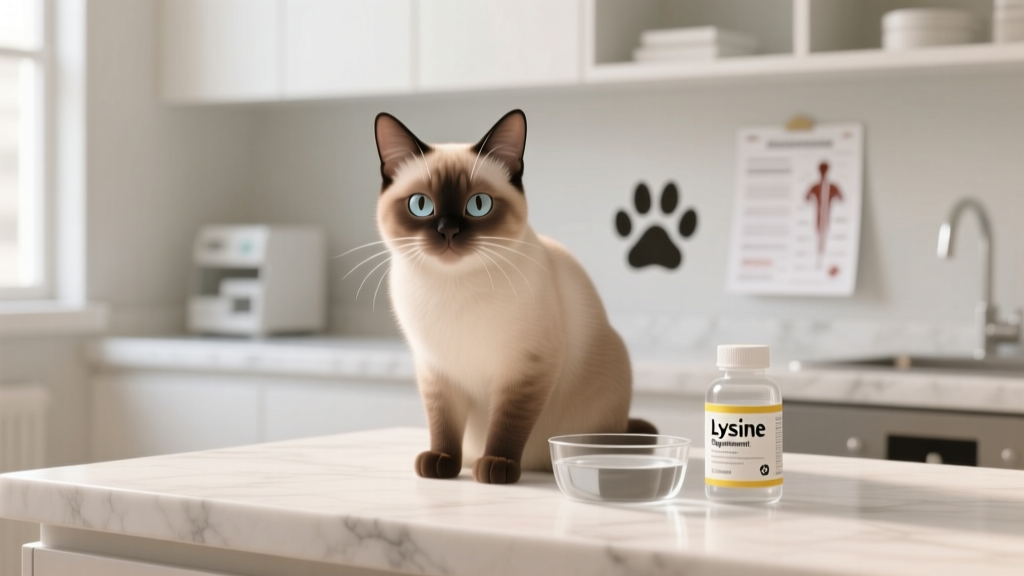
Real-world scenario #1: Luna, a 14-year-old Siamese with early-stage CKD, rejected her benazepril tablet for three days. Her owner switched from dry food hiding to a syringe-fed slurry of crushed tablet + 0.5 mL tuna water, administered via cheek pouch. She accepted it daily for 6 weeks.
Real-world scenario #2: Leo, a 3-year-old rescue with anxiety, lunged away during direct placement attempts. His vet prescribed transdermal methimazole gel applied to the inner ear pinna—bypassing oral stress entirely. Adherence improved from 40% to 95% compliance over two months.
Never crush time-release or enteric-coated tablets (e.g., Clavamox Chewable 62.5 mg)—doing so alters absorption and risks toxicity. Always confirm formulation compatibility with your vet before altering administration.
| Method | Success Rate* | Best For | Risk Notes |
|---|---|---|---|
| Pill Pockets | 68% | Young, food-motivated cats | Avoid with diabetic cats; check carb content (Pill Pockets contain ~1.2 g carbs/pocket) |
| Direct Placement | 82% | Cats needing precise dosing (e.g., anticoagulants) | Esophageal injury risk if tablet sticks; always follow with fluid |
| Compounded Liquid | 73% | Sensitive seniors or pill-phobic cats | Requires refrigeration; expires in 14 days (per USP Chapter <795>, 2025) |
Emergency care tip: If a pill lodges in the pharynx and your cat shows labored breathing or cyanosis, perform modified Heimlich—apply firm upward pressure just behind the ribcage—not on the neck. Then seek immediate veterinary attention. Keep your clinic’s after-hours number saved in your phone.