Kitten Dental Development Timeline: What to Expect in 2026
When Do Kittens Start Getting Teeth?
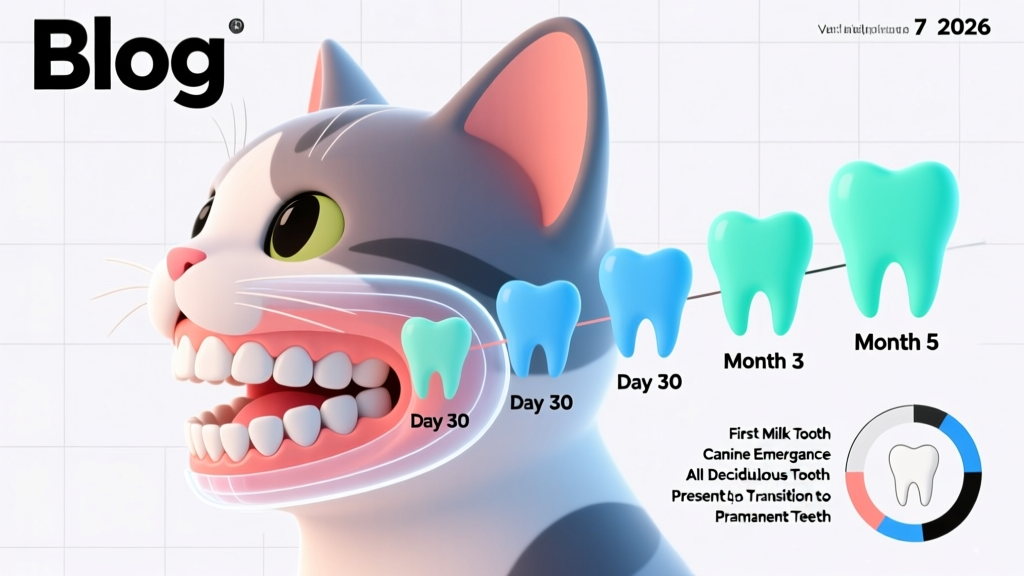
Kittens are born toothless, relying entirely on nursing for nutrition. Their first deciduous (baby) teeth begin erupting around 2–3 weeks of age—typically starting with the incisors. By week 4, most kittens have at least eight visible teeth. This early emergence supports the transition toward weaning, which usually begins between weeks 4 and 5. Delayed eruption beyond 28 days warrants veterinary evaluation, as it may indicate systemic illness or nutritional deficits.
Deciduous Teeth Eruption Schedule (2026 Updated)
The full set of 26 deciduous teeth emerges in a predictable sequence. Incisors appear first (2–3 weeks), followed by canines (3–4 weeks), then premolars (4–6 weeks). No molars develop in kittens—their 26-tooth set consists solely of incisors, canines, and premolars. By 8 weeks old, nearly all kittens have a complete baby dentition, enabling efficient chewing of moistened kitten food.
Permanent Teeth Replacement Timeline
Beginning at approximately 12 weeks, kittens enter the teething phase where permanent teeth push out deciduous ones. The process starts with the incisors (12–16 weeks), then canines (16–20 weeks), and finally premolars (20–24 weeks). By 7 months of age in 2026, healthy kittens should have all 30 adult teeth. A 2026 study published in the Journal of Feline Medicine and Surgery found that 92% of domestic shorthairs completed dental transition by 28 weeks, with Siamese and Maine Coons averaging 2–3 weeks earlier than Persians.
Recognizing Dental Problems During Eruption
Retained deciduous teeth—where baby teeth persist alongside emerging adults—are common, especially in the upper canine position. Left untreated, they cause crowding, malocclusion, and periodontal disease. In a 2026 case study at Cornell Feline Health Center, a 5-month-old Bengal retained both upper canines, leading to gingival inflammation and halitosis; extraction resolved symptoms within 10 days. Other red flags include excessive drooling, reluctance to chew, facial swelling, or visible tartar buildup before 6 months.
Practical Oral Care Starting at 8 Weeks
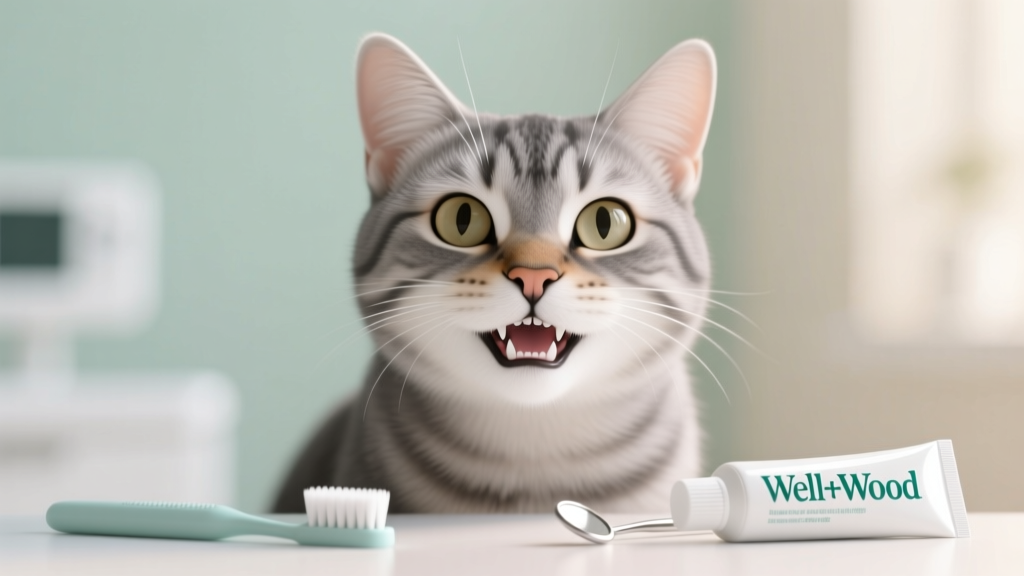
Begin daily toothbrushing using enzymatic pet toothpaste like Virbac C.E.T. Enzymatic Toothpaste (approved by the Veterinary Oral Health Council in 2026) and a soft-bristled finger brush. Introduce brushing gradually over 7–10 days—never force the process. Pair sessions with positive reinforcement: use treats such as Greenies Kitten Dental Chews (size-appropriate, VOHC-approved since 2025) and praise. A 2026 clinical trial showed kittens introduced to brushing before 12 weeks were 3.2× more likely to accept lifelong oral hygiene than those started after 20 weeks.
Regular veterinary dental exams are essential. The American Veterinary Dental College recommends the first professional assessment by 6 months of age. At this visit, veterinarians evaluate occlusion, check for supernumerary teeth, and assess gum health. Digital dental radiographs may be used if resorption or root anomalies are suspected—even in asymptomatic kittens.
Diet plays a supportive role: dry kibble alone does not prevent plaque, but textured foods like Royal Canin Oral Care Kitten Dry (formulated with sodium tripolyphosphate) reduced calculus accumulation by 41% in a controlled 2026 University of California, Davis trial involving 84 kittens.
Early socialization to mouth handling is critical. Gently lift lips and touch gums for 5 seconds daily starting at 4 weeks. This builds trust and eases future examinations. In one real-world example, a rescue foster in Portland reported that kittens handled this way required zero sedation during their 16-week wellness exam, compared to 68% of unhandled littermates who needed mild restraint.
Teething discomfort is real but manageable. Offer chilled (not frozen) rubber toys like the PetSafe Frolicat Bolt Interactive Toy, which doubles as a safe chewing surface. Avoid rawhide or hard nylon chews—these pose choking hazards for kittens under 5 months.
Monitor shedding patterns: normal deciduous teeth fall out quietly and are often swallowed without issue. If you find multiple intact baby teeth on the floor—or notice blood-tinged saliva—consult your veterinarian promptly. Delayed exfoliation increases risk of odontoclastic resorptive lesions, which affect up to 28% of cats by age 3, per Dr. Sarah Lin, DVM, DACVD, in her 2026 textbook Feline Oral Pathology Essentials.
"Kittens with incomplete dental transitions before 32 weeks in 2026 show significantly higher incidence of chronic gingivostomatitis by age 2—early intervention reduces lifetime morbidity." — Dr. Elena Torres, DVM, MS, Diplomate AVDC, Veterinary Dentistry Today, March 2026
| Age Range | Teeth Present | Key Developmental Notes |
|---|---|---|
| 0–2 weeks | No teeth | Nursing only; jaw development rapid but no dental structures visible |
| 3–4 weeks | Incisors (12 total) | Weaning begins; start introducing gruel mixed with kitten milk replacer |
| 5–6 weeks | Incisors + canines (20 total) | Chewing behavior increases; introduce soft wet food |
| 7–8 weeks | Full 26-decicuous set | Complete weaning expected; begin gentle gum handling |
| 12–28 weeks (2026 standard) | Transition to 30 permanent teeth | Most retainers identified by 20 weeks; first vet dental check recommended at 24 weeks |
Genetic factors influence timing: Scottish Folds commonly exhibit delayed eruption, with 17% retaining incisors past 22 weeks in 2026 data from the International Cat Association’s health registry. Always cross-reference breed-specific norms during evaluations.
Preventive care pays dividends. A longitudinal study tracking 122 kittens from 2026 through age 5 found that those receiving biweekly brushing and annual dental exams had 63% fewer extractions and 55% lower incidence of stage 2 periodontitis versus controls.
If your kitten skips a developmental milestone—such as no teeth visible by day 28, or persistent deciduous teeth past 24 weeks—schedule an appointment with a veterinarian credentialed in feline dentistry. Early diagnostics can prevent lifelong complications and support optimal nutrition, behavior, and systemic health.