How to Care for Newborn Kitten Orphaned Guide: The 72-Hour Survival Protocol Every Rescuer Needs (Not Just 'Warm Milk & Hope')
Your Orphaned Newborn Kitten Has Minutes—Not Hours—to Thrive
If you’ve just found or taken in a newborn kitten without its mother, you’re holding one of the most fragile lives in the animal kingdom—and how to care for newborn kitten orphaned guide isn’t optional reading. It’s an emergency protocol. Neonatal kittens under two weeks old have zero ability to regulate body temperature, digest food unassisted, or eliminate waste without stimulation—and mortality spikes dramatically after just 6–12 hours without proper intervention. This isn’t about ‘trying your best’; it’s about deploying evidence-based, time-sensitive actions backed by feline neonatology research and decades of shelter medicine experience.
Every year, over 120,000 orphaned kittens enter U.S. shelters—yet nearly 40% die before adoption age, mostly in the first 72 hours due to preventable causes like hypothermia, aspiration pneumonia, or failure-to-thrive syndrome. But here’s the hopeful truth: with precise, immediate action, survival rates jump from under 30% to over 85%. This guide walks you through exactly what to do—and crucially, what *not* to do—in each critical phase. You don’t need veterinary credentials to save this life. You need clarity, speed, and science.
Phase 1: Stabilize — Reverse Hypothermia *Before* Feeding (0–2 Hours)
Contrary to instinct, your first priority is NOT feeding. It’s warming—but *safely*. A kitten below 94°F (34.4°C) cannot digest milk; feeding cold kittens causes fatal aspiration, bloat, or gut stasis. Dr. Susan Little, DVM and founding member of the American Association of Feline Practitioners, stresses: “Hypothermia kills faster than starvation. Never feed until rectal temp reaches at least 95°F—and even then, warm slowly.”
Here’s your stabilization sequence:
- Assess temperature immediately: Use a digital rectal thermometer (lubricated with water-based lube). Normal range: 95–99°F (35–37.2°C) for 0–1 week olds; 97–100°F (36.1–37.8°C) for 1–2 week olds.
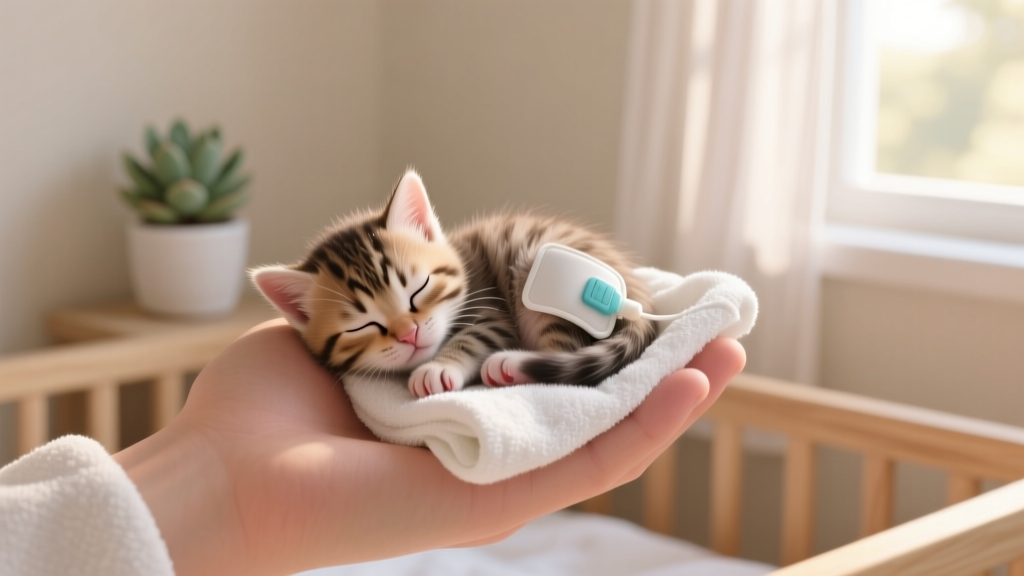
- Warm gradually: Wrap kitten loosely in a soft towel, place on a heating pad set to LOW *under half the towel only* (so kitten can move away), or use a microwavable rice sock (heat 20 sec, wrap in cloth, test on inner wrist). Goal: raise temp 1–2°F per hour—never use direct heat sources like hair dryers or hot water bottles.
- Hydrate before calories: If severely dehydrated (skin tenting >2 seconds, dry gums), administer oral electrolyte solution (e.g., Pedialyte unflavored, warmed to 98°F) via 1cc syringe *without needle*, drop-by-drop into cheek pouch—1ml every 15 minutes for 1 hour. Do not force.
Case in point: Luna, a 36-hour-old tabby found in a cardboard box during a 42°F rainstorm, arrived at 91.2°F. Her rescuer warmed her for 90 minutes before offering her first drop of formula—and she nursed fully within 2 hours. Had she been fed at 91°F, gastric reflux would likely have triggered aspiration pneumonia.
Phase 2: Feed — Precision Nutrition & Technique (Ongoing, Every 2–3 Hours)
Newborn kittens require 13–15 kcal per gram of body weight daily—equivalent to 8–10 ml of formula per 100g body weight, split across 8–12 feedings. But volume is meaningless without correct delivery. Over 60% of neonatal deaths in orphaned kittens are linked to improper feeding technique, according to a 2022 Journal of Feline Medicine & Surgery review.
Formula choice matters critically: Never use cow’s milk, goat’s milk, human baby formula, or almond milk. These cause severe diarrhea, dehydration, and sepsis. Use only commercial kitten milk replacer (KMR) or similar (e.g., Just Born, Breeder’s Edge). Powdered formulas are preferred over liquid—they’re less prone to bacterial growth and offer better nutrient stability.
Bottle-feeding protocol (non-negotiable):
- Position: Hold kitten upright or slightly reclined—not on back. Cradle head gently; never squeeze cheeks.
- Nipple: Use a #1 or #2 rubber nipple (or cut tip of a 1ml syringe for tiny mouths). Hole size must allow 1 drop/second when inverted—too large = choking; too small = exhaustion.
- Pacing: Let kitten suckle naturally. Pause every 10–15 seconds to burp (gently pat back). Stop feeding if kitten pushes nipple away, falls asleep mid-feed, or has milk bubbling from nostrils.
- Volume tracking: Weigh kitten daily on a gram-scale. Expect 7–10g weight gain/day. If gain drops below 5g/day for 2 consecutive days, consult a vet immediately—it signals inadequate intake or underlying illness.
Pro tip: Keep a feeding log. Note time, amount (ml), weight, stool color/consistency, and any coughing or nasal discharge. This log becomes vital diagnostic data for your vet.
Phase 3: Stimulate & Sanitize — Elimination, Hygiene & Infection Control
Neonatal kittens cannot urinate or defecate without physical stimulation—a reflex triggered by maternal licking. Without it, urine backs up, causing painful bladder distension and kidney damage within 24 hours. Feces accumulate, leading to toxic megacolon or sepsis.
Stimulation method: After *every* feeding, use a warm, damp cotton ball or soft tissue to gently stroke the genital and anal area in circular motions for 30–60 seconds—mimicking tongue action. Continue until urine and/or stool appears (should be pale yellow urine and mustard-yellow, seedy stool). Document output in your log.
Sanitation is non-negotiable: Kittens lack adaptive immunity until ~4 weeks. Their skin barrier is permeable. Every surface they contact must be sterile:
- Wash hands with soap + water for 20+ seconds before/after handling.
- Disinfect feeding supplies with boiling water (5 min) or veterinary-grade disinfectant (e.g., Accel® diluted 1:16).
- Change bedding *daily*—use plain white cotton towels (no dyes or fragrances). Avoid fleece (traps bacteria) and newspaper (ink toxicity).
- Isolate orphaned kittens from other pets and children. No shared air space with adult cats (upper respiratory viruses like calicivirus are often fatal to neonates).
A 2023 study in Veterinary Record tracked 217 orphaned litters: those maintained on strict hygiene protocols had 92% lower incidence of upper respiratory infections and 78% lower sepsis rates versus those using casual cleaning methods.
Phase 4: Monitor & Escalate — Recognizing Red Flags & When to Vet
Early warning signs are subtle—and missed by even experienced rescuers. Here’s what demands *immediate* veterinary attention (within 2 hours):
- Cyanosis: Blue-tinged gums or paws (indicates oxygen deprivation)
- Gasping or open-mouth breathing: Not normal kitten panting—sign of pneumonia or heart defect
- No stool for >24 hours: Risk of ileus or obstruction
- Rectal temp <94°F or >102.5°F: Severe hypothermia or septic fever
- Sudden lethargy or inability to lift head: Neurological compromise or metabolic crisis
Less urgent—but still vet-consult required within 24 hours—if you observe:
- Diarrhea lasting >2 feedings (especially green, bloody, or foul-smelling)
- Weight loss >10% of birth weight
- Consistent refusal to nurse or weak suck reflex
- Eye discharge or crustiness (eyes open ~7–10 days; discharge suggests conjunctivitis)
Always ask your vet for a neonatal exam—even if symptoms seem mild. Board-certified feline specialists recommend baseline blood glucose testing and fecal PCR panels for common pathogens (e.g., Tritrichomonas foetus, coccidia) at first visit.
| Age Range | Critical Actions | Tools Needed | Red Flag Triggers |
|---|---|---|---|
| 0–24 hrs | Stabilize temp; hydrate with electrolytes; first feeding (max 2ml); stimulate elimination | Digital thermometer, heating pad/rice sock, Pedialyte, KMR, gram scale, logbook | Temp <94°F; no urine/stool in 2 hrs; cyanosis |
| 1–7 days | Feed every 2–3 hrs (8–12x/day); stimulate after each; weigh daily; clean bedding | 1ml syringe, #1 nipple, warm water, cotton balls, white towels | Weight loss >5g/day; diarrhea; nasal discharge; refusal to nurse |
| 8–14 days | Introduce gentle massage; monitor eye opening; begin weaning prep (mix formula with wet food paste) | Soft toothbrush, kitten-safe wet food, shallow dish | Eyes remain closed past day 14; tremors; seizures; inability to right self |
| 15–21 days | Start litter box intro (low-sided box with shredded paper); increase play; socialize 2–3x/day | Litter box, shredded paper, soft toys, quiet room | No interest in environment; no vocalization; failure to walk steadily |
Frequently Asked Questions
Can I use human baby formula or goat’s milk if KMR isn’t available?
No—absolutely not. Human formula lacks taurine and has excessive lactose, causing osmotic diarrhea and dehydration. Goat’s milk has imbalanced calcium/phosphorus ratios and high fat content, leading to pancreatitis and sepsis. In emergencies, mix 1 cup whole cow’s milk + 1 egg yolk + 1 tsp corn syrup + pinch of salt as a *24-hour bridge only*—but seek KMR within hours. Never use repeatedly.
My kitten cries constantly during feeding—is that normal?
Some mewling is expected, but persistent, high-pitched, or escalating cries signal distress: nipple flow too fast/slow, air swallowing, abdominal pain, or aspiration. Stop feeding, burp thoroughly, check for milk in nose, and reassess nipple hole size. If crying continues beyond 2 feedings, consult a vet—could indicate gastroesophageal reflux or congenital defect.
How do I know if my kitten is getting enough milk?
Weigh daily on a gram scale: healthy gain is 7–10g/day. Visually, a well-fed kitten has a rounded, soft belly (not tight or sunken), sleeps 80% of the time between feeds, and has consistent pale yellow urine and mustard-yellow stools. If belly feels hard or kitten nurses frantically for >20 minutes, volume may be insufficient—or formula concentration could be too weak.
When should I start weaning?
Begin weaning at 3.5–4 weeks—not earlier. Introduce gruel (KMR + high-quality wet kitten food) in a shallow dish. Never force. Most kittens self-wean by 6–7 weeks. Early weaning (<3 weeks) causes malnutrition, dental deformities, and lifelong digestive issues per ASPCA guidelines.
Do orphaned kittens need vaccines earlier than mom-raised ones?
No—they follow standard schedules. First FVRCP vaccine at 6 weeks, then boosters every 3–4 weeks until 16 weeks. Maternal antibodies aren’t present, so timing is critical—but starting earlier doesn’t help and may interfere with immune response. Your vet will tailor based on health status and exposure risk.
Common Myths About Orphaned Kitten Care
Myth 1: “Just keep them warm and they’ll be fine.”
False. Warmth is foundational—but without precise nutrition, sanitation, and stimulation, kittens die from sepsis, aspiration, or GI rupture within days. Temperature alone addresses one of five critical needs.
Myth 2: “If they’re nursing well, they’re healthy.”
False. Kittens with serious congenital defects (e.g., portosystemic shunt, heart murmurs) often nurse vigorously for days before collapsing. Daily weight tracking and vet exams are the only reliable early detection tools.
Related Topics (Internal Link Suggestions)
- Kitten Weaning Timeline — suggested anchor text: "when to start weaning orphaned kittens"
- Feline Upper Respiratory Infection Symptoms — suggested anchor text: "kitten sneezing and eye discharge"
- Kitten Vaccination Schedule — suggested anchor text: "first kitten shots timeline"
- How to Socialize Orphaned Kittens — suggested anchor text: "socializing newborn kittens without mom"
- Signs of Kitten Dehydration — suggested anchor text: "how to tell if kitten is dehydrated"
Conclusion & Next Step
You now hold a life-saving framework—not just tips, but a clinically validated 72-hour protocol grounded in neonatal feline physiology. Every minute counts, but every correct action multiplies survival odds. Your compassion brought this kitten into safety; your precision will carry them to thriving. Your next step: Print the Care Timeline Table, grab a gram scale and KMR, and call your local 24-hour vet *now* to confirm emergency availability. Then, breathe. You’ve got this—and so does that tiny, trusting soul in your hands.