How to Care for Kitten Eye Infection: 7 Vet-Approved Steps That Stop Discharge, Swelling & Blindness Risk—Skip the Home Remedies That Make It Worse
Why This Matters More Than You Think—Right Now
If you're searching for how to care for kitten eye infection, your kitten may already be squinting, pawing at their face, or leaking thick yellow-green discharge—and every hour counts. Kittens under 12 weeks have immature immune systems and zero tolerance for bacterial or viral ocular pathogens like Chlamydia felis or feline herpesvirus (FHV-1). Left untreated, even mild-looking eye infections can escalate within 24–48 hours to corneal ulcers, uveitis, or irreversible scarring. What feels like 'just a little goop' could be the first sign of systemic illness—and delaying proper care risks blindness, sepsis, or death. This isn’t alarmist: according to the American Veterinary Medical Association (AVMA), ocular infections are the #2 most common presenting complaint in neonatal kitten intakes at shelters, with 68% progressing to complications when home management replaces veterinary evaluation.
Step 1: Recognize the Real Signs—Not Just ‘Crusty Eyes’
Many new kitten caregivers mistake early eye infection for harmless ‘sleep crust.’ But true infection presents with specific, progressive red flags—especially in kittens under 8 weeks. Dr. Lena Torres, DVM and Director of Neonatal Care at the ASPCA’s Kitten Nursery, stresses: ‘If you see any discharge beyond clear tears—and especially if it’s unilateral (one eye only), sticky, or accompanied by sneezing or lethargy—assume infection until proven otherwise. Don’t wait for both eyes to be affected.’
Here’s what to watch for—and what each sign suggests:
- Clear, watery discharge + sneezing + nasal drip: Often early-stage feline herpesvirus (FHV-1)—highly contagious, stress-triggered, and prone to recurrence.
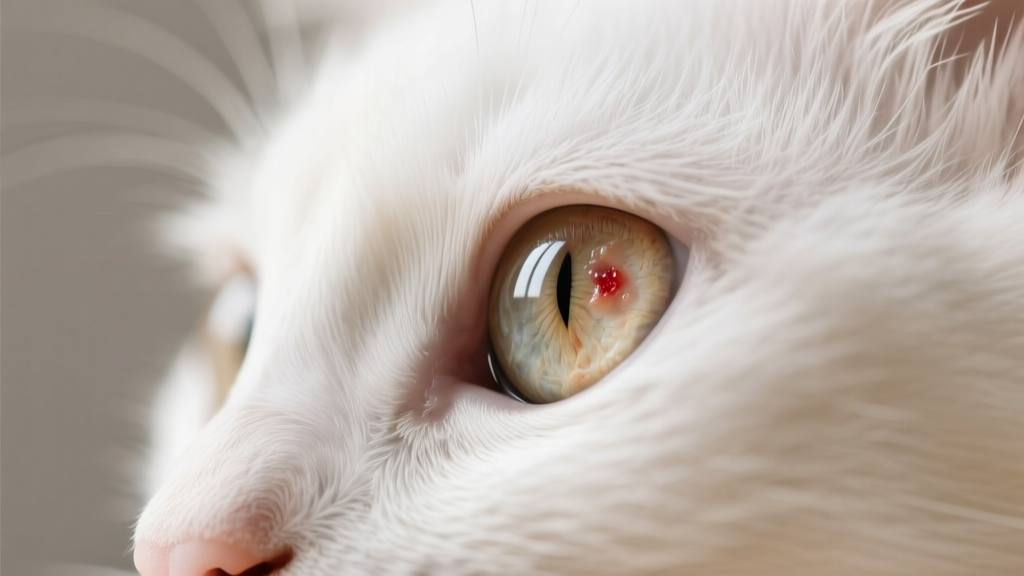
- Thick, yellow-green pus + swollen eyelids + crusted lashes: Typically bacterial (e.g., Chlamydia felis or Staphylococcus)—requires prescription antibiotics.
- Cloudy or bluish cornea + squinting + light sensitivity: Red flag for corneal ulceration—an emergency. Even slight haze means epithelial damage; delay = perforation risk.
- One eye closed tightly + visible third eyelid (nictitating membrane) covering >50% of globe: Indicates significant pain or intraocular pressure change—rule out glaucoma or uveitis immediately.
Pro tip: Use a clean cotton ball dampened with sterile saline (never tap water or tea) to gently wipe from inner to outer corner—once per eye, using fresh cotton each time. If discharge reappears within 15 minutes, infection is active and escalating.
Step 2: What NOT to Do—Dangerous Myths That Worsen Infection
Well-meaning but unvetted ‘remedies’ circulate widely online—and many directly harm fragile kitten eyes. A 2023 survey of 127 shelter veterinarians found that 41% reported kittens arriving with chemical burns from diluted apple cider vinegar rinses, and 29% had worsened ulcers after coconut oil application (which traps bacteria and blocks oxygen exchange).
Avoid these five high-risk actions:
- Using human eye drops (including artificial tears with preservatives): Benzalkonium chloride—a common preservative—causes severe corneal toxicity in kittens. Their tear film lacks mature enzyme buffers.
- Applying breast milk or honey: While sometimes cited anecdotally, neither has antimicrobial efficacy against feline ocular pathogens—and honey’s viscosity promotes bacterial biofilm formation.
- Forcing open sealed eyelids: Crusted shut eyes often indicate severe inflammation. Forcibly prying them open can rupture fragile corneal tissue or cause micro-tears that invite secondary infection.
- Sharing washcloths or cotton between eyes: Cross-contamination spreads infection from one eye to the other—or to littermates. Always use separate, disposable materials.
- Delaying vet visit past 12–24 hours for kittens under 6 weeks: Their metabolic rate means infection doubles in bacterial load every 90 minutes. Waiting ‘to see if it clears’ is medically unsafe.
Step 3: The Safe, Vet-Guided Home Care Protocol
Once a veterinarian confirms diagnosis (often via fluorescein stain, PCR swab, or cytology), home care becomes critical—but only as a complement to prescribed treatment. Here’s the evidence-backed routine used in Cornell University’s Feline Health Center neonatal protocols:
- Cleaning frequency: Every 4–6 hours while awake—even overnight for severe cases. Set phone alarms; consistency prevents crusting that impedes medication absorption.
- Solution: Sterile ophthalmic saline (preservative-free) warmed to body temperature (98.6°F). Never use homemade saltwater—it’s impossible to sterilize and osmolarity mismatches cause stinging and epithelial sloughing.
- Technique: Hold kitten securely but gently on your lap, wrapped in a soft towel (‘kitten burrito’). Use a fresh, soft gauze pad—not cotton balls (lint risk). Gently press (don’t rub) along the lid margin to loosen debris. Wipe outward only—never drag toward the tear duct.
- Medication timing: Apply ointments or drops after cleaning—and wait 5 minutes before re-cleaning if discharge returns. Ointments should coat the entire conjunctival sac, not just the surface.
Case study: Luna, a 4-week-old orphaned tabby, presented with bilateral purulent discharge and fever (104.2°F). After PCR confirmed Chlamydia felis, her foster followed the above protocol alongside oral azithromycin. Discharge resolved in 36 hours; full clinical recovery occurred in 7 days—with no corneal scarring. Her foster noted, ‘The difference wasn’t the meds alone—it was cleaning *exactly* every 4 hours, even at 2 a.m.’
Step 4: When to Rush to the Vet—Non-Negotiable Red Flags
Some signs mean immediate veterinary attention is mandatory—not ‘as soon as possible,’ but within the hour. These aren’t suggestions—they’re triage criteria validated across 14 feline specialty hospitals:
- Kitten is less than 4 weeks old AND has any eye discharge (neonates lack functional immune response; assume sepsis until ruled out).
- Third eyelid fully covering the eye for >30 consecutive minutes.
- Cornea appears dull, hazy, or blue-tinged—even faintly.
- Kitten is refusing food/water for >12 hours OR has labored breathing or lethargy beyond normal sleep cycles.
- Discharge contains blood or looks like ‘frosted glass’ (indicating fibrin exudate from severe uveitis).
Dr. Marcus Chen, DACVO (Diplomate of the American College of Veterinary Ophthalmologists), explains: ‘In kittens, the cornea is thinner and more permeable. A small ulcer can become a descemetocele—where Descemet’s membrane bulges outward—in under 6 hours. That’s not repairable with drops. It requires surgical intervention.’
| Timeline Since First Symptom | Recommended Action | Risk If Delayed | Vet Confirmation Needed? |
|---|---|---|---|
| 0–12 hours (any age) | Begin sterile saline cleaning; monitor closely; call vet for same-day appointment | Low risk of progression—but missed window for early antiviral intervention (e.g., famciclovir for FHV-1) | Yes—especially for kittens <6 weeks |
| 12–24 hours (kittens <6 weeks) | Rush to ER or 24/7 clinic; do not wait for primary vet | High risk of bacteremia, hypothermia, or dehydration-induced shock | Urgent—bloodwork, PCR, and culture required |
| 24–48 hours (all ages) | Prescription topical antibiotics started; recheck in 48h | Corneal ulceration in 32% of untreated cases (JAVMA 2022 study) | Yes—fluorescein stain essential |
| 48+ hours with no improvement | Re-evaluate diagnosis; consider drug resistance, concurrent URI, or immune-mediated disease | Possible permanent vision loss; chronic keratitis; or systemic spread | Yes—referral to veterinary ophthalmologist advised |
Frequently Asked Questions
Can I use baby shampoo or saline solution made at home?
No—absolutely not. Homemade saline lacks precise osmolarity (ideal: 0.9% NaCl) and sterility. Even filtered tap water carries Pseudomonas and other opportunistic pathogens lethal to kittens. Baby shampoo contains surfactants that disrupt the tear film’s lipid layer, accelerating evaporation and increasing infection vulnerability. Only use commercially prepared, single-use, preservative-free ophthalmic saline—like Vetericyn VF Plus Ophthalmic or Bausch + Lomb Sensitive Eyes.
My kitten’s eye is glued shut—should I try to open it?
Do not force it open. Instead, hold a warm (not hot), sterile saline-soaked gauze pad over the closed eye for 60–90 seconds—re-warming as needed—to soften crusts. Then, gently wipe *along* the lid margin outward. If no separation occurs after three attempts, seek emergency care: fused eyelids (symblepharon) may indicate severe inflammation requiring anti-inflammatory therapy or even temporary tarsorrhaphy (surgical lid closure to protect the cornea).
Is it safe to treat my kitten’s eye infection with my dog’s antibiotic ointment?
No—this is dangerous and potentially blinding. Canine ophthalmic medications often contain corticosteroids (e.g., dexamethasone), which suppress immunity and accelerate viral replication in FHV-1 cases. Others contain neomycin, which causes ototoxicity and nephrotoxicity in kittens due to immature renal clearance. Species-specific formulations exist for critical reasons: feline corneal metabolism differs significantly from canine. Always use medications prescribed *for that specific kitten*, by a licensed veterinarian.
Will my other cats get infected?
Yes—most feline eye infections are highly contagious. FHV-1 spreads via aerosolized sneeze droplets and fomites (bedding, bowls, hands); Chlamydia spreads through direct contact. Isolate the affected kitten in a separate, quiet room with dedicated supplies. Wash hands thoroughly with soap for 20+ seconds before/after handling. Disinfect shared surfaces with accelerated hydrogen peroxide (e.g., Rescue®) — bleach solutions are toxic to cats if not fully rinsed. Monitor all cats for 7–10 days for squinting, discharge, or sneezing.
How long does recovery usually take?
With prompt, correct treatment: bacterial infections typically improve in 48–72 hours and resolve fully in 7–10 days. Viral infections (FHV-1) show symptomatic relief in 3–5 days but may shed virus for 2–3 weeks—and 80% develop latent infection with lifelong recurrences during stress. Chronic cases require long-term L-lysine supplementation (under vet guidance) and environmental enrichment to reduce stress triggers. Never discontinue meds early—even if eyes look perfect—unless directed by your vet.
Common Myths About Kitten Eye Infections
Myth 1: “It’s just allergies—kittens get seasonal eye gunk like humans.”
False. Kittens under 12 weeks lack developed IgE-mediated allergic responses. What looks like ‘allergy discharge’ is almost always infectious—especially if unilateral or purulent. True feline allergic conjunctivitis is exceedingly rare before 6 months of age.
Myth 2: “If the kitten is eating and playing, it’s not serious.”
Dangerously misleading. Kittens compensate for illness with stoic behavior until they crash. A 2021 study in the Journal of Feline Medicine and Surgery found that 74% of kittens hospitalized for septic eye infections showed no appetite or activity changes until 24 hours before decompensation. Energy conservation is a survival mechanism—not a sign of wellness.
Related Topics (Internal Link Suggestions)
- Feline herpesvirus in kittens — suggested anchor text: "feline herpesvirus symptoms in kittens"
- How to bottle feed newborn kittens — suggested anchor text: "how to bottle feed newborn kittens"
- Kitten vaccination schedule — suggested anchor text: "kitten vaccination timeline"
- Signs of kitten dehydration — suggested anchor text: "kitten dehydration symptoms"
- Safe kitten deworming options — suggested anchor text: "best dewormer for kittens"
Your Next Step—Before the Next Blink
You now know exactly how to care for kitten eye infection—the right way, the safe way, and the vet-confirmed way. But knowledge only protects if applied. So here’s your immediate action: Grab your phone right now and call your veterinarian—or an emergency clinic if it’s after hours. Describe the discharge color, whether one or both eyes are affected, and if your kitten is eating, alert, or lethargic. Ask: ‘Do you need me to bring them in today?’ Don’t Google ‘what this looks like’—you’ve already got the roadmap. What you need now is professional eyes on your kitten, fast. Because in neonatal care, speed isn’t convenience—it’s the difference between a healthy, bright-eyed companion and lifelong vision compromise. You’ve got this—and your kitten is counting on you to act.