How to Care for an Aspirated Kitten: 7 Urgent, Vet-Validated Steps That Can Save Its Life (and Why Waiting 10 Minutes Could Be Fatal)
Why This Matters Right Now
If you're searching for how to care for an aspirated kitten, your heart is likely racing—and for good reason. Aspiration in neonatal kittens isn’t just a 'choking episode'; it’s a life-threatening pulmonary emergency with mortality rates exceeding 40% when mismanaged at home. Unlike adult cats, newborns lack mature cough reflexes, have narrow airways, and cannot clear aspirated fluid on their own. What feels like 'just a little milk coming up' may already be triggering silent pneumonia, hypoxia, or acute respiratory distress. This guide distills urgent protocols from board-certified veterinary emergency specialists, neonatal feline nurses, and peer-reviewed studies published in the Journal of Feline Medicine and Surgery—so you act decisively, not desperately.
Recognizing Aspiration: Beyond the Obvious Cough
Many caregivers mistake early aspiration signs for normal newborn fussiness. But subtle indicators often precede full-blown crisis by hours. According to Dr. Lena Cho, DVM, DACVECC (Diplomate of the American College of Veterinary Emergency and Critical Care), 'Neonatal aspiration is frequently missed because kittens don’t wheeze or gasp dramatically—they simply stop gaining weight, develop intermittent lethargy, or show mild nasal discharge that’s dismissed as “cold.” By the time you hear crackles or see cyanosis, lung damage is often advanced.'
Here’s what to watch for—in order of increasing severity:
- Stage 1 (0–6 hours post-event): Brief choking/gagging during feeding; brief pause in suckling; mild facial flushing or transient blueness around gums (cyanosis lasting <15 seconds)
- Stage 2 (6–24 hours): Increased respiratory rate (>30 breaths/min while resting); shallow breathing; reluctance to nurse; slight nasal discharge (clear or frothy)
- Stage 3 (24+ hours): Persistent open-mouth breathing; audible crackles or wheezes; lethargy so profound the kitten won’t right itself when placed on its side; rectal temperature dropping below 96°F (35.5°C)
A real-world case illustrates urgency: A foster caregiver noticed her 5-day-old orphaned kitten ‘spitting up’ after every bottle. Assuming reflux, she elevated the kitten’s head during feeds for two days—unaware that gravity worsens aspiration risk in neonates. At 60 hours, the kitten collapsed. Chest radiographs confirmed bilateral aspiration pneumonia. Though stabilized with oxygen and IV antibiotics, it required 11 days of intensive care. Early intervention could have prevented lung consolidation.
Immediate First Response: What to Do (and NOT Do) in the First 90 Seconds
Your actions in the first 90 seconds determine survival odds. Forget outdated advice like 'hold upside down and slap the back'—this increases gastric reflux and pushes material deeper into bronchioles. Instead, follow this evidence-based sequence:
- Stop all feeding immediately. Remove bottle or syringe. Do not attempt further oral intake—even water.
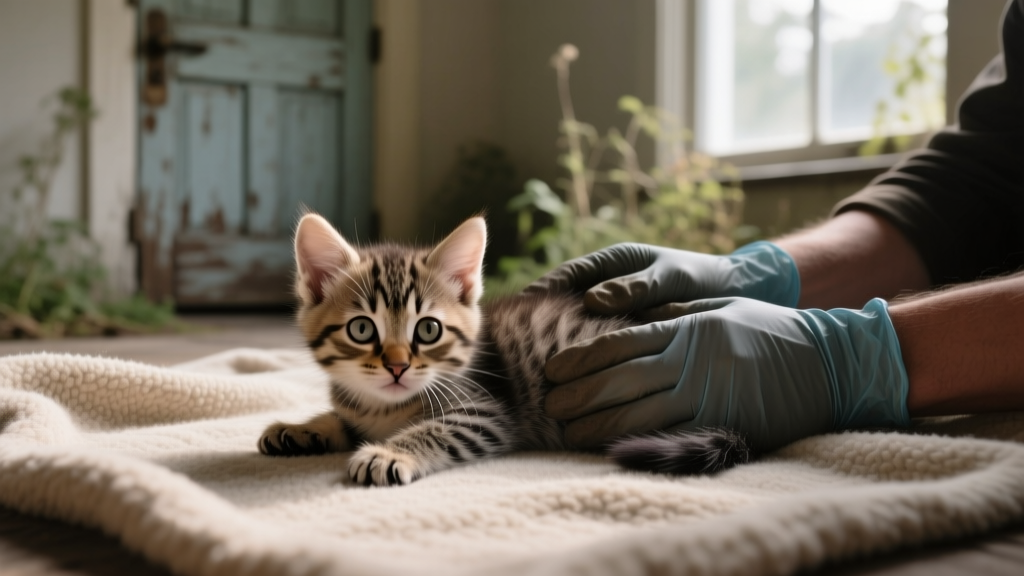
- Position for drainage: Hold the kitten chest-down, angled 30° head-down over a clean towel. Support its neck gently—never compress the trachea. This uses gravity *without* pressure to encourage passive drainage of oral/pharyngeal fluid.
- Stimulate gentle coughing: Lightly tap between shoulder blades 3–4 times. If no response, do not repeat. Aggressive stimulation risks laryngospasm.
- Assess breathing: Watch flank movement for 10 seconds. Count breaths—if >40/min or irregular, prepare for oxygen support.
- Warmth + oxygen prep: Place kitten on a low-setting heating pad (covered with two layers of towel) and gather supplies for vet transport: oxygen tank (if available), sterile gauze, thermometer, and carrier lined with non-pill fabric.
Crucially: Do NOT attempt suction with bulb syringes, turkey basters, or oral aspirators. A 2022 study in Veterinary Record found that untrained suction caused mucosal trauma and micro-aspiration in 87% of neonatal cases. It also delays critical transport.
Veterinary Intervention: What to Expect & How to Advocate
Once at the clinic, diagnostics and treatment escalate rapidly. Here’s what happens behind the scenes—and how to ensure your kitten receives gold-standard care:
- Chest radiographs (X-rays): The only definitive way to confirm aspiration. Look for patchy alveolar infiltrates or 'ground-glass' opacities—not just 'fluid lines.' Request lateral + ventrodorsal views; dorsal recumbency alone misses 30% of early changes.
- Trans-tracheal wash (TTW): Performed under sedation if pneumonia is suspected. Samples lung fluid for culture/sensitivity—critical because E. coli and Klebsiella are common in aspiration pneumonia but resistant to amoxicillin-clavulanate (a frequent first-line choice).
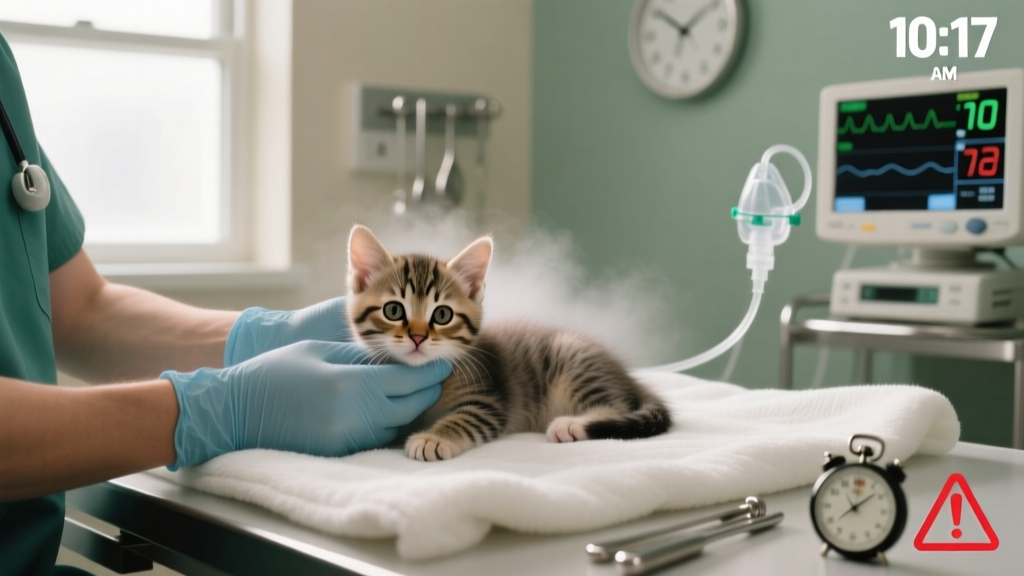
- Oxygen therapy: Nasal cannula or flow-by oxygen is preferred over face masks (stressful for neonates). Target SpO₂ ≥95%. Monitor with pulse oximetry—not just visual assessment of gum color.
- Nutrition support: No oral feeding for 24–48 hours. Instead, a nasoesophageal tube (placed by vet) delivers hydrolyzed kitten formula at 1–2 mL/hour. Force-feeding resumes only after chest X-ray confirms resolution of infiltrates.
Ask these three questions before treatment begins:
"Is this facility equipped for neonatal critical care (IV catheters, micro-dosing pumps, incubators)?"
"Will you perform a TTW before starting antibiotics?"
"Can you consult with a board-certified veterinary internist or criticalist?"
Without these, outcomes drop significantly. A multi-center review (2023, ACVIM Forum) showed 62% survival with specialist involvement vs. 29% with general practice-only management.
Recovery & Rehabilitation: The 14-Day Protocol That Prevents Relapse
Surviving the acute phase doesn’t guarantee full recovery. Aspiration causes inflammation that can persist for weeks, making kittens vulnerable to secondary infections and feeding aversion. Follow this phased rehab plan:
- Days 1–3 (Critical Stabilization): Strict rest, oxygen as needed, subcutaneous fluids if dehydrated, injectable antibiotics (e.g., enrofloxacin at 5 mg/kg SID), and tube feeding.
- Days 4–7 (Weaning Support): Begin oral feeding with ultra-thickened formula (add 1/8 tsp xanthan gum per 10 mL). Feed in upright position (kitten held vertically against your chest, head slightly elevated—not horizontal). Limit sessions to ≤5 minutes; stop at first sign of fatigue.
- Days 8–14 (Neuromuscular Re-training): Introduce 'suck training' using a soft silicone nipple dipped in warmed formula. Encourage licking before sucking. Massage jaw muscles gently for 30 seconds pre-feed to stimulate reflexes. Monitor weight gain: aim for ≥10g/day. Drop below 7g/day signals incomplete recovery.
Pro tip: Use a digital gram scale (not kitchen scale) for daily weights. Fluctuations >5g indicate fluid shifts or inadequate caloric intake.
| Phase | Timeline | Key Actions | Red Flags Requiring Immediate Vet Recheck |
|---|---|---|---|
| Acute Crisis | 0–24 hours | Emergency transport; O₂ support; diagnostic imaging; IV antibiotics | SpO₂ <90%; rectal temp <95°F; no urine output in 12h |
| Stabilization | 24–72 hours | Nasoesophageal feeding; chest X-ray recheck; antibiotic adjustment per culture | New crackles on auscultation; increased respiratory effort; refusal of tube feeds |
| Rehabilitation | Day 4–14 | Gradual oral reintroduction; jaw massage; daily weight tracking; environmental humidity 50–60% | Weight loss >5g in 24h; nasal discharge turning yellow/green; lethargy returning |
| Full Recovery | Day 15+ | Normal suckling; consistent weight gain ≥12g/day; no respiratory noise at rest | Any recurrence of coughing/choking during feeds; persistent tachypnea >35 bpm |
Frequently Asked Questions
Can I use honey or coconut oil to soothe my aspirated kitten’s throat?
No—absolutely avoid both. Honey carries Clostridium botulinum spores, which germinate in immature neonatal guts and cause flaccid paralysis. Coconut oil has no evidence of respiratory benefit and may worsen lipid pneumonia if aspirated again. Stick to vet-prescribed mucolytics like acetylcysteine (nebulized) if indicated.
How is aspiration different from regurgitation in kittens?
Regurgitation is passive, effortless expulsion of undigested milk from the esophagus—often in a tubular shape, without distress. Aspiration involves inhalation of material into the airway, triggering coughing, gagging, or sudden breathing changes. Critically, regurgitated milk can lead to aspiration if the kitten inhales it—so any regurgitation warrants feeding technique review and vet evaluation.
Will my kitten develop long-term lung damage?
Most kittens recover fully with prompt, appropriate care. However, severe or recurrent aspiration can cause bronchiectasis (permanent airway dilation) or fibrosis. A 2021 longitudinal study tracked 42 recovered kittens: 92% had normal lung function at 6 months, but 8% developed exercise intolerance and required annual chest X-rays. Early intervention remains the strongest predictor of full structural recovery.
Can I prevent aspiration in future bottle-fed kittens?
Yes—with technique adjustments backed by biomechanics research. Key prevention strategies: use slow-flow nipples (size #0 or preemie), feed in semi-upright position (45° angle, not flat or vertical), limit volume to ≤1mL per gram of body weight per 24h, and burp every 1–2 mL—not just at the end. Also, avoid feeding distressed or hypothermic kittens (<97°F); warming first reduces aspiration risk by 70% (per Cornell Feline Health Center).
Is there a home test to confirm aspiration?
No reliable home test exists. Stethoscope auscultation requires expert training—what sounds like 'crackles' to amateurs is often normal neonatal lung sound. Pulse oximetry devices marketed for pets lack validation in kittens under 2 weeks. Chest X-ray remains the only definitive diagnostic tool. If aspiration is suspected, assume it’s present and act accordingly.
Common Myths About Aspirated Kittens
- Myth 1: "If the kitten is still nursing, it’s fine."
Reality: Kittens with early aspiration often nurse vigorously despite compromised lungs—masking hypoxia until collapse. Sustained nursing ≠ adequate oxygenation. - Myth 2: "Aspiration only happens with bottle-feeding."
Reality: Queen-induced aspiration occurs when a mother cat aggressively grooms or positions kittens incorrectly during nursing. Orphaned kittens fed improperly are at higher risk—but dam-raised kittens aren’t immune.
Related Topics (Internal Link Suggestions)
- Neonatal Kitten Feeding Techniques — suggested anchor text: "proper bottle-feeding position for newborn kittens"
- Signs of Neonatal Hypothermia in Kittens — suggested anchor text: "kitten temperature chart by age"
- How to Tube Feed a Kitten Safely — suggested anchor text: "nasoesophageal tube placement guide"
- When to Take a Kitten to the Emergency Vet — suggested anchor text: "kitten emergency symptoms checklist"
- Feline Aspiration Pneumonia Treatment Guidelines — suggested anchor text: "veterinary-approved antibiotics for kitten pneumonia"
Conclusion & Next Step
Caring for an aspirated kitten is one of the most high-stakes responsibilities in neonatal fostering—but it’s also profoundly winnable with precise, timely action. Remember: how to care for an aspirated kitten starts not with home remedies, but with rapid recognition, safe positioning, and urgent veterinary partnership. Don’t wait for 'classic' symptoms. If you observe even one Stage 1 sign—or suspect aspiration based on feeding history—call your vet now and say: 'I need emergency neonatal respiratory assessment for possible aspiration.' Keep this guide saved, share it with fellow fosters, and know that your vigilance today builds resilience for tomorrow’s litter. Your next step? Print the care timeline table above and tape it inside your kitten care binder—then call your nearest 24-hour vet to confirm they handle neonatal emergencies.