How to Care for a Kitten for Stray Cats: The First 72 Hours That Save Lives (Veterinarian-Approved Emergency Protocol You Can Start Tonight)
Why This Isn’t Just ‘Cute’ — It’s Life-or-Death Triage
If you’ve just found a shivering, underweight kitten huddled beneath a porch or tucked in a cardboard box behind a dumpster, you’re holding more than a fragile life—you’re holding a ticking clock. How to care for a kitten for stray cats isn’t about choosing the right toy or naming ceremony; it’s about recognizing that 80% of unassisted stray kittens under 4 weeks old die within their first week due to preventable causes like hypothermia, dehydration, and untreated intestinal parasites (AVMA 2023 Kitten Mortality Report). These aren’t ‘feral cats’ yet—they’re immunocompromised infants with zero immunity, no maternal antibodies, and body temperatures that crash faster than you can warm a bottle. What you do in the next 90 minutes determines whether they live past sunrise.
Phase 1: Stabilize — Warm, Hydrate, Assess (0–2 Hours)
This is triage—not cuddling. Neonatal stray kittens (under 3 weeks) cannot regulate their own body temperature or eliminate waste without stimulation. A rectal temperature below 94°F means immediate risk of cardiac arrest. Do not feed formula yet—cold kittens digest nothing and aspirate easily.
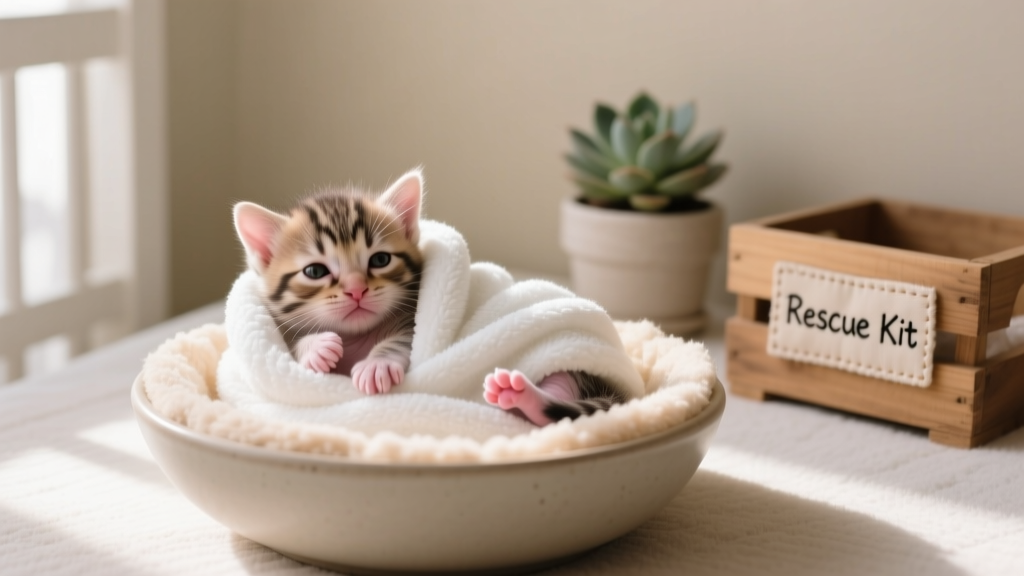
- Warming protocol: Wrap a rice sock (1/2 cup dry rice in a clean sock, microwaved 30 sec, shaken well) in a thin towel. Place it *beside*—not under—the kitten in a small, ventilated box. Monitor temp every 15 min with a digital rectal thermometer (lubricated with water-based lube). Goal: reach 96–99°F before feeding.
- Hydration check: Gently pinch the skin at the scruff. If it stays tented >2 seconds, severe dehydration exists. Subcutaneous fluids (Lactated Ringer’s) may be needed—but only under veterinary guidance. Never force oral fluids if kitten is lethargy or gasping.
- Rapid assessment checklist:
- Is breathing labored or raspy? → Possible upper respiratory infection (URI) — urgent vet visit.
- Are eyes crusted shut or oozing yellow-green? → Likely conjunctivitis — needs topical antibiotics within 12 hours.
- Is there blood or mucus in stool? → Coccidia or hookworms — requires fecal float + species-specific dewormer (not over-the-counter ‘all-wormers’).
Dr. Lena Cho, DVM and Director of the Urban Kitten Rescue Initiative in Chicago, stresses: “Every minute spent warming before feeding saves three minutes of emergency vet time later. I’ve seen 12 kittens rescued in one rainstorm—and 9 survived because volunteers followed this sequence. Skip warming, and you’ll spend $300 on oxygen therapy instead of $12 on a rice sock.”
Phase 2: Feed & Stimulate — Precision Nutrition & Elimination Support
Once stable (temp ≥96°F, alert eyes, rooting reflex), feeding begins—but not with cow’s milk, goat’s milk, or human baby formula. These cause fatal diarrhea and metabolic acidosis in kittens. Use only commercial kitten milk replacer (KMR or Just Born) warmed to 98–100°F—tested on your inner wrist, not fingers.
Feeding frequency depends strictly on age and weight. Underestimating age is common: a kitten with closed eyes and folded ears is ≤10 days old; one walking wobbly but not yet pouncing is ~3 weeks. Weigh daily on a gram-scale (kitchen scale works)—a healthy kitten should gain 10–15g/day. Loss or plateau = red flag.
- Stimulation technique: After every feeding, use a warm, damp cotton ball or soft tissue to gently stroke the genital and anal area in circular motions for 60 seconds—or until urination/defecation occurs. Stop once stool turns from black meconium to yellow-seedy at ~Day 4.
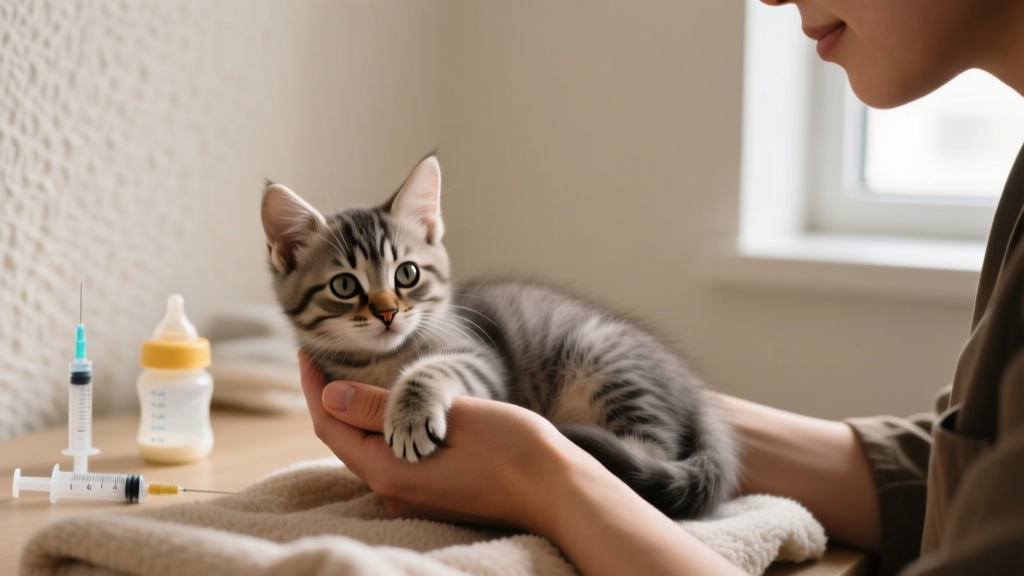
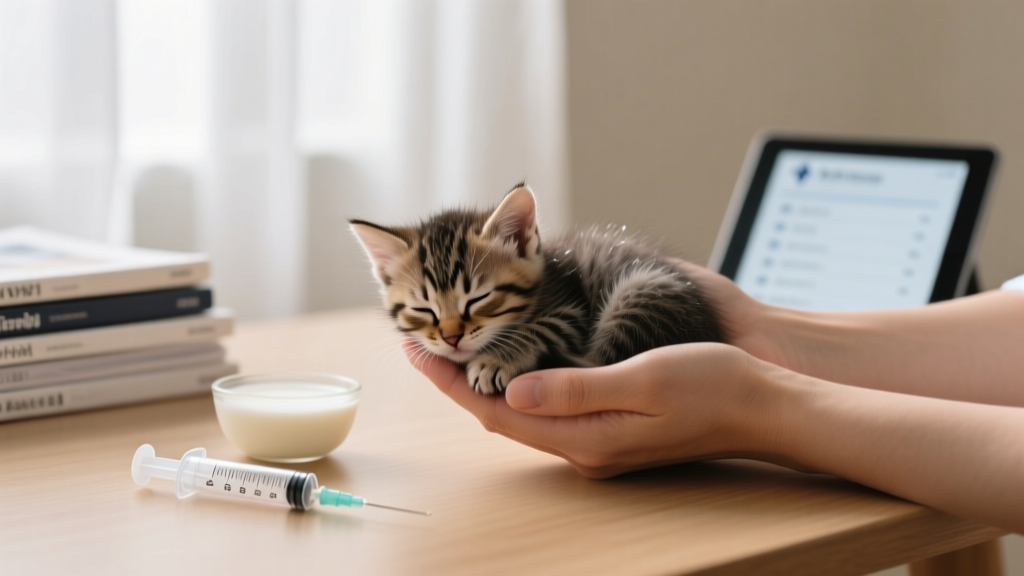
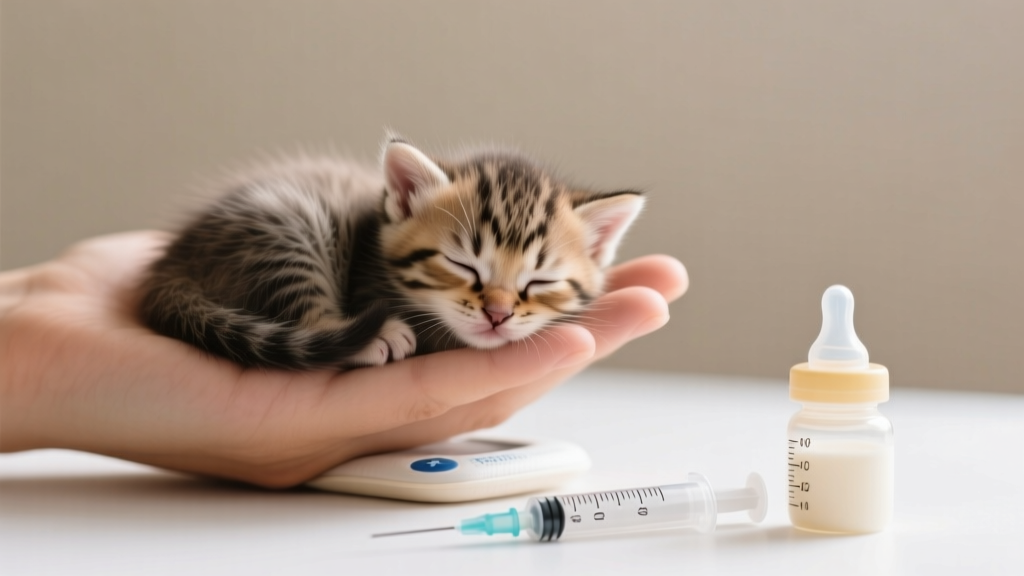
- Bottle vs. syringe: For kittens <100g, use a 1mL tuberculin syringe with a softened tip (dip in warm water 10 sec). Bottle-feeding risks aspiration if flow is too fast. Hold kitten upright—never on back—as you’d hold a human infant.
- Overfeeding danger: Kittens have tiny stomachs (~5–7mL capacity at Day 7). Feed 13mL per 100g body weight per day, split across 8–12 feedings. Overfilling causes bloat, regurgitation, and aspiration pneumonia—the #1 cause of death in hand-reared kittens.
Phase 3: Prevent & Protect — Parasites, Vaccines, and Socialization Windows
Stray kittens carry burdens invisible to the naked eye: roundworms (found in 92% of feral kittens per Cornell Feline Health Center), ear mites, fleas (which transmit tapeworms and Bartonella), and often feline leukemia virus (FeLV) or FIV. But here’s what most guides get dangerously wrong: You cannot vaccinate a sick, parasitized, or underweight kitten—and doing so can trigger immune collapse.
Start with parasite control first. Fenbendazole (Panacur) is safe from Day 2 onward for roundworms and hookworms—dosed at 50mg/kg daily for 3 days, repeated in 2 weeks. For ear mites, use selamectin (Revolution) only after 6 weeks and ≥1.5 lbs—never use ivermectin drops meant for dogs.
Vaccination timing is non-negotiable: First FVRCP (feline distemper combo) at 6 weeks—if weight ≥2 lbs and no fever/diarrhea. Boosters every 3–4 weeks until 16 weeks. Why? Maternal antibodies (even from a stray mom) interfere with vaccine uptake—and that interference window varies wildly. Skipping boosters leaves kittens vulnerable to panleukopenia, which kills 90% of infected kittens under 12 weeks.
Socialization is neurological, not optional. The prime window is 2–7 weeks. Miss it, and even loving care rarely reverses fear-based aggression. Spend 2+ hours daily handling, speaking softly, introducing novel textures (crinkly paper, soft brushes), and supervised play with other gentle kittens. A 2022 UC Davis study showed kittens handled 45+ minutes/day before Week 5 were 3.2x more likely to be adoptable by 12 weeks.
Kitten Care Timeline: Critical Actions by Age
| Age | Key Actions | Tools/Products Needed | Red Flags Requiring Vet |
|---|---|---|---|
| 0–3 days | Warm ONLY (no feeding), assess hydration, stimulate elimination after warmth achieved | Rice sock, digital thermometer, gram scale, sterile cotton balls | No urine/stool in 24h; temp <94°F after 1h warming; gasping |
| 4–14 days | Feed KMR every 2–3h; stimulate before/after each feed; begin gentle handling | KMR powder, 1mL syringes, soft towels, gram scale | Refusing feeds >2x; green/yellow eye discharge; bloody stool |
| 2–4 weeks | Introduce shallow litter box (non-clumping, shredded paper); start weaning to gruel (KMR + wet food); deworm with fenbendazole | Paper-based litter, shallow pan, stainless steel bowl, Panacur | No interest in litter by Day 21; persistent diarrhea >48h; seizures |
| 5–8 weeks | First FVRCP; flea treatment (if ≥1.5 lbs); begin socialization with humans/dogs/cats; transition to solid food | FVRCP vaccine, Revolution, ceramic bowls, interactive toys | Fever >103.5°F post-vaccine; refusal to eat >12h; hiding >4h continuously |
| 9–16 weeks | Second & third FVRCP; FeLV test (if outdoor exposure suspected); spay/neuter consult; adoptability prep | FeLV test kit, vet records, carrier, scratching post | Weight loss >10% in 7 days; coughing >24h; sudden aggression toward hands |
Frequently Asked Questions
Can I foster a stray kitten without taking it to a vet?
Technically yes—but ethically and medically risky. Even asymptomatic kittens carry zoonotic parasites (like Toxocara cati) and high-risk viruses. A baseline exam, fecal float, and FeLV/FIV snap test cost $60–$120 and prevent catastrophic illness outbreaks in your home or shelter. Dr. Aris Thorne, shelter medicine specialist at ASPCA, states: “Skipping intake vetting is like handing out umbrellas during a hurricane and calling it ‘rain preparedness.’”
What if the mother cat returns? Should I separate them?
Yes—but only if the kitten is injured, ill, or abandoned (no mom seen in 12+ hours with kittens under 3 weeks). Otherwise, observe from 20+ feet. If mom appears healthy and attentive, support her: leave food/water nearby, cover the nest with a light tarp for rain protection, and monitor for predators. Intervening unnecessarily disrupts natural immunity transfer and bonding. Document behavior for 6–8 hours before deciding.
Is it safe to use over-the-counter dewormer from pet stores?
No—most OTC products contain pyrantel pamoate, which only kills roundworms and hookworms, missing critical threats like coccidia and giardia common in strays. Worse, incorrect dosing (often based on ‘guess weight’) causes neurotoxicity. Always confirm parasite type via fecal exam first—and use prescription fenbendazole or ponazuril as directed by a vet.
How do I know if a kitten is truly feral or just scared?
Observe body language over 2+ hours: a feral kitten will flatten ears, hiss, back away without blinking, and avoid all eye contact—even when you’re still and silent. A scared but socializable kitten may freeze, then blink slowly, sniff your hand if extended, or approach a toy. Age is key: kittens under 5 weeks almost always socialize successfully with consistent effort. Those over 12 weeks require expert behavior intervention.
Do I need to quarantine a stray kitten from my other pets?
Yes—absolutely. Minimum 14 days in a separate, well-ventilated room with dedicated supplies (bowls, towels, litter). Test for FeLV/FIV and perform fecal exam before integration. Even vaccinated cats can shed pathogens asymptomatically. One 2021 shelter outbreak traced to a single ‘healthy-looking’ stray kitten infected 17 resident cats with calicivirus.
Common Myths Debunked
Myth #1: “Stray kittens don’t need vaccines because they’re ‘tough.’”
Reality: Their toughness is illusionary. Without maternal antibodies (which fade by 6–8 weeks), they have zero defense against panleukopenia—a virus that destroys bone marrow and gut lining in 48 hours. Unvaccinated stray kittens face 90% mortality if exposed.
Myth #2: “If it’s eating and pooping, it’s fine.”
Reality: Kittens compensate silently until 70% of kidney function is lost—or until URI bacteria overwhelm their airways overnight. Subtle signs—slight squinting, reduced suckling vigor, or a 5g weight dip—precede crisis by 12–24 hours. Daily gram-scale weighing is non-negotiable.
Related Topics (Internal Link Suggestions)
- How to tell a kitten’s age accurately — suggested anchor text: "kitten age chart by teeth and eyes"
- Safe deworming schedule for kittens — suggested anchor text: "best kitten dewormer for roundworms and coccidia"
- When to spay or neuter stray kittens — suggested anchor text: "early-age spay neuter safety guidelines"
- DIY kitten milk replacer alternatives — suggested anchor text: "homemade kitten formula recipes (veterinarian-approved)"
- Signs of feline upper respiratory infection — suggested anchor text: "cat cold symptoms and treatment at home"
Your Next Step Starts Now — Not Tomorrow
You’ve just absorbed life-saving protocols used by municipal animal services and rescue coalitions across 23 states. But knowledge without action stays theoretical—and kittens don’t wait for perfect conditions. So tonight, before bed: grab a clean sock, rice, and a thermometer. Search ‘find low-cost spay/neuter near me’ and bookmark one clinic. Text a friend who’s calm under pressure and ask them to be your 2 a.m. backup if breathing slows. Because the truth is simple: how to care for a kitten for stray cats isn’t about perfection—it’s about showing up, warming first, feeding second, and trusting that your hands, guided by science and compassion, are exactly what that tiny, trembling life needs most. Now go check your porch.