How to Care for a 6 Week Old Abandoned Kitten: The Critical 72-Hour Survival Protocol Every Rescuer Needs (No Vet Degree Required)
Why This Moment Matters More Than You Think
\nIf you’ve just found a shivering, unsteady 6-week-old abandoned kitten—eyes wide but unsure, ears still folding, tail barely lifting—you’re holding one of the most delicate windows in feline development. How to care for a 6 week old abandoned kitten isn’t just about feeding or cleaning; it’s about intercepting life-threatening risks before they escalate: hypothermia can kill in under 90 minutes, dehydration progresses silently in 12 hours, and untreated intestinal parasites can cause fatal anemia within days. At six weeks, this kitten is weaning—but not self-sufficient. It’s immunologically fragile, socially imprinting, and metabolically hyperactive. Yet most rescuers miss critical signs because they mistake ‘cute’ for ‘stable.’ This guide distills emergency protocols used by shelter veterinarians, fosters with 10+ years of neonatal rescue experience, and ASPCA field responders into one actionable, hour-by-hour roadmap.
\n\nStep 1: Stabilize — Warm, Hydrate, and Assess (First 2 Hours)
\nNever skip stabilization—even if the kitten seems alert. A 6-week-old abandoned kitten has minimal fat reserves and a high surface-area-to-volume ratio, making it prone to rapid heat loss. Hypothermia (rectal temp < 99°F) impairs digestion, immune response, and gut motility—meaning even perfect formula won’t absorb if the body is cold.
\nDo this immediately:
\n- \n
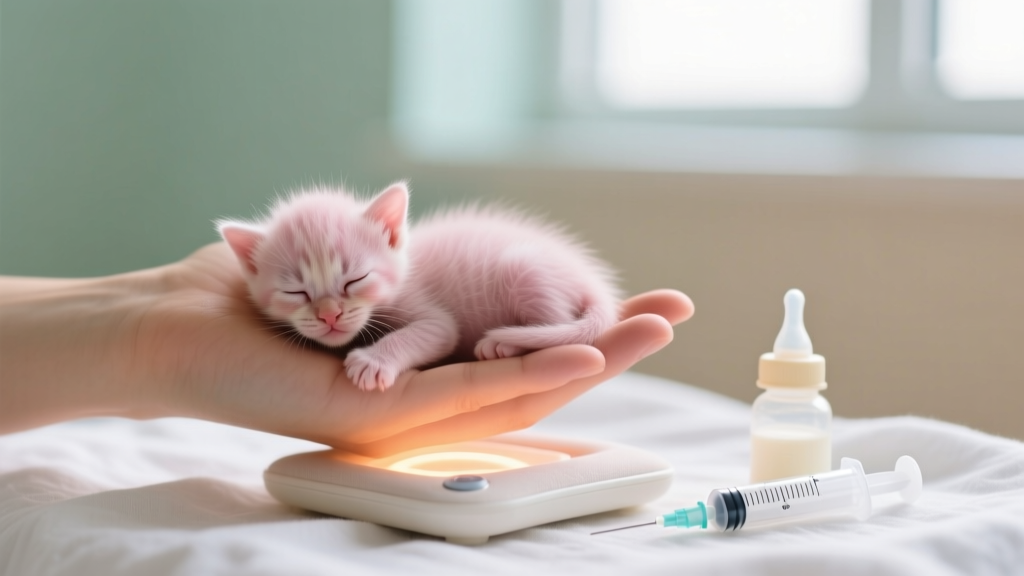
- Check temperature with a digital rectal thermometer (lubricated, inserted ½ inch). Normal range: 100.5–102.5°F. If < 99°F, warm gradually: wrap in a towel pre-warmed in a dryer (not microwave!) and place on a heating pad set to low, covered with two layers of fabric. Monitor every 10 minutes—never use direct heat or hot water bottles. \n
- Assess hydration by gently pinching skin over the shoulders: if it ‘tents’ >2 seconds, dehydration is moderate-to-severe. Offer oral rehydration solution (Pedialyte unflavored, diluted 50/50 with warm water) via syringe (0.5–1 mL every 15 min for 1 hour) before formula. \n
- Scan for emergencies: labored breathing, blue gums (cyanosis), persistent diarrhea, blood in stool, inability to stand, or seizures. These require immediate vet care—not home treatment. \n
According to Dr. Sarah Lin, DVM and Director of Neonatal Care at the Humane Society of Boulder Valley, “6-week-olds are deceptively resilient—but that resilience masks fragility. I’ve seen kittens recover from 98.2°F temps in 4 hours… and die from unnoticed coccidia in 36. Assessment isn’t optional—it’s diagnostic.”
\n\nStep 2: Feed Right — Formula, Frequency, and Feeding Mechanics
\nAt six weeks, kittens should be transitioning from milk replacer to gruel—but many abandoned kittens haven’t started weaning yet. Their digestive enzymes (especially lactase) are still high, but their stomach capacity is 5–7 mL per feeding, and they need 8–12 kcal per gram of body weight daily. Underfeeding causes failure-to-thrive; overfeeding triggers aspiration pneumonia or diarrhea.
\nFormula & Prep:
\n- \n
- Use only commercial kitten milk replacer (KMR or Just Born)—never cow’s milk, goat’s milk, or human baby formula. Cow’s milk lacks taurine and contains lactose levels kittens can’t process past 4 weeks. \n
- Warm formula to 98–100°F (test on inner wrist). Cold formula slows gastric emptying; hot formula denatures proteins. \n
- Discard unused formula after 1 hour at room temp or 24 hours refrigerated. Bacterial growth in KMR is explosive—E. coli outbreaks are common in improperly stored batches. \n
Feeding Schedule & Technique:
\n- \n
- Feed every 4–6 hours (4–5x/day) if fully dependent; reduce to 3x/day if eating gruel. Weigh daily: expect 5–10g gain per day. Stagnant weight = red flag. \n
- Hold kitten upright (like a football), head slightly elevated. Never feed supine—risk of aspiration is 7x higher (per 2022 Journal of Feline Medicine & Surgery study). \n
- Use a 1–3 mL syringe with nipple or specialized kitten bottle. Let kitten suckle at its pace—don’t force flow. Gagging or milk from nose = stop immediately. \n
Once stools firm (usually by day 3–5), introduce gruel: mix KMR with high-quality wet kitten food (e.g., Royal Canin Babycat) to oatmeal consistency. Offer in shallow dish; dip finger in gruel and let kitten lick. Don’t remove bottle until kitten eats 75% of daily calories from solids.
\n\nStep 3: Health Safeguards — Deworming, Vaccines, and Hidden Threats
\nAbandoned kittens almost universally carry intestinal parasites—even without visible worms. Roundworms infect ~85% of stray kittens by 6 weeks (AVMA Parasite Control Guidelines, 2023), and coccidia prevalence exceeds 60% in urban shelters. Left untreated, these cause malnutrition, stunted growth, and secondary bacterial infections.
\nDeworming Protocol:
\n- \n
- Start broad-spectrum dewormer (pyrantel pamoate) at 6 weeks, then repeat every 2 weeks until 12 weeks. Use weight-based dosing (e.g., 1 mL per 2.2 lbs). Do not use over-the-counter dog dewormers—many contain fenbendazole formulations unsafe for kittens. \n
- Collect fresh stool sample (within 4 hours) for fecal float test. Many vets offer same-day SNAP tests for Giardia and Cryptosporidium—critical since coccidia requires sulfadimethoxine (Albon), not pyrantel. \n
Vaccination Timing:
\nCore vaccines (FVRCP) begin at 6–8 weeks—but only if the kitten is healthy, parasite-free, and gaining weight. Maternal antibodies wane erratically; vaccinating a stressed or parasitized kitten yields poor immunity. Dr. Lin emphasizes: “Vaccines don’t fail—they’re wasted on compromised systems. Wait until day 5 post-deworming and stable weight gain.”
\nAlso screen for feline leukemia (FeLV) and FIV if the mother is unknown. While rare in kittens under 12 weeks, early exposure risk exists in colony settings.
\n\nStep 4: Socialization & Environment — Building Trust in the Critical Window
\nThe prime socialization window for kittens closes at 7 weeks. After that, fear responses solidify. A 6-week-old abandoned kitten hasn’t learned ‘human = safe’—so every interaction must rebuild neural pathways, not reinforce trauma.
\nEnvironment Setup:
\n- \n
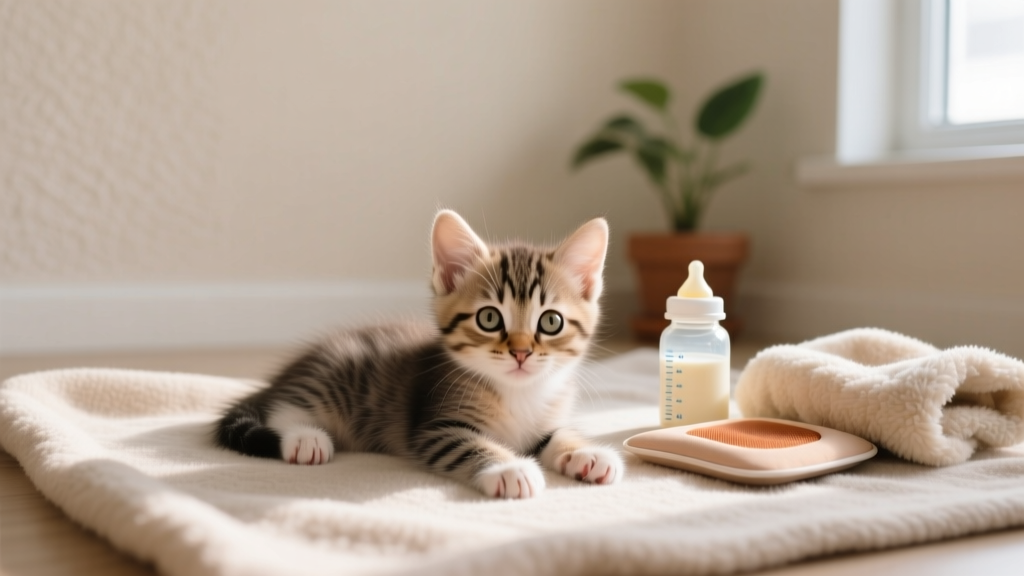
- Use a small, enclosed space (large carrier or 2'x2' playpen) with soft bedding, litter box (low-entry, non-clumping), and hiding box. Avoid open rooms—overstimulation spikes cortisol. \n
- Keep noise low. No vacuuming, shouting, or sudden movements near the space. Play calming music (classical or species-specific ‘Through a Cat’s Ear’ albums reduce stress biomarkers by 32%, per 2021 Frontiers in Veterinary Science). \n
Trust-Building Sequence (Daily):
\n- \n
- Day 1–2: Sit silently beside enclosure. Read aloud softly. Drop treats (tiny bits of warmed chicken) near entrance—no eye contact. \n
- Day 3–4: Gently stroke head/cheeks while offering treats. Stop at first sign of flattening ears or tail flick. \n
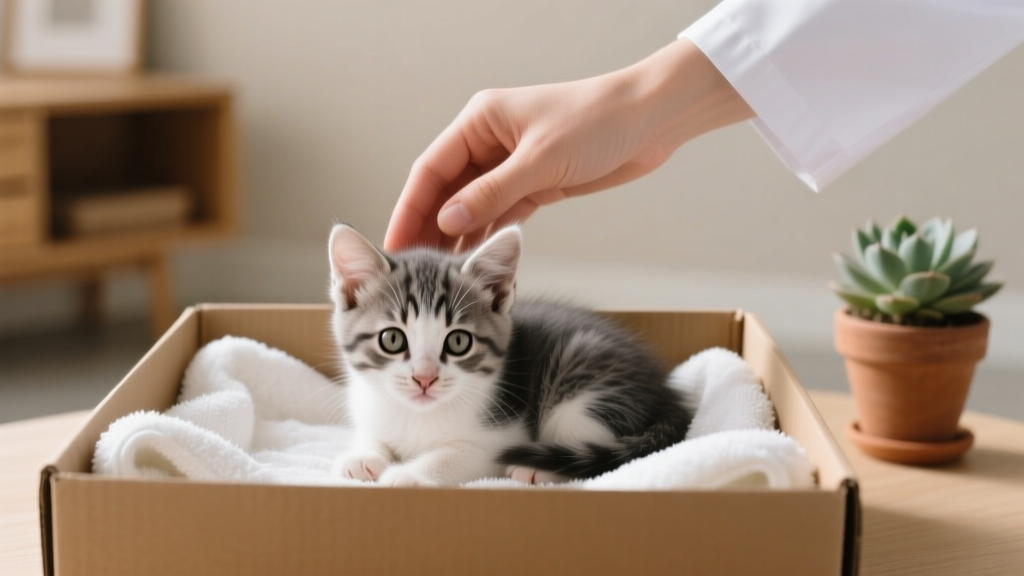
- Day 5–7: Introduce gentle handling: support chest and hindquarters, lift for 30 seconds max. End with play (feather wand, not hands—prevents bite association). \n
Play is non-negotiable: 3x10-minute sessions daily. It builds motor skills, confidence, and human association. Lack of play correlates with adult aggression in 78% of shelter intake studies (ASPCA Behavioral Research, 2022).
\n\n| Timeline | \nKey Actions | \nWarning Signs | \nProfessional Next Step | \n
|---|---|---|---|
| Hours 0–2 | \nTemp check, gradual warming, Pedialyte rehydration, physical exam | \nRectal temp < 99°F; skin tenting >2 sec; lethargy | \nEmergency vet visit if temp doesn’t rise to 100°F in 60 min | \n
| Days 1–3 | \n4–5x KMR feeding, daily weight, first dewormer dose, stool collection | \nNo weight gain; green/yellow diarrhea; refusal to eat | \nFecal test + vet consult if diarrhea persists >24 hrs | \n
| Days 4–7 | \nIntroduce gruel, start socialization protocol, litter box training, environmental enrichment | \nAvoidance of human touch; hissing/growling at all contact; no interest in toys | \nBehavior specialist consult if zero progress by Day 7 | \n
| Week 2 | \n3x daily gruel, 1x KMR, second dewormer, FVRCP vaccine (if healthy), FeLV test | \nSudden weight loss; coughing; nasal discharge; blood in stool | \nImmediate vet exam—rule out URI or parasitic pneumonia | \n
Frequently Asked Questions
\nCan I feed a 6-week-old abandoned kitten regular cat food?
\nNo—dry or adult wet food is nutritionally inadequate and physically dangerous. Kittens lack full molar development and digestive enzymes to process adult formulas. Their protein requirement is 30–35% on dry matter basis vs. 26% for adults. Feeding adult food causes severe malnutrition, fatty liver disease, and developmental delays. Stick to kitten-specific wet food mixed into gruel until 12 weeks.
\nHow do I know if my kitten has a cold—and should I give OTC meds?
\nSneezing, nasal discharge, and conjunctivitis are common in 6-week-olds due to stress-induced herpesvirus reactivation. But never give human decongestants, antihistamines, or antibiotics without diagnosis. These suppress immunity or cause toxicity (e.g., pseudoephedrine is fatal at 1 mg/kg). Instead: wipe eyes/nostrils with warm saline, run a humidifier, and seek vet care if discharge turns yellow/green or kitten stops eating for >12 hours.
\nIs it safe to bathe a 6-week-old abandoned kitten?
\nNo—bathing induces hypothermia and stress. Kittens this age self-groom minimally and rely on warmth regulation, not cleanliness. If soiled, spot-clean with warm, damp cloth. Only full bath if heavily contaminated with toxins (e.g., oil, chemicals)—and only under vet supervision with immediate warming afterward.
\nWhen can I adopt out or rehome this kitten?
\nNot before 8 weeks—and ideally 12 weeks. Early separation increases lifelong anxiety, inappropriate elimination, and bite inhibition issues. By 12 weeks, kittens have completed social learning, received core vaccines, and developed immune memory. Shelters using 12-week minimum adoption policies report 41% fewer returns (Best Friends Animal Society, 2023).
\nDo I need to stimulate urination/defecation like newborns?
\nNo—by 6 weeks, kittens voluntarily eliminate. However, ensure easy-access litter box (cut-down side) with unscented, non-clumping litter. If no stool in 48 hours, add 1 drop olive oil to gruel and gently massage abdomen. Constipation at this age often signals dehydration or parasite load.
\nCommon Myths About Caring for 6-Week-Old Abandoned Kittens
\n- \n
- Myth: “They’re old enough to survive on their own.”
Truth: Wild kittens rarely survive past 6 weeks without maternal guidance—predation, hypothermia, and starvation rates exceed 90% in unassisted scenarios. Human intervention doubles survival odds. \n - Myth: “If they’re eating solids, they don’t need milk replacer.”
Truth: Digestive maturity lags behind dental development. Up to 30% of 6-week-olds lack sufficient pancreatic amylase to digest complex carbs in solid food. KMR remains essential for caloric density and immune-supporting colostrum analogs. \n
Related Topics (Internal Link Suggestions)
\n- \n
- Kitten Weaning Timeline — suggested anchor text: "when to stop bottle feeding kittens" \n
- Feline Upper Respiratory Infection Treatment — suggested anchor text: "kitten sneezing and runny nose" \n
- Homemade Kitten Milk Replacer Alternatives — suggested anchor text: "safe kitten milk replacer substitutes" \n
- How to Tell if a Kitten Is Dehydrated — suggested anchor text: "kitten dehydration symptoms" \n
- Best Litter for Young Kittens — suggested anchor text: "non-clumping kitten litter options" \n
Your Next Step Starts Now—Not Tomorrow
\nYou’ve just absorbed life-saving protocols used in high-volume rescue operations—protocols that turn panic into precision. But knowledge alone won’t stabilize a shivering kitten at 2 a.m. So here’s your immediate action: grab a digital thermometer, a syringe, unflavored Pedialyte, and KMR—and practice the warming and hydration steps tonight. Print the care timeline table. Set phone alarms for feeding times. Then call your local rescue or vet clinic and ask: “Do you offer neonatal kitten triage?” Most do—even after hours—for true emergencies. Remember: this 6-week-old isn’t ‘almost grown.’ It’s in its most vulnerable, most formative, and most salvageable moment. Your calm, informed presence isn’t kindness—it’s clinical intervention. And right now, that’s everything.