Feline Spinal Meningioma: Most Common Cord Tumor Type
1. Why this topic matters to cat owners
When a cat starts walking “a little off,” hesitates to jump, or seems painful when picked up, it’s easy to assume it’s arthritis, a minor sprain, or just normal aging. Most of the time, those are reasonable guesses. But sometimes subtle mobility changes are the first signs of a spinal problem that needs prompt veterinary attention.
One of the most common tumors affecting a cat’s spinal cord area is a spinal meningioma. While the word “tumor” is understandably scary, meningiomas are often slow-growing, and many cats can do well with proper diagnosis and treatment. Knowing what to watch for—and getting help early—can make a real difference in comfort, mobility, and quality of life.
2. Overview: What is a feline spinal meningioma?
A meningioma is a tumor that arises from the meninges, the thin protective membranes that surround the brain and spinal cord. In cats, meningiomas more commonly occur in the brain, but they can also develop along the spinal cord. When they form in the spinal canal, they may compress the spinal cord and nearby nerves.
Here’s the key idea in plain language: the spinal cord is like a major “information highway” between the brain and the body. A meningioma can act like a slowly enlarging “space-occupying lump” within the spinal canal. Even if the tumor itself is not aggressively invasive, pressure on the spinal cord can cause:
- Weakness
- Unsteady walking
- Pain
- Changes in reflexes
- Bladder or bowel control issues (in more advanced cases)
Many meningiomas are considered benign based on how the cells look under a microscope. “Benign” does not mean harmless—compression of the spinal cord can still be serious. The good news is that slow growth may give you and your veterinarian time to investigate symptoms and plan care.
3. Symptoms and warning signs to watch for
Signs depend on where along the spine the meningioma is located (neck, chest/back, or lower back) and how much the spinal cord is compressed. Symptoms often appear gradually and may be mistaken for orthopedic pain at first.
Common early signs
- Wobbliness (ataxia): unsteady gait, especially in the back legs
- Weakness: difficulty climbing stairs, jumping, or rising
- Reluctance to move: less play, hiding more, avoiding normal activities
- Spinal pain: sensitivity when touched along the back or neck
- Changes in posture: hunched back, low head carriage, stiff movements
Progressive or more concerning signs
- Knuckling: paw flipping so the top of the paw contacts the floor
- Dragging feet or scuffing nails
- Loss of coordination that worsens over days to weeks
- Weak or absent reflexes in one or more limbs (your vet tests this)
- Partial paralysis (paresis) or complete paralysis
Advanced signs that require urgent veterinary attention
- Inability to walk
- Loss of bladder control: leaking urine, inability to urinate, accidents outside the box
- Loss of bowel control
- Severe pain (crying out, trembling, refusing all movement)
Practical tip: If you notice your cat slipping on floors, missing jumps, or hesitating at steps, take a short video. Gait videos are incredibly helpful for your veterinarian and can speed up the path to a diagnosis.
4. Causes and risk factors
In most cats, the exact cause of a meningioma is not known. These tumors arise spontaneously, and there’s usually nothing an owner did “wrong.”
Risk factors seen more often
- Age: meningiomas are more common in middle-aged to older cats
- Location-specific vulnerability: any spinal region can be affected, but signs vary depending on the site
- Overall health and resilience: cats with other medical issues may show faster decline from reduced mobility
Unlike some cancers, there is no clear, proven link to diet, vaccines, or routine parasite prevention. Focus on what you can control: prompt veterinary evaluation when signs appear and keeping your cat comfortable and safe.
5. Diagnosis methods and what to expect at the vet
Spinal tumors can mimic arthritis, disc disease, trauma, inner ear problems (balance issues), or inflammatory conditions. Diagnosis often happens in steps.
Step 1: History and physical exam
Your veterinarian will ask about:
- When the problem started and how it has progressed
- Any falls, injuries, or pain episodes
- Litter box habits and appetite changes
- Current medications and supplements
Step 2: Neurologic exam
This is a hands-on exam that tests gait, posture, reflexes, and pain response. It helps “localize” the problem to a particular spinal region, which guides the next diagnostic steps.
Step 3: Basic lab work
- Bloodwork and urinalysis to assess overall health and anesthesia readiness
- Sometimes blood pressure checks and thyroid testing in older cats
Step 4: Imaging (often essential)
- X-rays: can rule out fractures or obvious bone issues, but they usually can’t “see” a meningioma directly
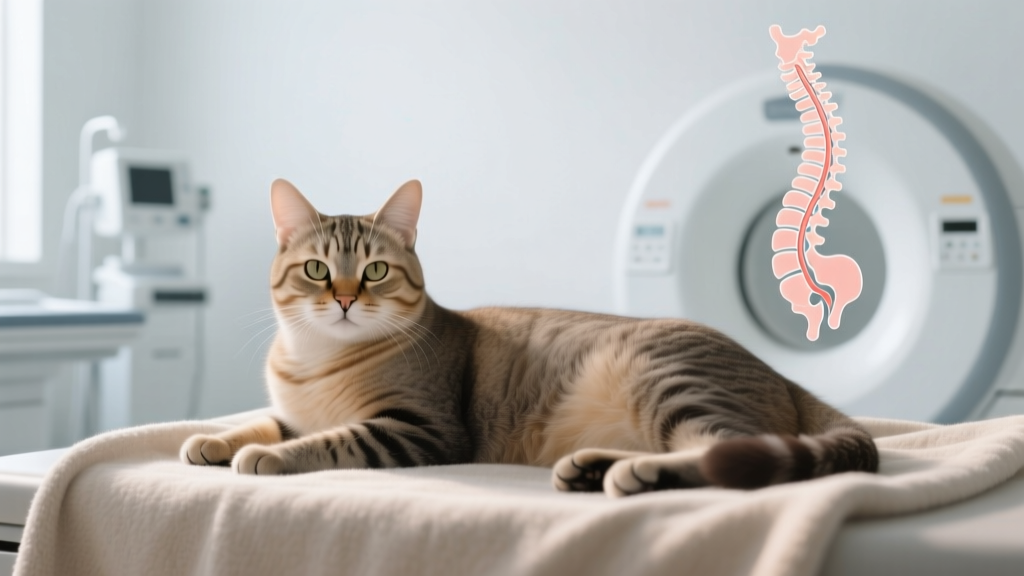
- MRI (gold standard): best for viewing spinal cord and soft tissue tumors, including meningiomas
- CT scan: helpful in some cases, especially for bony detail; may be combined with contrast
Step 5: Cerebrospinal fluid (CSF) analysis (sometimes)
A CSF tap can help rule out inflammation or infection. It doesn’t always confirm meningioma, but it can support the overall picture when combined with imaging.
Definitive diagnosis
A confirmed diagnosis typically requires histopathology (examining tumor tissue), which is most often obtained during surgery. Many cats start treatment based on MRI findings when the imaging appearance is strongly suggestive.
Practical tip: Ask your vet whether a referral to a veterinary neurologist is recommended. Neurologists see spinal cord conditions every day and can streamline advanced imaging and treatment planning.
6. Treatment options (medical, surgical, home care)
Treatment depends on tumor location, your cat’s neurologic status, overall health, and what’s available in your region. Your veterinarian or neurologist will help you weigh risks, benefits, and costs.
Surgical treatment
Surgery aims to remove or reduce the tumor and relieve spinal cord compression. Because meningiomas are often attached to the meninges and may be well-defined, they can sometimes be surgically addressed with good outcomes—especially when treated before severe neurologic decline.
- Pros: can rapidly relieve compression; may provide tissue for definitive diagnosis
- Cons: requires advanced surgical expertise; anesthesia and recovery risks; not always fully removable
Radiation therapy
Radiation may be recommended:
- when surgery isn’t possible
- when a tumor can’t be completely removed
- as follow-up therapy to slow regrowth
Radiation protocols vary. Many cats tolerate radiation well, but it requires multiple visits and careful planning.
Medical management (supportive/palliative care)
Medical therapy can help reduce inflammation around the spinal cord and manage pain. It does not remove the tumor, but it may improve comfort and function for a period of time.
- Anti-inflammatory medications: often corticosteroids are used in neurologic cases to reduce swelling (only under veterinary direction)
- Pain control: medications chosen specifically for cats; never give human pain meds
- Rehab support: gentle physical therapy techniques may be recommended by your care team
Home care you can start right away (with veterinary guidance)
- Improve traction: add rugs or non-slip mats to prevent falls
- Limit jumping: use pet stairs/ramps; block access to high perches temporarily
- Set up an easy recovery area: food, water, and litter box on one level
- Use a low-entry litter box: especially if hind-limb weakness is present
- Monitor pain and mobility daily: keep a simple journal (walking, appetite, toileting)
If your cat is prescribed medications, give them exactly as directed and report side effects promptly (sleepiness, appetite changes, vomiting, behavior changes, constipation, increased thirst/urination).
7. Prevention strategies and early detection tips
There’s no guaranteed way to prevent meningiomas. The best “prevention” is early detection and reducing the risk of secondary injuries from weakness or falls.
Early detection habits that help
- Schedule regular wellness exams: especially for cats over 7–8 years old
- Watch for subtle changes: hesitation to jump, mild wobble, less grooming, hiding
- Track litter box habits: constipation, straining, or accidents can signal pain or neurologic change
- Weigh your cat monthly: unexplained weight loss can indicate underlying illness
Reduce fall and strain risks
- Provide ramps/steps to favorite resting areas
- Keep nails trimmed to improve grip
- Use non-slip surfaces on slick floors
Always consult a veterinarian if your cat develops weakness, coordination changes, or pain. Early workup can sometimes prevent a minor mobility issue from becoming a major crisis.
8. Prognosis and quality of life considerations
Prognosis varies widely and depends on:
- tumor location and size
- severity and duration of neurologic signs
- whether surgery and/or radiation is possible
- your cat’s overall health (kidney disease, heart disease, etc.)
Because meningiomas are often slow-growing, some cats respond well to treatment and enjoy good quality time. Cats treated earlier—before profound weakness or paralysis—often have a better chance of meaningful improvement.
Quality of life checklist for owners
- Mobility: Can your cat get to food, water, and the litter box comfortably?
- Pain control: Is your cat resting calmly, grooming, and interacting normally?
- Appetite and hydration: Stable intake is a positive sign
- Dignity needs: Can urination/defecation be managed comfortably and hygienically?
Your veterinary team can help you make a realistic plan that supports comfort—whether the goal is curative treatment, tumor control, or palliative care.
9. When to seek emergency veterinary care
Seek emergency care the same day (or immediately) if your cat has any of the following:
- Sudden inability to walk or rapidly worsening weakness
- Suspected severe pain (crying out, hiding and growling, refusing to move)
- Inability to urinate, repeated straining, or a very firm/painful abdomen
- New loss of bladder or bowel control
- Trauma (fall, hit by car) followed by wobbliness or paralysis
If it’s after hours, contact an emergency clinic and let them know your cat has neurologic signs. Keep your cat warm, confined, and gently supported during transport. Avoid forcing movement.
10. FAQ: Common questions cat owners ask
Is a spinal meningioma cancer?
Meningiomas are often described as “benign” based on cell behavior, meaning they may not spread like aggressive cancers. Even so, they can be serious because they take up space and compress the spinal cord. Treatment is still medical care, not something to watch and wait without guidance.
Can my cat’s symptoms look like arthritis?
Yes. Reduced jumping, stiffness, and reluctance to move can overlap with arthritis. A neurologic exam helps your veterinarian tell whether the problem is more likely joint pain, spinal pain, or a spinal cord issue.
How is a spinal meningioma confirmed?
MRI is usually the best test to identify a suspected spinal meningioma. A definitive confirmation is often made by examining tumor tissue (biopsy/histopathology), typically obtained during surgery.
Can medication alone treat it?
Medications can reduce inflammation and improve comfort, and they may temporarily improve mobility. They don’t remove the tumor. Some cats do okay with medical management for a time, but ongoing monitoring is essential, and many cases benefit from discussing surgery and/or radiation with a specialist.
What can I do at home to help my cat right now?
Focus on safety and comfort: add non-slip flooring, use ramps/steps, keep everything on one level, and switch to a low-entry litter box. Also, take videos of walking changes and schedule a veterinary appointment promptly. Do not give over-the-counter human pain relievers—many are toxic to cats.
Should I see a specialist?
Often, yes. A veterinary neurologist (and sometimes an oncologist) can provide advanced imaging, interpret results, and offer the full range of treatment options. Your primary veterinarian can help with referrals.
If your cat is showing signs of pain, weakness, or coordination changes, a veterinary exam is the safest next step. For more supportive guides on mobility, aging-cat care, and other feline health topics, visit catloversbase.com for more cat health resources.