Cat Litomosoides: Pleural Cavity Filarial Worm
1. Introduction: Why this topic matters to cat owners
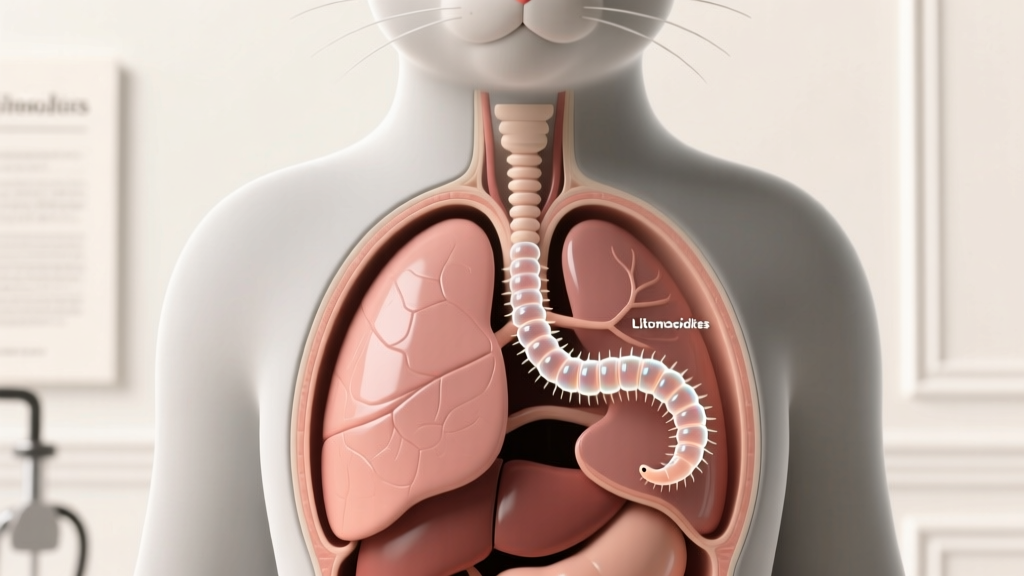
Most cat owners think of “worms” as an intestinal problem—something you spot in the litter box and treat with a dewormer. Litomosoides infections are different. These are filarial worms (thread-like parasites) that can live in areas outside the intestines, including the pleural cavity, the thin space between the lungs and the chest wall.
While pleural filarial infections are considered uncommon, they can cause real breathing discomfort and can look like other more familiar (and serious) chest conditions. Understanding what Litomosoides is, how cats become infected, and what signs to watch for helps you act quickly and partner with your veterinarian to keep your cat comfortable and safe.
2. Overview: What is Litomosoides in cats (plain-language explanation)
Litomosoides is a genus of filarial nematodes (parasitic roundworms). In some regions and situations, these parasites can infect cats and may be found in the pleural space (around the lungs) or in other tissues, depending on the species involved.
Filarial worms have a life cycle that usually involves:
- An insect vector (often blood-feeding insects depending on the species and geography)
- Adult worms living in an animal host
- Microscopic offspring (often called microfilariae) that circulate in the host and can be taken up by the next vector
When filarial worms are in or near the chest, they can trigger inflammation. In some cats, this may contribute to pleural effusion (fluid build-up around the lungs) or irritation that makes normal breathing harder. Not every infected cat becomes visibly ill, but when signs occur, they can be concerning—especially because breathing issues should always be treated as urgent.
3. Symptoms and warning signs to watch for
Litomosoides in the pleural cavity can be subtle at first. Some cats compensate until the problem becomes more advanced. Contact your veterinarian if you notice any of the following:
Breathing and chest-related signs
- Increased breathing rate (resting respiratory rate consistently above ~30 breaths per minute)
- Shallow breathing or visible effort (belly moving more than usual)
- Open-mouth breathing (an emergency in cats)
- Coughing (less common in cats than dogs, but can occur)
- Wheezing or noisy breathing
- Reluctance to lie down or preference for sitting upright (to breathe easier)
General or non-specific signs
- Low energy, hiding more than usual
- Reduced appetite or weight loss over time
- Decreased tolerance for play
- Stress or irritability when handled around the chest
At-home quick check you can do today
- Count your cat’s resting breaths: When asleep or calmly resting, count breaths for 30 seconds and multiply by 2. Track it for a few days. A consistent upward trend is worth a vet call.
- Watch posture: A crouched stance with neck extended can indicate respiratory distress.
If your cat is struggling to breathe, don’t wait to see if it passes—cats can decompensate quickly.
4. Causes and risk factors
Litomosoides infection requires exposure to the parasite through its life cycle, which commonly involves an insect vector. Exact risks vary by location, local wildlife reservoirs, and the specific Litomosoides species present.
Common risk factors
- Outdoor access (more exposure to biting insects and wildlife)
- Living in or traveling to endemic regions where filarial parasites are known
- High insect activity around the home (warm climates, standing water, poorly screened windows)
- Multi-pet or community cat environments where parasite prevention may be inconsistent
- Inconsistent parasite prevention (not using veterinarian-recommended preventives as directed)
Keep in mind: even indoor cats can be exposed if insects get inside. That’s why prevention discussions with your veterinarian are helpful, even for cats that rarely go outdoors.
5. Diagnosis: Methods and what to expect at the vet
Because pleural disease can have many causes (heart disease, infection, cancer, trauma, other parasites), diagnosing Litomosoides is usually a step-by-step process. Your vet’s first priority will be stabilizing breathing if your cat is in distress.
History and physical exam
- Questions about breathing changes, appetite, weight, energy
- Outdoor exposure, travel history, parasite prevention products used
- Auscultation (listening to the chest) for muffled heart/lung sounds that may suggest fluid
Imaging
- Chest X-rays: Can show pleural effusion or changes in lung expansion
- Ultrasound: Helps confirm fluid and can guide safe fluid removal
Thoracocentesis (removing fluid from the pleural space)
If fluid is present, your veterinarian may recommend thoracocentesis. This can be both diagnostic and immediately helpful for breathing.
- Fluid is collected and sent for cytology (microscopic exam), sometimes revealing parasites or inflammatory patterns
- Additional tests may include protein levels, cell counts, culture (to check for infection), and specialized parasite evaluation
Blood and parasite testing
- CBC/chemistry panel to evaluate inflammation, anemia, organ function
- In some filarial infections, microfilariae may be looked for using specialized blood tests (availability varies)
- Testing to rule out other important conditions (such as heart-related effusion or viral diseases) may be recommended
Expect your veterinarian to discuss a “rule-out list.” That’s normal and helps ensure your cat gets the right treatment, not just the fastest guess.
6. Treatment options (medical, procedural, and home care)
Treatment depends on your cat’s symptoms, whether fluid is present, and your veterinarian’s confirmation or suspicion of a filarial cause. Because cats can react strongly to parasite die-off, treatment should be veterinarian-guided, not DIY.
Immediate supportive care
- Oxygen therapy if breathing is labored
- Thoracocentesis to relieve pressure if pleural effusion is present
- Careful sedation if needed to reduce stress (stress worsens breathing)
Antiparasitic therapy
Your veterinarian may prescribe medications aimed at filarial parasites. The exact protocol depends on the suspected species, your cat’s overall health, and local veterinary guidance.
- Some cases require multiple doses over time
- Your vet may also prescribe anti-inflammatory medication to reduce the body’s reaction as parasites die
- Follow-up visits are often needed to monitor breathing, chest fluid, and overall response
Antibiotics and additional medications
If there is concern for secondary infection, or if diagnostic tests suggest a mixed condition, your veterinarian may add:
- Antibiotics (only when indicated)
- Pain control if chest discomfort is present
- Other therapies tailored to concurrent problems (for example, heart support if cardiac disease is also identified)
Is surgery needed?
Surgery is not commonly the first approach for pleural filarial worms, but procedures may be recommended in certain situations:
- Repeated fluid buildup that needs more advanced management
- Placement of a temporary chest drain in severe cases (typically in hospital)
- Exploration may be considered if another cause is suspected or if there are complications
Home care you can do right away (with your vet’s approval)
- Keep activity calm during recovery; avoid intense play until cleared
- Track resting respiratory rate daily and log it
- Give all medications exactly as directed; do not stop early because your cat “seems better”
- Reduce stress: quiet room, easy access to litter, food, and water
- Use a humidifier if your home air is very dry (helpful for comfort, not a cure)
If your cat refuses food for more than a day, or if breathing worsens at any point, contact your veterinarian promptly.
7. Prevention strategies and early detection tips
Prevention focuses on reducing insect exposure and keeping your cat on a veterinarian-recommended parasite prevention plan appropriate for your area.
Practical prevention steps
- Use year-round parasite prevention if recommended by your vet (especially in warm or insect-heavy climates)
- Keep cats indoors or supervise outdoor time to reduce insect and wildlife exposure
- Insect control at home:
- Repair window screens
- Eliminate standing water
- Use pet-safe pest management methods
- Routine wellness exams to catch subtle changes early
Early detection habits
- Weigh your cat monthly (or at least every 2–3 months) to spot gradual weight loss
- Log resting respiratory rate once or twice weekly for cats with any prior respiratory history
- Schedule a vet visit early for “minor” breathing changes—cats hide illness well
Always talk to your veterinarian before starting or switching preventives, especially if your cat is sick, very young, or has other medical conditions.
8. Prognosis and quality of life considerations
The outlook for a cat with Litomosoides in the pleural cavity depends on:
- How much inflammation or fluid has developed
- How quickly the condition is recognized and treated
- Whether there are additional problems (heart disease, lung disease, infection)
- How your cat responds to antiparasitic therapy and supportive care
Many cats can regain good comfort and day-to-day function once breathing is stabilized and the underlying cause is addressed. Some cats may need:
- Rechecks with repeat imaging
- Monitoring for recurrence of pleural effusion
- Longer recovery periods with restricted activity
Quality of life is a central goal. If your cat is breathing comfortably, eating, grooming, and engaging in normal behaviors, those are reassuring signs. Your veterinary team can help you track progress and adjust the plan if symptoms return.
9. When to seek emergency veterinary care
Go to an emergency veterinarian immediately if you see any of the following:
- Open-mouth breathing or panting
- Blue/gray gums or tongue
- Sudden collapse or extreme weakness
- Rapid breathing at rest that does not settle (especially > 40 breaths/min)
- Obvious breathing effort: heaving sides, extended neck, elbows held away from the body
- Severe lethargy with any respiratory sign
If you’re unsure, it’s safer to call an emergency clinic and describe what you’re seeing. Breathing problems are not a “wait and see” situation for cats.
10. FAQ: Common questions from cat owners
Is Litomosoides contagious from cat to cat?
Direct cat-to-cat spread is not typical. Filarial parasites usually require an insect vector as part of the life cycle. That said, if one cat is infected, it suggests the environment may allow transmission, so discuss prevention for all pets with your veterinarian.
Can humans catch Litomosoides from cats?
Most filarial parasites are adapted to specific hosts and transmission routes. The main concern is usually vector exposure (biting insects), not casual contact with your cat. If you have questions about human risk in your region, your veterinarian and local public health resources can guide you.
Will a routine dewormer fix this?
Not necessarily. Many over-the-counter or routine intestinal dewormers target gut parasites, not tissue-dwelling filarial worms. Treatment should be based on veterinary diagnosis and a cat-safe protocol to avoid complications.
How do I know if my cat’s breathing is abnormal?
A practical benchmark is the resting respiratory rate. Many healthy cats breathe under ~30 breaths per minute at rest. Consistently higher rates, increasing trends, or any visible effort (belly breathing, open-mouth breathing) warrants a veterinary call right away.
If my cat has pleural fluid, does that automatically mean parasites?
No. Pleural effusion has many possible causes, including heart disease, infection, cancer, trauma, and inflammatory conditions. Parasites are one possible cause, and your veterinarian will use fluid analysis and other tests to narrow it down.
What’s the most helpful thing I can do at home while waiting for the vet?
Keep your cat calm and cool, minimize handling, and transport them in a carrier with good airflow. Do not give human medications. If breathing looks difficult, seek emergency care rather than waiting for a regular appointment.
If you’re concerned your cat may have a respiratory issue or an unusual parasite infection, schedule a veterinary exam as soon as possible. Early care can make breathing problems much easier to manage.
For more clear, caring cat health guidance and prevention tips, visit catloversbase.com.