Cat Hip Dysplasia: Not Just a Dog Problem
1. Why this topic matters for cat owners
Hip dysplasia is usually talked about as a canine issue, but cats can develop it too. Because cats are skilled at hiding pain and adjusting their behavior, hip discomfort can be easy to miss until mobility changes become obvious. The good news is that many cats with hip dysplasia do very well once the problem is recognized and managed. Understanding the early signs and knowing what help looks like can protect your cat’s comfort, activity level, and long-term joint health.
2. What hip dysplasia is (plain-language medical overview)
The hip is a “ball-and-socket” joint. The ball is the head of the femur (thigh bone), and the socket is the acetabulum in the pelvis. In a healthy hip, the ball fits snugly into the socket and moves smoothly, cushioned by cartilage and joint fluid.
Hip dysplasia means the hip joint didn’t form perfectly. The socket may be too shallow, the ball may not sit tightly in place, or the supporting structures may be lax. Over time, that looseness (called joint laxity) can cause:
- Abnormal wear on cartilage (the smooth “glide” surface)
- Inflammation and pain
- Arthritis (degenerative joint disease) as the body tries to stabilize the joint with new bone growth
Some cats are born with a hip that’s more prone to dysplasia, and changes can progress as they age. Others may have mild hip dysplasia that stays quiet for years, then becomes noticeable when arthritis or weight gain adds strain.
3. Symptoms and warning signs to watch for
Cats often compensate by moving differently rather than limping dramatically. Subtle clues are common, especially early on. Contact your veterinarian if you notice any of the following lasting more than a day or two, recurring, or gradually worsening.
Mobility and movement changes
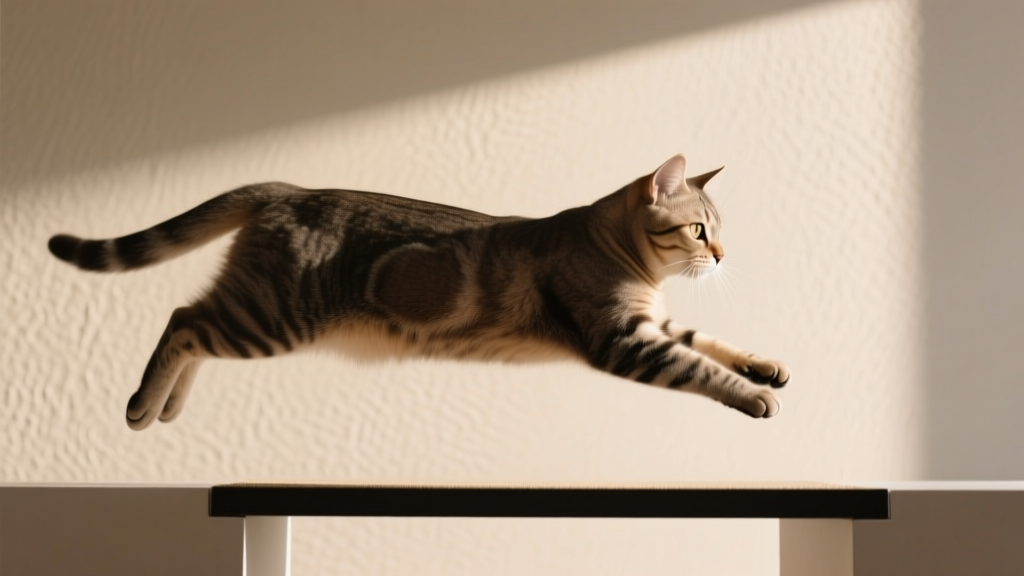
- Decreased jumping height (stops jumping onto counters, beds, or cat trees)
- Hesitation before jumping up or down; “testing” the surface first
- Stiffness after resting; “warming up” after a few steps
- Bunny-hopping gait in the back legs (moving both hind legs together)
- Wobbliness in the hind end or occasional slipping on smooth floors
- Limping that comes and goes
- Reluctance to climb stairs
Behavior and daily habit changes
- Sleeping more; playing less; shorter play sessions
- Irritability when touched near the hips or lower back
- Hiding more or avoiding family interaction
- Changes in litter box habits (avoiding high-sided boxes, accidents because getting in/out hurts)
Body and grooming clues
- Decreased grooming over the lower back and rear end (coat looks greasy or matted)
- Overgrooming or licking at hips or thighs
- Muscle loss in the back legs (thighs look thinner), sometimes with a pot-bellied look from less activity
Practical tip: Take a short video on your phone of your cat walking, jumping, or using stairs. Cats often move differently in a clinic, and videos are extremely helpful for your vet.
4. Causes and risk factors
Hip dysplasia is influenced by genetics and development, but several factors can worsen symptoms or speed up arthritis.
- Genetics: Some cats inherit hip shapes that predispose them to laxity and arthritis.
- Breed tendencies: Hip dysplasia is reported more often in larger-boned breeds such as Maine Coons, Ragdolls, Persians, Himalayans, and British Shorthairs, but any cat can be affected.
- Body weight: Extra weight increases joint load and inflammation. Even a small weight gain can make a painful hip much harder to tolerate.
- Age: Dysplasia may exist early, but arthritis-related pain often becomes more noticeable in adulthood or the senior years.
- Activity and muscle condition: Good muscle supports the joint. Long periods of inactivity can reduce muscle mass and joint stability.
- Past injury: Trauma doesn’t cause true dysplasia, but it can aggravate a borderline joint or accelerate arthritis changes.
Many cats with mild dysplasia show minimal signs until something changes—weight gain, reduced activity, or concurrent arthritis elsewhere.
5. Diagnosis: what to expect at the vet
If you suspect hip pain, schedule a veterinary appointment. Avoid giving human pain medications at home; many are dangerous to cats.
History and home details
Your vet team will ask questions like:
- When did the behavior change start?
- Is it worse after rest, after play, or at certain times of day?
- Any changes in jumping, litter box use, grooming, or temperament?
- What diet is your cat eating, and what is their current weight trend?
Physical and orthopedic exam
- Observation of walking, turning, and sitting posture
- Checking hip range of motion and looking for pain or crepitus (grating feeling)
- Assessing muscle mass in hind legs
- Evaluating spine and knees—cats may have more than one painful area
Imaging
- X-rays (radiographs): The most common test. They show joint shape, arthritis, and remodeling.
- Sedation: Many cats need light sedation for proper positioning and comfort. This is normal and helps get accurate images while reducing stress.
- Advanced imaging: In select cases, CT may be recommended for surgical planning or complex cases.
Ruling out other causes
Hip dysplasia can look like other conditions such as knee injuries, spinal pain, patellar luxation, arthritis in the spine, or neurologic issues. Your vet’s exam and imaging help narrow it down.
6. Treatment options (medical, surgical, home care)
Treatment is tailored to your cat’s age, pain level, arthritis severity, overall health, and lifestyle. Many cats respond very well to a combination approach.
Medical management (pain control and joint support)
- Prescription pain relief: Your veterinarian may prescribe cat-safe analgesics (often non-steroidal anti-inflammatory drugs or other pain-modulating medications). These require proper dosing and monitoring.
- Joint supplements: Products containing omega-3 fatty acids (EPA/DHA), glucosamine/chondroitin, or green-lipped mussel may help some cats. Results vary, and quality matters—ask your veterinarian for vetted brands and dosing.
- Injectable options: Some cats benefit from veterinary-administered joint therapies. Your vet will advise what’s appropriate and available in your area.
- Weight management: If your cat is overweight, gradual weight loss is one of the most effective ways to reduce hip strain.
Rehabilitation and supportive therapies
- Physical therapy: Gentle strengthening and range-of-motion exercises can improve comfort and stability.
- Laser therapy, acupuncture, or massage: These may reduce pain for some cats and can complement medications.
- Controlled activity: Short, frequent play sessions are often better than intense bursts that lead to soreness.
Surgical options
Surgery is not needed for every cat, but it can be life-changing for those with significant pain or poor hip function.
- Femoral Head and Neck Ostectomy (FHO): The femoral head is removed so the body forms a “false joint” of scar tissue. Many cats do very well, especially with rehab and maintaining good muscle tone.
- Total Hip Replacement (THR): Replaces the joint with implants. This can restore excellent function in appropriate candidates. It is more specialized and costly but can provide outstanding comfort and mobility.
Your veterinarian may refer you to a veterinary orthopedic surgeon to discuss the best fit for your cat.
Home care you can start right away
- Make mobility easier: Add pet steps or a sturdy ottoman to favorite sleeping spots. Provide ramps for window perches.
- Improve footing: Place rugs or yoga mats on slippery floors to prevent splaying and falls.
- Litter box comfort: Use a large box with a low entry (or cut a doorway into a storage bin). Keep it on the same floor where your cat spends time.
- Warmth and soft bedding: A warm, supportive bed can help stiffness, especially for seniors.
- Gentle play: Use wand toys at floor level, treat puzzles, or short “chase” games that don’t require big jumps.
7. Prevention strategies and early detection tips
You can’t always prevent hip dysplasia, but you can reduce the impact and catch discomfort earlier.
- Keep your cat lean: Ask your vet for a target weight and body condition score. Even modest weight loss can reduce pain.
- Schedule regular wellness exams: Subtle arthritis changes are often detected during routine exams.
- Monitor jumping and grooming habits: A cat that stops jumping or grooming their rear end is telling you something hurts.
- Choose joint-friendly enrichment: Provide climbing options with steps, lower platforms, and easy routes down.
- Ask about early screening for at-risk cats: If you have a large-breed kitten or a cat from lines known for orthopedic issues, your vet may recommend baseline assessment and weight guidance early.
Quick at-home check: Once a month, note your cat’s favorite jump height (bed, windowsill, cat tree level). If that “comfort height” drops, it’s worth a vet visit.
8. Prognosis and quality of life
The outlook for cats with hip dysplasia is often very good. Many cats have mild dysplasia that never causes major problems. For cats with pain, a plan that combines weight control, appropriate medications, and a home setup that supports easy movement can restore normal behaviors—playing, cuddling, grooming, and using the litter box comfortably.
Quality of life is the main goal. Signs that your management plan is working include:
- More willingness to move around the home
- Improved grooming and posture
- More stable walking and easier transitions from lying to standing
- Brighter mood and more social behavior
If progress stalls, your vet can adjust the plan. Pain management is not “one size fits all,” and many cats benefit from fine-tuning over time.
9. When to seek emergency veterinary care
Hip dysplasia itself is usually not a sudden emergency, but cats with joint pain can still have urgent situations that need immediate attention.
Seek emergency care promptly if your cat:
- Cannot stand or cannot use one or both back legs
- Cries out in pain, has sudden severe lameness, or appears extremely distressed
- Has a traumatic injury (fall, hit by car, suspected fracture)
- Shows open-mouth breathing, pale gums, collapse, or profound weakness
- Stops eating for 24 hours or more (especially if also painful or hiding)
If you’re unsure, call your veterinarian or an emergency clinic for guidance. It’s always better to ask than to wait while a cat is suffering.
10. FAQ: Common questions about cat hip dysplasia
Can cats really get hip dysplasia, or is it rare?
Yes, cats can get hip dysplasia. It’s likely underdiagnosed because cats mask pain well and may not show obvious limping. With more cats living longer, arthritis-related signs are noticed more often.
Is hip dysplasia the same as arthritis?
Not exactly. Hip dysplasia describes an abnormal hip structure and looseness. Arthritis is the wear-and-tear and inflammation that can develop over time due to that abnormal joint mechanics. A cat can have dysplasia with minimal arthritis early on, or significant arthritis later in life.
My cat isn’t limping. Could it still be hip pain?
Absolutely. Many cats show hip pain as reduced jumping, stiffness after naps, behavior changes, or litter box avoidance rather than a clear limp. If your cat’s routine changes, schedule a veterinary exam.
What should I do at home while waiting for the vet appointment?
Limit high jumping, add traction with rugs, provide a low-entry litter box, and keep essentials (food, water, litter) easy to access. Do not give human pain medicines. If your cat seems very painful or can’t walk, seek urgent care.
Will my cat need surgery?
Not always. Many cats do well with weight management, appropriate pain control, and home modifications. Surgery is considered when pain is hard to control or function is significantly limited. Your veterinarian and, if needed, an orthopedic specialist can guide you.
How can I tell if treatment is helping?
Look for improvements in daily life: more normal grooming, easier jumping (even if still lower than before), more play, better mood, and more consistent litter box use. Keeping a simple weekly note of mobility and behavior can help you and your vet track progress.
If you suspect your cat may have hip dysplasia or any form of joint pain, book an appointment with your veterinarian for an exam and a personalized plan. With the right support, many cats stay comfortable and active for years.
For more caring, practical cat health guidance, visit catloversbase.com.