How to Care for a Four Month Old Kitten: The Critical Health & Development Checklist Every New Owner Misses (And Why Skipping It Risks Lifelong Issues)
Why This Is the Most Important Month in Your Kitten’s Life
If you’re wondering how to care for a four month old kitten, you’ve landed at the precise developmental inflection point where lifelong health, confidence, and behavior patterns are cemented—or compromised. At 16 weeks, your kitten’s immune system is maturing but still vulnerable; their socialization window is narrowing rapidly; and their nutritional, dental, and environmental needs are shifting dramatically from those of a newborn. Yet most new owners mistakenly believe ‘they’re almost grown’—and relax vigilance just as critical milestones (like final core vaccines and fear imprinting) demand heightened attention. This isn’t just about feeding and cleaning—it’s about neurodevelopmental timing, immunological readiness, and preventing irreversible setbacks.
Vaccinations, Parasites & Preventive Health: What Can’t Wait Past Week 16
By four months, your kitten should have completed their core vaccine series—but many don’t. According to the American Association of Feline Practitioners (AAFP), kittens require three rounds of FVRCP (feline viral rhinotracheitis, calicivirus, panleukopenia) spaced 3–4 weeks apart, with the final dose administered no earlier than 16 weeks to ensure maternal antibody interference has fully waned. Skipping or delaying this final shot leaves them dangerously unprotected against panleukopenia—a highly contagious, often fatal disease with mortality rates up to 90% in unvaccinated kittens.
Simultaneously, internal parasite screening becomes non-negotiable. A 2023 study published in Parasites & Vectors found that 68% of asymptomatic kittens under 5 months tested positive for at least one intestinal parasite—including roundworms (present in 52%), hookworms (29%), and Coccidia (17%). These aren’t just ‘annoyances’: chronic parasitism impairs nutrient absorption, stunts growth, triggers anemia, and damages intestinal villi long-term. Your vet should perform a centrifugal fecal flotation test—not just a visual check—and administer species-specific dewormers (e.g., fenbendazole for roundworms/hookworms, ponazuril for Coccidia) based on lab results, not guesswork.
Don’t forget external parasites: flea infestations at this age can cause life-threatening anemia in tiny kittens due to blood loss. Use only kitten-safe, FDA-approved products (e.g., Revolution Plus for kittens ≥2.8 lbs and ≥8 weeks). Never apply dog flea treatments—they contain permethrin, which is neurotoxic and often fatal to cats.
Nutrition Transition: From Kitten Formula to Adult-Ready Feeding
At four months, your kitten is entering peak growth velocity—gaining ~0.5–1 lb per month—but their metabolism and digestive capacity are changing fast. While many commercial ‘kitten food’ bags suggest feeding until 12 months, research from the Waltham Centre for Pet Nutrition shows that optimal skeletal development requires protein and calcium levels adjusted specifically for weeks 12–20. Feeding adult food too early risks nutrient deficiencies; continuing high-calorie kitten food past 6 months may contribute to obesity (a risk factor in 63% of overweight adult cats, per the 2022 Banfield State of Pet Health Report).
Transition gradually over 7–10 days: mix 25% new food on days 1–2, 50% on days 3–4, 75% on days 5–6, then full switch. Monitor stool consistency daily—soft stools signal intolerance. Prioritize foods with AAFCO ‘All Life Stages’ or ‘Growth’ statements and at least 35% crude protein (dry matter basis). Avoid grain-free diets unless prescribed: a 2021 FDA investigation linked grain-free formulations to increased cases of dilated cardiomyopathy (DCM) in young cats, possibly due to taurine deficiency or legume-based protein sources.
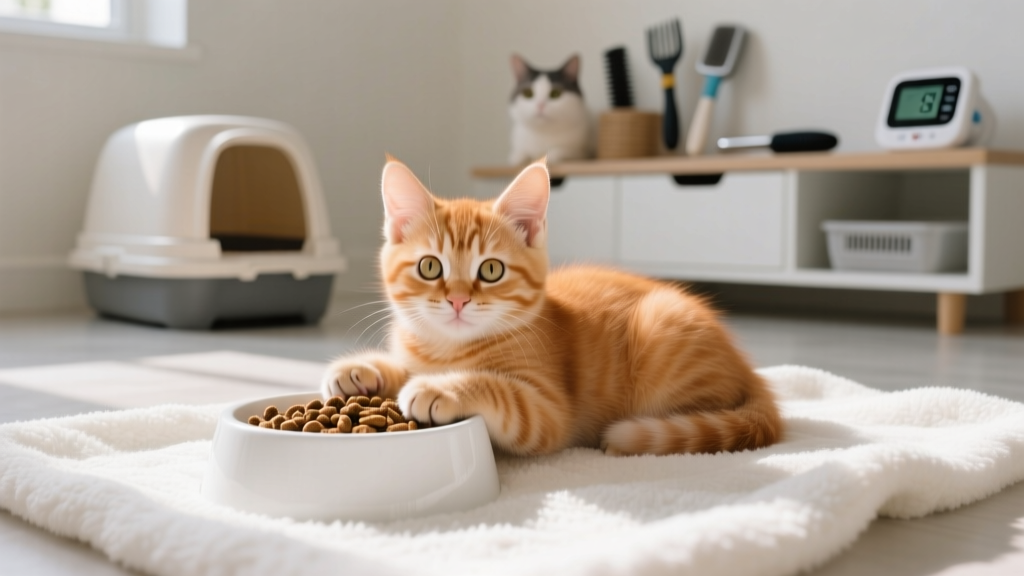
Hydration remains critical. Kittens this age should consume ~60 mL water/kg/day. If feeding dry food exclusively, add warm water to kibble (1:1 ratio) or offer bone broth (unsalted, no onion/garlic) to boost intake. Consider a ceramic or stainless-steel water fountain—movement stimulates interest, and flowing water stays fresher longer.
Socialization, Training & Environmental Enrichment: The Last Window for Confidence
The sensitive socialization period for cats closes sharply between 14–16 weeks. After this, novelty exposure often triggers fear—not curiosity. That means your four-month-old kitten is at the absolute deadline for positive, controlled introductions to people, other pets, carriers, car rides, nail trims, and vet exam simulations. Dr. Mikel Delgado, certified cat behaviorist and researcher at UC Davis, emphasizes: ‘Missed socialization doesn’t mean “shy”—it means neurologically wired for avoidance. You can manage it, but you cannot re-open that plasticity window.’
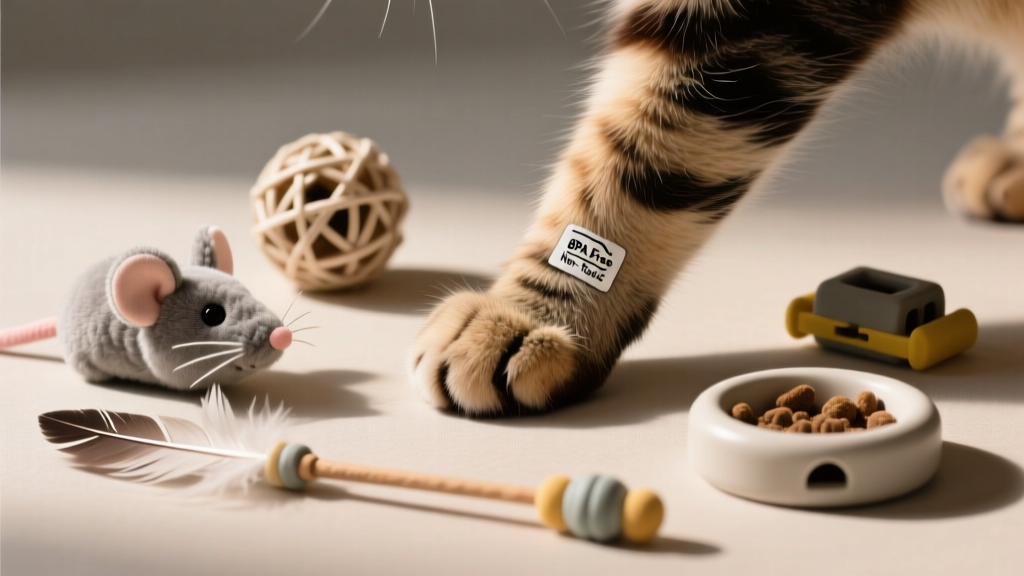
Here’s how to act now: Dedicate 10 minutes, twice daily, to structured enrichment. Rotate toys weekly (feathers, crinkle balls, puzzle feeders), use vertical space (cat trees, wall shelves), and practice ‘touch tolerance’—gently handling paws, ears, mouth, and tail while offering high-value treats (freeze-dried chicken, tuna paste). Never force interaction; instead, let your kitten approach on their terms, then reward proximity.
Litter box refinement is also urgent. By 4 months, kittens should consistently use the box—but 22% of litter aversion cases begin here due to substrate changes, location shifts, or inadequate cleaning. Keep boxes in quiet, low-traffic areas, scoop twice daily, and wash monthly with enzymatic cleaner (never ammonia-based—its scent mimics urine and attracts repeat soiling). Offer one box per cat + one extra, and experiment with substrates if accidents persist (many prefer unscented, fine-grained clay over crystal or pellet litters).
Dental, Grooming & Behavioral Red Flags: What to Watch For
Dental disease begins early—and silently. Gingivitis (red, swollen gums) is detectable by 4 months in up to 40% of kittens, per a 2020 Cornell Feline Health Center audit. Start brushing now with pet-safe enzymatic toothpaste and a soft finger brush—just 5 seconds per side, 3x/week builds tolerance. Never use human toothpaste: fluoride is toxic if swallowed.
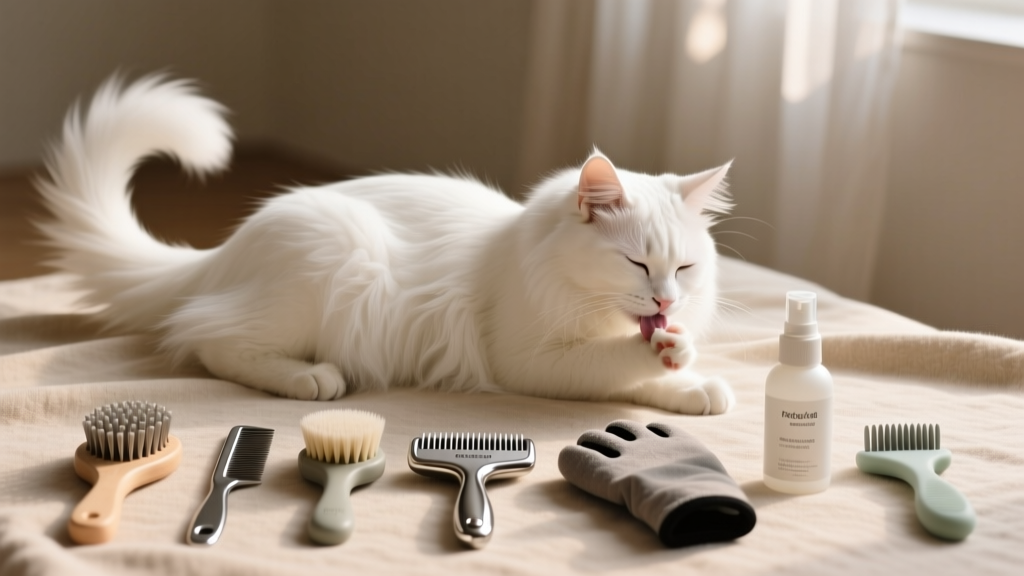
Grooming serves dual purposes: coat health and bonding. Short-haired kittens need weekly brushing; long-hairs (Maine Coons, Ragdolls) require daily combing to prevent mats. Introduce nail trims gently—only the clear tip, never the pink quick. If your kitten resists, try ‘touch + treat’ sessions: hold paw → reward → touch nail → reward → clip one nail → reward lavishly.
Behavioral red flags demanding immediate vet consultation include: sudden lethargy (sleeping >20 hrs/day), refusal to eat for >24 hours, vomiting >2x in 24 hrs, straining to urinate (especially males—this is a life-threatening emergency), or persistent hiding (>48 hrs post-stressor). These aren’t ‘just kitten quirks’—they signal pain, infection, or metabolic imbalance.
| Developmental Stage | Key Health Actions (Weeks 13–16) | Tools/Products Needed | Warning Signs to Escalate |
|---|---|---|---|
| Vaccination & Immunity | Final FVRCP booster; Rabies vaccine (if required by law); Feline Leukemia (FeLV) testing & vaccination for outdoor-access or multi-cat households | Vet visit, vaccination records, FeLV/FIV test kit | Fever >103.5°F, swelling at injection site >2 cm, lethargy >48 hrs post-vaccine |
| Parasite Control | Fecal exam + targeted deworming; topical flea/tick prevention; ear mite check & treatment if indicated | Fecal sample container, vet-prescribed dewormer, kitten-safe topical | Bloody diarrhea, pale gums, rapid breathing (signs of anemia or toxicity) |
| Nutrition & Hydration | Transition to growth-formulated food; introduce water fountain; monitor weight gain (0.5–1 lb/month expected) | Food scale, measuring cup, stainless-steel water fountain | Weight loss, excessive thirst/urination, vomiting undigested food >2x/week |
| Behavior & Environment | Structured socialization (3+ novel people/pets/objects/week); carrier desensitization; scratching post reinforcement; litter box audit | High-value treats, carrier, scratching post, pheromone diffuser (Feliway) | Aggression toward hands, biting during play, elimination outside box >3x/week |
Frequently Asked Questions
Can I take my four-month-old kitten outside?
No—unless in a fully enclosed, predator-proof catio or on a harness-and-leash under constant supervision. Outdoor exposure before full vaccination (including rabies and FeLV) risks fatal diseases like feline leukemia, distemper, and upper respiratory infections. Even ‘safe’ backyards harbor fleas, ticks, and parasites. Wait until 1–2 weeks after their final FVRCP and rabies vaccines, and always use a breakaway collar with ID tag.
Is it normal for my four-month-old kitten to bite and scratch during play?
Yes—but it must be redirected, not punished. Biting/scratching is instinctual hunting practice. Provide appropriate outlets: wand toys (never hands/feet), cardboard tunnels, and chew-safe teething rings. End play sessions before overstimulation occurs (tail flicking, flattened ears, dilated pupils). If biting persists beyond 5 months, consult a certified cat behaviorist—early intervention prevents escalation.
Should I spay/neuter my kitten at four months?
Yes—most veterinarians and the ASPCA now recommend pediatric spay/neuter between 4–5 months. Early sterilization prevents unwanted litters, reduces mammary tumor risk by 91% (if done before first heat), and eliminates uterine infections (pyometra) and testicular cancer. Recovery is faster, anesthesia risk lower, and behavioral issues (spraying, roaming) significantly reduced. Discuss timing with your vet based on breed and size.
My kitten seems scared of everything—can I fix this after 16 weeks?
You can improve confidence, but true socialization plasticity ends around 16 weeks. Post-window work focuses on counter-conditioning (pairing scary things with treats) and desensitization (gradual, voluntary exposure). Success varies—some cats become tolerant, few become truly outgoing. Prevention is infinitely more effective than rehabilitation. If fear is severe, ask your vet about short-term anti-anxiety support (e.g., gabapentin) during critical exposures.
How much should my four-month-old kitten sleep?
16–20 hours per day is normal. Kittens conserve energy for rapid neurological and physical development. However, if sleep exceeds 22 hours, or they’re difficult to rouse for meals/play, it signals illness—especially when paired with decreased appetite or dull coat. Track sleep patterns for 48 hours and contact your vet if deviation persists.
Common Myths About Four-Month-Old Kittens
Myth 1: “They’re old enough to skip vet visits until they’re a year.”
False. The 4-month visit is arguably the most critical: it confirms vaccine efficacy, screens for congenital issues (e.g., heart murmurs, hernias), assesses dental health, and establishes baseline weight/behavior metrics. Skipping it risks undetected problems becoming chronic.
Myth 2: “Kittens don’t get stressed—so moving or introducing new pets is fine anytime.”
False. Cortisol spikes in kittens under 5 months directly impair hippocampal development—the brain region governing learning and emotional regulation. Stressful events during this period correlate with lifelong anxiety disorders and inappropriate elimination. Always plan transitions slowly, using pheromones and separate spaces.
Related Topics (Internal Link Suggestions)
- Kitten Vaccination Schedule — suggested anchor text: "complete kitten vaccination timeline"
- How to Stop Kitten Biting — suggested anchor text: "gentle ways to stop kitten biting"
- Best Kitten Food Brands Vet-Approved — suggested anchor text: "top vet-recommended kitten foods"
- Signs of Sick Kitten — suggested anchor text: "early warning signs your kitten is ill"
- When to Spay a Kitten — suggested anchor text: "optimal age to spay a kitten"
Your Next Step Starts Today—Not Tomorrow
Caring for a four-month-old kitten isn’t about perfection—it’s about precision during a narrow, biologically urgent window. Every day counts toward building immunity, shaping neural pathways, and preventing habits that will define their adulthood. Don’t wait for ‘next week’ or ‘when things settle.’ Book that vet appointment today, pull out the toothbrush, and spend 10 minutes practicing gentle handling—those small acts compound into lifelong resilience. Your kitten isn’t just growing older; they’re building their biological foundation. Be the architect they need.