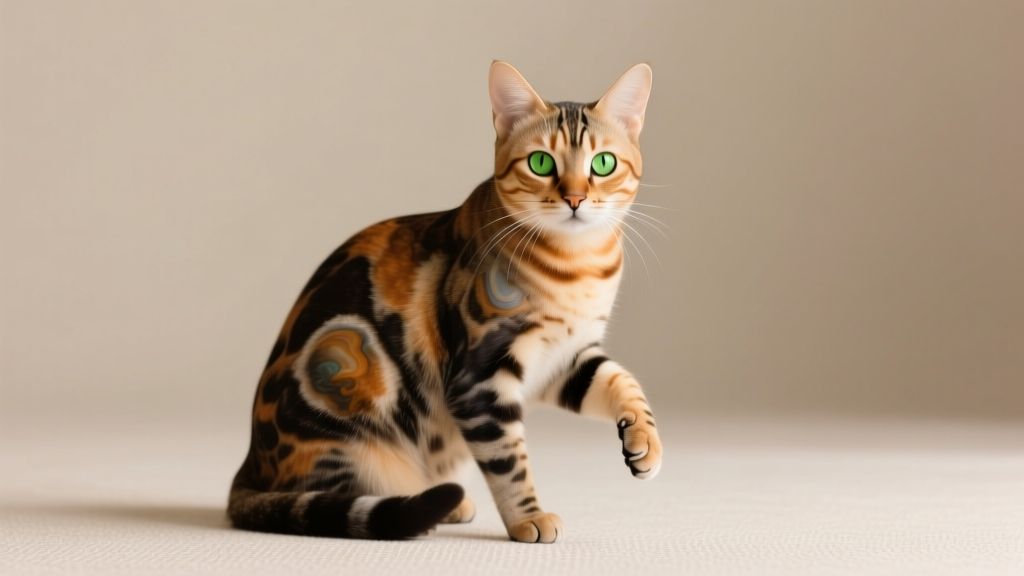
Bengal Cat Energy and Exercise
Bengal Cats: High-Energy Athletes
Bengals are one of the most active and athletic domestic cat breeds. Descended from Asian leopard cats, they retain wild-like energy, curiosity, and athleticism. They need significantly more exercise and stimulation than the average domestic cat.
Energy Level and Exercise Needs
- Daily play: Minimum 30-60 minutes of interactive play
- Vertical space: Need tall cat trees and climbing structures
- Outdoor access: Harness walks or enclosed catio highly recommended
- Mental challenges: Puzzle toys, training sessions, and new experiences
Best Activities for Bengals
Physical Exercise
- Fetch — many Bengals naturally retrieve toys
- Leash walking — train from kittenhood for outdoor adventures
- Cat wheels — exercise wheels satisfy their running instinct
- Agility courses — tunnels, jumps, and weave poles
- Water play — many Bengals love water; try a shallow pool or running faucet
Mental Stimulation
- Clicker training — Bengals learn tricks quickly (sit, high-five, spin)
- Puzzle feeders — challenging feeders that require problem-solving
- Food hiding — scatter kibble around the house for foraging
- Novel objects — rotate new toys and items for exploration
Consequences of Under-Stimulation
A bored Bengal is a destructive Bengal. Without adequate exercise:
- Destructive scratching and climbing on prohibited surfaces
- Aggression toward people or other pets
- Excessive vocalization (loud, persistent meowing)
- Self-destructive behaviors (over-grooming, tail chasing)
- Escape attempts (opening doors, squeezing through gaps)
Ideal Bengal Home
- Active household with people home regularly
- Another playful cat companion (energy match is important)
- Large living space with vertical opportunities
- Secure outdoor access (catio or harness walks)
- Owner willing to invest time in daily exercise and training
Health Note
Bengals are generally healthy but have higher rates of hypertrophic cardiomyopathy and progressive retinal atrophy. Annual veterinary checkups with cardiac screening are recommended from age 3.