Siamese Cat: Vocal and Affectionate Companion
If you’ve ever met a Siamese cat, you probably remember the conversation. Siamese don’t simply “meow”—they comment, request, argue, greet, and narrate their day with a voice that’s as iconic as their sleek silhouette. For many cat lovers, that talkative nature is exactly the charm: a Siamese feels less like a quiet roommate and more like a devoted, witty best friend.
They’re also famously affectionate. A well-socialized Siamese cat will often follow you from room to room, curl up beside you (or on you), and act personally invested in whatever you’re doing—typing, cooking, folding laundry, even brushing your teeth. If you’re looking for a cat breed that bonds deeply and wants to be part of the action, the Siamese is a standout.
This guide covers Siamese cat history, appearance, temperament, health, and daily care—plus what it’s really like to share your life with one of the most people-oriented breeds in the cat world.
Breed History and Origin
The Siamese cat traces its roots to Thailand, formerly known as Siam—hence the name. These cats were treasured for centuries, appearing in historical Thai manuscripts such as the Tamra Maew (often referred to as “The Cat Book Poems”), which describes cats with point coloration and pale bodies.
Siamese cats began captivating the Western world in the late 1800s. They were exhibited in England and soon gained popularity for their exotic looks and outgoing personality. Early Western Siamese often had a more moderate build, but over time selective breeding split the “Siamese type” into two broad styles:
- Modern Siamese: Long, slender body; wedge-shaped head; very large ears; strikingly angular look.
- Traditional Siamese (often called Thai cat by some registries): More rounded head and a slightly sturdier, less extreme body.
Both types share the hallmark Siamese qualities: point coloration, bright blue eyes, intelligence, and that famously expressive voice.
Physical Characteristics
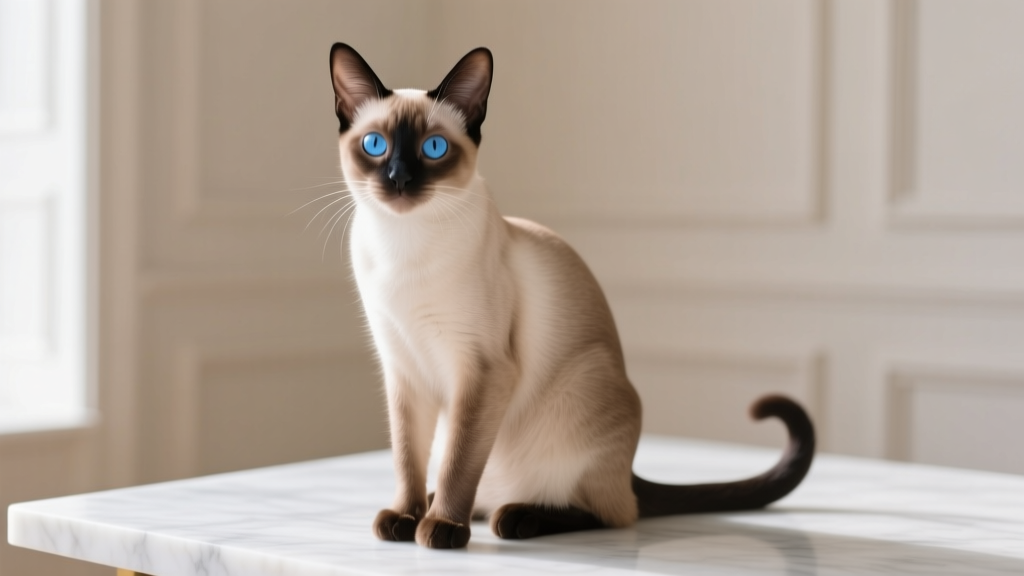
The Siamese cat is built like an athlete—sleek, flexible, and surprisingly muscular under that smooth coat. Their distinctive “points” (darker color on the face, ears, legs, and tail) are the breed’s signature look.
| Feature | Typical Siamese Traits |
|---|---|
| Size | Medium |
| Weight | Usually 6–12 lbs (females often smaller; males often larger) |
| Body | Long, lean, fine-boned, muscular |
| Head | Wedge-shaped (modern type) or moderately rounded (traditional type) |
| Eyes | Almond-shaped, vivid blue |
| Ears | Large, wide-set, continuing the lines of the head |
| Coat | Short, fine, close-lying, low-shedding |
| Tail | Long, tapering; some lines historically had kinks (now less common) |
Coat Colors and Point Patterns
Siamese cats are best known for their classic point colors. Many cat associations recognize these traditional Siamese points:
- Seal point: Cream body with deep brown points
- Blue point: Cool-toned, bluish-gray points with a lighter body
- Chocolate point: Warmer milk-chocolate points, ivory body
- Lilac point: Pale frosty gray-pink points, very light body
Other “Siamese-type” cats (or related breeds like Colorpoint Shorthairs, depending on the registry) may come in additional point colors and patterns such as red, cream, lynx (tabby points), or tortie points.
The point coloration is tied to a temperature-sensitive form of albinism. Cooler areas of the body develop darker pigment, which is why the extremities are darker. Kittens are typically born very pale and develop their points as they grow.
Personality and Temperament Traits
The Siamese personality is big—bright, bold, affectionate, and intensely social. This is a cat breed that thrives on interaction and easily becomes emotionally attached to their people. If you want a cat that “gets you,” a Siamese often feels uncannily tuned in.
- Highly vocal: They communicate often and clearly, especially when they want attention, food, play, or you to come to bed already.
- Deeply affectionate: Many Siamese are lap cats, shoulder cats, and “follow-you-everywhere” cats.
- Smart and curious: They learn routines fast, can open cabinets, and enjoy puzzle toys.
- Playful for life: Many remain kittenish well into adulthood.
- People-oriented: They tend to do best in homes where someone is around regularly.
Because they bond so closely, Siamese cats can become lonely if left alone too long. A bored Siamese may “redecorate” (think: knocked items, opened drawers) or turn the volume up. Many owners find that two cats—especially another social, playful companion—can be a happy solution.
Health Considerations and Common Issues
Siamese cats are generally long-lived and can thrive well into their teens, with many reaching 15–20 years with good care. Like all breeds, they do have some health concerns that responsible breeders screen for and informed owners keep an eye on.
- Dental disease: Siamese can be prone to gingivitis and periodontal issues. Regular dental care helps a lot.
- Respiratory sensitivity: Some lines (especially very slender, modern types) may be more prone to upper respiratory issues.
- Eye concerns: Some Siamese may show strabismus (crossed eyes) or nystagmus (involuntary eye movement). Often mild, but worth monitoring.
- Heart disease: Hypertrophic cardiomyopathy (HCM) can occur in many breeds, including Siamese; ask breeders about cardiac screening.
- Amyloidosis: A condition involving protein deposits, historically reported in Siamese lines; reputable breeding practices aim to reduce risk.
- Asthma/allergies: Not exclusive to Siamese, but their sensitivity can show up as coughing or wheezing in some cats.
Best practice: Choose a breeder who health tests, provides veterinary records, and raises kittens in a home environment. If adopting, schedule a thorough new-cat exam and discuss breed-related risks with your vet.
Care Requirements (Grooming, Exercise, Diet)
Grooming
Good news for neat freaks: Siamese cats have a short, fine coat that’s easy to maintain. They’re known for being relatively low-shedding compared to many fluffier breeds.
- Brushing: Once a week is usually plenty; a soft brush or grooming glove works well.
- Nails: Trim every 2–4 weeks, depending on growth and scratching habits.
- Ears: Check weekly; clean gently if waxy or dirty (use vet-approved cleaner).
- Teeth: Aim for several times a week (daily is amazing). Dental treats can help but don’t replace brushing.
Exercise and Enrichment
Siamese cats aren’t “sit pretty and stare” cats. They’re interactive, athletic, and happiest when their brains and bodies have something to do.
- Daily play: 15–30 minutes (split into sessions) with wand toys, feathers, or chase games.
- Climbing: Cat trees, shelves, and window perches are Siamese-approved.
- Training: Many Siamese excel at clicker training, target training, and leash/harness walks.
- Puzzle feeders: Great for mental stimulation and slowing fast eaters.
Diet
A Siamese cat’s lean frame can fool you—they still need balanced nutrition and portion control. Some are enthusiastic eaters, and a bored Siamese may beg dramatically (and convincingly).
- High-quality protein: Look for meat-forward foods suited to your cat’s life stage.
- Portion awareness: Use measured meals or a feeding schedule to prevent weight gain.
- Hydration: Many cats drink more from fountains; wet food can also support hydration.
- Food puzzles: Combine meals with enrichment to keep their smart minds busy.
If your Siamese is especially active, your vet may recommend a diet that supports lean muscle. For seniors, adjustments may be needed for joints, kidneys, or dental comfort.
Compatibility with Families, Children, and Other Pets
Siamese cats are often wonderful family pets—when the household is ready for their social style. They typically enjoy being included and can do very well with respectful children who like to play.
- With children: Usually great with gentle, cat-savvy kids; they appreciate interactive play more than rough handling.
- With dogs: Many Siamese can coexist happily with cat-friendly dogs, especially with slow introductions.
- With other cats: Often do best with another playful companion; they can become lonely as “only cats” in quiet homes.
- With busy households: They often thrive—there’s more attention to go around.
Because Siamese are so people-focused, they may struggle in homes where they’re alone all day with little stimulation. If your schedule is intense, consider adopting two compatible cats or arranging mid-day interaction.
Pros and Cons of Owning a Siamese Cat
| Pros | Cons |
|---|---|
|
|
FAQ: Siamese Cats
Are Siamese cats good for first-time cat owners?
They can be, as long as you want an interactive, social cat. A Siamese is less “low-profile” than many breeds—they’ll want playtime, conversation, and togetherness. If that sounds fun (and not exhausting), a Siamese can be an amazing first cat.
Do Siamese cats shed a lot?
Siamese cats are typically moderate to low shedders thanks to their short, close coat. Weekly brushing helps remove loose hair and keeps their coat glossy.
Why are Siamese cats so vocal?
Vocalizing is part of the Siamese breed personality—these cats have been bred for generations to be people-oriented communicators. Many Siamese “talk” more when they’re bored, lonely, hungry, or excited to interact.
How long do Siamese cats live?
Many Siamese live 15–20 years, and some go beyond that with excellent care, indoor living, and regular veterinary checkups.
Do Siamese cats like to be held?
Many do, especially if they’re handled gently from kittenhood. Individual preference matters, but Siamese are generally very affectionate and enjoy close contact—often on their own terms and with plenty of attention included.
Are Siamese cats hypoallergenic?
No cat breed is truly hypoallergenic. Siamese may work better for some allergy sufferers because they have short coats and may shed less than long-haired breeds, but they still produce dander and allergenic proteins. Time with the breed before committing is the best test.
A Warm Sendoff
A Siamese cat brings more than beauty to your home—they bring presence. Expect blue-eyed gazes that follow you around the room, a warm body tucked against your side at bedtime, and a running commentary on absolutely everything. For the right person (or family), a Siamese isn’t just a pet; they’re a full-time companion with a big heart and an even bigger personality.
If you’re considering this vocal, affectionate cat breed, spend time with Siamese cats if you can—talk to breeders and rescues, ask about temperament in the line, and think honestly about your schedule and your desire for a “chatty shadow.” When it’s a match, it’s pure magic.
Want to meet more incredible feline personalities? Explore more breed profiles on catloversbase.com.