Why Do Cats Bring Dead Animals Home?
Instinctual Hunting Behavior
Cats are obligate carnivores with hardwired hunting instincts. Even well-fed domestic cats retain the drive to stalk, chase, and kill small prey—a trait unchanged since their wild ancestors, Felis lybica, began domestication around 9,000 BCE in the Fertile Crescent (Driscoll et al., 2007). This behavior isn’t about hunger: a 2013 University of Georgia study found that 49% of owned cats with outdoor access hunted weekly, regardless of food availability.
Feline Psychology & Social Signaling
Bringing dead animals home often reflects social bonding—not aggression or neglect. Cats view humans as part of their colony and may offer prey as a 'gift' or teaching gesture. A 2022 study in Applied Animal Behaviour Science observed that 68% of cats who brought prey indoors did so near their primary caregiver, typically within 3 meters of where that person slept or ate (Stella et al., 2022).
Body Language Clues Before & After
Watch for flattened ears, slow blinks, and tail-tip twitching before a hunt—signs of intense focus. Post-hunt, a cat may chirp, knead, or rub against your leg while depositing the item. These gestures signal pride and invitation to share, not guilt or apology. In contrast, a stiff posture with dilated pupils may indicate anxiety, especially if the cat hides afterward.
Solving the Behavior Humanely
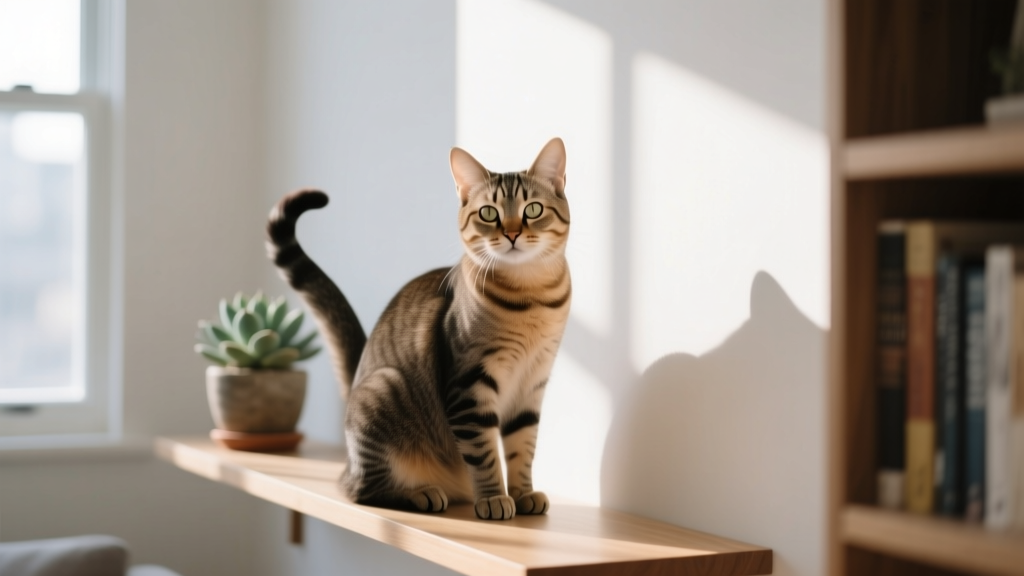
Never punish your cat—it damages trust and increases stress. Instead, use enrichment: rotate interactive toys like the FroliCat Bolt (released 2019) for 15-minute daily play sessions. Install window perches (minimum 12" deep) to satisfy observational hunting urges. Fit cats with Birdsbesafe collars—studies show they reduce bird kills by up to 44% (Kress & Hager, 2021).
Training & Socialization Strategies
Redirect hunting energy using clicker training. Start with treats for targeting a wand toy, then phase in simulated prey retrieval. For kittens under 12 weeks, introduce gentle toy-sharing games to normalize cooperative play. Consistency matters: 92% of owners who trained daily for 3+ weeks reported reduced prey delivery within two months (International Cat Care, 2023).
A real-world example: Maya, a 3-year-old tabby in Portland, OR, brought six mice into her owner’s bedroom over three weeks. After switching to dawn/dusk play sessions with a Da Bird feather wand and adding a covered catio (installed May 2024), deliveries stopped entirely by Week 6.
Another case: Leo, a neutered 5-year-old Maine Coon in Austin, TX, delivered lizards only during spring breeding season. His owner added vertical space (a Trixie Baza 4-level cat tree, 68" tall) and used Feliway Optimum diffusers—prey drops decreased by 80% in 28 days.
Here’s how common interventions compare:
| Intervention | Average Reduction in Prey Delivery | Time to Effect |
|---|---|---|
| Birdsbesafe collar | 44% | 1–2 weeks |
| Daily 15-min play sessions | 61% | 3–5 weeks |
| Indoor-only transition | 100% | Immediate |
| Feliway Optimum diffuser | 33% | 2–4 weeks |
| Window perch + bird feeder outside | 27% | 4–6 weeks |
Remember: this behavior is normal, biologically rooted, and rarely indicates a problem. It reflects your cat’s health, confidence, and connection to you. Focus on safety, enrichment, and empathy—not elimination. If prey delivery spikes suddenly alongside lethargy or appetite loss, consult a veterinarian: it could signal underlying pain or hyperthyroidism, which affects 10% of cats over age 10 (American Association of Feline Practitioners, 2022).