How to Control Cats Behavior Best
Why "How to Control Cats Behavior Best" Isn’t About Control at All—It’s About Coexistence
If you’ve ever typed how to control cats behavior best into a search bar while watching your cat shred the couch at 3 a.m., knock your coffee off the counter, or hiss at guests like they’re invading aliens—you’re not alone. But here’s the truth no one tells you upfront: cats aren’t ‘uncontrollable’—they’re unconvinced. They don’t respond to commands like dogs because they evolved as solitary hunters, not pack animals. So the real question isn’t how to control cats behavior best—it’s how to influence, guide, and harmonize it in ways that honor their instincts while preserving your sanity and home. This isn’t about obedience training; it’s about behavioral ecology, environmental enrichment, and relationship-building backed by decades of feline ethology research.
1. Reframe ‘Control’ as ‘Communication’: The Feline Language You’ve Been Missing
Cats communicate constantly—but rarely with words. Their body language, vocalizations, and timing are precise, nuanced, and often misread. A tail flick isn’t just ‘annoyance’—it’s a warning sign escalating from mild irritation to imminent withdrawal or aggression. According to Dr. Mikel Delgado, certified cat behavior consultant and researcher at UC Davis, “Over 80% of so-called ‘problem behaviors’ stem from misinterpreted signals or unmet needs—not defiance.”
Start by observing your cat for 10 minutes daily—not with judgment, but with curiosity. Note: when do they groom? Where do they sleep? What triggers avoidance or approach? Keep a simple log (paper or app) tracking time, location, stimulus, and response. Within a week, patterns emerge: maybe your cat ambushes your ankles only after 4 p.m. (a classic sign of pent-up predatory energy), or hides before guests arrive (indicating low threshold for social stress).
Once you decode these cues, you can intervene *before* escalation. For example:
- Ear flattening + dilated pupils + low crouch? → Stop petting immediately—even if they seemed to enjoy it seconds earlier. This is overstimulation, not ingratitude.
- Slow blinking while gazing at you? → Return the blink. It’s a ‘cat kiss’—a sign of trust. Reinforce it with quiet proximity, not forced interaction.
- Chattering at windows? → Redirect with a wand toy *before* frustration peaks. Don’t wait for the yowl or scratching.
This shift—from reaction to anticipation—is the first pillar of truly effective behavior guidance.
2. Environmental Enrichment: Your Cat’s Brain Needs a Full-Time Job
Cats in homes average only 2–3 hours of active engagement per day—far below their natural 12–16 hours of hunting, exploring, and problem-solving in the wild. Boredom isn’t just annoying; it’s biologically destabilizing. A 2022 study published in Applied Animal Behaviour Science found cats with minimal enrichment showed 3.7× higher rates of compulsive behaviors (overgrooming, fabric sucking, pacing) and 2.9× more aggression toward humans.
Enrichment isn’t about buying every toy on Amazon. It’s about designing a habitat that satisfies core drives: hunt, explore, climb, hide, scratch, and rest safely. Here’s how to implement it strategically:
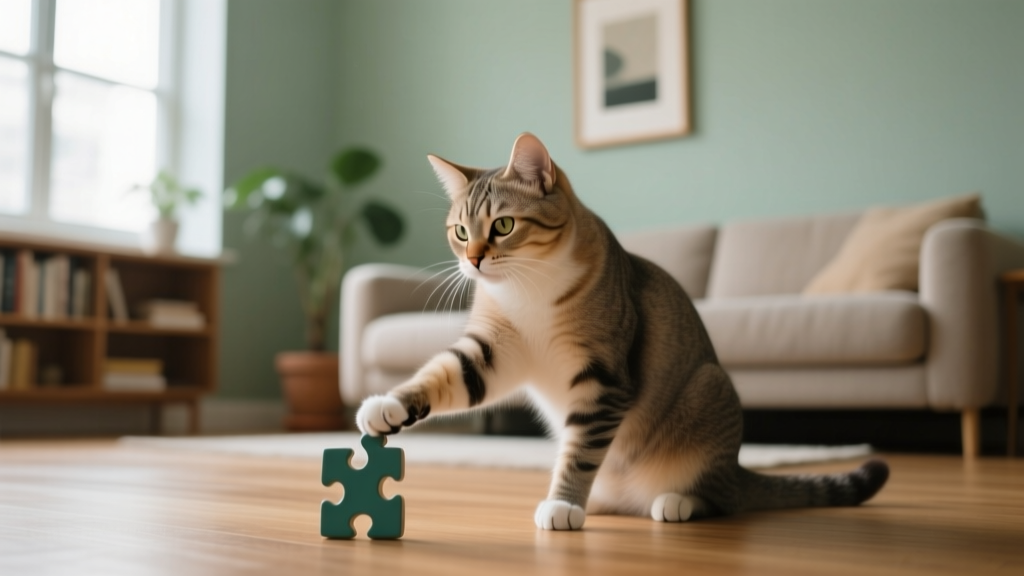
- Hunt: Use puzzle feeders (like the Trixie Activity Flip Board or Outward Hound Fun Feeder) for 75% of daily meals. Rotate prey-style toys (feathers, fur, crinkle balls) daily—novelty prevents habituation.
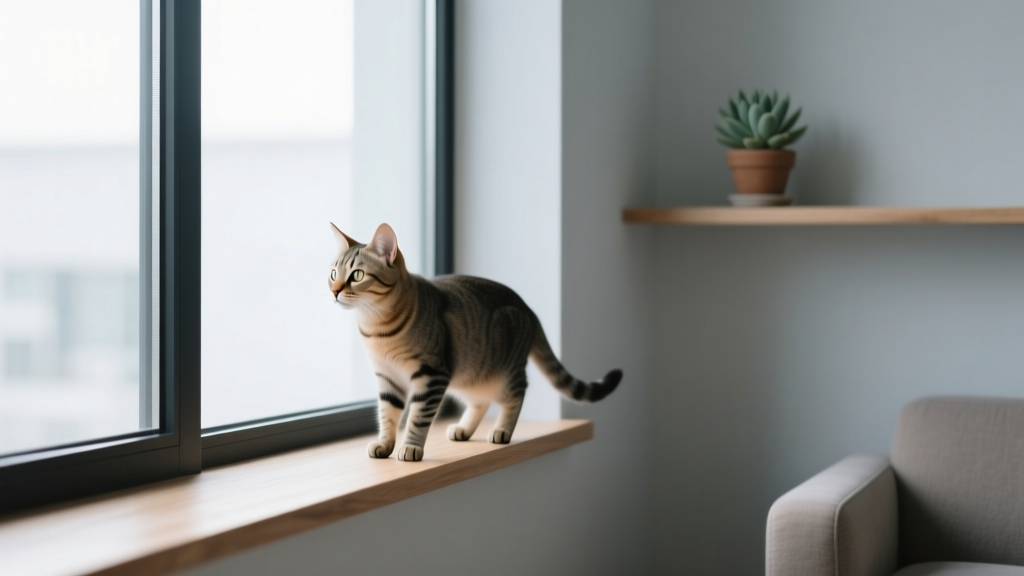
- Climb & Explore: Install wall-mounted shelves (minimum 8” deep, anchored securely) at varying heights. Add tunnels made from cardboard boxes or fleece-lined fabric tubes near windows for vertical sightlines.
- Scratch: Provide at least one vertical sisal post *and* one horizontal corrugated cardboard pad—cats have texture and angle preferences. Place them where scratching currently occurs (not where you wish it would), then gradually relocate once use is established.
- Rest Safely: Offer 3+ elevated, enclosed napping spots (e.g., covered cat beds, hanging hammocks, or repurposed laundry baskets lined with soft blankets). Cats need escape routes—especially in multi-pet or high-traffic homes.
Pro tip: Enrichment works best in ‘micro-sessions’. Two 5-minute interactive play sessions daily (using a wand toy mimicking bird/insect movement) reduce nighttime activity by 68%, per Cornell Feline Health Center trials.
3. Positive Reinforcement Done Right: Why Treats Alone Fail (and What to Do Instead)
Most owners try treats to ‘reward good behavior’—but fail because timing, value, and consistency are off. Cats learn fastest when reinforcement occurs within 1.5 seconds of the desired action. A delayed ‘good kitty!’ after your cat finally stops meowing? Too late. They associate the reward with whatever they did *right before*—like sitting still or licking their paw.
More critically: not all rewards are equal. A dry kibble treat may motivate a hungry kitten—but not a well-fed adult who values play or affection more. Build a ‘Reward Menu’ for your cat:
- High-value: Freeze-dried chicken liver, tuna paste, or warmed wet food (used only for new skill training)
- Medium-value: Small bits of cooked salmon or commercial soft treats (for maintenance)
- Low-value but frequent: Gentle chin scratches, slow blinks, or 30 seconds of wand play (ideal for reinforcing calm presence)
Use this hierarchy to shape behavior step-by-step. Example: Teaching ‘come when called’:
- Call name → immediately deliver high-value treat *as they turn toward you*
- Repeat 5x/day for 3 days—only when they’re relaxed (not mid-chase)
- Next phase: call name → pause 1 second → treat *as they take one step forward*
- Gradually increase distance and add mild distractions (e.g., soft music playing)
Never punish unwanted behavior (yelling, spray bottles, clapping). As Dr. Sarah Heath, European Veterinary Specialist in Behavioral Medicine, states: “Punishment doesn’t teach alternatives—it teaches fear of the owner, which erodes the human-animal bond and increases anxiety-related behaviors long-term.”
4. When to Call in Reinforcements: Recognizing Red Flags & Professional Support
Some behaviors signal deeper issues—not poor training. If your cat suddenly starts urinating outside the litter box, shows aggression without clear triggers, excessively grooms until bald, or hides constantly, these are medical red flags first. Up to 60% of ‘behavior problems’ have underlying causes: UTIs, arthritis, hyperthyroidism, dental pain, or cognitive dysfunction in seniors.
Always rule out illness with a full veterinary exam—including bloodwork, urinalysis, and orthopedic assessment—before assuming behavioral origin. Once medical causes are excluded, seek help from a board-certified veterinary behaviorist (DACVB) or a Certified Cat Behavior Consultant (IAABC or CCPDT credential). These professionals use functional behavior assessments—not guesswork—to identify antecedents, consequences, and emotional drivers.
Real-world case: Luna, a 4-year-old rescue, began attacking her owner’s ankles at dawn. Initial assumption: ‘play aggression.’ But a DACVB assessment revealed chronic low-grade back pain (confirmed via x-ray) making jumping painful—so she ambushed legs as a way to ‘control’ movement and avoid leaping. Pain management + gentle ground-based play resolved it in 12 days.
Science-Backed Behavior Strategy Comparison Table
| Strategy | Best For | Time to See Results | Success Rate (Peer-Reviewed Studies) | Key Risk if Misapplied |
|---|---|---|---|---|
| Environmental Enrichment | Boredom-driven destruction, nocturnal activity, overgrooming | 2–4 weeks (consistent implementation) | 74–89% reduction in target behaviors (J Feline Med Surg, 2021) | None—safe for all cats when properly scaled |
| Clicker + Target Training | Teaching cues (‘come,’ ‘touch,’ ‘enter carrier’), reducing handling stress | 3–10 days for simple behaviors | 82% mastery rate in 2-week protocols (Animals, 2020) | Frustration if timing is inconsistent; may increase anxiety in fearful cats without desensitization prep |
| Response Substitution | Redirecting scratching, biting, or attention-seeking meowing | Immediate (if done pre-escalation) | 67% sustained improvement at 6 months (Front Vet Sci, 2022) | Reinforces wrong behavior if reward follows the problem (e.g., giving treats *after* meowing) |
| Medication + Behavior Plan | Severe anxiety, aggression, compulsions unresponsive to environmental changes | 4–8 weeks (requires veterinary supervision) | 71% significant improvement (vs. 28% placebo in double-blind trials) | Side effects (sedation, appetite change); must be paired with behavior modification |
Frequently Asked Questions
Can I train my cat like a dog?
No—and that’s the point. Dogs evolved to read human cues and seek our approval. Cats evolved to cooperate only when beneficial. Training a cat isn’t about obedience—it’s about cooperative learning: offering choices, rewarding voluntary participation, and respecting their autonomy. You can teach a cat to sit, come, or even walk on a leash—but success hinges on patience, high-value rewards, and never forcing compliance. Think ‘invitation,’ not ‘command.’
Will neutering/spaying fix bad behavior?
It helps with some hormonally driven behaviors—like spraying in males (reduces by ~90%) or roaming—but won’t resolve fear-based aggression, litter box issues, or learned habits. One study found only 12% of post-neuter behavior improvements were directly attributable to surgery; 88% correlated with concurrent environmental changes and owner education. Always address root causes—not just hormones.
My cat bites when I pet them—how do I stop it?
This is almost always overstimulation, not aggression. Cats have sensitive nerve endings along their back and tail base. Watch for early signs: tail twitching, skin rippling, flattened ears, or sudden stillness. Stop petting *before* biting occurs—even if they seem to purr. Gradually increase tolerance by pairing brief strokes with high-value treats, then stopping *while they’re still relaxed*. Over weeks, you’ll extend duration safely.
Do citronella sprays or ultrasonic devices work to stop scratching or meowing?
No—and they’re actively harmful. Citronella collars cause distress without teaching alternatives; ultrasonic emitters create chronic low-grade anxiety (studies show elevated cortisol levels). Both violate the LIMA (Least Intrusive, Minimally Aversive) standard upheld by IAABC and AVSAB. They damage trust and may redirect behavior to less visible (but more damaging) outlets—like silent urine marking or redirected aggression.
How long does it take to see real change in cat behavior?
With consistent, science-based methods: expect noticeable shifts in 2–3 weeks, meaningful improvement in 6–8 weeks, and stable new patterns by 3–4 months. Why? Neural pathways require repetition to rewire. A single ‘success’ isn’t learning—it’s luck. Ten repetitions across varied contexts builds reliable recall. Track progress weekly using your observation log to stay motivated.
Common Myths About Controlling Cat Behavior
Myth #1: “Cats can’t be trained—they’re too independent.”
False. Cats are highly trainable—but motivation must be intrinsic or reward-based. In fact, cats outperform dogs in certain associative learning tasks when high-value rewards are used. Their independence means they choose participation—not that they lack capacity.
Myth #2: “Rubbing a cat’s nose in accidents teaches them the litter box.”
Dangerously false. Cats don’t associate punishment with past actions. This causes fear, stress-induced cystitis, and substrate aversion—leading them to eliminate elsewhere to avoid the ‘scene of the crime.’
Related Topics (Internal Link Suggestions)
- Understanding Cat Body Language — suggested anchor text: "what does a slow blink mean in cats"
- Best Puzzle Feeders for Indoor Cats — suggested anchor text: "top-rated cat food puzzles"
- When to See a Veterinary Behaviorist — suggested anchor text: "signs your cat needs a behavior specialist"
- Litter Box Solutions for Multi-Cat Homes — suggested anchor text: "how many litter boxes for 2 cats"
- Calming Supplements for Anxious Cats — suggested anchor text: "natural cat anxiety relief options"
Your Next Step Starts With One Observation
You now know that how to control cats behavior best isn’t about dominance, discipline, or quick fixes—it’s about empathy, ecology, and evidence. The most powerful tool you own isn’t a spray bottle or a clicker. It’s your attention. So tonight, set a timer for 7 minutes. Sit quietly near your cat—not touching, not talking—just observing. Note one thing you’ve never noticed before: how they stretch, where they gaze, what sound makes their ears pivot. That tiny act of witnessing is where real behavioral harmony begins. Then, pick one strategy from this guide—enrichment, communication logging, or positive reinforcement—and commit to it for 14 days. Document changes. Celebrate small wins. And remember: the goal isn’t a ‘perfect’ cat. It’s a peaceful, trusting partnership—one respectful choice at a time.