Cat Behavior Decoded: 7 Hidden Signals You’re Misreading
Why Understanding What Is a Cat’s Behavior Changes Everything
\nWhat is a cat’s behavior? At its core, it’s a sophisticated, species-specific language shaped by 9,000 years of domestication—and 30 million years of wild ancestry. Unlike dogs, who evolved to read human cues, cats primarily communicate with other cats… and only secondarily with us. That’s why so many well-meaning owners misinterpret their cat’s signals: a flattened ear isn’t just ‘grumpy’—it’s a distress warning; a purr isn’t always contentment—it can signal pain or anxiety. When we misunderstand what is a cat’s behavior, we risk overlooking early signs of illness, escalating stress-related conditions (like idiopathic cystitis), or damaging the human-feline bond before it fully forms. In fact, the American Veterinary Society of Animal Behavior reports that 68% of cats surrendered to shelters are relinquished due to ‘behavioral problems’—most of which stem from unmet environmental or communicative needs, not inherent ‘badness.’ This guide cuts through myth and guesswork with vet-verified insights, real-world case studies, and tools you can apply today.
\n\n1. The Silent Language: Decoding Body Posture, Tail, and Ear Signals
\nCats don’t speak in words—but they broadcast constantly through micro-expressions and posture shifts. Dr. Sarah Heath, a European Diplomate in Veterinary Behavioural Medicine, emphasizes: “A cat’s body is a continuous biofeedback system. If you’re only watching the eyes, you’re missing 70% of the message.”
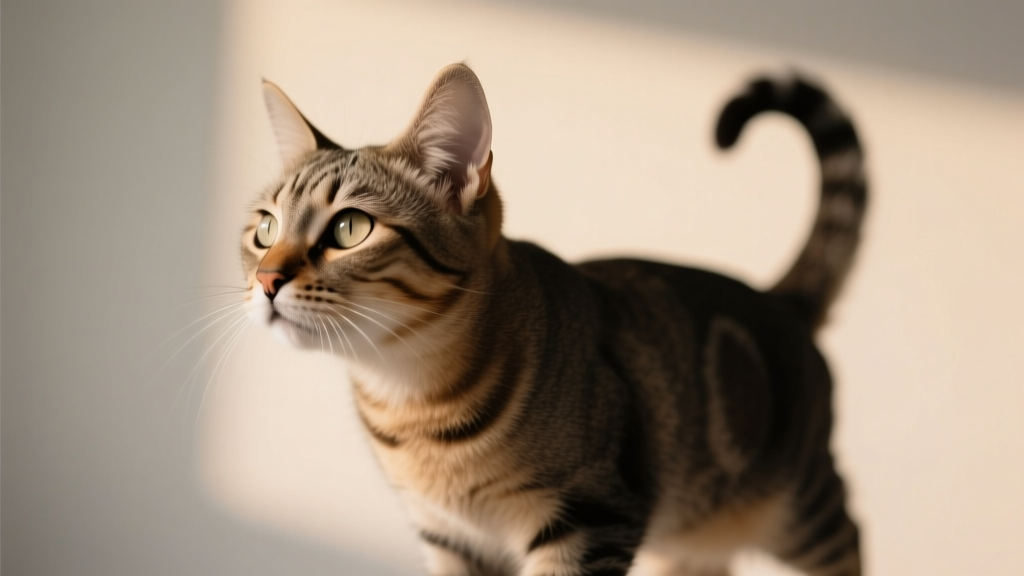
\nStart with the tail—the most expressive limb. A gently raised tail with a soft curl at the tip? That’s a confident ‘hello.’ But a rapidly twitching tip while the tail remains upright? That’s rising arousal—not excitement, but potential overstimulation. A puffed tail held low signals fear; a tucked tail pressed against the belly means acute stress or pain.
\nEars tell another story. Forward-facing ears show engagement. Slightly sideways (‘airplane ears’) indicate mild uncertainty—common when introducing new people. But ears flattened backward, especially with dilated pupils and tense whiskers? That’s a full-blown threat assessment. Don’t mistake this for ‘playful grumpiness’—this is your cat’s last line before defensive aggression.
\nReal-world example: Maya, a 3-year-old rescue tabby, began hiding under the bed after her owner started working from home. Her owner assumed she was ‘shy.’ But observation revealed her ears were pinned *only* during video calls—when voices rose and screens lit up. Her behavior wasn’t antisocial; it was sensory overload. Once her owner created a quiet, elevated perch away from the desk with visual barriers, Maya returned to normal within 48 hours.
\nAction step: For one week, log your cat’s posture during three daily interactions (morning greeting, feeding time, evening play). Note tail position, ear angle, pupil size, and whether whiskers are forward or pulled back. Patterns will emerge faster than you expect.
\n\n2. Vocalizations: Beyond Meows and Purring
\nHere’s a truth most owners miss: Adult cats rarely meow at other cats. They meow almost exclusively to communicate with humans—a learned behavior shaped by our responses. That means every meow is a request, complaint, or commentary—and its meaning depends entirely on context and tone.
\nA short, high-pitched ‘mew’ at dawn? Likely a food cue. A drawn-out, low-pitched yowl while pacing near a closed door? Could signal frustration—or, in senior cats, cognitive decline (feline dementia affects ~50% of cats over age 15). A chattering sound at the window? Often mislabeled as ‘excitement,’ but research from the University of Lincoln shows it correlates with heightened predatory arousal—and sometimes frustration when the hunt is impossible.
\nPurring is even more nuanced. While associated with contentment, studies published in Current Biology confirm cats purr at frequencies between 25–150 Hz—frequencies shown to promote bone density and tissue repair. So yes, they purr when injured, during labor, or when frightened. As veterinary behaviorist Dr. Katherine Houpt notes: “If your cat is purring while trembling, hiding, or refusing food—don’t assume all is well. Check for pain first.”
\nCase study: Leo, a 12-year-old neutered male, began ‘talking’ incessantly at night—meowing, yowling, and pacing. His bloodwork was normal. A geriatric behavior consult revealed he’d developed early-stage hyperthyroidism *and* hearing loss. His vocalizations weren’t ‘demanding attention’—they were compensatory: louder sounds helped him orient himself in darkness. After treatment and environmental adjustments (nightlights, textured floor paths), vocalizations dropped by 90%.
\n\n3. The Territory Imperative: Why Scratching, Rubbing, and Spraying Aren’t ‘Bad Habits’
\nWhat is a cat’s behavior around territory? It’s non-negotiable. Cats are obligate territorial animals—even indoor-only cats maintain a ‘core area’ (sleeping spots, litter box, food bowl) and a ‘perimeter’ (windowsills, doorways, high shelves). Every marking behavior serves a biological purpose.
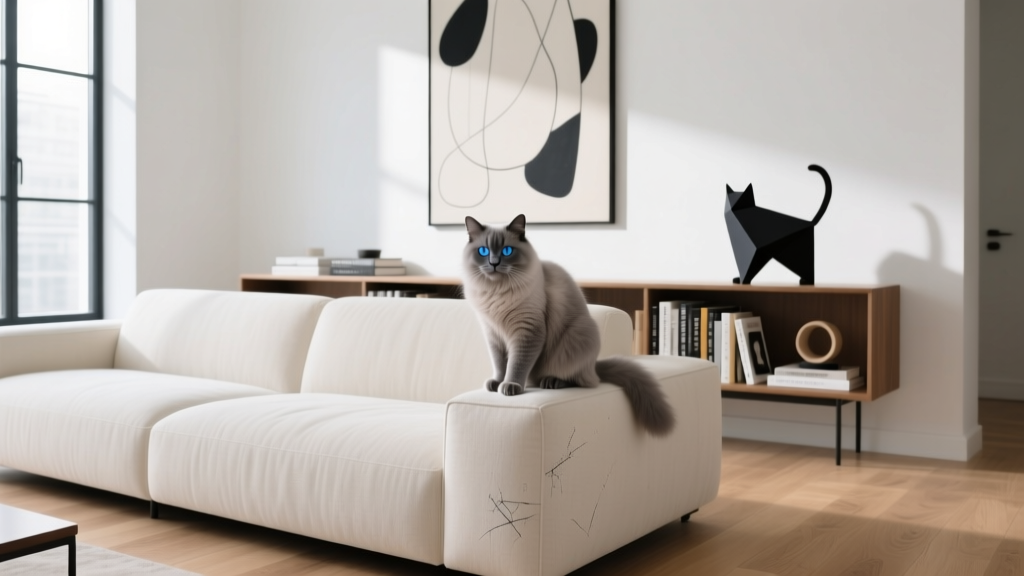
\nScratching isn’t about sharpening claws—it’s multisensory communication. It deposits scent from interdigital glands, stretches shoulder muscles critical for hunting, and leaves visible marks. Punishing scratching damages trust; redirecting without offering alternatives sets up failure.
\nRubbing (bunting) transfers facial pheromones (F3), signaling safety and familiarity. When your cat head-butts your leg, they’re literally saying, “This space—and you—are part of my secure zone.”
\nSpraying, however, is different. Unlike inappropriate urination (which involves squatting), spraying is a vertical, tail-quivering deposit of urine laced with pheromones and hormones. It’s almost always stress-driven—not spiteful. Common triggers include new pets, construction noise, or even subtle changes like a new laundry detergent scent.
\nProven solution: Feliway Optimum diffusers (containing synthetic analogues of the F3 pheromone) reduced spraying incidents by 83% in a 2022 RVC clinical trial when used alongside environmental enrichment. But crucially—they only work if the underlying stressor is identified and mitigated.
\n\n4. Play, Predation, and the ‘Crazy Hour’ Explained
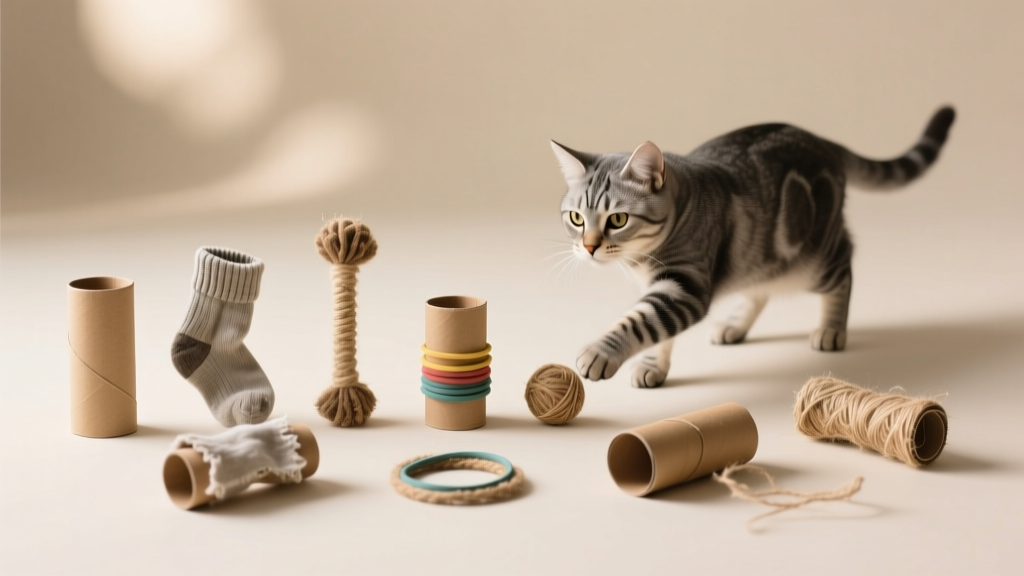
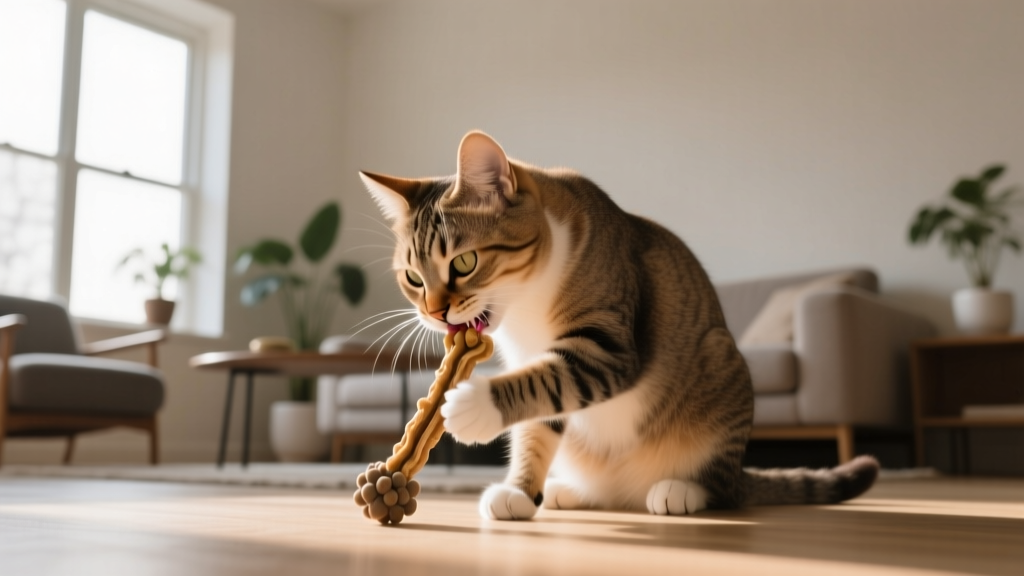
\nThat 3 a.m. zoomie session? It’s not random. It’s hardwired predation sequencing—stalking, chasing, pouncing, killing, eating, grooming. Indoor cats rarely complete the full sequence, leading to pent-up energy and redirected behaviors (biting ankles, attacking curtains).
\nThe key insight from Dr. John Bradshaw’s landmark research: “Cats don’t need ‘more play’—they need *complete* play sessions that mimic the natural arc.” That means 15 minutes of interactive play (not just dangling toys), ending with a ‘kill’—a treat or meal—and followed by grooming (petting or self-grooming).
\nMini-case: Bella, a 2-year-old Bengal, attacked her owner’s hands during petting. Her vet ruled out pain, but her behavior log showed attacks occurred only after >2 minutes of stroking—classic petting-induced aggression. The fix? Shorter, targeted sessions (head/cheeks only), paired with a feather wand chase *before* petting, then finishing with a food puzzle. Within 10 days, biting ceased.
\nEnvironmental enrichment is non-negotiable. A 2023 Cornell Feline Health Center study found cats with ≥5 distinct enrichment zones (vertical space, hiding spots, prey-like toys, food puzzles, window perches) showed 41% lower cortisol levels and 67% fewer stereotypic behaviors (overgrooming, pacing) than control groups.
\n\n| Behavior | \nMost Likely Meaning | \nImmediate Action | \nWhen to Consult a Vet | \n
|---|---|---|---|
| Kneading with purring | \nContentment + neonatal comfort association (kittens knead mammary glands) | \nOffer gentle petting; avoid restraining | \nIf sudden onset in senior cats—rule out oral pain or neurological issues | \n
| Slow blinking | \nTrust signal—equivalent to a feline ‘I love you’ | \nReturn the blink! Hold eye contact, close eyes slowly, pause, repeat | \nRarely concerning—but absence in multi-cat households may indicate chronic stress | \n
| Excessive licking/grooming | \nStress response OR medical issue (allergies, pain, skin infection) | \nAssess environment: recent changes? New scents? Conflict with other pets? | \nIf bald patches, redness, or skin lesions appear—see vet within 48 hours | \n
| Bringing ‘gifts’ (dead mice, toys) | \nInstinctive teaching behavior—your cat sees you as inept hunter needing instruction | \nPraise calmly, then quietly dispose. Never punish—this breaks trust | \nIf gifts increase suddenly—check for outdoor access risks or rodent infestation | \n
| Chattering at windows | \nFrustration + motor activation of jaw muscles pre-hunt | \nRedirect with interactive play using wand toys mimicking prey movement | \nIf accompanied by vocalizing at walls/empty spaces—consider vision loss or cognitive decline | \n
Frequently Asked Questions
\nWhy does my cat stare at me without blinking?
\nDirect, unblinking stares are often misinterpreted as ‘creepy’—but they’re actually neutral attention. Cats lack the social pressure humans feel around prolonged eye contact. However, if the stare is paired with stiff posture, dilated pupils, or a low tail, it may signal alertness or mild anxiety. The true sign of affection is the slow blink: when your cat locks eyes, then slowly closes and opens them. Try returning it—you’ll likely see them blink back. This ‘cat kiss’ is scientifically validated as a trust indicator in feline-human bonding studies.
\nIs it normal for my cat to sleep 16–20 hours a day?
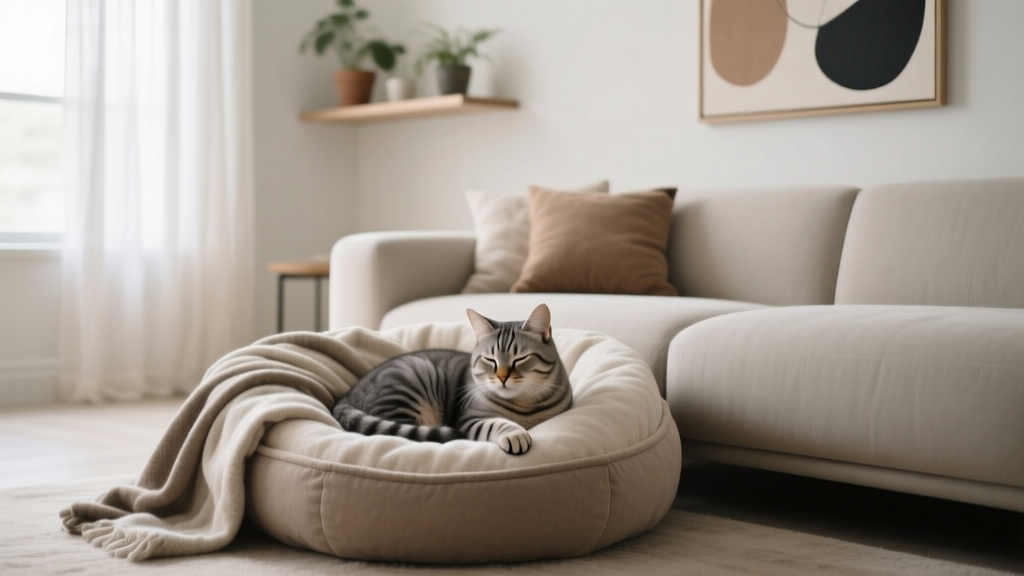
\nYes—absolutely normal. Cats are crepuscular (most active at dawn/dusk) and conserve energy for short, intense bursts of activity. Their sleep cycles include light dozing (easily roused) and deep REM sleep (paws twitching, whiskers quivering). Kittens and seniors sleep more; adults average 15–18 hours. Concern arises only if sleep patterns shift dramatically—e.g., a formerly active cat now sleeping 22+ hours, or one who won’t nap at all. These can signal pain, hyperthyroidism, or depression.
\nMy cat hides when guests arrive. Is this shyness or fear?
\nIt’s almost always fear-based avoidance—not ‘shyness.’ True shyness implies curiosity mixed with caution; hiding is a survival response. Observe: Does your cat retreat to a high, enclosed spot (safe)? Or squeeze under furniture where they can’t be reached (panic)? The latter suggests past trauma or insufficient socialization. Never force interaction. Instead, use ‘passive presence’: have guests ignore the cat, place treats nearby, and let your cat approach on their terms. Most cats acclimate within 3–5 visits when given this autonomy.
\nDo cats really recognize their names?
\nYes—multiple peer-reviewed studies confirm it. A 2019 study in Scientific Reports tested 78 cats using recordings of their owner’s voice saying four nouns similar in length/sound to their name, followed by their actual name. 50% of cats turned their heads, moved ears, or vocalized specifically to their name—even when spoken by strangers. But here’s the nuance: they respond to the *sound pattern*, not abstract identity. So ‘Mittens’ won’t come running unless trained to associate that sound with positive outcomes (food, play, affection).
\nWhy does my cat bite me gently during petting?
\nThis is ‘petting-induced aggression’—a common, misunderstood signal. Cats have sensitive nerve endings along their spine and tail base. Overstimulation builds until their threshold is crossed, triggering a reflexive bite. It’s not anger; it’s a hardwired ‘off switch.’ Watch for early warnings: tail thumping, skin rippling, flattened ears, or sudden stillness. Stop petting *before* these appear. Focus strokes on the head, cheeks, and chin—areas rich in scent glands and less sensitive.
\nCommon Myths About Cat Behavior
\nMyth #1: “Cats are aloof and don’t form attachments.”
\nFalse. Groundbreaking attachment studies (using the ‘Strange Situation Test’ adapted for cats) show 64% of cats display secure attachment to their owners—comparable to dogs and human infants. Securely attached cats explore freely when their owner is present, seek comfort upon reunion after separation, and use their owner as a ‘secure base.’ The difference? Cats express attachment through proximity, slow blinking, and following—not constant physical contact.
Myth #2: “If my cat doesn’t like me, there’s nothing I can do.”
\nFalse. Bonding is a skill—not fixed personality. A 2022 Journal of Veterinary Behavior study found that owners who practiced ‘choice-based interactions’ (letting cats initiate contact, respecting withdrawal, using food-based positive reinforcement) increased mutual trust scores by 72% in just 3 weeks—even with previously fearful rescues.
Related Topics (Internal Link Suggestions)
\n- \n
- Understanding Cat Body Language — suggested anchor text: "how to read your cat's body language" \n
- Cat Stress Signs and Solutions — suggested anchor text: "signs of stress in cats and how to help" \n
- Best Enrichment Toys for Indoor Cats — suggested anchor text: "indoor cat enrichment ideas that actually work" \n
- When to See a Veterinary Behaviorist — suggested anchor text: "cat behavior problems that need professional help" \n
- Feline Cognitive Dysfunction in Senior Cats — suggested anchor text: "is my older cat developing dementia?" \n
Your Next Step: Observe, Interpret, Respond
\nWhat is a cat’s behavior? It’s not a puzzle to solve—it’s a conversation to join. You don’t need to become a feline linguist overnight. Start small: pick *one* signal this week—maybe the slow blink, tail position, or meow context—and track it. Notice how your cat’s behavior shifts when you adjust your response. That tiny act of attention builds the foundation for profound mutual understanding. And remember: the most powerful tool isn’t a clicker or pheromone diffuser—it’s your consistent, patient observation. Ready to go deeper? Download our free 7-Day Cat Behavior Tracker (includes printable logs, video examples, and vet-vetted interpretation guides) to turn insight into action—starting today.