Why Cats Sit on the Doorstep Welcome Mat
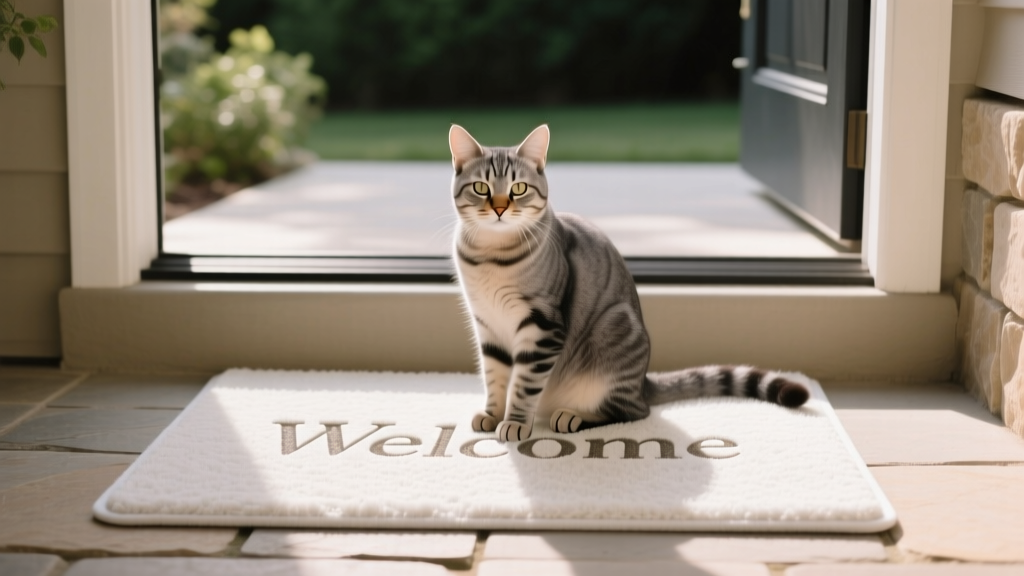
You open the front door with one hand full of groceries, the other hand juggling keys, and there’s your cat—planted like a tiny statue on the welcome mat. Not just near it. On it. Perfectly positioned where your feet need to go, gazing up like: “Oh good, you’re home. Please step around me.”
If you’ve ever wondered why your cat chooses that exact spot—especially when there are perfectly cozy beds, couches, and sunbeams available—you’re not alone. The welcome mat is one of those weirdly magnetic places in a cat’s world. And once you understand what it represents to a cat, the behavior starts to look less “random” and more like a very feline combination of security, information-gathering, and social strategy.
The Scientific (and Slightly Sneaky) Reason: Doorways Are Powerful Places
Cats are both predators and prey in evolutionary terms. That means they’re wired to love locations that offer information and control without making them feel exposed. Doorways are exactly that: a natural “pinch point” where movement funnels through one predictable path.
In animal behavior, these spots are sometimes called transition zones—places where one territory meets another. For a cat, the front door isn’t just a door. It’s the border between “home territory” and “the great unknown.” The mat is right on that border, which makes it an irresistible observation post.
From a scent and sensory perspective, a welcome mat is also a goldmine. It collects smells from:
- you (your shoes, your footsteps, your daily adventures)
- other humans (delivery drivers, guests)
- other animals (neighborhood cats, dogs, wildlife)
- the outdoors (plants, rain, pavement, pollen)
A cat’s nose is far more sensitive than ours, and their world is layered with scent “news.” Sitting on the mat is a bit like scrolling the neighborhood feed—except it’s written in smells.
What Sitting on the Welcome Mat Looks Like in Different Contexts
Not all doorstep mat-sitting is the same. The “why” can change depending on what’s happening around the door, the time of day, and your cat’s personality.
1) The “Door Guardian” Routine
Some cats sit on the mat like they’ve been hired as head of security. They face the door, ears swiveling, alert but calm. This often shows up in cats who are confident and socially invested in the household.
What’s happening: Your cat is monitoring traffic, listening for footsteps in the hallway, and keeping tabs on potential intruders (which might include the mail slot).
2) The “You’re Late” Welcome Mat Protest
You get home and your cat is already waiting—sometimes loafed, sometimes sprawled, sometimes with a look that could curdle milk. This is common in cats who have strong routines and a healthy attachment to you (yes, cats can be very attached).
What’s happening: The mat becomes the meeting point. Your cat may have learned that being there increases the chance of attention, food, or a door-opening event.
3) The “Scent Collector” After-Guests Session
After company leaves, your cat appears and sits on the mat as if reviewing the guest list. They may sniff, rub their cheeks on the edge, or knead.
What’s happening: Social scent processing. Cats use scent to answer questions like, “Who was here?” and “Do I need to adjust my comfort level?”
4) The “I Want Out (or In)” Door Negotiation
If your cat sits on the mat and stares at the door, vocalizes, or taps the door with a paw, they might be requesting access—either to the outside, the hallway, the porch, or a specific room beyond the door.
What’s happening: Doorways represent resources: freedom, novelty, smells, and sometimes an actual food source (like a neighbor who offers treats).
5) The “It’s Warm/Interesting/Texture Is Nice” Simple Explanation
Sometimes the mat is just… pleasant. It can trap warmth from sunlight, have a satisfying texture, or provide a non-slippery surface for a good sit.
What’s happening: Cats are connoisseurs of surfaces. If it feels good under their paws and offers a good view, they’re sold.
What It Means About Your Cat’s Mood and Feelings
The welcome mat is a mood board—if you know what to look for. Pay attention to body language and you’ll get a much clearer message than the location alone.
- Relaxed loaf, slow blinks, soft face: Your cat feels safe and content. The mat is a comfortable observation spot.
- Upright posture, tail wrapped neatly, ears forward: Calm vigilance. Curious and engaged with the environment.
- Low crouch, tense body, ears sideways or back: Uneasy. Something outside (or at the door) may be stressing them.
- Rolling, rubbing, cheek-marking: Ownership and reassurance. Your cat is “labeling” the threshold with friendly scent.
- Meowing, pawing, darting between you and the door: Request behavior. They’re asking for an action—open door, attention, food, play.
One more emotional layer: cats often choose doorway areas when they want to feel included without being in the middle of the action. If your home gets busy, the mat can be a “participation perch” where your cat can watch arrivals, departures, and household movement.
Related Behaviors You Might Also Notice
If your cat loves the welcome mat, you may see other doorway- and threshold-themed behaviors:
- Blocking your path: Standing in doorways or hallways (prime traffic control zones).
- Rubbing the doorframe: Cheek glands deposit friendly pheromones—your cat’s version of “this is ours.”
- Flopping in front of the door when you leave: A dramatic combo of attention-seeking and “don’t go.”
- Waiting for a specific sound: Keys, elevator ding, garage door, footsteps—cats can learn a whole soundtrack of “human returns.”
- Sniffing your shoes intensely: Shoe scent is basically a travel documentary in odor form.
When Welcome Mat Sitting Is Normal… and When It Might Be a Concern
Most of the time, this behavior is perfectly normal—and honestly, very cat.
Normal signs:
- your cat looks relaxed and moves away easily
- they sit there at predictable times (when you come home, when deliveries arrive)
- they use the mat briefly, then go about their day
Potential concerns:
- Sudden fixation on the door paired with hiding, growling, or increased vigilance (could indicate a new outdoor cat, construction noise, or a stressful change)
- Spraying or inappropriate urination near the entrance (territorial stress is common around boundary areas)
- Compulsive pacing at the door or inability to settle (stress, anxiety, or unmet needs)
- Door-dashing behavior that’s escalating and unsafe (especially near busy streets)
- Appetite changes, overgrooming, or aggression alongside door guarding (stress can spill into other behaviors)
If you’re seeing any of the concern signs, it’s worth considering both behavior and health. Stress can amplify physical issues, and physical discomfort can make cats more vigilant. A vet check plus a behavior-focused plan is a smart combo.
Tips for Responding to (or Encouraging) the Behavior
If your cat’s welcome-mat habit is harmless, you can treat it as a useful communication moment and even a relationship-builder.
Make the Mat Area Cat-Friendly (and Safer)
- Add a second “cat mat” nearby: If your cat always sits exactly where you step, place a small rug or bed beside the welcome mat. Reward them for choosing it.
- Use positive reinforcement: When your cat sits in the “safe spot,” toss a treat there or offer a gentle hello. You’re teaching a polite greeting routine.
- Keep the entrance calm: Loud greetings and sudden movements can make the doorway stressful. Soft voices and predictable routines help.
Support Their Need to Monitor the World
- Offer a window perch: Many cats sit on the mat because it’s the best “intel station.” A perch with a view can reduce doorway fixation.
- Provide enrichment: Daily play (even 5–10 minutes) and puzzle feeders can lower the need to seek stimulation at the door.
If Your Cat Is Door-Obsessed or Door-Dashes
- Teach a station behavior: Pick a spot a few feet from the door. Lure your cat there with treats consistently before opening the door. Over time, they’ll run to their station when they hear keys.
- Manage the environment: Use baby gates, double-door entry strategies, or keep a treat jar away from the door to redirect attention.
- Don’t punish: Spraying water or yelling can make the entrance more emotionally charged, increasing anxiety and escalating the behavior.
Fun Facts and Research-Flavored Nuggets
- Cats map their world with scent: Cats have scent glands in their cheeks, paws, and around their tail base. Doorways are prime “scent billboard” locations because everyone passes through them.
- Whiskers help with doorway decisions: Whiskers (vibrissae) provide detailed spatial info. Doorways are sensory-rich, and cats often pause there to assess movement and space.
- Thresholds reduce surprises: From a survival standpoint, controlling a chokepoint reduces the chance of being startled. Many cats prefer positions where they can see approach routes.
- They may be tracking your routine with scary accuracy: Cats can learn time-based patterns and cues (sounds, light changes, household rhythms). The mat can become part of that “schedule.”
FAQ: Common Questions About Cats and Welcome Mats
Why does my cat sit on the welcome mat when I come home?
It’s often a greeting ritual plus learned behavior: the mat predicts your arrival, attention, and sometimes food. It’s also where your outdoor scent “lands” first—your cat is checking in on where you’ve been.
Is my cat guarding the house?
In a cat way, yes. Many cats monitor entrances because doorways are territorial boundaries. “Guarding” usually looks calm and watchful, not aggressive.
Why does my cat roll around on the welcome mat?
Rolling can be comfort, happiness, or scent behavior. Your cat may be mixing their scent with the mat’s collection of outside smells—basically making the doorway feel more familiar and “ours.”
My cat hisses at the door or growls while sitting on the mat—what’s going on?
That often suggests they’re reacting to something outside: another cat, a dog, unfamiliar voices, or even a sound you barely notice. Consider blocking visual access temporarily, using calming routines, and checking for outdoor triggers. If it’s frequent or intense, a behavior consult can help.
Should I stop my cat from sitting on the mat?
If it’s not causing problems, there’s no need. If it’s a tripping hazard or connected to door-dashing, redirect to a nearby “station spot” and reward that choice.
Why does my cat only do this at night (or early morning)?
Cats are naturally most active at dawn and dusk. Those times also tend to have more outdoor animal activity, more hallway noise, and more interesting scents drifting under the door.
Your cat on the welcome mat isn’t just being quirky (though they absolutely are). They’re choosing a spot that offers control, information, and connection—three things cats care about deeply. With a few small tweaks, you can make that doorway routine safer, calmer, and even more charming.
Does your cat sit like a tiny bouncer at the front door, sprawl dramatically when you try to leave, or perform a full sniff-inspection of your shoes? Share your funniest welcome-mat stories and photos with the Cat Lovers Base community at catloversbase.com—we’d love to hear what your doorstep supervisor is up to.