Cat Paw Grabbing Your Hand: Play or Stop Signal?
You’re sitting on the couch, minding your own business, and your cat climbs up like they own the place (because they do). You reach out to give a sweet little chin scratch… and suddenly—grab. A paw hooks around your hand. Maybe there’s a gentle tug. Maybe a few claws peek out. Sometimes there’s a soft nip, like your cat is saying, “Excuse you, human.”
If you’ve ever frozen mid-pet thinking, “Is this cute? Is this a trap? Am I being scolded?” you’re not alone. Paw-grabbing can be affectionate, playful, controlling, overstimulated, or even a polite “stop.” The tricky part is that the same move can mean different things depending on the context.
Here’s how to read the situation like a cat behaviorist—without ruining the moment (or your skin).
Why Cats Grab: The Instinct Behind the Paw
To understand the paw grab, it helps to remember one thing: cats are tiny, adorable predators with a strong preference for control. In the wild, control is survival—control the prey, control the space, control the interaction.
That grabbing motion is closely related to:
- Prey-capture behavior: Cats often hook prey with their front paws to pull it closer, then bite. Even well-fed indoor cats still have the wiring for this sequence.
- Social boundary-setting: Cats are not “touch first, ask later” animals. Their communication is full of subtle consent signals, and the paw is an excellent tool for managing distance.
- Object manipulation: Cats use paws like hands. Grabbing, tapping, holding, and “testing” objects is normal feline exploration.
So when your cat grabs your hand, you’re seeing a behavior that can be rooted in hunting instinct, social communication, or simple curiosity—sometimes all at once.
Different Contexts: What “The Grab” Looks Like in Real Life
The meaning changes based on what happens right before and right after the grab. Here are the most common scenarios cat owners recognize.
1) The “Hold Still, That’s Nice” Grab
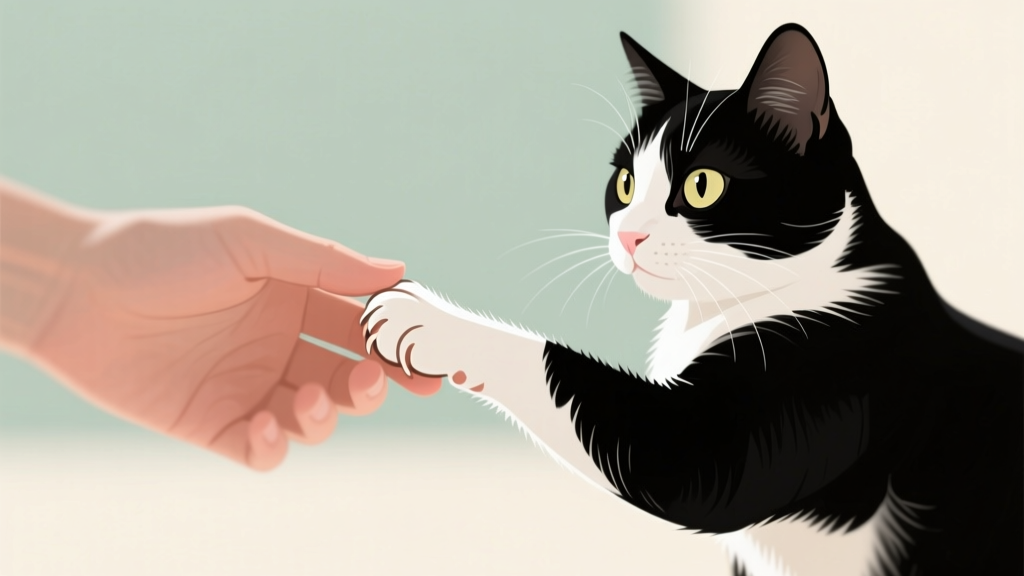
Scene: You’re scratching the sweet spot—chin, cheek, base of the ear. Your cat grabs your hand gently, no claws, like they’re trying to keep the good thing from leaving.
What it usually means: “Don’t stop.” This is often an affectionate, controlling cuddle move. Many cats will also lean in, purr, half-close their eyes, or rub their cheek into your hand.
Typical body language: Soft body, relaxed tail, slow blinks, kneading, purring, head-butting.
2) The “Wrestling Invitation” Grab
Scene: Your hand moves, your cat’s eyes get big, and suddenly your hand is being hugged with both front paws. Sometimes the back feet start bunny-kicking. Sometimes teeth get involved.
What it usually means: Play. Your cat has switched into predatory play mode, and your hand just got cast as “prey.” This is especially common with young cats, high-energy cats, and cats who didn’t get much appropriate play practice as kittens.
Typical body language: Dilated pupils, crouching, fast tail swishes, sudden bursts of energy, ears slightly sideways (“airplane ears”).
3) The “That’s Enough” Stop Signal
Scene: Petting is going fine… until it’s not. Your cat grabs your hand, maybe with claws, and holds it firmly. Sometimes they look away, or their body stiffens. Sometimes there’s a nip that feels more like punctuation than a bite.
What it usually means: Overstimulation or a boundary. Many cats enjoy affection in short doses. The paw grab can be a clear “pause” signal before escalation.
Typical body language: Skin twitching along the back, tail flicking faster, ears turning back, tension in shoulders, a sudden stop in purring.
4) The “Redirected Frustration” Grab
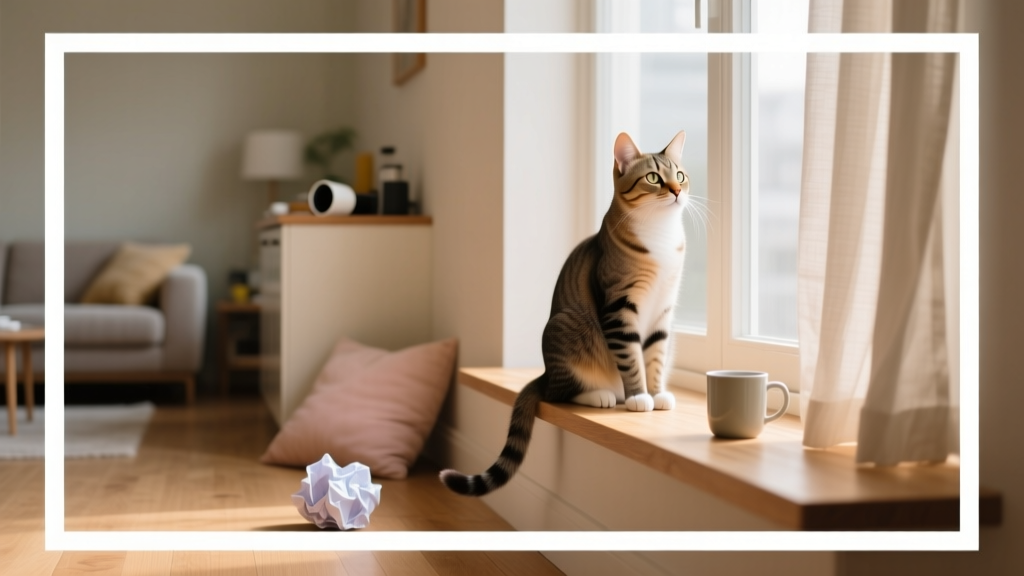
Scene: Your cat is watching a bird out the window, chattering, tail lashing. You reach to pet them and they whip around and grab your hand—harder than usual.
What it usually means: Redirected arousal. The cat’s nervous system is revved up by something exciting or stressful, and your hand becomes the nearest outlet.
Typical body language: High alert posture, intense staring, sharp tail movement, quick breathing, sudden snapping motion.
5) The “I’m Not Sure About This” Grab
Scene: A guest reaches to pet your cat. Your cat doesn’t fully leave—but they grab the hand, hold it, and maybe sniff or give a cautious nibble.
What it usually means: Ambivalence: curiosity mixed with caution. The paw grab can be your cat gathering information and controlling the distance.
Typical body language: Leaning forward then back, ears rotating, whiskers forward then neutral, hesitant sniffing.
What the Paw Grab Says About Your Cat’s Mood
Think of paw grabbing as a “conversation” move. Here’s a quick translation of the most common emotional states behind it:
- Affection + trust: Gentle hold, soft face, relaxed body. Your cat feels safe and wants connection on their terms.
- Playful excitement: Grabbing paired with pouncing, kicking, or chasing. Your cat is in hunting-game mode.
- Overstimulated irritation: The grab is firmer, your cat’s body stiffens, tail flicking ramps up. It’s a “stop” before it becomes a swat.
- Anxious control: The grab is a way to manage uncertainty—“I’m not fleeing, but I need you to slow down.”
- Frustration spillover: The grab comes after high arousal (window watching, loud noises, another cat outside). It’s not personal; it’s nervous system overflow.
One helpful rule: soft paw = soft feeling. tense paw + tense body = listen closely.
Related Behaviors You Might Notice (And What They Pair With)
Paw grabbing often shows up alongside other classic cat behaviors. These “combo packs” can help you interpret the meaning:
- Bunny kicks: Usually play or predatory sequence practice. If it happens with claws out, redirect to a toy.
- Love bites: Gentle nips during petting can be affection or early overstimulation. Watch the tail and body tension.
- Kneading: Often comfort and bonding; may include holding your hand in place like a security blanket.
- Tail flicking: Not always anger—often arousal. Faster, sharper flicks usually mean “I’m reaching my limit.”
- Chattering at birds: High excitement; don’t be surprised if touch becomes risky during this state.
- Grooming your hand: Social bonding. Some cats alternate between grooming and holding you still with a paw.
When Paw Grabbing Is Normal vs. When to Worry
Normal: Most paw grabbing is perfectly typical feline communication—especially when it’s gentle, predictable, and easy to interrupt.
Potential concern: Take a closer look if you notice any of the following:
- Sudden change in behavior (a previously tolerant cat now grabs or bites during touch)
- Grabbing paired with yowling, hissing, or intense aggression
- Touch sensitivity in specific areas (your cat grabs when you pet near hips, belly, or back)
- Signs of pain: hiding more, reduced grooming, limping, flinching, changes in appetite or litter box habits
- Compulsive or constant grabbing that interrupts normal life or causes injuries
If the behavior escalates quickly or seems linked to discomfort, a vet visit is a smart next step. Pain can make tolerance for touch evaporate, and cats are experts at hiding it until they can’t.
How to Respond (Without Confusing Your Cat)
Your goal is to reward communication and prevent your hand from becoming the default toy or punching bag.
If it seems affectionate
- Pause instead of pulling away fast. Quick withdrawal can trigger chase/play instinct.
- Offer “consent breaks.” Pet for a few seconds, stop, and see if your cat re-initiates with a head rub or leaning in.
- Keep sessions short and sweet. Many cats prefer multiple mini-cuddles over one long pet marathon.
If it seems like play
- Don’t wrestle with your hands. It teaches your cat that human skin is an acceptable toy.
- Swap in an appropriate target. Use a wand toy, kicker toy, or small plush. Move it like prey: dart, pause, hide, reappear.
- Give daily hunting outlets. Two or three short play sessions often reduce hand-grabbing dramatically.
If it seems like “stop” or overstimulation
- Respect the warning. Your cat is being polite by grabbing instead of immediately swatting.
- End petting calmly. Slowly remove your hand and redirect attention with a treat toss or toy.
- Note patterns. Time limit, body area, or intensity of touch can all be triggers.
If it seems like redirected frustration
- Give space during high-arousal moments. Bird-watching and window patrol can be very intense.
- Use enrichment. Puzzle feeders, sniff-and-find treats, and scheduled play help “use up” that energy.
- Reduce stressors if possible. Blocking sightlines to outdoor cats, adding window film, or providing vertical perches can help.
Fun Facts and Research Nuggets
- Cats use their paws like sensory tools. The paw is not just for walking—it’s for testing, trapping, and controlling. Many cats prefer to “handle” something with a paw before committing.
- Petting aggression is real—and common. Some cats have a lower threshold for repetitive touch. What feels soothing to us can become irritating to them, like someone tapping your arm nonstop.
- Kittens learn bite inhibition through play. Early experiences with littermates teach “too hard!” If a kitten is separated very early, they may need more coaching to use gentle paws and mouth.
- Many cats enjoy predictable interaction patterns. Consistent routines—short petting sessions, clear play times—often reduce mixed signals like sudden grabbing.
FAQ: Common Questions About Cats Grabbing Your Hand
Why does my cat grab my hand and lick me?
That’s often social bonding. Licking can be grooming behavior, and the paw grab is your cat’s way of holding you still—like a cat-style hug. If licking turns into nibbling and your cat’s body gets tense, they may be sliding into overstimulation.
Why does my cat grab my hand and bite when I stop petting?
Two common reasons: your cat is asking for more (especially if the bite is gentle), or your cat is overstimulated and the bite is an “end it now” message. Watch for relaxed vs. tense body language, tail flicking, and ear position.
Is it bad if my cat bunny-kicks my arm after grabbing it?
It’s normal play behavior, but it’s not great for your skin. Redirect to a kicker toy so your cat can do the full grab-and-kick routine safely. The behavior itself is fine; the target needs adjusting.
How do I teach my cat not to grab my hands?
Don’t punish—cats usually don’t connect punishment with the behavior. Instead, consistently redirect to toys, end interaction when teeth/claws appear, and reward calm engagement. Over time, your cat learns that gentle paws keep attention going, and rough paws end the fun.
Why does my cat grab only certain people?
People move differently. One person may pet longer, use heavier pressure, or ignore early warning signs. Cats also form individual social “rules” with each person based on what has worked before.
Could paw grabbing mean my cat is in pain?
It can, especially if the behavior is new, happens when you touch a specific area, or comes with other changes (hiding, appetite changes, litter box issues). When in doubt, a vet check is the safest call.
One Last Thought: Your Cat Is Communicating
The paw grab is rarely random. It’s your cat’s way of steering the interaction: “Keep going,” “Play with me,” “Too much,” or “I need a little control here.” The more you respond in a way your cat understands—respecting boundaries, offering appropriate play outlets, and noticing the early signals—the more relaxed and affectionate your relationship tends to become.
Does your cat do the gentle “hold my hand” grab, the full-on wrestling hug, or the polite “stop right there” paw? Share your funniest (or most puzzling) paw-grab stories with the Cat Lovers Base community at catloversbase.com—cat people understand like no one else.