Cat Paw Holding the Curtain Edge: Pulling Behavior
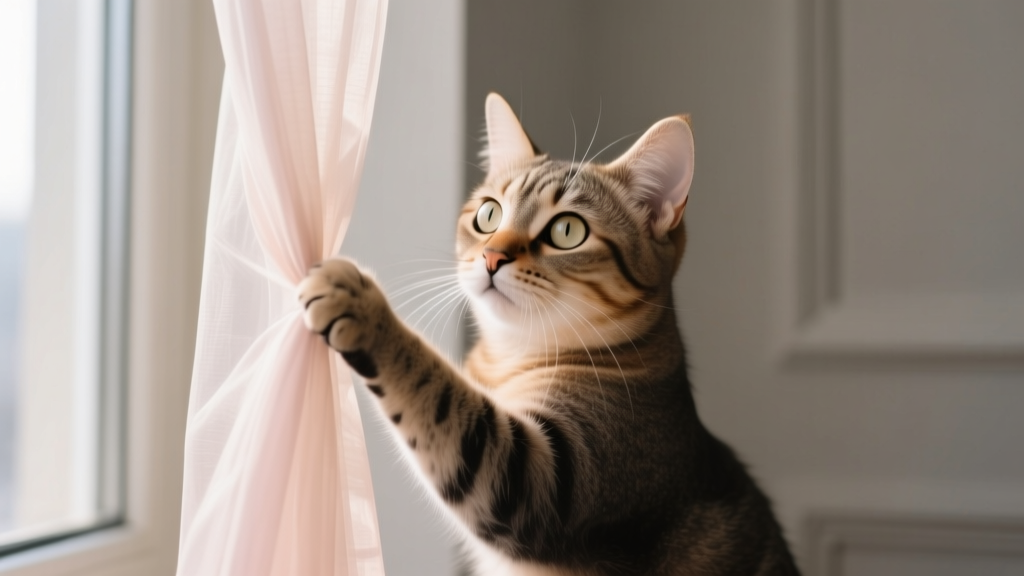
You’re sitting on the couch, thinking you finally have a peaceful evening. The room is quiet. Then you hear it: a soft shhk… shhk… from the window. You look over and there’s your cat—one paw delicately pinching the curtain edge like a tiny hand—slowly pulling it toward themselves with the focus of a jewel thief. Maybe they peek behind it. Maybe they freeze when you notice. Maybe they keep tugging like they’re testing the laws of physics. If this sounds familiar, congratulations: you live with a cat.
Cats holding the curtain edge and pulling is one of those behaviors that feels oddly intelligent and oddly mischievous at the same time. It can be play, curiosity, communication, or a cat’s version of “I’m in charge of this room.” Often it’s completely normal. Sometimes it’s a clue that something in your cat’s environment or routine needs a tweak. Either way, it’s a fascinating little window into feline psychology—right there on your windowsill.
Why Cats Pull Curtains: The Science and the “Inner Wild Cat”
Cats are predators first, even when they’ve never hunted anything more dangerous than a sock. Their brains are wired for stalking, manipulating objects, and controlling access to space. A curtain edge is basically a perfect cat toy from an evolutionary perspective:
- It moves. Predators are magnetized to movement. A slight draft or a gentle tug makes fabric sway like potential prey.
- It offers “cover.” In the wild, cats use vegetation to hide and ambush. Curtains create instant camouflage and a safe observation post.
- It responds to pawing. Cats learn through cause-and-effect. When paw meets curtain and curtain moves, the brain lights up: “I did that.”
- It’s a boundary object. Cats care about edges, thresholds, and control of access—doors, cabinets, boxes, and yes, curtains that decide what’s visible.
There’s also a sensory component. Cat paws are incredibly sensitive. The pads contain receptors that help cats judge texture and vibration—useful when hunting. Gripping fabric and pulling it is tactile “information gathering.” It’s not just play; it’s a cat using their paws the way we use our fingertips.
Different “Curtain Pulling” Styles and What’s Going On
Not all curtain pulling is created equal. The context matters. Here are common versions I see (and what they usually mean):
1) The Slow, Careful Pinch-and-Pull
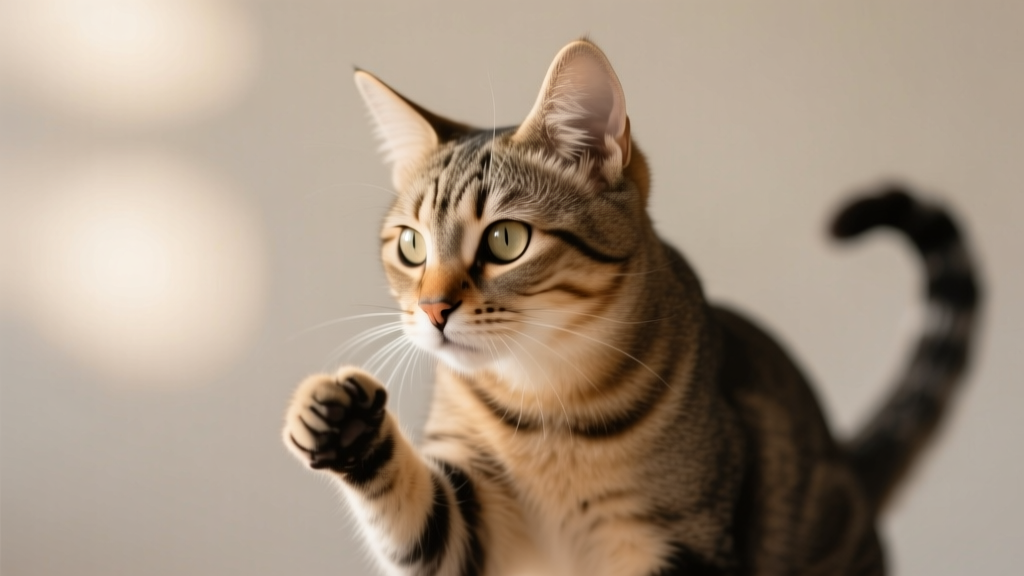
Your cat gently hooks one claw or pads the edge, then draws it toward their chest as if they’re closing a tiny door.
Common motivation: Curiosity, environmental control, quiet play. This is often a calm, self-directed behavior—your cat entertaining themselves without needing you.
2) The Peekaboo Hide-and-Spy
Your cat pulls the curtain, slips behind it, and then sits like a statue watching the room or the outdoors.
Common motivation: Seeking safety and a vantage point. Curtains create a “privacy booth.” Cats love observing without being observed.
3) The “I Heard Something” Investigation
A bird chirps outside, a neighbor closes a car door, or a squirrel performs parkour. Your cat grabs the curtain edge and yanks it open like they’re saying, “Excuse me, I need visual confirmation.”
Common motivation: High prey drive and alertness. This can be the feline equivalent of binoculars.
4) The Dramatic Tug… While Looking at You
Your cat pulls the curtain edge and makes sure you see it. Some even do a slow-motion tug while maintaining intense eye contact.
Common motivation: Communication. This can mean “Pay attention to me,” “I’m bored,” or “I want something.” It may also be a learned attention-getting behavior if you’ve reacted strongly in the past.
5) The Repetitive, Slightly Intense Curtain Workouts
They do it again and again: grip, pull, release, repeat—sometimes with escalating intensity.
Common motivation: Under-stimulation, stress relief, or compulsive tendencies. Repetition isn’t automatically a problem, but it’s worth noticing patterns.
What This Behavior Says About Your Cat’s Mood
Because curtain pulling can mean different things, your cat’s body language is your best translator. Here are quick “mood subtitles” to watch for:
- Relaxed mood: Soft eyes, neutral ears, slow movements, tail resting or gently swishing. Likely calm curiosity or quiet play.
- Playful mood: Bouncy posture, wiggles, quick paw taps, tail twitching at the tip. Your cat is hunting the curtain like it’s prey.
- Alert/excited mood: Ears forward, body leaning toward the window, stiff tail or rapid tail flicks. Something outside has their full attention.
- Frustrated mood: Harder yanks, ears slightly sideways, tense body, vocalizing. They may want access (to the window, to you, or to something they can’t reach).
- Anxious mood: Low posture, wide pupils, startle responses, retreating behind the curtain and staying there. Curtains may be serving as a hiding zone.
One small but useful clue: if your cat’s claws are out and they’re snagging fabric, it’s often a sign of heightened arousal—either excited play or frustration—rather than gentle exploration.
Related Behaviors You Might Also Notice
Curtain-edge pulling tends to travel with other classic “I must manipulate this object” cat behaviors:
- Door pawing or “door drumming”: Cats pull at edges to change access—open it, close it, test it.
- Blinds batting: Similar prey-mimic movement and sound feedback.
- Carpet scratching near windows: A mix of marking territory and releasing energy while watching outdoor stimuli.
- Knocking items off windowsills: Cause-and-effect play plus clearing the “observation deck.”
- “Helping” you with fabric: Sitting on laundry, pawing blankets, grabbing sleeves—fabric is sensory gold for cats.
Normal vs. Concerning: When to Pay Closer Attention
In most households, curtain pulling is harmless enrichment. It becomes a concern when it’s paired with signs of stress, compulsive repetition, or safety risks.
Usually normal if:
- Your cat does it occasionally, especially around sunrise/sunset or when birds are active.
- They can be redirected easily to a toy or a treat.
- There’s no damage beyond minor curiosity pokes.
- Your cat otherwise eats, sleeps, plays, and uses the litter box normally.
Worth addressing (and possibly discussing with a vet/behavior professional) if:
- It’s constant and difficult to interrupt, especially if your cat seems “stuck” in a loop.
- It coincides with other stress signs (hiding more, over-grooming, appetite changes, litter box changes, aggression).
- Your cat is ingesting fabric threads or chewing curtain material (possible pica; can be dangerous).
- They’re climbing curtains and risking falls, injuries, or pulling the rod down.
If the behavior suddenly appears in an adult cat who never did it before, treat it like new information. Something in the environment may have changed—new pets, construction noise, a move, schedule changes, or even a new outdoor cat visible through the window.
How to Respond: Encourage the Cute, Prevent the Chaos
You don’t have to “train it out” of them completely. The goal is to meet the underlying need (play, control, safety, stimulation) while protecting your curtains and keeping your cat safe.
1) Offer a better “pull target”
- Hang a sturdy fleece strip or a kicker toy near a cat tree (something they’re allowed to grab).
- Try crinkle toys or wand toys that mimic that satisfying tug-and-release feeling.
2) Build a window-viewing station
- Add a window perch, sturdy cat tree, or shelf near the window.
- Place a small blanket there to make it a “destination.”
- Consider a bird feeder outside (placed safely and appropriately) for “cat TV.”
3) Use strategic redirection (not punishment)
If your cat is pulling for attention, dramatic reactions can accidentally reward the behavior. Instead:
- Calmly redirect with a toy and praise when they engage with the appropriate object.
- Give attention before the curtain routine starts—short, scheduled play sessions can reduce attention-seeking.
4) Make curtains less tempting
- Tiebacks can reduce dangling edges.
- Heavier curtains move less with drafts (less prey-like).
- Replace delicate, loose-weave fabric with sturdier materials if your cat is a dedicated “textile enthusiast.”
5) Support emotional comfort
- Provide multiple resting spots (high and low), hiding options, and predictable routines.
- If outdoor triggers are intense (like neighborhood cats), consider window film on the lower portion or controlled viewing times.
Fun Facts and Research-Adjacent Nuggets
- Cats map the world through surfaces. Scratching, pawing, and pulling aren’t random—they’re ways of interacting with texture, resistance, and movement.
- Object play often mirrors hunting sequences. Stalk, pounce, grab, “kill bite,” carry—curtains let cats practice the grab-and-control part of that sequence.
- Cats like controlling visibility. Many cats are calmer when they can choose when to watch and when to hide. Curtains provide adjustable privacy.
- Your reaction matters more than you think. Cats are excellent at learning what reliably makes a human move, talk, or look at them—especially if it works a few times.
FAQ: Cat Paw Holding the Curtain Edge
Why does my cat pull the curtain while staring at me?
Often it’s attention-seeking or a request: play, food, window access, or just “engage with me.” If your cat has learned that curtain pulling makes you react, they may repeat it. Try offering structured playtime and rewarding calm behaviors rather than reacting dramatically to the curtain.
Is curtain pulling a sign of anxiety?
It can be, but it isn’t automatically. If your cat pulls the curtain to hide and then stays tense, startles easily, or shows other stress behaviors (over-grooming, hiding, appetite changes), anxiety becomes more likely. In that case, focus on environmental comfort and consider consulting your vet or a behavior professional.
How do I stop my cat from damaging the curtains?
Give them an approved alternative (a toy they can grab and pull), increase daily play, and reduce tempting curtain edges with tiebacks. If your cat climbs, add a tall cat tree near the window so they have a legitimate way to get height and a view.
Why does my cat do this mostly at night or early morning?
Cats are naturally crepuscular—most active at dawn and dusk. That’s prime time for outdoor movement (birds, insects, neighborhood sounds), and your cat’s hunting brain is switched on. A short play session before bedtime can help reduce nighttime mischief.
Should I worry if my cat chews the curtain?
Yes—chewing or eating fabric can be dangerous (strings and threads can cause intestinal issues). If you notice chewing, remove access, offer safer chew outlets (some cats like silvervine sticks), increase enrichment, and talk with your vet to rule out medical or nutritional contributors.
My cat only pulls one specific curtain. Why that one?
Usually that window has the best “cat TV,” the best sunbeam, a draft that makes the fabric move, or it’s near a high-traffic area where your cat can interact with you. Cats are very location-specific with habits—one spot becomes the habit spot.
Curtain-edge pulling is one of those small behaviors that reveals a lot: your cat’s curiosity, their love of control, their need for play, and their talent for turning your home into an interactive habitat. If you watch the body language, you’ll quickly learn whether you’re seeing a calm investigator, a tiny hunter, or a cat making a very specific request.
Has your cat mastered the slow-motion curtain tug, the dramatic peekaboo, or the “I swear I wasn’t doing anything” freeze? Share your funniest (or most puzzling) curtain stories with the Cat Lovers Base community at catloversbase.com—we’d love to hear what your whiskered window manager is up to.