How to Fix Cat Behavior for Kittens: 7 Gentle, Vet-Approved Steps That Stop Biting, Scratching & Litter Accidents in Under 2 Weeks (No Punishment Needed)
Why 'How to Fix Cat Behavior for Kittens' Is the Most Urgent Question New Cat Owners Ask
If you're searching for how to fix cat behavior for kittens, you're likely exhausted: your 12-week-old fluffball just shredded your favorite couch, ambushed your ankles at 4 a.m., or peed beside—not in—the litter box. You’re not failing. You’re facing one of the most misunderstood windows in feline development: the critical socialization and habit-formation period between 2–14 weeks. Unlike adult cats, kittens aren’t ‘bad’—they’re biologically wired to explore, test boundaries, and learn through consequences that feel immediate and meaningful to them. And here’s what most guides miss: punishment doesn’t fix kitten behavior—it erodes trust, delays learning, and can even trigger long-term anxiety. In this guide, we’ll walk you through exactly how to fix cat behavior for kittens—not by suppressing instincts, but by guiding them into healthy, joyful habits.
Step 1: Decode the 'Why' Behind the Behavior (Before You Try to Fix It)
Kittens don’t misbehave out of spite—they communicate unmet needs. According to Dr. Melissa Bain, board-certified veterinary behaviorist and professor at UC Davis School of Veterinary Medicine, 'Over 85% of so-called “problem behaviors” in kittens stem from three root causes: insufficient play enrichment, mismatched human expectations, or undiagnosed physical discomfort.' That means your kitten’s midnight zoomies may signal pent-up predatory energy—not defiance. Their biting during petting could indicate sensory overload—not aggression.
Start with a 48-hour behavior log. Note each incident: time, location, what happened immediately before (e.g., 'picked up while sleeping'), what happened after (e.g., 'ran under bed'), and your kitten’s body language (dilated pupils? flattened ears? tail flicks?). You’ll likely spot patterns. One client, Maya (a first-time kitten owner), logged her 10-week-old Mochi’s biting episodes and discovered every single one occurred within 90 seconds of being held still—her kitten wasn’t aggressive; he was signaling overstimulation long before his teeth made contact.
Key red flags that warrant a vet visit *before* behavior training begins:
- Sudden onset of inappropriate elimination (especially if accompanied by straining, vocalizing, or blood)
- Excessive grooming or hair loss in one area
- Uncharacteristic hiding, lethargy, or refusal to eat
- Aggression toward hands *only* when touched near the hindquarters or belly
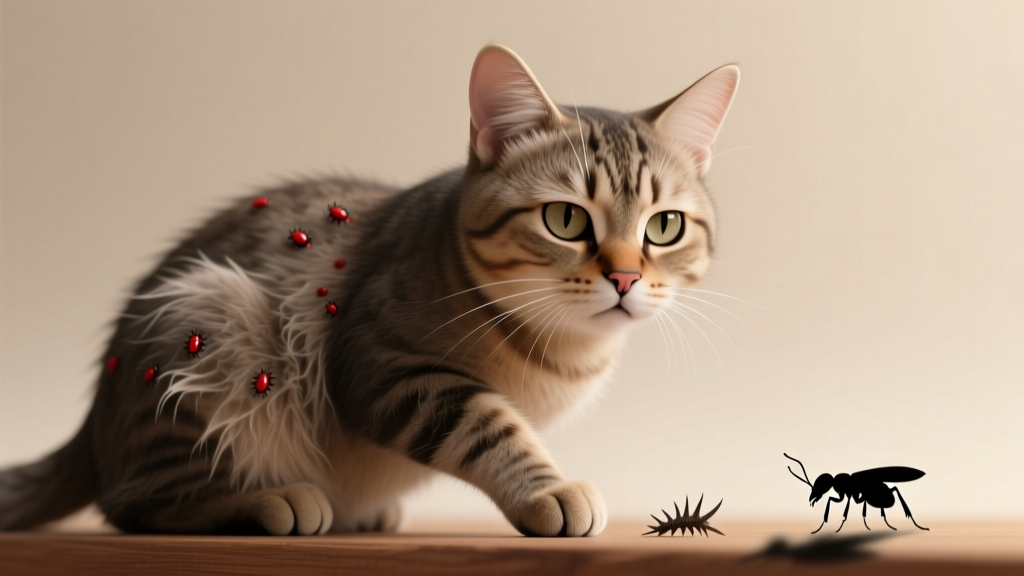
These may indicate urinary tract infection, flea allergy dermatitis, or early orthopedic pain—conditions that mimic behavioral issues but require medical intervention first.
Step 2: Build the Right Environment—Not Just the Right Training
Here’s what top-tier feline behavior consultants (like those certified by the International Association of Animal Behavior Consultants) emphasize: You cannot train a kitten out of stress—but you can design an environment that prevents it. Kittens process safety through vertical space, predictable routines, and resource security. A 2022 study published in Applied Animal Behaviour Science found that kittens housed in enriched environments (with multiple perches, hide boxes, and rotating toys) showed 63% fewer redirected aggression incidents and 41% faster litter box mastery than control groups.
Start with the 3-3-3 Rule:
- 3 Vertical Zones: Install wall-mounted shelves or cat trees at low, mid, and high levels. Kittens climb to assess territory—and feel safe observing from above.
- 3 Separate Resource Stations: Place food, water, and litter boxes in distinct, quiet areas—not clustered together. Cats won’t eliminate where they eat or drink. Use unscented, clumping litter in shallow, uncovered boxes (kittens can’t jump into tall sides).
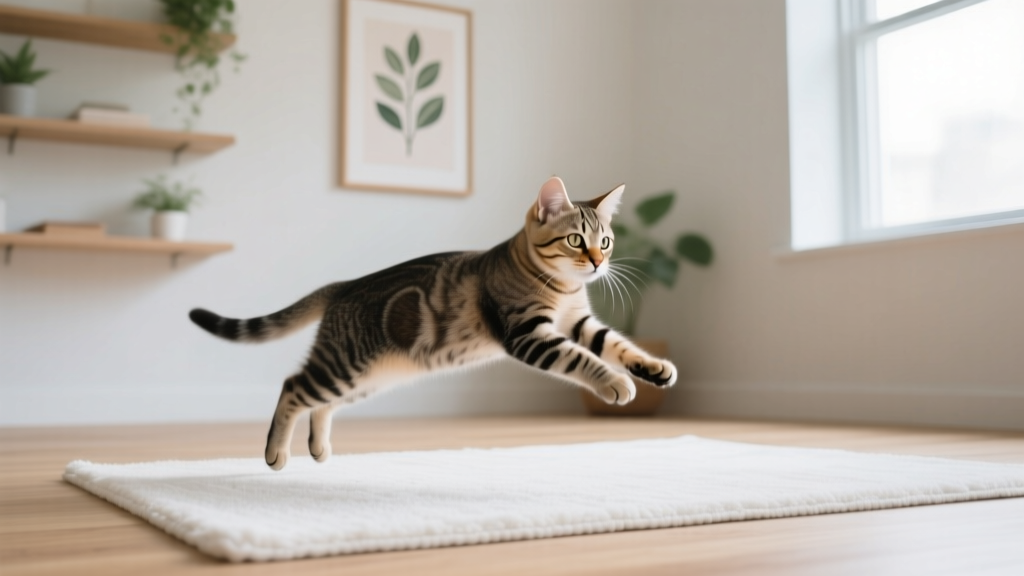
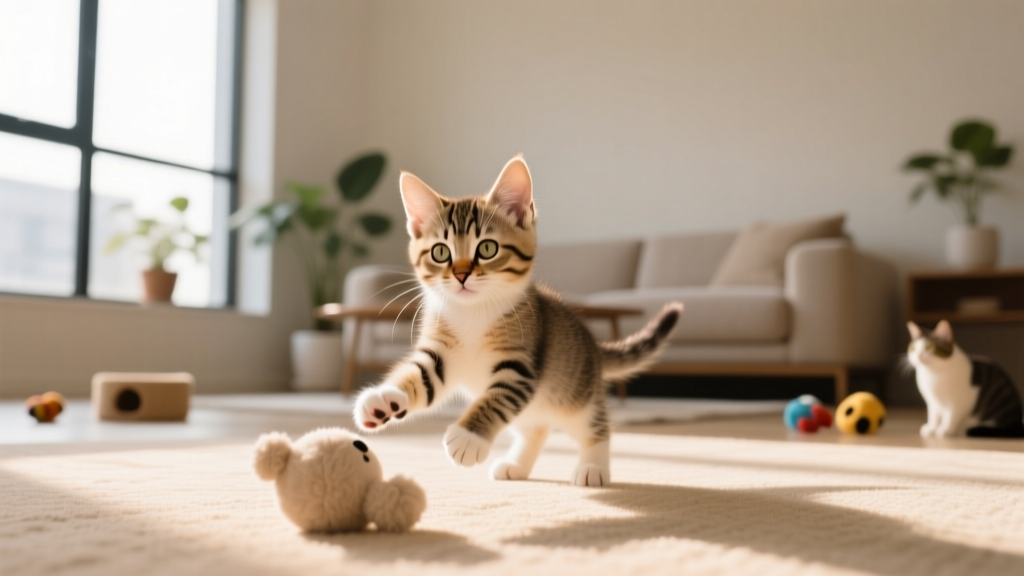
- 3 Daily Play Sessions: 15 minutes each, timed to mimic natural hunting cycles: dawn, late afternoon, and before bedtime. Use wand toys (never fingers!) to simulate prey movement—ending each session with a ‘kill’ (let kitten catch and bite a plush toy) followed by a small meal to satisfy the predatory sequence.
Real-world impact: When Sarah reconfigured her studio apartment using these principles—including adding a $25 window perch and moving the litter box away from the noisy dishwasher—her 9-week-old rescue Luna stopped urinating on laundry piles in 3 days. Why? The laundry pile smelled like her bedding (safe scent), but was near the dishwasher (startle source). Once she had a quiet, elevated, scent-neutral bathroom zone, the behavior vanished.
Step 3: Teach Boundaries Using Positive Reinforcement—Not Correction
Forget spray bottles, yelling, or tapping noses. These methods damage your bond and teach kittens that *you* are unpredictable—not that biting is undesirable. Instead, use positive interrupters and reward-based redirection.
For biting or scratching hands:
- Pause instantly—freeze all movement and withdraw attention (turn away, fold arms, say nothing).
- Offer an immediate alternative: Shake a crinkle ball or dangle a feather wand 6 inches from their nose.
- When they engage with the toy, reward with 5 seconds of gentle chin scratches + a tiny treat (freeze-dried chicken works best—no fillers, high value).
- Repeat consistently. Within 5–7 days, kittens learn: ‘Hands = stillness → toy appears → fun happens.’
This isn’t permissiveness—it’s teaching cause-and-effect in kitten terms. Dr. Kelly Ballantyne, DVM and feline behavior specialist at Cornell Feline Health Center, confirms: ‘Kittens form lasting associations in under 10 repetitions—if the consequence is immediate, consistent, and rewarding.’
For litter box issues, never punish accidents. Instead:
- Thoroughly clean soiled areas with enzymatic cleaner (not vinegar or ammonia—these smell like urine to cats).
- Place a second litter box next to the accident site for 48 hours, then gradually move it 6 inches per day toward your preferred location.
- Use a litter attractant (like Dr. Elsey’s Precious Cat Ultra) only for the first week—then fade it out to avoid dependency.
Step 4: Socialize Strategically—Not Just Frequently
Socialization isn’t about exposing kittens to ‘as many people as possible.’ It’s about controlled, positive experiences during the sensitive window (2–7 weeks). Miss it, and fear-based behaviors become neurologically embedded.
Follow the Rule of 7s (developed by behaviorist Dr. Ian Dunbar): By 7 weeks, your kitten should have gently experienced:
- 7 different surfaces (carpet, tile, grass, cardboard, etc.)
- 7 different sounds (vacuum, doorbell, rain, children laughing)
- 7 different people (varied ages, genders, heights, voices)
- 7 different handling touches (ears, paws, tail base, mouth, belly)
Crucially: Each exposure must end *before* stress signs appear (tail thumping, lip licking, freezing). If your kitten hides, you’ve gone too far. Back up and try again at lower intensity.
Case study: Leo, a 5-week-old stray kitten, hissed and flattened at all human touch. His foster used ‘treat trails’: placing tiny bits of salmon along the floor leading to his carrier, then inside it—with the door open. Over 12 days, Leo entered voluntarily, then allowed gentle stroking while eating. By week 3, he’d sleep on laps. No forcing. No restraint. Just choice, safety, and reward.
| Step | Action | Tools/Supplies Needed | Expected Outcome Timeline |
|---|---|---|---|
| 1 | Baseline behavior log + vet wellness check | Notebook/app, vet appointment | Within 48 hours — rule out medical causes |
| 2 | Install 3 vertical zones + separate resource stations | Wall shelves ($20–$45), 2–3 litter boxes, unscented litter | Behavioral reduction in stress-related incidents within 3–5 days |
| 3 | Implement 3x daily 15-min play sessions with ‘hunt-eat-groom-sleep’ sequence | Wand toy, plush ‘prey’ toy, freeze-dried treats | Decreased nocturnal activity & redirected biting within 5–7 days |
| 4 | Begin positive interrupter training for biting/scratching | Crinkle ball, feather wand, high-value treats | Consistent toy engagement instead of hands within 7–10 days |
| 5 | Execute Rule of 7s socialization plan | Treat pouch, calm volunteers, varied textures/sounds | Confident exploration of new stimuli by 7 weeks old |
Frequently Asked Questions
My kitten bites me during cuddles—does this mean they don’t like me?
No—this is almost always overstimulation, not dislike. Kittens (and adult cats) have low tolerance for sustained petting. Watch for early warning signs: tail flicking, skin twitching, flattened ears, or sudden stillness. Stop petting *before* biting occurs—and reward calm interaction with treats. Gradually increase duration only when your kitten initiates and remains relaxed.
How long does it take to fix kitten behavior problems?
Most common issues—biting, scratching furniture, litter box inconsistency—show marked improvement in 7–14 days with consistent implementation. However, full habit integration takes 3–6 weeks, as kittens solidify neural pathways. Patience isn’t passive waiting—it’s daily repetition of the right response. Think of it like teaching a toddler to hold a spoon: clumsy at first, then automatic with practice.
Should I get a second kitten to ‘fix’ my kitten’s behavior?
Not as a behavior solution. While same-age littermates often self-regulate play better, introducing a second kitten adds complexity: double the vet costs, double the training load, and risk of learned aggression if one models poor habits. Only consider it if you’re prepared for lifelong commitment to both—and consult a behaviorist first. For most owners, enriching the environment and refining training yields faster, safer results.
Is clicker training effective for kittens?
Yes—but only after they reliably associate the click with a treat (usually 2–3 short sessions). Start with ‘click → treat’ pairings, then add simple behaviors like touching a target stick. Keep sessions under 90 seconds. Kittens have short attention spans; 5 micro-sessions daily beat one 10-minute drill. Avoid clicking during play—reserve it for focused learning moments.
Common Myths About Fixing Kitten Behavior
Myth #1: “You need to establish dominance by holding down your kitten or staring them down.”
False—and dangerous. Dominance theory has been thoroughly debunked in feline science. Forcing submission triggers fear, not respect. Kittens who are pinned or stared at often develop avoidance, redirected aggression, or chronic anxiety. Trust is built through predictability and reward—not power plays.
Myth #2: “Kittens will naturally grow out of bad behavior.”
Partially true for some playfulness—but not for learned habits. A kitten who learns biting gets attention (even negative) will repeat it. A kitten who discovers the couch feels great to scratch *and isn’t offered alternatives* will keep doing it. Unaddressed behaviors become hardwired by 16 weeks. Early intervention isn’t strict—it’s compassionate guidance.
Related Topics (Internal Link Suggestions)
- Kitten Socialization Checklist — suggested anchor text: "free printable kitten socialization checklist"
- Best Toys for Teething Kittens — suggested anchor text: "teething kitten toys that actually work"
- How to Introduce a Kitten to Other Pets — suggested anchor text: "introducing kitten to dog safely"
- Signs of Stress in Kittens — suggested anchor text: "subtle kitten stress signals you're missing"
- Vet-Recommended Kitten Vaccination Schedule — suggested anchor text: "kitten shots timeline and side effects"
Your Next Step Starts Today—And It’s Simpler Than You Think
You now know how to fix cat behavior for kittens—not through force or frustration, but by meeting their biological needs with intention, empathy, and science-backed tools. The most powerful shift isn’t in your kitten—it’s in your perspective: every ‘problem’ is data pointing to an unmet need. So grab your notebook, schedule that vet visit, and set up just *one* vertical perch tonight. Small, consistent actions compound faster than you imagine. Ready to build your personalized 7-day behavior reset plan? Download our free Kitten Behavior Tracker + Daily Action Sheet—complete with vet-approved prompts, progress checkboxes, and troubleshooting tips for common slip-ups. Because raising a joyful, well-adjusted cat shouldn’t feel like crisis management—it should feel like partnership, starting now.