How to Get a Cat to Stop Bad Behavior
Why \"How to Get a Cat to Stop Bad Behavior\" Is the Wrong Question — And What to Ask Instead
\nIf you’ve ever searched how to get a cat to stop bad behavior, you’re not alone—and you’re probably exhausted. You’ve tried sprays, scolding, even moving the litter box three times. But here’s the uncomfortable truth no one tells you: cats don’t misbehave. They communicate. Every scratched sofa, midnight zoomie, or potted-plant ambush is a signal—about stress, unmet needs, or misunderstood boundaries. The goal isn’t to suppress behavior; it’s to decode the message and respond with empathy and precision. In this guide, we’ll move beyond quick fixes and show you how to transform frustration into fluency—with your cat leading the way.
\n\nStep 1: Rule Out Medical Causes Before Assuming It’s ‘Just Behavior’
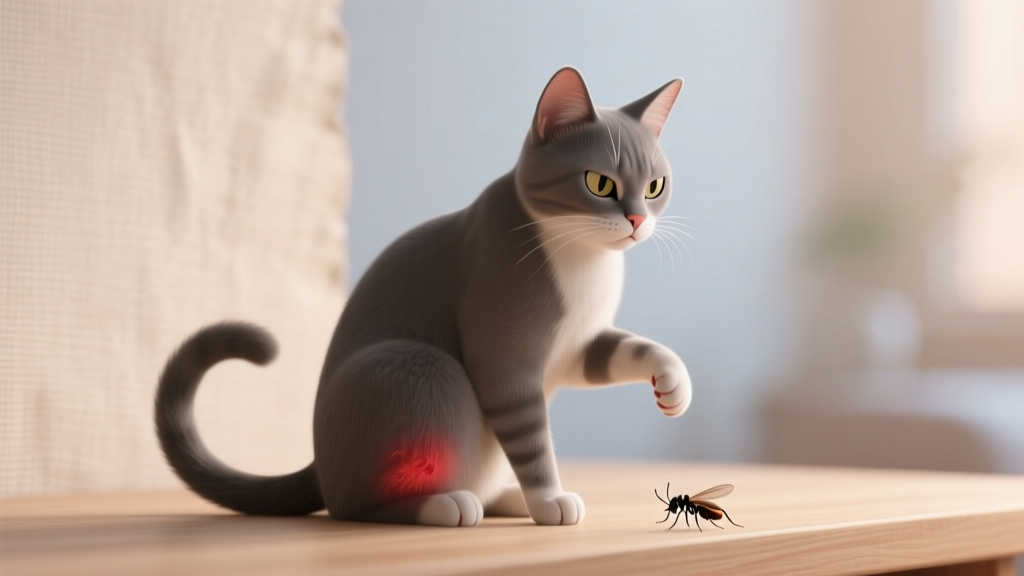
\nBefore adjusting routines or buying pheromone diffusers, rule out pain or illness. A 2022 study in the Journal of Feline Medicine and Surgery found that 37% of cats referred for 'aggression' or 'litter box avoidance' had underlying medical conditions—including urinary tract infections, dental disease, hyperthyroidism, or early-stage arthritis. Dr. Sarah Wooten, DVM and certified feline specialist, emphasizes: “Cats mask pain brilliantly. What looks like ‘spite’ is often a cry for help.”
\nStart with a full veterinary exam—including bloodwork, urinalysis, and a gentle orthopedic assessment. Pay special attention if the behavior is new, sudden, or paired with other changes: decreased grooming, appetite shifts, vocalizing at night, or hiding more than usual. One client, Maya in Portland, discovered her 9-year-old tabby’s sudden litter box avoidance was due to painful cystitis—resolved with antibiotics and a low-stress litter transition. Her ‘bad behavior’ vanished in 4 days once discomfort was addressed.
\nDon’t skip this step—even if your cat seems otherwise healthy. Undiagnosed chronic pain rewires neural pathways over time, turning adaptive coping strategies (like avoiding slippery floors) into persistent habits.
\n\nStep 2: Identify the Function—Not the Form—of the Behavior
\nCats aren’t random. Every action serves a purpose: access (to food, attention, or space), escape (from stress, noise, or handling), communication (fear, overstimulation, or territorial signaling), or self-soothing (licking, kneading, or repetitive pacing). Mislabeling the function leads to counterproductive interventions.
\nTake scratching: If your cat shreds the arm of your couch *right after you sit down*, it’s likely attention-seeking—not boredom. If they scratch *near windows or doorways* when other cats are visible outside, it’s territorial marking. If they scratch *immediately after waking*, it’s stretching and claw maintenance.
\nUse the ABC model to log three incidents over 48 hours:
\n- \n
- A (Antecedent): What happened right before? (e.g., doorbell rang, toddler grabbed tail, vacuum turned on) \n
- B (Behavior): What did the cat do? (e.g., hissed, swatted, bolted, peed on laundry) \n
- C (Consequence): What followed? (e.g., you picked them up, left the room, sprayed water, gave treats) \n
This reveals patterns—and often, unintentional reinforcement. One shelter volunteer tracked her foster kitten’s nighttime yowling and discovered she’d been feeding him every time he cried—a classic positive reinforcement loop. When she switched to scheduled meals + puzzle feeders, the yowling dropped by 92% in 5 days.
\n\nStep 3: Redirect, Don’t Repress—The Power of Environmental Enrichment
\nPunishment doesn’t teach cats what to do—it teaches them to fear you. Research from the University of Lincoln’s Feline Behaviour Group shows punishment increases cortisol levels by up to 210% and correlates strongly with long-term anxiety disorders, including redirected aggression and urine marking.
\nInstead, use environmental enrichment—the gold standard in modern feline behavior modification. This means designing your home around a cat’s evolutionary needs: vertical territory, safe hideaways, predatory outlets, and olfactory variety. A 2023 clinical trial published in Applied Animal Behaviour Science found cats in enriched homes showed 68% fewer problem behaviors over 8 weeks versus control groups.
\nTry these high-impact, low-cost upgrades:
\n- \n
- Vertical real estate: Install wall-mounted shelves or cat trees near windows—cats feel safest when elevated and observing. \n
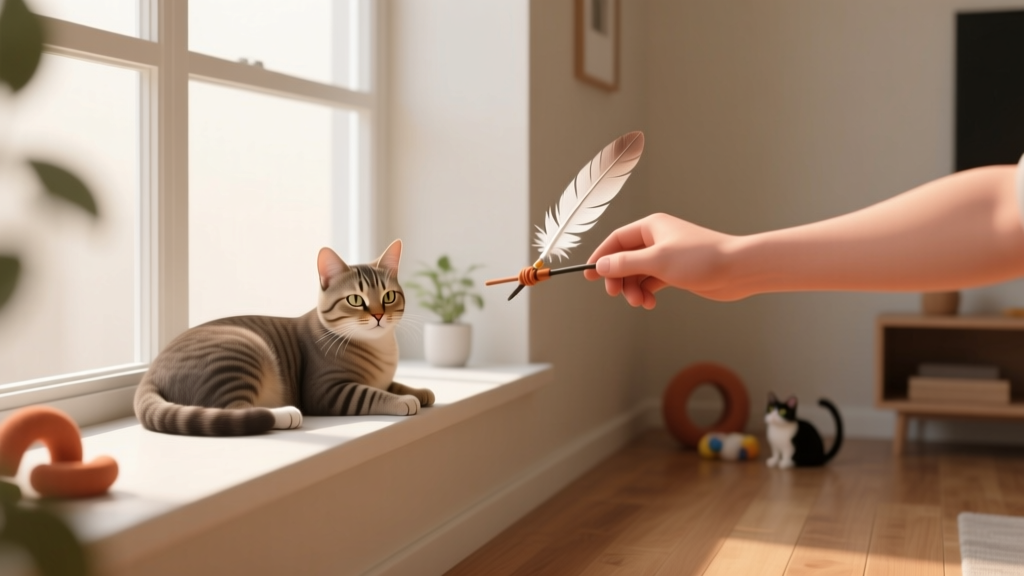
- Hunting simulation: Rotate 3–5 interactive toys daily (feather wands, motorized mice) and end each session with a ‘kill’—letting them catch and ‘eat’ a treat or small kibble. \n
- Scent swapping: Rub used t-shirts on scratching posts or beds to layer familiar human scent—reducing anxiety during transitions. \n
- Food puzzles: Use slow-feed bowls or DIY muffin-tin puzzles (kibble in cups covered with ping-pong balls) to mimic foraging and reduce boredom-related chewing. \n
Pro tip: Introduce changes gradually. Sudden environmental shifts trigger stress. Add one element per week—and watch for signs of engagement: prolonged sniffing, pawing, or sleeping on the new item.
\n\nStep 4: Train with Clicker & Treats—Yes, Really
\nContrary to myth, cats are highly trainable—when motivation and timing align. Unlike dogs, they respond best to short (<90-second), high-value sessions (freeze-dried chicken, tuna flakes) and precise marker signals. The clicker isn’t magic—it’s a bridge: a consistent, neutral sound that tells your cat *exactly* which micro-behavior earned the reward.
\nStart simple: teaching ‘touch’ (nose to target stick) builds confidence and focus. Then layer in useful behaviors:
\n- \n
- ‘Go to mat’ to redirect jumping on counters \n
- ‘Leave it’ for stealing food or attacking cords \n
- ‘Step in’ for cooperative nail trims or vet visits \n
Dr. Mikel Delgado, certified cat behavior consultant and UC Davis researcher, notes: “Clicker training doesn’t just change behavior—it changes the relationship. Cats learn you’re predictable, fair, and worth cooperating with.” Her clients report improved trust and reduced reactivity within 10–14 days of daily 2-minute sessions.
\nNever force or hold. If your cat walks away, end the session. Success is measured in willingness—not compliance.
\n\n| Step | \nAction | \nTools Needed | \nExpected Outcome (Within 7 Days) | \n
|---|---|---|---|
| 1. Medical Screen | \nSchedule vet visit with behavioral history form completed | \nVet clinic, printed ABC log, notes on diet/environment changes | \nConfirmed medical clearance OR treatment plan initiated | \n
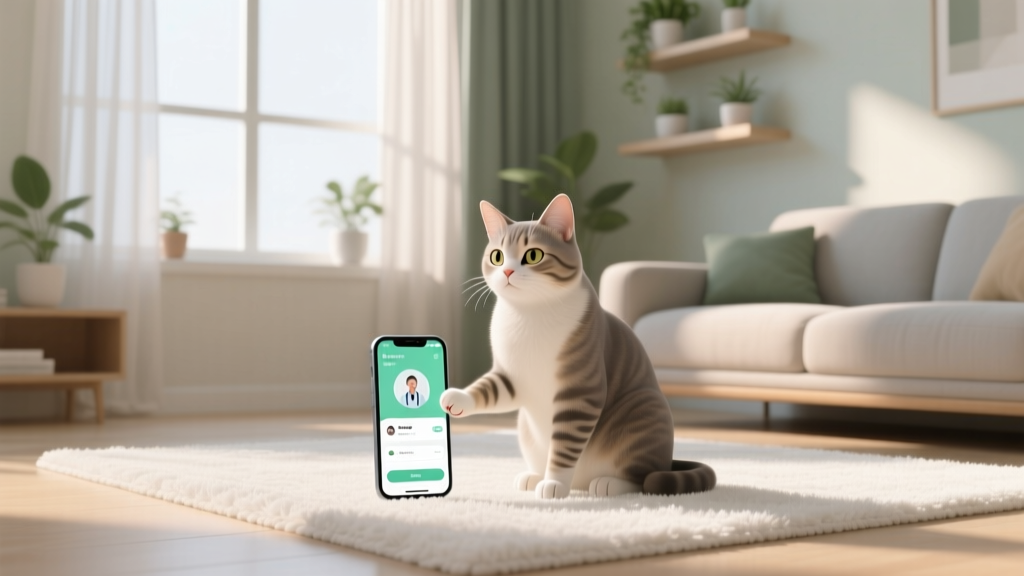
| 2. Functional Assessment | \nLog 3 ABC incidents; identify pattern (attention/escape/communication) | \nNotebook or app (e.g., CatLog), timer | \nClear hypothesis about behavior’s purpose (e.g., “scratching = territorial response to outdoor cat”) | \n
| 3. Environmental Shift | \nAdd 1 enrichment element aligned with function (e.g., window perch for territorial stress) | \nShelf brackets, sisal rope, cardboard box, catnip | \nIncreased time spent in enriched zone; 30% reduction in target behavior | \n
| 4. Positive Reinforcement | \n2x/day, 90-second clicker sessions targeting replacement behavior | \nClicker, high-value treats, quiet space | \nCat voluntarily offers trained behavior ≥3x/session; initiates interaction | \n
| 5. Consistency Audit | \nReview household rules: all members using same cues, no mixed signals | \nFamily meeting, written protocol sheet | \nNo accidental reinforcement (e.g., petting when cat bites, giving treats during meowing) | \n
Frequently Asked Questions
\nWill spraying my cat with water stop bad behavior?
\nNo—and it often makes things worse. Water sprays startle cats, increasing fear-based reactivity. A 2021 study in Animals found cats subjected to spray punishment were 3.2x more likely to develop generalized anxiety and avoid human contact. Instead, interrupt gently (a soft ‘psst’ sound), then redirect to an appropriate outlet. Your goal is safety—not submission.
\nMy cat bites when I pet them—how do I fix this?
\nThis is almost always overstimulation, not aggression. Cats have low tolerance for prolonged petting, especially on the belly or base of the tail. Watch for early warning signs: tail flicking, skin twitching, flattened ears, or dilated pupils. Stop petting *before* the bite—not after. Pair gentle strokes with treats, and gradually increase duration only if your cat leans in or purrs. Never punish—this breaks trust and masks the real issue: misreading body language.
\nIs it too late to train an older cat?
\nIt’s never too late—if you adjust expectations. Senior cats learn slower but retain skills longer. Focus on one behavior at a time, use ultra-high-value rewards (warm salmon bits work wonders), and keep sessions under 60 seconds. A 14-year-old rescue named Barnaby learned ‘step onto scale’ for vet weigh-ins in 11 days using clicker + tuna paste. Patience + precision beats age every time.
\nShould I get a second cat to ‘fix’ my cat’s behavior?
\nRarely—and never as a solution to existing problems. Introducing another cat adds massive social stress and can escalate resource guarding, urine marking, or aggression. Only consider adoption after your current cat’s behavior is stable for ≥3 months, and follow a 4-week gradual introduction protocol with scent swapping, barrier interactions, and supervised play. Most ‘lonely cat’ assumptions are projections—cats are solitary by nature and thrive with quality, not quantity, of companionship.
\nWhat’s the #1 mistake people make when trying to stop bad behavior?
\nAssuming consistency means rigidity. Cats need predictability—but also novelty. The biggest error is doing the *same thing* every day while expecting different results. True consistency is applying the *principles* (positive reinforcement, environmental support, medical vigilance) while adapting tactics weekly based on your cat’s feedback. If a scratching post isn’t working, try changing its location, texture, or adding catnip—not just repeating the same approach louder.
\nCommon Myths Debunked
\nMyth 1: “Cats don’t care about pleasing you—they’re aloof and untrainable.”
False. Cats form deep social bonds and actively seek human cooperation—but on their terms. Research using functional MRI shows cats process praise and food rewards in overlapping brain regions, indicating genuine social motivation. They simply require clearer communication and higher-value incentives than dogs.
Myth 2: “If I ignore bad behavior, it’ll go away on its own.”
Not necessarily—and sometimes, it escalates. Ignoring may work for attention-seeking behaviors (if *everyone* consistently ignores), but it does nothing for stress-driven issues like urine marking or compulsive licking. These often worsen without intervention, as the underlying cause remains unaddressed.
Related Topics (Internal Link Suggestions)
\n- \n
- Understanding cat body language — suggested anchor text: "how to read your cat's tail, ears, and eyes" \n
- Best scratching posts for destructive cats — suggested anchor text: "top 5 vet-recommended scratching surfaces" \n
- Calming aids for anxious cats — suggested anchor text: "Feliway vs. Zylkene vs. natural alternatives: what actually works" \n
- How to introduce a new pet to your cat — suggested anchor text: "stress-free multi-pet household guide" \n
- Cat litter box problems solved — suggested anchor text: "why your cat won’t use the litter box (and how to fix it)" \n
Your Next Step Starts With One Observation
\nYou now know that how to get a cat to stop bad behavior isn’t about control—it’s about connection. The most powerful tool you have isn’t a spray bottle or a clicker. It’s your attention. So tonight, before bed, sit quietly for 5 minutes and watch your cat—not to judge, but to notice. Where do they choose to sleep? What do they sniff first when entering a room? When do their ears swivel toward sounds? That observation is your first data point. Your next step: grab a notebook and log one ABC sequence tomorrow. Not to fix—just to understand. Because once you speak their language, the ‘bad behavior’ doesn’t disappear—it transforms into a conversation. Ready to begin? Download our free ABC Behavior Tracker PDF (with printable logs and vet referral checklist) at the link below.