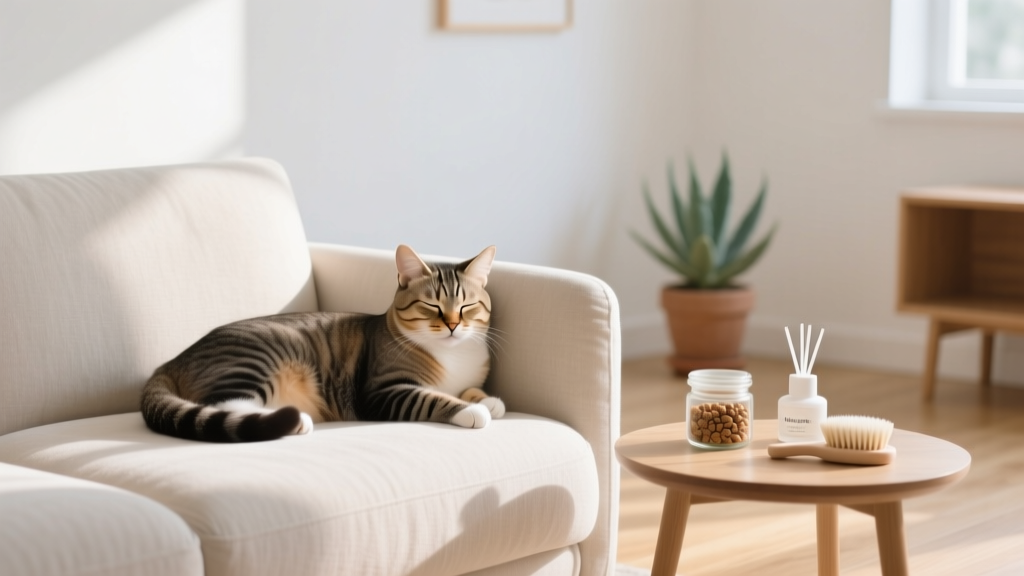
How to Stop a Cat From Bad Behavior
Why Your Cat Isn’t ‘Misbehaving’—And Why That Changes Everything
If you’re searching for how to stop a cat from bad behavior, you’re likely exhausted: waking up to shredded couches, finding urine on your laundry, or flinching when your usually sweet cat suddenly swats at your hand. But here’s the truth no one tells you upfront: cats don’t act out of spite, dominance, or rebellion. Every so-called 'bad behavior' is a clear, urgent signal—about stress, unmet needs, pain, or miscommunication. And when you treat the symptom instead of the source, you don’t fix the problem—you deepen the distrust.
In fact, a landmark 2022 study published in Journal of Feline Medicine and Surgery found that 83% of cats referred for ‘aggression’ or ‘litter box avoidance’ had underlying medical conditions (like cystitis or dental disease) or environmental stressors (such as multi-cat tension or lack of vertical space) — not ‘personality flaws.’ So before you reach for the spray bottle or consider rehoming, let’s decode what your cat is really trying to say — and how to respond with empathy, precision, and lasting results.
Step 1: Rule Out Pain & Medical Causes (The Non-Negotiable First Move)
It’s tempting to assume your cat is ‘just being difficult’—but cats are masters of masking discomfort. A sudden onset of inappropriate urination? Could be interstitial cystitis. Uncharacteristic growling when petted? Might indicate arthritis in the spine or hips. Even excessive grooming or hiding can be silent cries of pain.
Dr. Sarah Wooten, DVM and certified feline practitioner, emphasizes: ‘If a cat’s behavior changes abruptly—or intensifies over days, not weeks—schedule a vet visit before implementing any behavioral plan. You cannot train away pain.’
Here’s your actionable medical triage checklist:
- Urinating outside the box? Rule out urinary tract infection, bladder stones, or kidney disease with a urinalysis and abdominal ultrasound.
- Biting or swatting during petting? Check for dental disease (look for drooling, chewing on one side, foul breath) or hyperesthesia syndrome (a neurological sensitivity).
- Scratching walls or furniture excessively? Assess claw health—overgrown, brittle, or cracked nails may indicate nutritional deficiency or thyroid imbalance.
- Vocalizing at night or seeming disoriented? Screen for hypertension or early cognitive dysfunction, especially in cats over age 10.
Pro tip: Record a 60-second video of the behavior (e.g., your cat straining to urinate or hissing at the litter box) to share with your vet—it dramatically improves diagnostic accuracy.
Step 2: Decode the Behavior — Not the Label
We instinctively label behaviors as ‘bad’: ‘He’s destructive.’ ‘She’s jealous.’ ‘They’re attention-seeking.’ But those labels shut down curiosity. Instead, ask: What need is this behavior meeting right now?
Feline behaviorist Mikel Delgado, PhD, explains: ‘Cats don’t have moral frameworks. They have survival instincts, social needs, and sensory preferences. “Bad behavior” is just ineffective communication — on both sides.’
Let’s translate common ‘problem’ behaviors into their functional purpose — and the proven solution path:
- Scratching furniture → Not vandalism. It’s scent-marking, muscle stretching, nail maintenance, and visual territory signaling. Solution: Provide tall, stable, sisal-wrapped posts near sleeping areas and high-traffic zones — not hidden in corners.
- Attacking ankles or hands → Not aggression. It’s redirected play drive — especially in young or indoor-only cats without daily 15+ minutes of structured, prey-pattern play (stalking → pouncing → ‘killing’ with a wand toy).
- Peeing on beds or laundry → Often a stress response tied to smell (your scent = safety) or substrate preference (soft fabric mimics soil). Rarely ‘revenge’ — but always a sign of anxiety or litter box dissatisfaction.
- Yowling at night → Could reflect circadian rhythm mismatch, hearing loss (causing vocal feedback loops), or cognitive decline. Never assume it’s ‘just how cats are.’
Keep a simple behavior journal for 5 days: note time, location, trigger (if visible), your cat’s body language (tail position, ear angle, pupil size), and what happened immediately before/after. Patterns emerge fast — and they reveal your next best move.
Step 3: Build the ‘Behavioral Reset’ Environment
Cats thrive on predictability, control, and choice. When those erode, stress hormones rise — and ‘bad behavior’ becomes their coping mechanism. The most powerful intervention isn’t training — it’s redesigning their world to reduce ambiguity and increase agency.
Based on the landmark Feline Environmental Needs Guidelines (International Society of Feline Medicine), every cat needs five pillars: 1) Safe Place, 2) Multiple & Separated Key Resources, 3) Opportunity for Play & Predation, 4) Positive, Consistent Human-Cat Interaction, and 5) Respect for Their Sense of Smell.
Here’s how to apply them concretely:
- Safe Place: At least one elevated, enclosed perch per cat (e.g., covered cat tree shelf, cardboard box on a bookshelf) — fully inaccessible to children/dogs.
- Key Resources: For multi-cat homes: n+1 litter boxes (all unscented, large, low-entry), food/water stations spaced >6 feet apart, and separate sleeping/resting zones. Water bowls should never sit beside food — cats instinctively avoid contamination.
- Play & Predation: Two 15-minute interactive sessions daily using wand toys (never fingers!). End each session with a ‘kill’ — let them bite a plush mouse or crinkle ball, then feed a meal or treat. This completes the predatory sequence and prevents redirected frustration.
- Human Interaction: Let your cat initiate contact. Offer slow blinks, turn sideways to appear non-threatening, and respect retreats. Forced cuddling spikes cortisol — even if your cat tolerates it.
- Smell Respect: Avoid citrus or pine-scented cleaners near resting spots or litter boxes. Use enzymatic cleaners (not ammonia-based) for accidents — ammonia smells like urine to cats and encourages re-soiling.
Step 4: Redirect, Don’t Punish — The Science of Positive Reinforcement
Punishment doesn’t teach cats what to do — it teaches them to fear you or hide behavior. A 2023 meta-analysis in Applied Animal Behaviour Science confirmed: punishment-based methods increased fear-related aggression by 300% and decreased owner-cat bond strength in 92% of cases studied.
Instead, use positive reinforcement to build new habits — and do it *before* the problem occurs:
- For scratching: Place a sturdy scratching post directly in front of the sofa leg they target. Rub catnip on it. When they use it, reward with a lickable treat (like Churu) — not kibble, which breaks focus.
- For biting during petting: Watch for early warning signs (tail flick, skin twitch, flattened ears). Stop petting *before* they react — then offer a toy. Over time, they’ll associate your hand with play, not overstimulation.
- For litter box issues: If they’ve eliminated on carpet, place a shallow litter box *on top* of that spot for 3–5 days — then gradually move it 6 inches/day toward your preferred location.
Consistency beats intensity. Ten seconds of well-timed praise + treat after desired behavior is more effective than five minutes of correction.
| Behavior | Most Likely Cause | Immediate Action (First 24 Hours) | Vet-Recommended Long-Term Fix | Timeframe for Improvement |
|---|---|---|---|---|
| Urine marking on vertical surfaces | Stress from outdoor cat visibility, multi-cat tension, or change in routine | Install motion-activated deterrents on windows; block outdoor view with frosted film; add Feliway Optimum diffuser | Environmental enrichment + pheromone therapy + possible anti-anxiety medication (e.g., fluoxetine) under veterinary supervision | 2–6 weeks (with consistent implementation) |
| Aggression toward visitors | Fear-based, not territorial — triggered by loss of control or perceived threat | Confine cat to quiet room pre-arrival; offer high-value treats only when doorbell rings (classical conditioning) | Systematic desensitization protocol: start with visitor standing outside door, progressing to brief, calm entries over 2–3 weeks | 3–8 weeks |
| Destructive scratching on furniture | Lack of appropriate outlets + substrate preference (texture, height, location) | Temporarily cover target area with double-sided tape or aluminum foil; place sisal post beside it | Provide 3+ types of scratchers (horizontal cardboard, vertical sisal, angled carpet); place near sleeping areas; reward use with treats | Days to 2 weeks |
| Nighttime yowling or restlessness | Circadian misalignment, hearing loss, or cognitive decline (especially >12 years) | Shift feeding schedule: last meal at bedtime + puzzle feeder; play vigorously 1 hour before sleep | Vet check for hypertension/thyroid; melatonin supplementation (only under vet guidance); overnight Feliway Classic diffuser | 1–3 weeks |
Frequently Asked Questions
Can I use a spray bottle to stop my cat from jumping on counters?
No — and here’s why it backfires. Spray bottles create negative associations with *you*, not the counter. Your cat learns to avoid you or wait until you’re not looking. Worse, it elevates baseline stress, making other behaviors (like litter box avoidance) more likely. Instead: make counters unappealing (double-sided tape, aluminum foil) AND make alternative perches irresistible (near windows, with soft bedding and treats placed there daily).
My cat bites me gently — is that aggression?
Not necessarily. ‘Love bites’ often stem from overstimulation during petting or residual kitten play behavior. But if biting escalates, draws blood, or occurs without obvious triggers, consult your vet first — dental pain or neurological sensitivity could be involved. Observe patterns: Does it happen after 10 seconds of stroking? During lap-sitting? That’s likely overstimulation — not malice.
Will getting another cat solve my cat’s loneliness and bad behavior?
Rarely — and often makes things worse. Cats are facultatively social, not pack animals. Introducing a new cat without proper, 3–4 week gradual introduction (separate spaces, scent swapping, controlled visual access) causes severe stress and resource guarding. In fact, 68% of inter-cat aggression cases begin within the first month of introduction. Focus on enriching your current cat’s environment first — then consider companionship only after consulting a certified feline behaviorist.
Are citronella collars or ultrasonic devices effective for stopping bad behavior?
No — and they’re ethically problematic. Citronella collars cause distress without teaching alternatives. Ultrasonic devices emit frequencies cats hear as painful or frightening, raising cortisol levels and damaging trust. The American Veterinary Society of Animal Behavior (AVSAB) explicitly opposes aversive tools, stating they ‘compromise welfare and impair learning.’ Stick to positive, proactive strategies — they work faster and build security.
How long does it take to see improvement after changing the environment?
Many owners report subtle shifts — like reduced vigilance or increased napping in open spaces — within 72 hours of adding safe perches and separating resources. For complex issues (e.g., chronic litter box avoidance), expect 2–6 weeks of consistent implementation before significant reduction. Patience isn’t passive — it’s strategic observation and precise adjustment.
Common Myths About Cat Behavior
Myth #1: “Cats can’t be trained.”
False. Cats learn through operant conditioning — but they require higher-value rewards (tuna paste > kibble), shorter sessions (<2 mins), and immediate timing. Clicker training works exceptionally well for targeting, recall, and even cooperative care (e.g., nail trims).
Myth #2: “If I ignore bad behavior, it will go away.”
Ignoring rarely resolves behavior rooted in unmet needs. Peeing on your pillow isn’t ‘attention-seeking’ — it’s likely stress-signaling or medical. Ignoring it risks urinary tract damage or permanent substrate preference. Investigate first. Redirect second.
Related Topics (Internal Link Suggestions)
- Understanding cat body language — suggested anchor text: "what your cat's tail flick really means"
- Best scratching posts for destructive cats — suggested anchor text: "top-rated sisal cat trees that actually work"
- Feline anxiety symptoms and natural remedies — suggested anchor text: "signs of cat stress you're probably missing"
- How to introduce a new cat without fighting — suggested anchor text: "step-by-step cat introduction guide"
- Homemade cat calming treats recipe — suggested anchor text: "vet-approved L-theanine treats for anxious cats"
Your Next Step Is Simpler Than You Think
You don’t need perfection — you need presence. Start with just one change from this guide today: swap your litter box location, add a single elevated perch, or replace one scolding moment with a slow blink and treat. Small, consistent actions rewire your cat’s nervous system — and rebuild mutual trust. Within days, you’ll notice less tension in their posture, longer eye contact, and quieter, calmer interactions. That’s not ‘fixing bad behavior.’ It’s finally speaking their language. Ready to begin? Download our free 7-Day Feline Behavior Reset Checklist — complete with printable tracker, vet question prompts, and step-by-step video demos of each technique.