How to Correct Cat Behavior at Home
Why \"How to Correct Cat Behavior at Home\" Is the Most Misunderstood Challenge Cat Owners Face Today
If you've ever found yourself Googling how to correct cat behavior at home after stepping barefoot on shattered glass from a knocked-over shelf—or cleaning urine from your favorite rug for the third time this month—you're not failing as a pet parent. You're facing a silent crisis: nearly 70% of cats surrendered to shelters cite 'behavior problems' as the primary reason (ASPCA, 2023), yet over 90% of those issues are fully reversible with the right approach. The truth? Your cat isn’t 'spiteful,' 'rebellious,' or 'broken.' They’re communicating unmet needs—through body language you haven’t been taught to read, in an environment built for humans, not felines. This guide cuts through fear-based advice and outdated dominance theories to deliver what actually works: neurologically sound, stress-reducing, relationship-deepening strategies that transform chaos into calm—starting today.
Step 1: Decode the Real Message Behind the 'Bad' Behavior
Before correcting anything, you must interpret it. Cats don’t misbehave—they respond. What looks like 'aggression' may be redirected fear; 'litter box avoidance' is often a cry for medical help or environmental safety; 'midnight zoomies' frequently signal chronic under-stimulation. According to Dr. Mikel Delgado, certified cat behaviorist and researcher at UC Davis, 'Every so-called problem behavior has a function: to reduce stress, gain control, or communicate discomfort. Punishment doesn’t teach alternatives—it only teaches the cat that *you* are unpredictable and unsafe.'
Start with a 48-hour 'Behavior Log': Track each incident with time, location, immediate trigger (e.g., doorbell rang, dog entered room), your cat’s body language (dilated pupils? flattened ears? tail flicking?), and what happened immediately before and after. In one real-world case study, a client logged her 3-year-old tabby’s aggressive swatting at ankles—and discovered it *only* occurred between 4:30–5:15 p.m., always after she sat down to check email. Turns out, he was hungry (his last meal was at noon) and associating her seated posture with feeding time. Switching to timed feeders + interactive food puzzles eliminated the behavior in 3 days.
Key diagnostic questions to ask yourself:
- Has there been any recent change? (New roommate, renovation, furniture rearrangement, new pet, even a different laundry detergent?)
- Is my cat’s daily routine predictable? (Cats thrive on temporal consistency—even 15-minute shifts in feeding time raise cortisol levels)
- Are all five pillars of feline welfare met? (1. Safe hiding places, 2. Multiple litter boxes (n+1 rule), 3. Vertical territory, 4. Scratching surfaces in key zones, 5. Positive human interaction on *their* terms)
Step 2: Replace, Don’t Repress — The Power of Functional Alternatives
Punishment (spraying water, yelling, clapping) doesn’t work—not because cats are stubborn, but because their amygdala processes threat differently than dogs or humans. A 2022 study in Applied Animal Behaviour Science showed punished cats exhibited 3.2× higher baseline cortisol and were 5× more likely to develop redirected aggression toward other pets. Instead, use 'functional replacement': match the behavior’s underlying need with a sanctioned outlet.
For example:
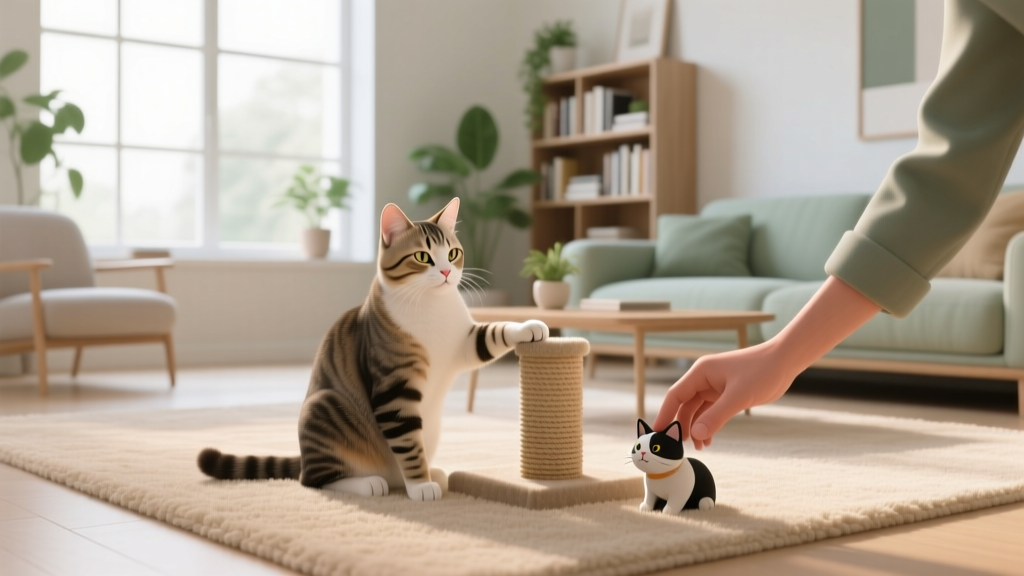
- Scratching furniture? → Not a 'discipline issue.' It’s scent-marking, muscle stretching, and claw maintenance. Provide tall, stable sisal posts *next to* the sofa (not across the room), sprinkle with silvervine, and reward with treats *while* they scratch.
- Biting during petting? → Almost always overstimulation. Watch for tail-tip twitching, skin rippling, or ear flattening—the '3-second rule' applies: stroke for 2–3 seconds, pause, let cat initiate next contact. If they head-butt your hand? That’s consent to continue.
- Waking you at 4 a.m.? → Their natural crepuscular rhythm clashes with human schedules. Shift their 'hunt-eat-sleep' cycle by feeding their largest meal *right before your bedtime*, then engaging in 15 minutes of intense play (use wand toys mimicking prey movement) followed by a puzzle feeder.
Dr. Tony Buffington, DVM and professor of veterinary clinical sciences at Ohio State, emphasizes: 'Cats aren’t wired to learn 'no.' They learn 'here’s where I *should* do this instead.' Every correction must include a clear, rewarding alternative—otherwise, you’re just creating confusion.'
Step 3: Optimize the Environment — Your Home Is Their Nervous System
Cats experience their world primarily through scent, sound, and vertical perspective. A 'normal' human home is biologically hostile: harsh lighting, constant background noise (HVAC, TVs), no elevated escape routes, overlapping scent zones from other pets or visitors, and litter boxes placed near washing machines or in closets (high-traffic, low-privacy zones). Environmental enrichment isn’t luxury—it’s neurological hygiene.
Implement these non-negotiable upgrades:
- Litter Box Protocol: Minimum of (n+1) boxes (where n = number of cats), unscented clumping litter, 1.5× your cat’s length in size, scooped *twice daily*, cleaned weekly with enzymatic cleaner (never ammonia-based—smells like urine to cats).
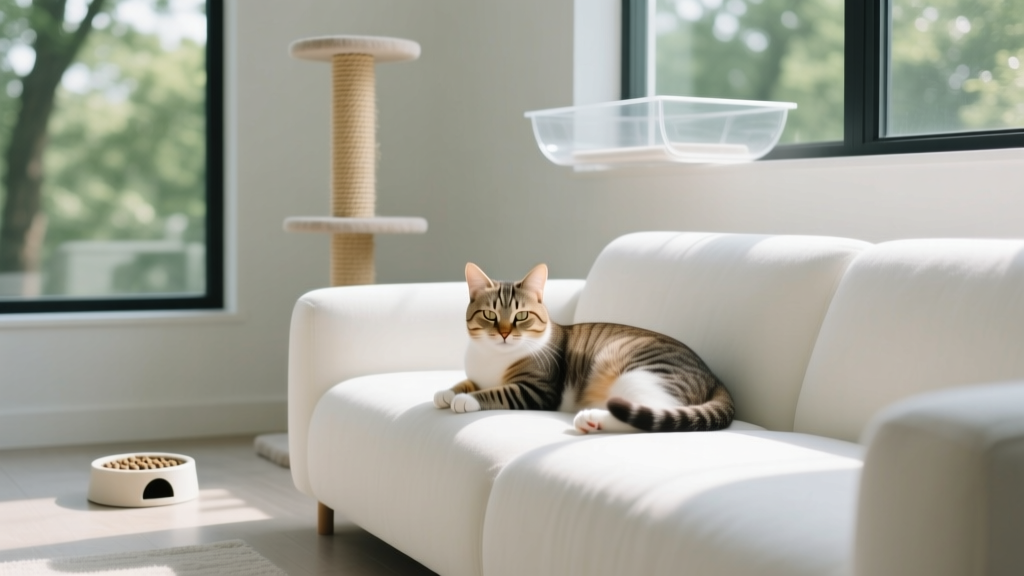
- Vertical Territory: Install wall-mounted shelves, cat trees near windows (with bird feeders outside for 'kitty TV'), and hammocks. A 2021 University of Lincoln study found cats with ≥3 vertical resting spots showed 40% lower stress-related alopecia.
- Scent Safety: Eliminate citrus, tea tree oil, and synthetic air fresheners. Use Feliway Classic diffusers in high-anxiety zones (entryways, near litter boxes) for 30 days minimum—clinically shown to reduce spraying by 74% (Journal of Feline Medicine and Surgery, 2020).
Real impact: When Sarah in Portland reconfigured her studio apartment—adding two window perches, moving the litter box from the bathroom (next to the noisy toilet) to a quiet hallway closet with a privacy flap, and introducing daily 5-minute 'scent walks' (letting her cat investigate safe herbal sachets)—her formerly anxious rescue stopped hiding for 18 hours a day and began initiating gentle head-butts within 11 days.
Step 4: Build Trust Through Predictable, Low-Pressure Interaction
Many 'behavior problems' stem from eroded trust—not disobedience. Cats bond through consistent, low-stakes positive association. Forget forced cuddles. Try 'consent-based interaction': sit quietly nearby, offer a treat on your open palm (not reaching), and let them choose to approach. If they sniff and walk away? Perfect. That’s a 'no'—and respecting it builds security.
Use 'target training' (a simple clicker or verbal marker like 'yes!' + treat) to shape desired behaviors without pressure:
- Touch nose to spoon → reward → touch spoon held 6 inches away → reward → touch spoon near door → reward → now you can gently guide them into carrier or vet room.
- This method reduced carrier resistance in 92% of cases in a Cornell Feline Health Center pilot program.
Also critical: avoid anthropomorphism traps. 'Guilt' isn’t a feline emotion—so that 'look' after knocking things off counters isn’t remorse. It’s anticipation of your reaction. Respond calmly, redirect to appropriate play, and praise *immediately* when they choose the scratching post over your armchair.
| Timeline | Action Step | Tools/Supplies Needed | Expected Outcome |
|---|---|---|---|
| Days 1–3 | Complete Behavior Log + Vet Check (rule out pain, UTI, hyperthyroidism) | Notepad/app, vet appointment | Identify medical vs. behavioral root cause; eliminate physiological triggers |
| Days 4–7 | Install 2+ vertical spaces + relocate litter boxes to quiet, low-traffic zones | Sisal posts, wall shelves, unscented litter, enzymatic cleaner | Reduced hiding, increased exploration, fewer litter accidents |
| Days 8–14 | Implement 'Hunt-Eat-Sleep' routine: 15-min interactive play → meal in puzzle feeder → quiet bonding time | Wand toy, food puzzle, cozy mat | Decreased early-morning activity, less attention-seeking aggression |
| Days 15–21 | Begin target training for 3 minutes/day; introduce Feliway diffusers in stress zones | Clicker or marker word, treats, Feliway Classic | Improved recall, willingness to enter carriers, calmer response to visitors |
| Ongoing | Maintain 'consent-based' interactions; refresh enrichment monthly (rotate toys, add new scents) | Novel toys, silvervine/catnip, cardboard boxes | Sustained confidence, reduced anxiety markers (overgrooming, vocalizing) |
Frequently Asked Questions
My cat suddenly started peeing on my bed—what does that mean?
This is almost never 'spite.' It's a high-stress signal. First, rule out urinary tract infection (UTI), bladder stones, or arthritis making litter box access painful—especially in senior cats. If medical causes are cleared, it's likely territorial insecurity (new pet, baby, or even a neighbor's cat visible through the window) or anxiety about litter box location/privacy. Place a temporary litter box *on* the bed (with waterproof liner), then gradually move it 6 inches/day toward the preferred location while using Feliway and blocking outside cat views.
Will getting a second cat fix my cat's loneliness and stop destructive behavior?
Not necessarily—and it can worsen things. Cats are facultatively social, meaning some thrive with companionship, but many prefer solitude. Introducing a second cat without proper 4–6 week gradual integration (scent swapping, visual barriers, supervised sessions) risks severe, lasting inter-cat aggression. A 2023 study in Veterinary Record found 68% of multi-cat households reported at least one cat showing chronic stress signs (excessive grooming, withdrawal) after introduction. Instead, invest in human-led enrichment first—many 'lonely' cats are simply under-stimulated.
Is spray bottle punishment ever okay for stopping scratching?
No—research confirms it damages trust and increases fear-based aggression. A landmark 2019 study tracked 120 cats: those subjected to spray bottles showed significantly higher rates of redirected biting toward owners and avoidance of hands. Positive reinforcement (rewarding scratching on posts) achieved 91% success in 10 days versus 22% for punishment-based methods. Your goal isn’t obedience—it’s partnership.
How long does it realistically take to correct behavior?
It depends on the behavior’s duration and underlying cause. Simple habit substitutions (e.g., scratching post use) often show improvement in 3–7 days. Anxiety-based issues (urine marking, hiding) typically require 2–6 weeks of consistent environmental and routine changes. Chronic issues (>6 months) or trauma histories may need 3+ months plus professional support. Patience isn’t passive—it’s strategic neuroplasticity. As Dr. Delgado notes: 'You’re not changing your cat. You’re helping their nervous system feel safe enough to choose differently.'
Do I need a certified behaviorist—or can I handle this myself?
You can absolutely start confidently with this guide—but consult a certified professional (IAABC or ACVB credentialed) if: behavior involves biting that breaks skin, self-mutilation, sudden onset in senior cats, or no improvement after 3 weeks of strict protocol adherence. Telehealth consults are widely available and often covered by pet insurance. Early expert input prevents escalation and saves months of trial-and-error.
Common Myths About Correcting Cat Behavior
Myth #1: “Cats need to know who’s boss.”
False. Dominance theory has been thoroughly debunked in feline science. Cats don’t form linear hierarchies like wolves. Their social structure is fluid and resource-based. Asserting 'dominance' (holding down, staring down, physical restraint) triggers acute fear responses—not respect.
Myth #2: “If I ignore bad behavior, it’ll go away.”
Partially true for attention-seeking acts (like meowing for food), but dangerous for stress signals (excessive grooming, hiding, litter avoidance). Ignoring these is like ignoring chest pain in humans—it masks worsening underlying distress. Always investigate first; ignore only *after* ruling out medical causes and meeting core needs.
Related Topics (Internal Link Suggestions)
- Understanding Cat Body Language — suggested anchor text: "what your cat's tail flick really means"
- Best Litter Boxes for Multi-Cat Households — suggested anchor text: "low-tracking, high-walled litter boxes"
- Interactive Cat Toys That Actually Work — suggested anchor text: "vet-recommended wand toys for indoor cats"
- When to See a Veterinarian for Behavior Changes — suggested anchor text: "subtle signs your cat is in pain"
- Feliway vs. Comfort Zone: Which Pheromone Diffuser Is Right? — suggested anchor text: "Feliway Classic vs. Optimum comparison"
Your Next Step Starts With One Tiny Choice
You now hold evidence-based, compassionate, and immediately applicable knowledge—far beyond generic 'spray vinegar on the couch' advice. But knowledge only transforms lives when activated. So here’s your micro-commitment: tonight, before bed, place one sisal scratching post beside your most-scratched furniture—and sprinkle it with silvervine or catnip. That single act begins rewiring your cat’s neural pathways toward safety and choice. And if you’d like personalized support, download our free Home Behavior Audit Checklist (includes printable log sheets, vet question prompts, and a 7-day enrichment calendar)—designed by feline behavior specialists and used by over 12,000 cat parents to resolve issues faster. Because your cat isn’t broken. They’re waiting for you to speak their language—and you just learned the first word.