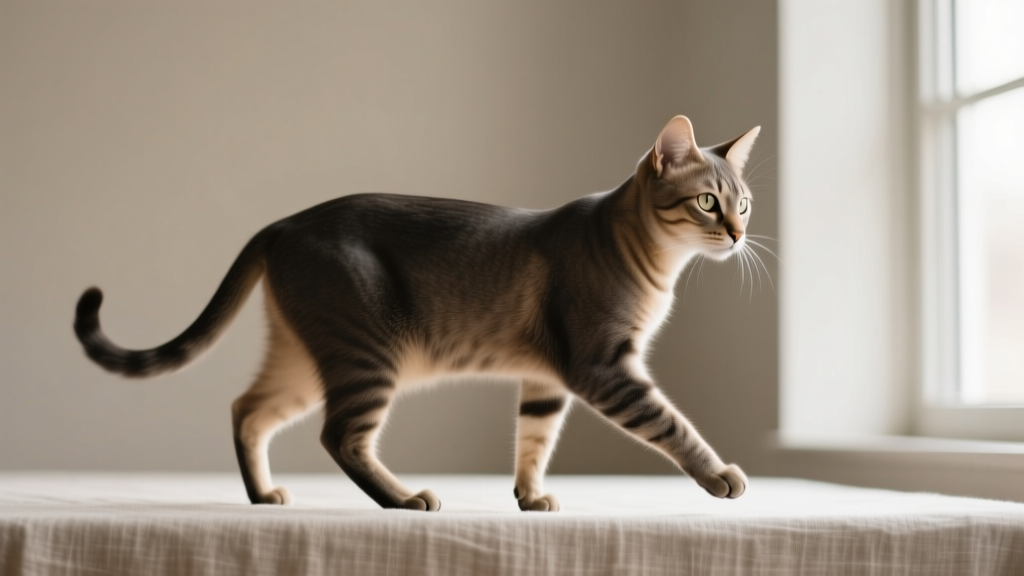
Cat Paw Extension: Stretching or Reaching for You?
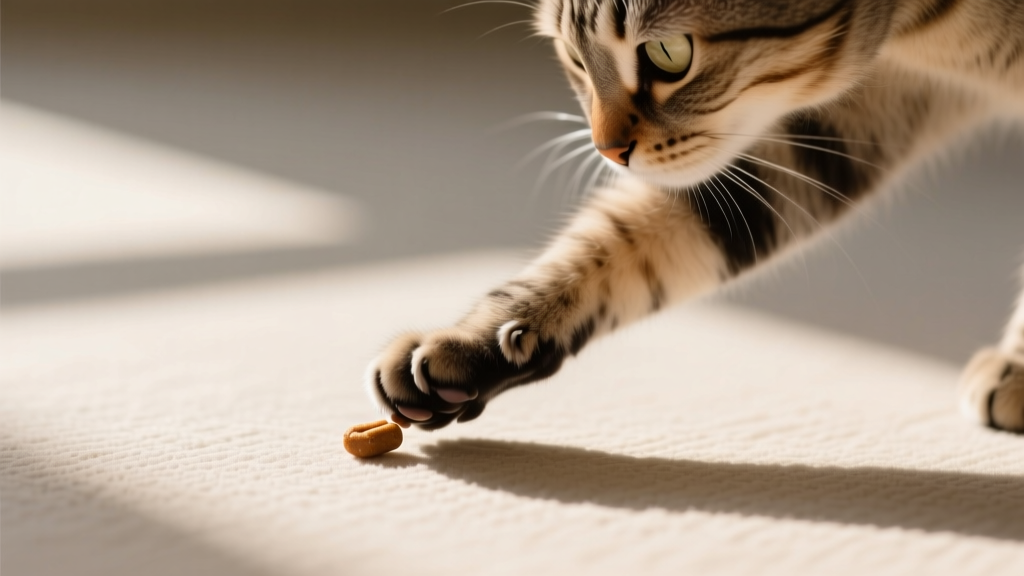
You’re on the couch, mid-scroll, when you feel it: a gentle tap on your arm. You glance down and there’s your cat—eyes half-lidded, whiskers relaxed—slowly extending one paw like they’re testing the water. Sometimes the paw rests on you like a tiny hand. Sometimes it hovers an inch from your sleeve, as if they’re trying to connect without fully committing. And sometimes it’s a dramatic full-body stretch with toes splayed wide, like a yoga instructor who takes their job very seriously.
It’s one of those cat moments that’s adorable and confusing at the same time. Are they stretching? Asking for attention? Claiming you? Plotting something? The answer is: it depends. The good news is that paw extension is one of those behaviors that can tell you a lot about how your cat feels—if you learn to read the context.
Why Cats Extend Their Paws (The Science and the “Cat History” Behind It)
Cats are built for precision movement. Their bodies are designed for stalking, pouncing, climbing, and landing softly. A slow paw extension—whether it’s a stretch or a reach—can serve a few biologically useful purposes:
- Muscle maintenance: Stretching keeps muscles supple, improves circulation, and helps a cat stay spring-loaded. In the wild, readiness matters—there’s no warm-up jog before a hunt.
- Range-of-motion checks: Extending a limb and flexing toes helps cats “calibrate” their body—especially after rest.
- Scent communication: Cat paws have scent glands. When your cat touches you, a blanket, or furniture, they may be leaving behind a subtle scent signature—basically saying, “This is familiar. This is mine/ours.”
- Social contact at low risk: Cats are social, but many prefer controlled, low-pressure interactions. A paw touch can be a gentle test: “Are you receptive right now?”
Domestic cats carry the same instincts as their wild cousins, but they’ve adapted those instincts to life with humans. So the “hunting body” and “territory messaging” systems often show up as cute, puzzling gestures on your sofa.
The Many Versions of the Paw Extension (And What’s Happening in Each)
Not all paw extensions are created equal. Here are the most common contexts cat owners notice, and what they usually mean.
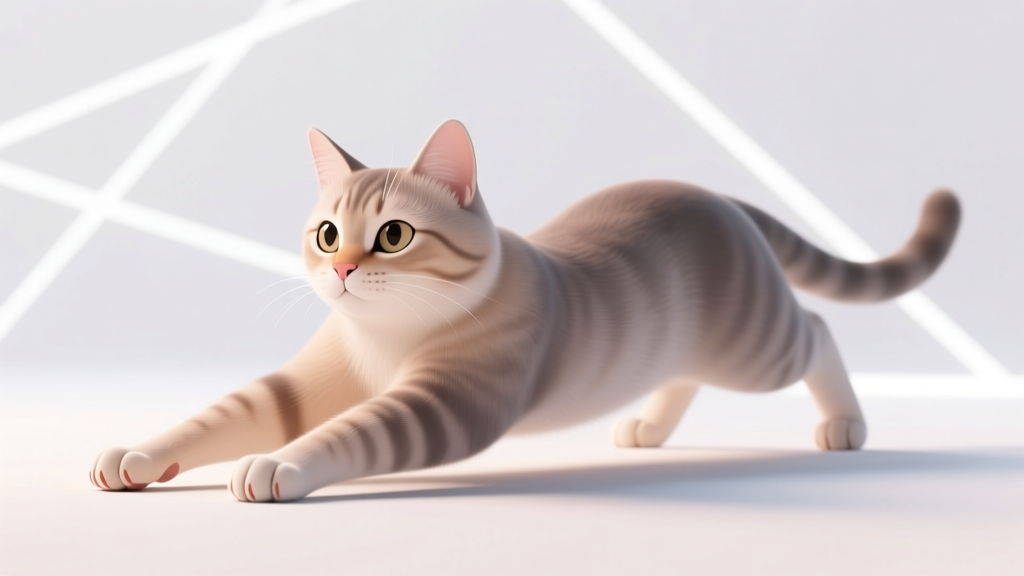
1) The Classic Full-Body Stretch (“Long Cat Mode”)
Your cat stands up, arches slightly, extends one or both front paws forward, and spreads their toes. Sometimes they do it while yawning like they’re auditioning for a sleep commercial.
What it usually means: Physical stretching, comfort, and transition from rest to activity. If it happens near you, it can also be a relaxed “I’m content here” signal.
2) The Gentle Paw-on-You Reach
Your cat is lying beside you and slowly extends one paw until it rests on your arm, shoulder, or chest. Claws are typically sheathed. The pressure is light.
What it usually means: Social contact and reassurance. Many cats do this to maintain connection without escalating into full petting. Think of it as their version of holding hands—brief, calm, and very intentional.
3) The Hovering Paw (The “Will You?” Question)
The paw extends and hovers, sometimes paired with a soft stare, a slow blink, or a tiny meow.
What it usually means: A polite request—attention, food, play, or “move your arm, you’re in my spot.” The hover is often a test: if you respond nicely, they’ll continue; if you ignore it, they may escalate to a tap.
4) The Tap-Tap Reminder
You stop petting too soon, and your cat taps your hand. Or you’re working and they tap your wrist like a coworker who needs a quick chat.
What it usually means: “Continue,” “notice me,” or “engage.” This can be friendly, but it can also be mildly demanding depending on the cat’s personality and arousal level.
5) The Paw Under the Door / Under the Blanket Maneuver
Your cat slides a paw under a closed door, under your blanket, or between couch cushions to fish for something—maybe a toy, maybe you.
What it usually means: Curiosity and play/hunt behavior. The paw is a tool for exploring unknown spaces safely. If it’s aimed at you under the blanket, your moving feet may be “prey” in your cat’s eyes.
6) The “Air Knead” or One-Paw Flex
Your cat extends a paw and flexes it rhythmically, sometimes while purring. Sometimes it’s both paws, sometimes just one.
What it usually means: Comfort, relaxation, and emotional regulation. Kneading traces back to kittenhood nursing behavior and often shows up when a cat feels safe.
What Paw Extension Says About Your Cat’s Mood
Paw extension is like a sentence—one word isn’t enough. Combine the paw with the rest of the body language for the real meaning.
- Relaxed and affectionate: Soft eyes, slow blinks, neutral ears, loose body, tail resting or gently waving. Paw touch is light, claws hidden.
- Seeking attention: Direct gaze, small vocalizations, following you, circling your legs. Paw reaches you, then looks at your face like, “Well?”
- Playful and excited: Dilated pupils, twitchy tail tip, crouching or wiggly butt, quick taps. Paw may come with a playful swat (still often claw-sheathed, but not always).
- Overstimulated or conflicted: Tail thumping, ears angled sideways (“airplane ears”), skin twitching, sudden freezing. Paw may extend as a warning or boundary setter: “Stop. I’m done.”
- Insecure or needing reassurance: Paw reaches while cat stays close, may purr but look a bit tense. They might be checking that you’re still there.
One of the sweetest patterns is the “contact check.” Some cats like to fall asleep with a paw resting on you—not because they’re clingy, but because it’s a subtle way to track your presence and feel secure.
Related Behaviors You Might Notice (Same Message, Different Dialect)
If your cat is a paw extender, you may also see:
- Slow blinking: A relaxed social signal often paired with gentle paw contact.
- Head bunting and cheek rubbing: Scent marking + affection. Some cats alternate between a paw touch and a head bump.
- Kneading: Comfort behavior that can follow a paw extension once the cat settles in.
- “Making biscuits” on you: Same emotional theme, higher intensity. (Wear thick fabric if your cat’s claws get enthusiastic.)
- Following you and “guiding” with a paw: A cat may reach for your leg as you pass, like, “This way, human. The food bowl is over here.”
- Gentle swats during play: Paw extension is often the prelude to a playful ambush—especially with younger cats.
When Paw Extension Is Normal… and When It Might Be a Concern
Most paw extending is completely normal. Still, there are a few situations where it’s worth paying closer attention.
Likely Normal
- Paw stretches after sleeping
- Gentle touch with claws sheathed
- Occasional taps to get attention
- Paw reaching during calm cuddles
Possible Concern (Consider a Vet Check)
- Sudden change: A cat who never paws at you starts doing it constantly, or a previously cuddly cat stops touching altogether.
- Limping or stiffness: Paw extension looks painful, uneven, or your cat avoids bearing weight. Arthritis, soft tissue strain, or nail/paw pad issues can make stretching look “off.”
- Excessive pawing at face or mouth: Repeated pawing could signal dental pain, nausea, or irritation.
- Claws always out, swatting escalates: If your cat’s pawing becomes rough, paired with growling/hissing or sudden bites, look for overstimulation, stressors, or poor play outlets.
- Compulsive pawing: Repetitive, hard-to-interrupt behavior may indicate anxiety or a medical issue that needs professional guidance.
If you’re unsure, a quick video of the behavior can be incredibly helpful for your vet—cats are famous for acting perfectly normal the moment they arrive at the clinic.
How to Respond (And Encourage the Sweet Version)
Your goal is to reward the kind of paw extension you like—gentle, calm, connection-seeking—while redirecting anything too intense.
- Respect the “soft request”: If your cat places a paw on you, pause and assess. If their body is relaxed, offer a calm pet (cheeks or chin are often safest) or a slow blink back.
- Reinforce with what your cat wants: If the paw reach is a polite “attention please,” respond with a short, positive interaction—then stop before they get overstimulated. Leave them wanting a bit more.
- Redirect rough pawing into play: If taps turn into swats, grab a wand toy. Keep hands out of “prey mode.” Cats who learn that hands are toys often become enthusiastic smackers.
- Teach a gentle “paw” cue: Many cats can learn to touch your hand on cue using clicker training and treats. It channels pawing into a predictable, fun behavior.
- Provide better outlets: Daily play (5–10 minutes, 1–2 times a day) plus scratching posts and climbing spaces reduces attention-pawing driven by boredom.
- Don’t punish paw touches: Yelling or pushing your cat away can make them anxious or escalate them into more intense attention-seeking. Instead, calmly redirect or disengage.
If your cat reaches out while you’re busy, try giving them a “yes, but later” routine: a brief pet, a calm verbal cue, then toss a treat into a puzzle toy. You’re acknowledging them without reinforcing constant interruptions.
Fun Facts and Research-Adjacent Nuggets
- Cat paws are sensory tools: Cats have sensitive nerve endings in their paws, helping them detect texture and vibration—great for hunting and exploring.
- Toe spreading isn’t just cute: When cats stretch and splay their toes, they’re extending muscles and tendons through the foot and lower limb, maintaining flexibility for climbing and jumping.
- Paws can carry scent signals: When cats scratch or press their paws into surfaces, they may be leaving both visual marks and scent cues from glands in the feet.
- “Touch” can be a trust marker: Many cats prefer proximity and light contact over prolonged petting. A paw on you can be their ideal level of closeness.
FAQ: Cat Paw Extension
Why does my cat reach a paw toward my face?
Often it’s social contact or a request for attention—especially if your cat is relaxed and gentle. If it happens while you’re asleep, it may also be a learned behavior that reliably wakes you up (cats are excellent at training humans).
Is my cat trying to “hold my hand”?
In human terms, it can look like that—and functionally, yes: it can be a comfort/contact behavior. Cats don’t interpret it as a romantic gesture, but it can signal trust and a desire to stay connected.
Why does my cat tap me when I stop petting them?
That’s usually a “continue” signal. If their body stays loose, it’s friendly. If you see tail thumping, ear flattening, or twitchy skin, it may be a sign they’re getting overstimulated and the tap is conflicted (“I want it… no I don’t”). In that case, stop and give them space.
Why does my cat stretch with one paw extended more than the other?
Some cats have a “dominant” paw preference, similar to right- or left-handedness. However, if the stretch looks stiff or your cat favors one limb suddenly, consider a check for soreness or joint discomfort.
My cat reaches out and sometimes grabs with claws—what should I do?
First, don’t yank your hand away quickly (that can trigger more grabbing). Freeze, then gently disengage and redirect to a toy. Regular nail trims and more structured play help a lot. If it’s happening during petting, shorten pet sessions and focus on head/cheek areas.
Does pawing mean my cat loves me?
It can be a sign of affection and trust, but it can also be a request (food, play, attention) or a boundary signal. Look at the whole cat: eyes, ears, tail, and how gentle the touch is.
That little paw extension is one of the most charming “in-between” signals cats use—part stretch, part question, part connection. Once you start noticing the patterns, you’ll get better at answering your cat in the way they actually mean.
Has your cat mastered the dramatic reach, the polite tap, or the sleepy paw-on-your-arm cuddle? Share your best paw-extension stories (and what you think your cat was saying) over on catloversbase.com—cat people live for this kind of detective work.