Why Cats Sit on Your Yoga Mat During Exercise
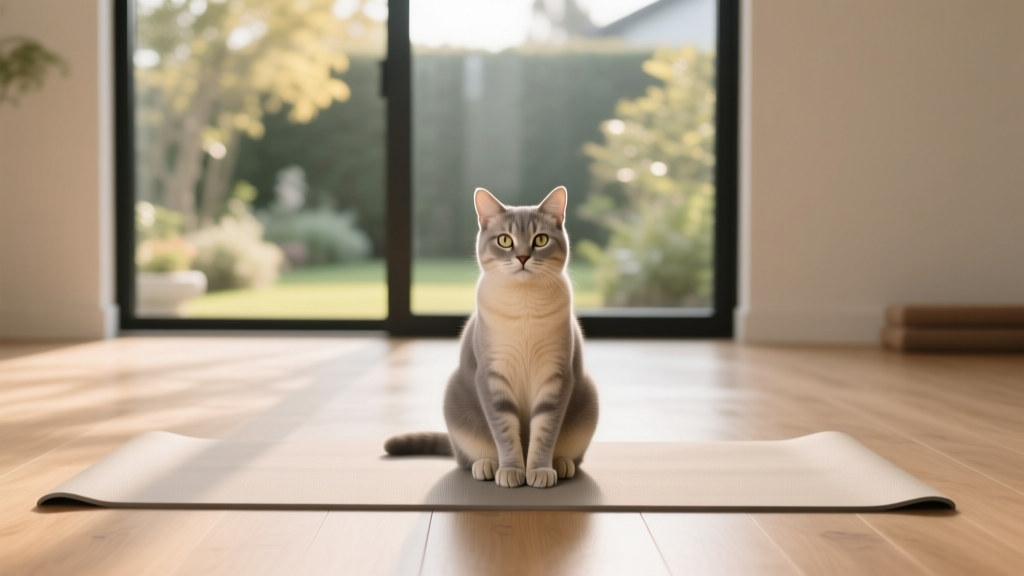
You roll out your yoga mat with the best intentions. Today is the day: calmer mind, stronger core, fewer “why does my back do that?” moments. You cue up a class, take a deep breath… and then a fuzzy shadow trots in like it pays rent. Before you’ve even found your balance, your cat has planted themselves squarely in the center of the mat—tail neatly wrapped, eyes half-lidded, as if they’re the instructor.
If you’ve ever tried to hold a plank while negotiating with a cat who’s loafing on your mat like a warm croissant, you’re in good company. This behavior is extremely common, and it’s not just your cat being “random.” From a cat’s perspective, your yoga mat is basically a deluxe invitation: it smells like you, it’s placed in the most interesting part of the room at the most interesting time of day, and it’s just the right size for a confident sit.
1) The Scientific (and Evolutionary) Reasons Cats Love Your Yoga Mat
Cats are experts at choosing the best spot in any environment. In the wild, survival often comes down to smart positioning—where you can observe, feel secure, and conserve energy. Your yoga mat checks several boxes that align with a cat’s natural instincts:
- Resource guarding and “prime real estate” thinking: Cats gravitate toward valuable spaces—sunny windowsills, high perches, warm laundry… and newly placed mats. When you put something down on the floor and then focus on it, your cat clocks it as a high-value “resource.”
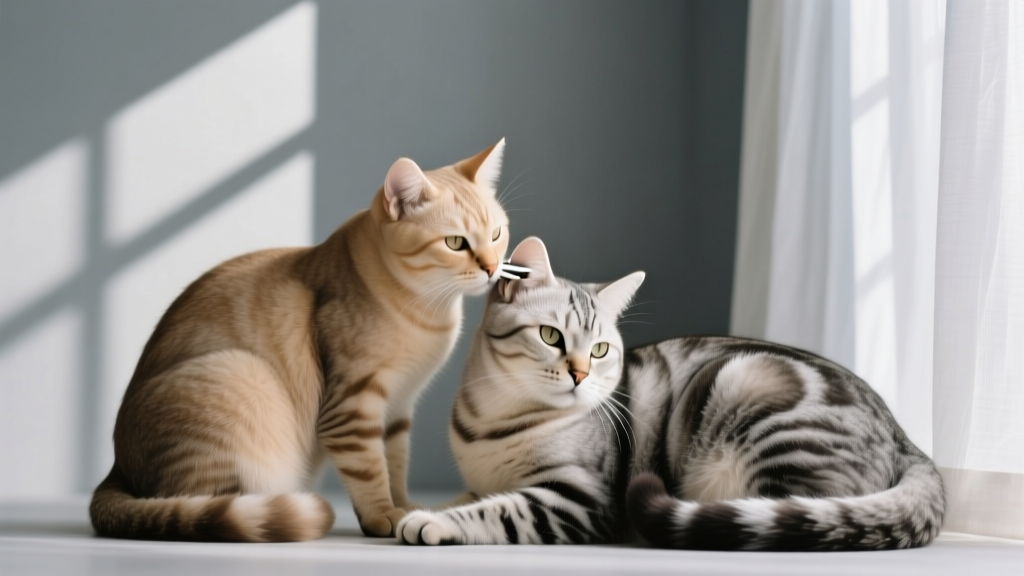
- Scent-based social bonding: Cats rely heavily on scent to interpret relationships. Your mat often carries your smell (skin oils, sweat, detergent, your home’s general “you-ness”). Sitting on it is a way of mixing scents—subtle social glue in cat language.
- Warmth and texture preferences: Many mats have a slightly insulating, grippy texture that feels stable and cozy under paws. Some cats love the faint warmth a mat holds, especially after you’ve been moving on it.
- Attention and pattern learning: Cats are excellent at learning routines. If “human unrolls mat” predicts “human stays in one place and makes interesting noises,” your cat will show up on schedule.
To a cat, you exercising isn’t “you doing yoga.” It’s “you engaging in a predictable ritual on a new territory marker that smells like the family.” Of course they want in.
2) A Detailed Breakdown: Different Contexts, Different Motivations
Not all mat-sitting is created equal. The same behavior can have different motivations depending on what’s happening around it.
The “You Are Here” Sit (Social Gravity)
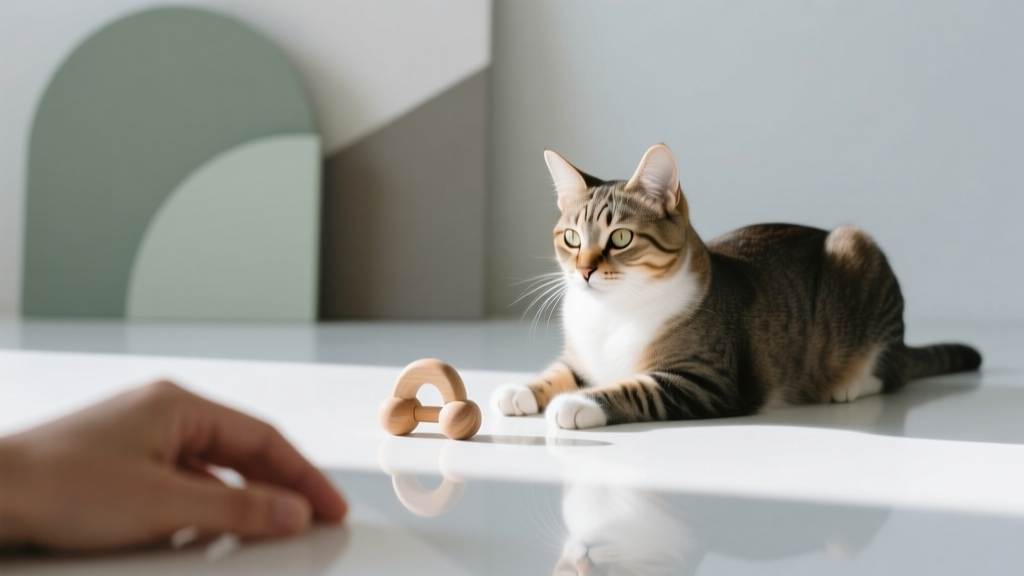
You unroll the mat, and your cat strolls over immediately, plops down, and watches you. This is often simple social attraction: you’re suddenly in one spot for a while, and cats love being near their people without necessarily being handled. Think of it as quiet companionship with excellent boundaries.
What it looks like: relaxed posture, slow blinks, tail tucked or loosely curled, ears neutral. Your cat may follow your movements with sleepy interest.
The “Please Stop Leaving” Sit (Attention-Seeking)
Some cats notice exercise as a “rival” for attention. If your routine means less lap time—or if you’re focused on a screen instead of them—your cat may place themselves directly in the middle of your activity to redirect you.
What it looks like: persistent re-centering (they move back onto the mat each time you shift), gentle paw taps, chirps, head bumps, or flopping dramatically onto their side like they’ve just been wronged.
The “This Is Mine Now” Sit (Territory and Control)
Cats like stability. Your yoga practice changes your body position, your breathing pattern, and sometimes your noise level. That can be stimulating—or mildly unsettling—for a cat who prefers predictable environments. Sitting on the mat can be a way of controlling the scene: “This space is claimed; things are normal; carry on.”
What it looks like: deliberate slow walk onto the mat, firm loaf or sphinx pose, steady gaze. They may act mildly offended if you try to move them.
The “Interesting Smell + Crinkly Texture” Sit (Sensory Appeal)
Some mats squeak or crinkle subtly under paws. Some are made of materials that hold scent interestingly. Your cat may simply enjoy the tactile/smell experience—especially if the mat is new.
What it looks like: sniffing, rubbing cheeks along the edge, kneading, rolling, or scratching lightly (which, as your mat will testify, is less cute).
The “I’m Joining the Ritual” Sit (Enrichment and Play)
For curious cats, yoga is moving furniture (your limbs). A cat may treat your mat like a play stage. They may pounce on your hands during tabletop pose or chase the swinging end of a strap.
What it looks like: perked ears, bright eyes, tail up or twitching, playful swats (usually with soft paws—usually).
3) What Sitting on Your Mat Says About Your Cat’s Mood
Your cat’s body language is the real “subtitle track.” Here are common emotional states that can pair with mat-sitting:
- Content and connected: Soft eyes, slow blinks, relaxed whiskers, still tail. Your cat is comfortable sharing space and enjoys your presence.
- Curious and engaged: Forward ears, attentive gaze, sniffing, small repositioning. They’re investigating and learning your routine.
- Seeking reassurance: Slightly crouched posture, watching you closely, choosing the mat as a “safe base.” This can happen if exercise noises (music, fast breathing) are new.
- Demanding attention: Meowing, rubbing, inserting themselves into your poses, persistent blocking. They’re lobbying for interaction.
- Mildly overstimulated: Tail flicking, skin twitching, sudden swats if touched. This isn’t “mean,” it’s information: your cat’s arousal level is rising and they need a break.
Most of the time, a cat on your mat is a sign they feel comfortable in your space and confident enough to claim a front-row seat.
4) Related Behaviors You Might Also Notice
If your cat loves your yoga mat, you may see similar “why there?” behaviors in daily life:
- Sitting on your laptop or keyboard: Warmth, attention, and scent—plus it reliably makes you look at them.
- Choosing the exact spot you’re about to step: Cats track your movement patterns and often settle where activity is highest.
- Sleeping on freshly folded laundry: Soft texture + your scent + elevated importance in your mind.
- Rubbing cheeks on your gear (mat edges, blocks, straps): Facial glands deposit scent markers, creating a “group scent” that signals belonging.
- “Helping” with stretching by walking under you: Cats are drawn to predictable motion and may seek contact when you’re grounded and close to floor level.
5) When It’s Normal (and When It Might Be a Concern)
Yoga-mat sitting is usually harmless and adorable. Still, it helps to know when to pay closer attention.
Normal and No Big Deal
- Your cat’s body language is relaxed.
- They hop on, hang out, then leave.
- They’re eating, using the litter box, and behaving normally otherwise.
- They’re simply curious about a new object or routine.
Potential Concerns to Watch For
- Sudden clinginess or blocking that’s new: If your cat suddenly becomes unusually needy, checks in constantly, or won’t let you move without intervening, consider possible stressors (changes at home, new pets, schedule shifts) or discomfort.
- Aggression during workouts: If your cat escalates to hard bites or repeated intense swats, they may be overstimulated by movement or noise. Some cats find fast arm swings or jumping jacks genuinely alarming.
- Compulsive behavior: If your cat obsessively circles the mat, can’t settle, or seems distressed, it may signal anxiety.
- Signs of pain: If your cat is less active overall, hides more, or seems irritable when touched, the mat-sitting may be incidental—while the real story is discomfort. A vet check is wise.
If the behavior is paired with appetite changes, litter box changes, or hiding, treat it as a “check the whole picture” moment rather than a cute quirk.
6) Tips for Responding (Without Ruining Your Workout)
You don’t have to choose between fitness and feline friendship. A few small tweaks can keep your cat happy and your wrists un-nibbled.
Create a “Decoy Mat”
Place a small blanket, towel, or inexpensive second mat beside yours. Many cats are drawn to the “new territory rectangle,” so giving them their own spot often works beautifully.
Reinforce Calm Participation
If your cat settles on the decoy spot, reward with a treat tossed gently to that area or a calm “good kitty” voice. You’re teaching: this spot pays.
Meet the Attention Need Before You Start
Try a 2-minute ritual: a few wand-toy swoops, a short cuddle (if they enjoy it), or a sprinkle of treats in a puzzle feeder. Cats who’ve had a little connection often relax faster.
Keep It Safe
- Avoid poses where you might accidentally press weight onto your cat.
- Skip essential oils or strong diffusers—cats can be sensitive to many scents.
- Secure straps and bands; playful chewers can get into trouble quickly.
Don’t Punish—Redirect
Shoving, yelling, or spraying water can make your cat more anxious and more determined to control the situation. Quietly lure them to the decoy spot with a treat or toss a toy away from the mat to reset their position.
If You Want to Encourage the Bond
If it’s safe and you enjoy it, invite your cat to be part of the routine: gentle petting during cooldown, a treat when you roll up the mat, or a “post-yoga cuddle” that becomes its own predictable reward.
7) Fun Facts and Research-Linked Insights
- Cats use scent as social information: Cheek rubbing and sitting on your items help blend scents, supporting a shared “family scent profile.” This is one reason cats often choose objects that smell strongly like you.
- Novel objects attract cats—especially when you care about them: Cat curiosity isn’t just about the object; it’s also about your behavior around it. Your focused attention turns the mat into an “important event.”
- Loafing is often a sign of comfort: When cats tuck paws under, they’re generally indicating safety and relaxation (though context matters—some cats loaf when they’re conserving energy, too).
- Cats are routine detectives: Many cats anticipate schedules with uncanny accuracy. If your workouts happen at consistent times, your cat may appear like clockwork—because for them, it’s part of the daily pattern.
8) FAQ: Common Questions Cat Owners Ask
Is my cat jealous of my yoga mat?
In a human sense, probably not. But your cat may be competing for access to you and to an activity that grabs your attention. The behavior often reflects social bonding and “I want to be included,” not spite.
Why does my cat only do this when I’m exercising?
Because the mat is paired with a high-interest situation: you’re on the floor, moving, breathing differently, and staying in one place. That combination is cat catnip—socially and mentally stimulating.
Should I let my cat sit on the mat?
If it’s safe and you don’t mind, it’s fine. Just watch for claws (mat damage) and positioning (avoid stepping or placing weight near them). If it disrupts your practice, a decoy mat and rewards for using it are usually effective.
My cat attacks my hands during yoga. What does that mean?
Often it’s play behavior triggered by movement—your hands look like exciting prey. Redirect with a wand toy before you start, and keep a toy nearby to toss away from your body. If the intensity is high or your cat can’t calm down, shorten sessions and add enrichment at other times of day.
Why does my cat knead or scratch my mat?
Kneading can be comfort behavior, especially if the texture is satisfying. Scratching may be normal claw maintenance and scent marking. If scratching is a problem, provide a scratching post nearby and reward its use. Consider trimming nails regularly and choosing a mat material that doesn’t invite shredding.
Can this behavior mean my cat is anxious?
Sometimes. If mat-sitting comes with clinginess, hiding, overgrooming, or irritability, your cat may be seeking reassurance. Look for recent changes (noise, guests, new pet, schedule shifts) and talk to your vet or a qualified behavior professional if it persists.
Better Workouts, Better Cat-Human Bond
A cat on your yoga mat can feel like sabotage when you’re trying to focus, but it’s often a small compliment in cat language: “I like being where you are.” With a decoy spot, a bit of pre-workout play, and an eye on body language, you can keep your routine intact while your cat enjoys their role as floor supervisor.
Does your cat loaf in the center of the mat, head-butt you mid-downward dog, or insist on being the “weight” in your core workout? Share your funniest (or most baffling) yoga-mat stories with the Cat Lovers Base community at catloversbase.com—your cat may not want credit, but they’ve earned it.