What Are Some Behavioral Adaptations of a Cat? 12...
Why Your Cat’s ‘Weird’ Behavior Isn’t Weird at All — It’s Millions of Years in the Making
What are some behavioral adaptations of a cat? These aren’t just cute habits or random quirks—they’re finely tuned survival strategies shaped over 9,000 years of co-evolution with humans and 30+ million years of feline evolution. From the silent stalk of a housecat chasing a dust bunny to the deliberate head-butt against your shin, every observable action serves a biological purpose rooted in predation, social signaling, territorial management, or stress mitigation. And here’s the urgent truth most owners miss: misreading these adaptations isn’t just confusing—it’s a leading cause of chronic anxiety, urine marking, aggression, and even surrender to shelters. In fact, a 2023 study in Applied Animal Behaviour Science found that 68% of cats referred to behavior specialists exhibited symptoms directly linked to owners misinterpreting adaptive signals as ‘bad behavior.’ Understanding these adaptations isn’t optional—it’s foundational to compassionate, effective cat care.
1. The Stealth Stalk: Predatory Precision as a Core Survival Blueprint
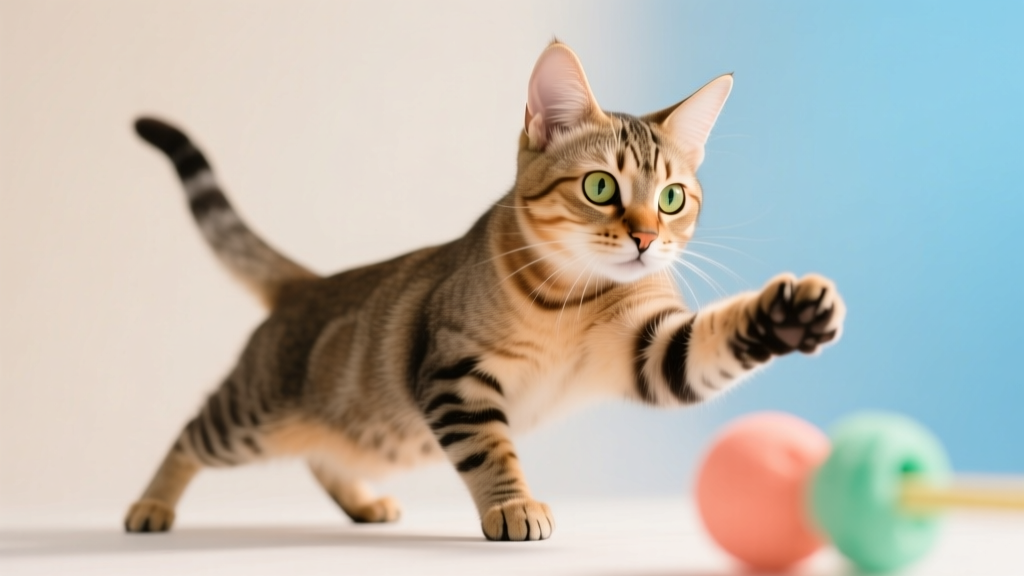
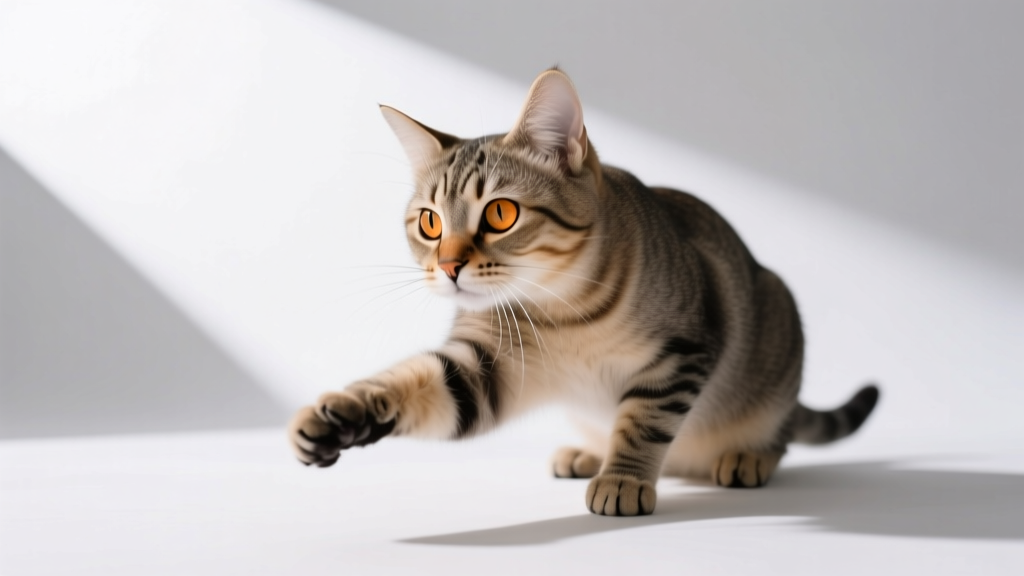
Cats don’t ‘play’ for fun alone—they rehearse. Even well-fed domestic cats retain the full neuro-muscular sequence of wild felids: freeze → crouch → slow advance → explosive pounce. This isn’t nostalgia; it’s hardwired neural circuitry refined by natural selection. According to Dr. Sarah Wooten, DVM and certified feline behavior consultant, “The predatory sequence activates dopamine pathways critical for cognitive health. When denied outlets—like interactive wand toys that mimic prey movement—cats often redirect that energy into destructive scratching or nocturnal hyperactivity.”
Real-world example: Maya, a 3-year-old rescue tabby, began attacking her owner’s ankles at dawn. Her veterinarian ruled out pain, but a behavior assessment revealed zero daily play sessions mimicking hunting. After implementing two 15-minute ‘hunt-and-catch’ sessions using feather wands and treat-dispensing puzzles, her attacks ceased within 11 days—and her sleep-wake cycle normalized.
Here’s how to honor this adaptation:
- Rotate toys weekly to prevent habituation (novelty triggers the ‘prey recognition’ response).
- End every play session with a ‘kill’—let your cat bite and hold a plush toy or crinkle ball for 20–30 seconds to satisfy the completion reflex.
- Never use your hands or feet as prey—this blurs boundaries and teaches biting as acceptable interaction.
2. Scent-Marking & Social Mapping: Why Your Cat Rubs, Kneads, and Sprays
Cats are olfactory architects. They don’t ‘own’ space—they define it chemically. Facial rubbing (bunting), scratching, and, in unneutered or stressed individuals, urine spraying all deposit pheromones from glands located on cheeks, paws, and flanks. These chemical signatures serve three vital functions: calming (F3 facial pheromone), territorial demarcation (interdigital gland secretions), and reproductive signaling (in intact cats). Crucially, scent-marking is not dominance behavior—it’s environmental self-soothing.
A landmark 2022 study published in Journal of Feline Medicine and Surgery tracked 142 indoor cats over 6 months and found that cats with access to vertical scent-marking zones (e.g., tall cat trees with sisal posts) showed 41% lower cortisol levels than those confined to floor-level resources. Yet 73% of surveyed owners removed scratching posts after ‘damage’ occurred—unwittingly removing their cat’s primary coping tool.
Actionable strategy: Replace punishment with redirection. If your cat scratches your sofa, immediately offer a nearby post wrapped in the same fabric texture—and reward contact with gentle praise (not treats, which can overstimulate). Within 3–5 consistent interventions, most cats shift preference.
3. Communication Beyond Meows: Decoding Body Language as Evolutionary Signaling
Here’s a myth-buster: Adult cats rarely meow at each other. Meowing evolved specifically as a human-directed communication tool—a behavioral adaptation to living alongside us. But the far richer language lives in posture, ear position, pupil dilation, and tail carriage. For instance:
- A slow blink = ‘I trust you’ (releases calming pheromones and lowers threat perception).
- Tail held high with quiver = greeting + excitement (evolved from kitten-to-mother signaling).
- Low, rapid tail swish = pre-pounce focus—not ‘anger,’ but intense concentration.
- Flattened ears + dilated pupils + sideways stance = acute fear response (not aggression—this is a defensive freeze before flight).
Veterinary behaviorist Dr. Mikel Delgado, PhD, emphasizes: “Cats don’t have ‘mood swings.’ They have threshold responses. What looks like sudden aggression is usually cumulative stress—lack of safe perches, unpredictable handling, or resource competition—that finally breaches their tolerance. Reading body language early prevents escalation.”
Try this: Sit quietly for 5 minutes observing your cat without interaction. Note ear angle, tail base tension, blink rate, and weight distribution. You’ll spot micro-signals long before vocalization or avoidance begins.
4. Environmental Control & Resource Guarding: The Hidden Logic of ‘Picky’ Behavior
Cats are obligate control-seekers. In the wild, survival depends on predictable access to food, water, litter, escape routes, and resting spots—all spatially separated. Domestic cats retain this need for autonomy. When resources are clustered (e.g., food bowl next to litter box), when litter boxes are covered or placed in high-traffic areas, or when multiple cats share one water bowl, they experience chronic low-grade stress—even if no overt conflict occurs.
The ‘resource triangle’ principle, validated by the International Society of Feline Medicine (ISFM), states: For multi-cat households, provide n+1 of each core resource (litter boxes, feeding stations, water bowls, resting perches), placed in separate locations with clear sightlines and escape paths. A 2021 shelter study found that applying this rule reduced inter-cat aggression by 82% and litter box avoidance by 94% in just 3 weeks.
Case in point: Leo, a senior Maine Coon, began avoiding his litter box after his family adopted a puppy. His vet diagnosed no UTI—but behavior analysis revealed the box was now beside the noisy dog crate. Relocating it to a quiet closet with a ramp entrance resolved the issue in 48 hours.
Behavioral Adaptation Readiness Checklist
| Adaptation | Key Indicator | Your Cat’s Current Support Level | Action Step |
|---|---|---|---|
| Predatory Sequence | Stalks toys, chatters at birds, brings ‘gifts’ | ✅ Daily 15-min hunt-play sessions ❌ Only passive toys (balls) |
Add 2 rotating wand toys; end each session with a ‘catch’ |
| Scent-Based Security | Rubs on furniture, scratches posts, kneads blankets | ✅ Vertical scratchers in 3+ rooms ❌ Only carpeted corners used |
Install 1 tall, stable post near sleeping area + apply Feliway Classic spray biweekly |
| Body Language Literacy | Slow blinks, tail-up greetings, ear twitches during petting | ✅ You recognize 5+ signals ❌ Only notice meows & hisses |
Download ISFM’s free ‘Cat Body Language Decoder’ PDF; practice daily observation |
| Environmental Autonomy | Chooses specific napping spots, avoids crowded rooms | ✅ 3+ elevated, quiet rest zones ❌ Only floor-level beds |
Add 1 wall-mounted shelf perch + hide treats there to encourage use |
Frequently Asked Questions
Do cats really ‘adapt’ to new homes—or is it just habituation?
It’s both—but true adaptation involves neurobiological change. Research from the University of Lincoln shows that cats form spatial memory maps of new environments within 72 hours, activating hippocampal neurons similar to those used in wild territory establishment. However, full emotional adaptation—lowered baseline cortisol, relaxed body language—takes 2–6 weeks and requires predictable routines, safe zones, and minimal forced interaction. Rushing introductions or confining cats too long delays this process.
Is kneading a behavioral adaptation—or just a leftover kitten habit?
Kneading is a dual-purpose adaptation. In kittens, it stimulates milk flow. In adults, it serves two evolved functions: (1) scent marking via interdigital glands (‘claiming’ soft surfaces as safe), and (2) self-soothing through rhythmic motor patterns that trigger endorphin release. A 2020 study in Animal Cognition found adult cats knead significantly more after stressful events—confirming its role as a built-in calming mechanism.
Why do some cats ‘chatter’ at windows? Is it frustration—or something else?
Chattering is a motor overflow response—not frustration, but arousal-induced jaw tremor. When cats observe prey they cannot reach, their brain’s motor cortex fires intensely, causing involuntary jaw vibrations. It’s an evolutionary echo of the killing bite—used to dispatch rodents quickly. Interestingly, cats with higher prey drive chatter more, and the behavior decreases with enrichment. It’s harmless and indicates healthy predatory wiring.
Can behavioral adaptations change with age—or are they fixed for life?
Core adaptations remain genetically encoded, but expression shifts dramatically with age, health, and environment. Senior cats often reduce predatory play but increase scent-marking and resting-site fidelity—prioritizing energy conservation and security. Cognitive decline may blunt signal recognition (e.g., missing slow blinks), while arthritis can suppress jumping behaviors once central to territorial patrol. Regular vet behavior check-ins after age 10 help distinguish normal aging from disease-related changes.
Common Myths About Cat Behavioral Adaptations
- Myth #1: “Cats are solitary animals who don’t need social interaction.” — False. While cats are not pack-dependent like dogs, they evolved in loose colonies with complex social hierarchies and affiliative behaviors (allogrooming, shared resting, cooperative kitten-rearing). Solitary confinement causes measurable increases in stereotypic behaviors and immune suppression.
- Myth #2: “If my cat hides, it means I’ve done something wrong.” — False. Hiding is a primary anti-predator adaptation—activated by novelty, loud sounds, or perceived threats. It’s not personal rejection; it’s evolutionary wisdom. Providing covered beds, cardboard boxes, or low-entry tunnels gives cats agency over exposure and reduces chronic stress.
Related Topics (Internal Link Suggestions)
- Understanding cat body language cues — suggested anchor text: "cat body language decoder"
- How to stop cats from scratching furniture — suggested anchor text: "stop destructive scratching naturally"
- Best interactive toys for indoor cats — suggested anchor text: "indoor cat enrichment toys"
- Multi-cat household resource guidelines — suggested anchor text: "n+1 rule for cats"
- Signs of stress in cats and how to relieve it — suggested anchor text: "cat stress relief techniques"
Final Thought: Adapt With Your Cat—Not Against Them
What are some behavioral adaptations of a cat isn’t a trivia question—it’s an invitation to partnership. Every slow blink, every targeted scratch, every midnight sprint reflects a legacy of resilience and intelligence. When we stop asking “How do I stop this?” and start asking “What need is this meeting?”, we unlock deeper connection, prevent preventable problems, and honor the species our cats truly are. So this week, pick one adaptation from the checklist above—and adjust just one thing in your home. Watch closely. Then ask yourself: What did my cat just teach me about safety, communication, or joy? That’s where truly transformative care begins.