Why Cat Hissing Behavior at Home Isn’t ‘Just Being Mean’
Why Your Cat’s Hissing at Home Is a Red Flag You Can’t Ignore
If you’ve ever jumped back when your usually affectionate cat suddenly hissed while being petted on the couch, or felt confused and hurt when your kitten hissed at your toddler during playtime, you’re not alone. Why cat hissing behavior at home is one of the most misinterpreted signals in feline communication — and misunderstanding it can escalate stress, damage trust, and even delay critical health interventions. Hissing isn’t aggression for aggression’s sake; it’s your cat’s last-resort alarm system, deployed only when they feel cornered, threatened, or unwell. In fact, a 2023 study published in Applied Animal Behaviour Science found that 68% of cats who began hissing suddenly at home had an undiagnosed medical condition — most commonly dental pain, arthritis, or urinary discomfort. This article cuts through the myths and gives you a practical, compassionate roadmap to decode, de-escalate, and prevent hissing — backed by veterinary behaviorists, certified cat trainers, and real household case studies.
What Hissing Really Means: It’s Not Anger — It’s Fear-Based Communication
Hissing is a distance-increasing signal — a biological ‘stop sign’ hardwired into cats over millennia. Unlike growling dogs (which may signal dominance or warning), a hiss is almost always rooted in fear, anxiety, or pain. As Dr. Sarah Wooten, DVM and certified veterinary behaviorist, explains: ‘When a cat hisses, they’re screaming “I feel unsafe right now — please back off.” Punishing or ignoring that signal doesn’t teach them better manners; it teaches them that humans aren’t safe allies.’
Think of hissing like a smoke alarm: it doesn’t mean there’s fire *yet* — but it means conditions are dangerously close. The key is identifying the trigger *before* the hiss happens. Common pre-hiss cues include flattened ears, dilated pupils, tail flicking, low crouching, or freezing mid-movement. These micro-signals appear seconds before the hiss — and catching them consistently is how you build true behavioral fluency.
Consider Maya, a 4-year-old rescue tabby in Portland. Her owners thought she was ‘grumpy’ because she’d hiss when picked up — until a full wellness exam revealed painful sacroiliac joint inflammation. After two weeks of anti-inflammatory meds and gentle handling protocols, the hissing stopped entirely. Her story isn’t rare: over half of sudden-onset hissing in adult cats has an underlying physical cause.
The 5 Most Overlooked Triggers Behind Indoor Hissing
While many assume hissing is about ‘bad temperament,’ the reality is far more nuanced. Here are five high-impact, frequently missed triggers — each with actionable detection methods and intervention steps:
- Silent Pain: Dental disease (affecting 70% of cats over age 3), hyperthyroidism, or gastrointestinal discomfort often manifest as irritability or avoidance — culminating in hissing when touched near sensitive areas. Watch for reduced grooming, reluctance to chew dry food, or hiding more than usual.
- Overstimulation Threshold: Petting-induced aggression isn’t ‘random’ — it’s neurological overload. Cats have a finite tolerance for tactile input. A 2022 Cornell Feline Health Center study found that the average cat reaches sensory saturation after just 12–18 seconds of continuous stroking — especially along the base of the tail or belly. Hissing here is a precise ‘off switch.’
- Environmental Micro-Stressors: Things we barely notice — a new air purifier’s ultrasonic hum, shifting light patterns from a neighbor’s security camera, or even lingering scent from a visitor’s perfume — can spike cortisol levels. One cat owner in Austin eliminated daily hissing episodes simply by moving her litter box away from a vibrating HVAC vent.
- Resource Guarding (Even When Resources Are Plentiful): Cats don’t assess abundance — they assess safety. If your cat hisses near their food bowl, water fountain, or favorite napping spot, it’s rarely about scarcity. It’s about perceived vulnerability. A cat who feels exposed while eating (e.g., in a high-traffic hallway) may hiss at anyone approaching — even you.
- Unresolved Trauma or Social Mismatch: Former strays, shelter cats, or kittens separated too early often lack secure attachment templates. They may hiss when hugged, carried, or even when someone sits too close on the sofa — not out of dislike, but because proximity hasn’t been associated with safety in their lived experience.
How to Respond in the Moment (Without Making It Worse)
When hissing occurs, your immediate response determines whether trust deepens or fractures. Here’s what works — and what absolutely doesn’t:
- Freeze and retreat: Stop all movement. Slowly back 3–5 feet without breaking eye contact (soft, blinky eyes only). Never reach toward or speak sharply — this confirms their fear.
- Remove the trigger silently: If another pet or child is nearby, calmly usher them away — no explanations, no scolding. Your calmness is contagious.
- Offer a safe exit route: Open a nearby closet door or place a cardboard box on the floor. Cats need control to regain calm.
- Wait 15+ minutes before re-engaging: Rushing back in ‘to reassure’ often re-triggers anxiety. Let them choose when to reconnect.
- Never use spray bottles, clapping, or yelling: These punish the symptom, not the cause — and erode your relationship. A 2021 study in Journal of Veterinary Behavior showed cats subjected to aversive correction were 3.2x more likely to develop chronic anxiety disorders.
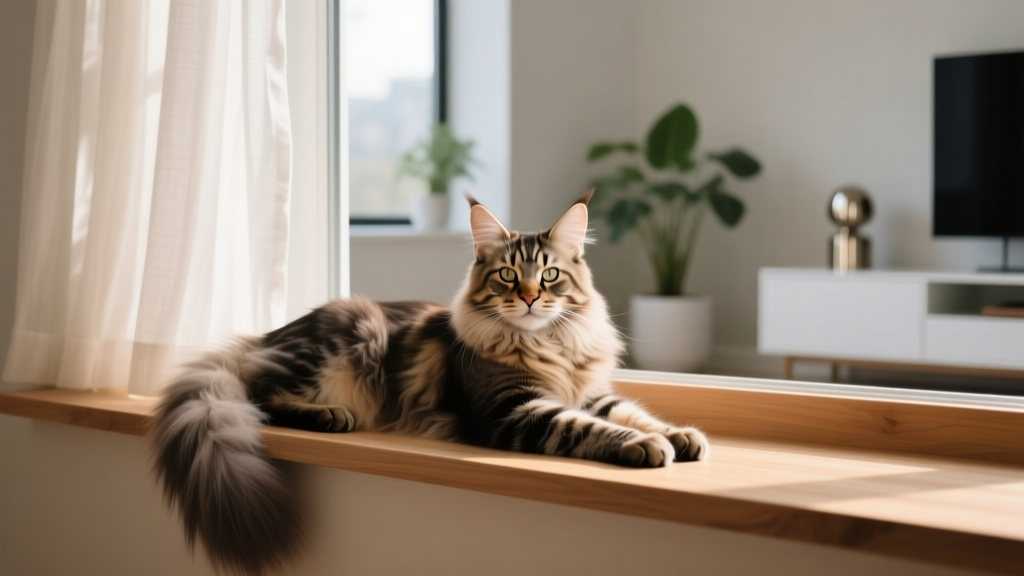
Real-world example: Leo, a 7-year-old Maine Coon, began hissing at his owner every time she reached for the vacuum cleaner. Instead of forcing exposure, his owner placed treats near the unplugged vacuum for 5 days — then turned it on (in another room) while feeding him. Within 12 days, Leo would sit beside the running vacuum, purring. Desensitization + positive association > confrontation.
Prevention Protocol: Building Long-Term Safety & Predictability
True prevention means reshaping your cat’s environment and routines — not just managing reactions. Start with these evidence-based pillars:
- Vertical Territory Audit: Cats feel safest when they can observe from above. Add at least three elevated perches (shelves, cat trees, window hammocks) on different walls. A 2020 University of Lincoln study found cats with ≥3 vertical zones showed 41% less defensive behavior in multi-cat homes.
- Consistent Resource Mapping: Place food, water, litter boxes, and sleeping spots in quiet, low-traffic zones — never side-by-side. The ‘Rule of 3’ applies: 3 litter boxes (even for 1 cat), 3 water stations (including one fountain), 3 separate resting areas.
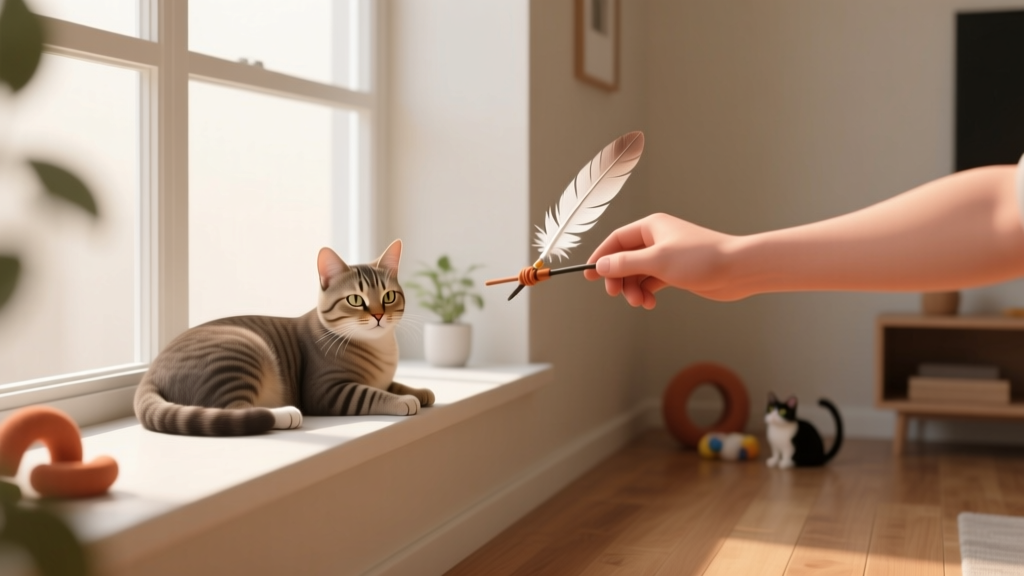
- Play Therapy Sessions: 15 minutes of structured predatory play (feather wand → chase → capture → ‘kill’ with a treat) twice daily reduces redirected frustration. Use a ‘play pause’ technique: stop before your cat gets overexcited — then reward calm sitting.
- Smell-Safe Home Maintenance: Avoid citrus-scented cleaners, air fresheners, and essential oils (many are toxic and stressful). Opt for unscented, enzymatic cleaners. Introduce new scents gradually — e.g., rub a cloth with your unwashed t-shirt on new furniture before allowing access.
| Trigger Category | Early Warning Signs (Before Hissing) | Immediate Response | Long-Term Prevention Strategy |
|---|---|---|---|
| Pain or Discomfort | Reduced jumping, avoiding stairs, excessive licking of one area, squinting, decreased appetite | Cease all handling. Schedule vet visit within 48 hours. Offer warm compress (if approved) and quiet space. | Biannual senior wellness exams (starting at age 7); dental checkups yearly; keep pain logs using apps like CatLog. |
| Overstimulation | Tail thumping, skin twitching, flattened ears, sudden stillness, dilated pupils | Stop petting immediately. Turn away slightly. Offer a treat on the floor to reset. | Use ‘petting tests’: stroke 3 seconds → pause → watch for tail flick. Gradually increase duration only if body language stays relaxed. |
| Environmental Stress | Increased blinking, hiding during routine activities, excessive grooming, urine marking outside box | Dim lights, lower volume, close blinds, offer covered bed. Remove new objects slowly. | Install Feliway Optimum diffusers in high-stress zones; rotate toys weekly; use white noise machines near windows. |
| Social Anxiety | Avoiding eye contact, slow blinking avoidance, retreating when approached, flattened whiskers | Step back. Sit sideways (less threatening). Offer treats at a distance. Never force interaction. | Clicker train ‘touch’ and ‘target’ behaviors; use ‘passive presence’ — sit quietly nearby reading, rewarding calm proximity. |
Frequently Asked Questions
Is it normal for my kitten to hiss at me?
Yes — but context matters. Kittens hiss during play-fighting with littermates to practice boundaries. However, if your kitten hisses when you pick them up, touch their paws, or during routine care (like nail trims), it’s signaling discomfort or fear — not ‘cuteness.’ Early positive handling (gentle paw touches + treats, short crate sessions with praise) builds lifelong trust. Never force contact; let them initiate.
Should I punish my cat for hissing?
No — absolutely not. Punishment suppresses the hiss but does nothing to resolve the underlying fear or pain. Worse, it teaches your cat that *you* are part of the threat. Veterinarians and feline behaviorists universally agree: punishment increases anxiety, damages your bond, and can lead to redirected aggression or chronic stress-related illness (e.g., idiopathic cystitis).
My cat only hisses at certain people — why?
This points to associative learning. Maybe a guest wore strong cologne that startled them, or someone moved too quickly during a past interaction. Cats remember negative associations vividly. The solution isn’t ‘getting them used to’ that person — it’s rebuilding positive associations: have the person sit quietly, toss high-value treats (like tuna flakes) without making eye contact, and let your cat approach on their own terms. Consistency over 1–2 weeks usually shifts the response.
Could my cat be hissing because of another pet in the house?
Very likely — especially if hissing occurs near shared resources (litter boxes, food bowls, sun patches) or during transitions (e.g., when the dog enters the room). Multi-pet households require intentional resource separation. Never assume ‘they’ll work it out.’ Use baby gates, timed feedings, and scent-swapping (rubbing towels on each animal) to reduce tension. A certified cat behavior consultant can design a step-by-step reintroduction plan.
Will neutering/spaying stop hissing?
Rarely. While intact cats may hiss more during mating season due to hormonal surges, hissing is primarily a fear-based behavior — not a sex hormone-driven one. Spaying/neutering improves health and reduces roaming or spraying, but won’t resolve anxiety, pain, or poor socialization. Focus on environmental enrichment and behavior support instead.
Common Myths About Cat Hissing
Myth #1: “Hissing means my cat is dominant or trying to ‘rule’ the house.”
Reality: Dominance is a human construct rarely applicable to cats. Hissing is a vulnerable, high-energy signal — energetically costly and used only when escape isn’t possible. A truly ‘dominant’ cat would simply avoid conflict, not risk confrontation.
Myth #2: “If I ignore the hissing, it’ll go away on its own.”
Reality: Ignoring the symptom while leaving the trigger unchanged often worsens the problem. Unaddressed stress accumulates, leading to chronic anxiety, urinary issues, or escalated aggression (biting, swatting). Proactive observation and gentle intervention yield faster, safer results.
Related Topics (Internal Link Suggestions)
- Understanding Cat Body Language Signals — suggested anchor text: "what does slow blinking mean in cats"
- How to Introduce a New Cat to Your Home — suggested anchor text: "stress-free multi-cat household guide"
- Signs of Pain in Cats That Aren’t Obvious — suggested anchor text: "hidden cat pain symptoms checklist"
- Best Calming Products for Anxious Cats — suggested anchor text: "vet-recommended cat anxiety solutions"
- Why Does My Cat Bite Me Gently? — suggested anchor text: "love bites vs. overstimulation bites"
Your Next Step: Observe, Record, and Respond With Compassion
Hissing is never ‘just behavior’ — it’s your cat’s clearest voice asking for help. Now that you understand why cat hissing behavior at home occurs, your power lies in observation: grab a notebook or open a notes app and log every hiss for 3 days — time, location, who was present, what happened just before, and your cat’s body language. Patterns will emerge. Then, prioritize the most frequent trigger using the table above. If pain is suspected, book that vet visit *this week*. If stress dominates, start with one environmental change — like adding a second litter box in a quieter spot. Small, consistent actions compound. You’re not fixing a ‘problem cat’ — you’re honoring a complex, sensitive companion who trusts you enough to show you their fear. That’s where real connection begins.