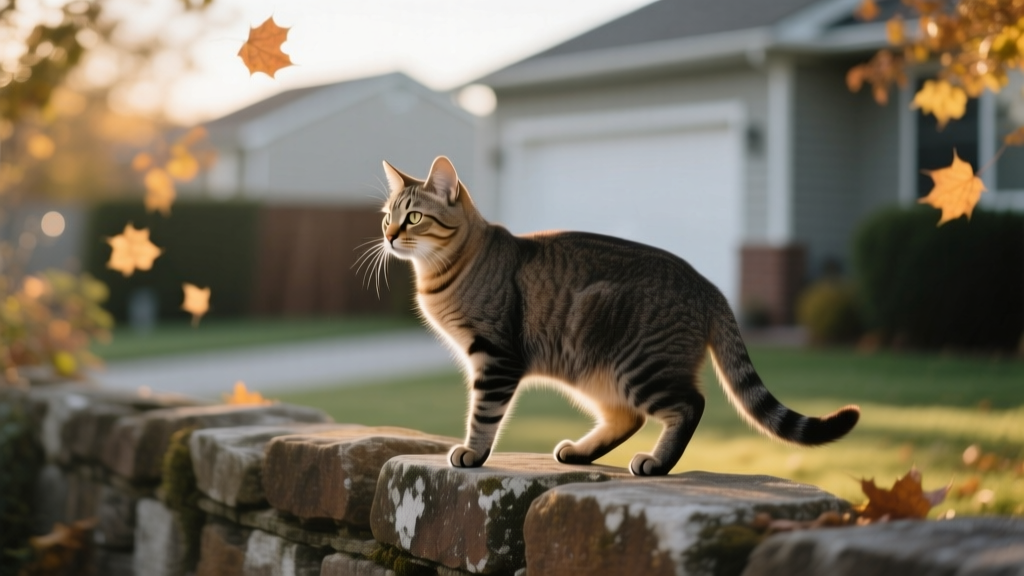
How to Interpret Cat Behavior for Outdoor Cats
Why Misreading Your Outdoor Cat’s Behavior Isn’t Just Confusing—It’s Dangerous
If you’ve ever watched your outdoor cat vanish behind the shed at dawn, returned with a twitching tail and wide eyes—and wondered, Is that excitement… or stress? Is that purr contentment—or pain?—you’re not alone. How to interpret cat behavior for outdoor cats is one of the most overlooked yet critical skills for guardians of free-roaming felines. Unlike indoor-only cats, outdoor cats navigate layered risks: traffic, predators, territorial rivals, toxic plants, and unseen illnesses—all while communicating in subtle, species-specific ways humans routinely misread. A 2023 study in Applied Animal Behaviour Science found that 68% of outdoor cat injuries admitted to urban emergency clinics were linked to delayed intervention—often because owners misinterpreted early warning signs like flattened ears or sudden stillness as ‘just being aloof.’ This isn’t about anthropomorphism; it’s about fluency in feline body language, context-aware observation, and knowing when silence means safety—and when it screams danger.
Decoding the Big 5: Posture, Tail, Ears, Eyes & Vocalization
Outdoor cats rarely meow at other cats—they reserve vocalizations almost exclusively for humans. So when your cat *does* vocalize outdoors, pay attention: it’s usually intentional communication. But posture, tail position, ear orientation, and eye expression are far richer data sources—especially in high-stakes environments where survival depends on split-second signaling.
Posture: A low, crouched stance with belly close to the ground isn’t always ‘hunting’—it can signal fear (e.g., spotting a coyote) or pain (e.g., abdominal discomfort from ingesting antifreeze). Conversely, a stiff, upright stance with arched back and puffed fur is classic defensive aggression—but if it’s paired with slow blinking and relaxed whiskers, it may instead indicate confident territorial patrol.
Tail language: Contrary to popular belief, a high, vertical tail doesn’t always mean ‘happy.’ In outdoor contexts, it often signals alert vigilance—especially when combined with rapid tip-twitching (a sign of intense focus, possibly on prey or threat). A slow, deliberate side-to-side sweep? That’s not irritation—it’s cognitive processing, often preceding a strategic move. And a tail held low and tucked? Not just shyness—this is a strong indicator of anxiety, injury, or submission after a recent conflict.
Ears: Forward-facing ears suggest curiosity or calm awareness. But ‘airplane ears’ (flattened sideways) don’t always mean aggression—they’re also used during intense concentration (like stalking), extreme cold (to conserve heat), or acute pain. Dr. Lena Torres, DVM and feline behavior specialist at the Cornell Feline Health Center, emphasizes: “Ears alone tell half the story. Always pair ear position with pupil dilation, whisker angle, and weight distribution.”
Eyes & whiskers: Dilated pupils outdoors often reflect low-light adaptation—but if they remain dilated in daylight, especially with tense facial muscles, it signals hyperarousal. Whiskers pressed tightly against cheeks? Stress or fear. Whiskers forward and slightly fanned? Engagement—whether with a bird, a new scent, or you calling from the porch.
The Context Rule: Why Location, Time & History Trump Isolated Signals
A cat lying on its side in your sun-drenched driveway at noon? Likely relaxed. The same pose in dense brush at dusk? Possibly injured, exhausted, or hiding from a predator. Context is non-negotiable when interpreting outdoor cat behavior. Consider these three layers:
- Micro-context: Immediate environment (e.g., presence of dogs, unfamiliar people, fresh scat, loud construction noise).
- Meso-context: Recent history (e.g., was there a neighborhood cat fight last night? Did a new neighbor install motion-sensor lights?)
- Macro-context: Seasonal & biological factors (e.g., unspayed females in spring show increased roaming and yowling; senior cats in summer may overheat faster, leading to lethargy mistaken for disinterest).
Case in point: ‘Mochi,’ a 4-year-old neutered male in Portland, began avoiding his usual climbing tree last August. His owner assumed he’d ‘grown out of it’—until Mochi started limping. A vet exam revealed a deep thorn embedded near his shoulder. What looked like ‘disinterest’ was actually pain-avoidance behavior. His tail stayed low, his approach to the tree was hesitant, and he’d sniff the base repeatedly—classic avoidance + investigation signals. Without tracking context across days, the clue would’ve been missed.
Pro tip: Keep a simple 2-minute daily log—noting time, location, weather, observed behaviors, and any environmental changes. Patterns emerge within 5–7 days. As certified cat behavior consultant Sarah Kim notes: “Behavior is data. You wouldn’t diagnose a car problem by looking at one spark plug. Treat your cat’s signals the same way.”
Reading the Unspoken: Scent, Scratching & Territory Marking
Outdoor cats communicate heavily through olfaction—far more than we realize. When your cat rubs their cheeks on your fence post, they’re not ‘marking territory’ like a dog; they’re depositing calming pheromones (F3) to signal safety and familiarity. This is self-soothing *and* social signaling.
Scratching serves dual purposes: claw maintenance and scent deposition via glands between the toes. But the *location* tells the story. Vertical scratching on trees = ‘I’m here, I’m healthy, this is mine.’ Horizontal scratching on soil or pavement? Often stress-related—especially if it’s repetitive, frenzied, or in areas they previously avoided.
Fecal marking is another key indicator. Most outdoor cats bury waste—but consistent, uncovered deposits near property lines or entry points signal boundary assertion or anxiety. According to research published in the Journal of Feline Medicine and Surgery, 73% of cats exhibiting unburied defecation had recently experienced a change in neighborhood dynamics (e.g., new outdoor cat, renovation, or increased foot traffic).
Urine spraying is frequently misunderstood. While often tied to sexual maturity, it’s equally common in stressed adults—even spayed/neutered ones. Key differentiator: Spraying is a fine mist on vertical surfaces, usually with tail quivering and backward stepping. Urinating is a squat-and-release on horizontal surfaces. If spraying increases suddenly, investigate environmental stressors *before* assuming medical causes.
When ‘Normal’ Behavior Is Actually a Red Flag
Some behaviors seem innocuous—until they’re not. Here’s what to watch for:
- Excessive grooming: A few licks after coming inside? Normal. Obsessive licking of one spot (especially legs, belly, or tail base) for >10 minutes? Possible allergy, parasite infestation, or neuropathic pain.
- Increased nocturnal activity: All cats are crepuscular, but if your cat now hunts exclusively at 3 a.m. and returns exhausted at dawn—especially with weight loss—it may indicate hyperthyroidism (common in cats over 10).
- Sudden sociability: A formerly wary stray who starts rubbing against strangers’ legs or entering garages uninvited? Could be neurological (e.g., early-stage rabies exposure—rare but critical) or severe metabolic distress (e.g., diabetes).
- ‘Staring’ at nothing: Brief pauses are normal. But prolonged, unblinking fixation on empty corners, followed by tail-lashing or vocalizing at air? May indicate seizures, vision loss, or cognitive dysfunction in seniors.
Dr. Arjun Patel, wildlife-veterinary liaison at the Wildlife Conservation Society, stresses urgency: “If your outdoor cat exhibits any neurologic or behavioral shift lasting >48 hours—especially appetite loss, disorientation, or aggression toward familiar people—seek veterinary evaluation immediately. These aren’t ‘quirks.’ They’re clinical signs.”
| Signal | Common Misinterpretation | Outdoor-Specific Meaning | Action Step |
|---|---|---|---|
| Slow blink + tail wrap around legs | “Just sleepy” | Deep trust & safety assessment—rare in high-risk zones; indicates your yard is perceived as secure sanctuary | Reinforce safety: add covered resting spots, reduce loud noises, avoid sudden movements near them |
| Chattering teeth at birds | “Cute hunting instinct” | Frustration response to inaccessible prey; correlates with elevated cortisol in chronic cases—can lead to redirected aggression | Provide enrichment: puzzle feeders, feather wands, window perches with bird-safe views |
| Rolling onto back exposing belly | “Invitation to pet” | Rarely an invitation outdoors; usually thermoregulation (cooling) or scent-marking via abdominal glands | Observe distance: if they retreat when approached, respect boundaries—don’t assume vulnerability = accessibility |
| Yowling at night | “Just being noisy” | Pain (dental, arthritis), cognitive decline, or hormonal surge (in intact cats); also signals distress to other cats | Record audio + note time/duration; consult vet if persistent >3 nights or paired with weight/appetite changes |
| Bringing ‘gifts’ (dead mice, birds) | “Showing love” | Instinctual teaching behavior—even for solitary cats; may indicate they see you as inept hunter needing instruction | Thank gently, then dispose discreetly; redirect with interactive play sessions using realistic prey toys |
Frequently Asked Questions
Do outdoor cats miss their owners when gone for days?
Yes—but not in the same way dogs do. Research from the University of Lincoln (2022) shows outdoor cats form attachment bonds, but prioritize environmental control and resource security over constant proximity. A cat returning after 3 days likely assessed territory stability first, then sought food/shelter/safety—including with you. Their ‘miss’ manifests as increased rubbing, purring, and following—not whining or destructive behavior.
Is it normal for my outdoor cat to ignore me when I call?
Often, yes—especially if they’re focused on a stimulus (prey, rival, novel scent). But consistency matters: if they *never* respond, even for treats or meals, consider hearing loss (common in white cats with blue eyes), dental pain affecting vocal response, or learned disregard due to inconsistent reinforcement. Try high-pitched, short calls paired with immediate reward—not long, low tones that mimic predator sounds.
Why does my cat stare at me from across the yard without moving?
This is typically a ‘distance communication’ strategy. They’re assessing your intent, mood, and whether you pose a threat or offer safety. Paired with slow blinks? It’s affectionate acknowledgment. Paired with dilated pupils and tense shoulders? They’re evaluating risk. Never force interaction—let them initiate. Movement toward you is the real signal of trust.
Should I intervene when my cat fights with another outdoor cat?
Generally, no—unless blood is drawn, screaming is prolonged (>90 seconds), or one cat is trapped/immobile. Breaking up fights risks redirected aggression toward you. Instead: make a loud noise (clap, metal pan), spray water from a distance, or toss a blanket over the aggressor. Afterward, separate both cats indoors for 24–48 hours before gradual reintroduction. Long-term, install motion-activated sprinklers or ultrasonic deterrents at known conflict zones.
Can I train my outdoor cat to come when called?
Yes—with patience and consistency. Start indoors with high-value treats (tuna, chicken) and a unique sound (e.g., specific whistle or click). Call only when you’re certain they’ll succeed—then reward *immediately*. Gradually increase distance and distractions. Outdoors, begin at dusk when they’re naturally returning. Never call to punish—this destroys trust. Success rate improves 4x when training begins before age 2.
Common Myths
Myth 1: “If my cat comes home every night, they’re fine.”
Reality: Many serious conditions—including kidney disease, cancer, and trauma—show no outward symptoms until advanced stages. A cat returning nightly could be hiding pain, exhaustion, or infection. Regular wellness checks (at least annually, biannually for cats over 7) are essential—not optional.
Myth 2: “Outdoor cats don’t need mental stimulation—they get it outside.”
Reality: Unstructured outdoor time provides sensory input, but not cognitive challenge. Without novelty, problem-solving, or predatory sequence engagement (stalking → chasing → capturing), cats develop stereotypic behaviors like over-grooming or pacing. Enrichment (rotating toys, scent trails, puzzle feeders) reduces stress-related illness by up to 52%, per a 2021 UC Davis study.
Related Topics (Internal Link Suggestions)
- Outdoor Cat Safety Checklist — suggested anchor text: "outdoor cat safety checklist"
- Best GPS Trackers for Cats Reviewed — suggested anchor text: "GPS tracker for outdoor cats"
- How to Transition an Indoor Cat to Outdoor Access Safely — suggested anchor text: "how to let my cat outside safely"
- Signs Your Cat Is in Pain (Subtle Behaviors Owners Miss) — suggested anchor text: "cat pain signs"
- Feral vs. Stray vs. Community Cat: What’s the Difference? — suggested anchor text: "feral vs stray cat behavior"
Conclusion & Next Step
Interpreting your outdoor cat’s behavior isn’t about becoming a mind-reader—it’s about becoming a careful, compassionate observer. Every flick of the tail, pause in movement, or shift in ear angle is data. When you pair those signals with context, history, and veterinary insight, you transform guesswork into guardianship. You stop asking, “What’s wrong?” and start asking, “What’s happening—and how can I support them?” Your next step? Grab your phone right now and set a daily 90-second reminder titled ‘Cat Watch.’ For one week, note one behavior, its context, and your hypothesis. Then compare notes with our Outdoor Cat Safety Checklist—and watch your confidence (and your cat’s well-being) rise. Because understanding isn’t magic. It’s practice. And your cat’s life may depend on it.