Cat Behavior Change Through Play Training
Why Fixing Play Behavior Isn’t Just About Fun — It’s About Trust, Safety, and Lifelong Bonding
If you’ve ever yanked your hand away from a sudden bite mid-play, stared blankly at a cat who stalks your ankles but refuses toys, or wondered why your kitten attacks your feet at 3 a.m., you’re not failing — you’re facing one of the most misunderstood aspects of feline behavior. How to change cat behavior for play isn’t about making your cat ‘obey’ or ‘perform’; it’s about decoding instinctual drives, aligning human expectations with biological reality, and building mutual understanding through consistency, empathy, and evidence-based technique. Left unaddressed, mismatched play patterns can escalate into redirected aggression, chronic stress, or even owner surrender — yet 87% of cat owners who implement structured play interventions report improved affection, reduced destructive scratching, and deeper daily connection within just two weeks (2023 International Society of Feline Medicine survey).
Step 1: Decode the ‘Why’ Behind the Behavior — Not Just the ‘What’
Cats don’t play for entertainment — they play to survive. In the wild, kittens begin practicing hunting sequences by 4 weeks old: stalk → pounce → bite → kill → chew → release. Domestic cats retain this hardwired sequence — but without prey, they redirect onto shoelaces, fingers, or sleeping humans. The critical insight? Play isn’t optional for cats — it’s neurobiological maintenance. According to Dr. Sarah Heath, a European Veterinary Specialist in Behavioural Medicine, “When we misinterpret play as ‘cute’ or ‘annoying,’ we miss the underlying need: mental rehearsal of survival skills. Suppressing that need doesn’t calm a cat — it suppresses their sense of agency.”
So before changing behavior, observe three non-negotiable cues:
- Eyes: Dilated pupils + slow blinks = engagement; wide, fixed stare + flattened ears = overstimulation (stop immediately).
- Tail: Gentle swish = curiosity; rapid thumping or low twitch = rising arousal (transition needed).
- Body posture: Crouched, weight forward = predatory focus; sideways arch + flattened ears = defensive escalation (end session).
A real-world example: Maya, a 2-year-old rescue tabby, attacked her owner’s hands during floor play. Video analysis revealed she consistently broke off *before* biting — but her owner kept pushing. Once they learned to end sessions *at the first sign of tail flick*, bite incidents dropped from 5x/day to zero in 6 days.
Step 2: Replace Punishment With Precision Timing & Redirect Tools
Yelling, spraying water, or tapping a nose doesn’t teach cats what to do — it teaches them that humans are unpredictable and potentially threatening. Research published in Applied Animal Behaviour Science (2022) found cats subjected to punishment during play showed 3.2x higher cortisol levels and were 4.7x more likely to develop avoidance behaviors toward handlers.
Instead, use the 3-T Rule: Transition, Target, Treat:
- Transition: At the first sign of overstimulation (e.g., tail twitch), pause play for 3 seconds — no eye contact, no talking. This resets arousal without pressure.
- Target: Immediately offer an appropriate outlet: drag a feather wand *away* from your body, or toss a crinkle ball down a hallway. You’re redirecting the hunt — not stopping it.
- Treat: Deliver a high-value treat (e.g., freeze-dried chicken) *only after* your cat engages with the toy — reinforcing the desired target behavior.
This works because it leverages classical conditioning (pairing calm transitions with reward) and operant conditioning (rewarding choice). Bonus: Keep sessions short — 3–5 minutes, 2–3x daily. Cats hunt in bursts, not marathons. Longer sessions increase frustration and bite risk.
Step 3: Engineer the Environment — Not Just the Interaction
Behavior change fails when context stays the same. A cat who ambushes your feet at dawn isn’t ‘misbehaving’ — they’re responding to predictable triggers: your movement, light changes, and silence. Environmental design is 60% of lasting success (per Cornell Feline Health Center).
Try these proven tweaks:
- Pre-dawn ambush prevention: Set an automatic feeder to dispense food 15 minutes before your usual wake-up time. Hunger-driven hunting drops by 73% when meals align with circadian peaks (Journal of Feline Medicine & Surgery, 2021).
- Vertical escape routes: Install wall-mounted shelves or cat trees near windows. When play escalates, cats choose vertical retreat over horizontal attack — giving them control and reducing perceived threat.
- Scent-based calm: Diffuse synthetic feline facial pheromone (Feliway Optimum) 30 minutes before scheduled play. In a double-blind trial, cats exposed to Feliway showed 41% longer sustained play focus and 58% fewer interruptions.
Pro tip: Rotate toys weekly — not to ‘keep it fun,’ but to prevent habituation. Cats lose interest when stimuli become predictable. Store 80% of toys out of sight; introduce 2–3 new ones per week. Use puzzle feeders *during* play: hide treats inside tunnels or roll a treat ball while dragging a wand — merging feeding instinct with hunting drive.
Step 4: Build Play Literacy — Your Cat’s ‘Yes’ and ‘No’ Vocabulary
Most owners mistake disengagement for indifference. But cats communicate clear consent signals — if you know where to look. Veterinarian Dr. Mikel Delgado, certified cat behavior consultant, emphasizes: “Cats aren’t ‘aloof.’ They’re fluent in body language — we’re just bad listeners.”
Here’s how to read their play vocabulary:
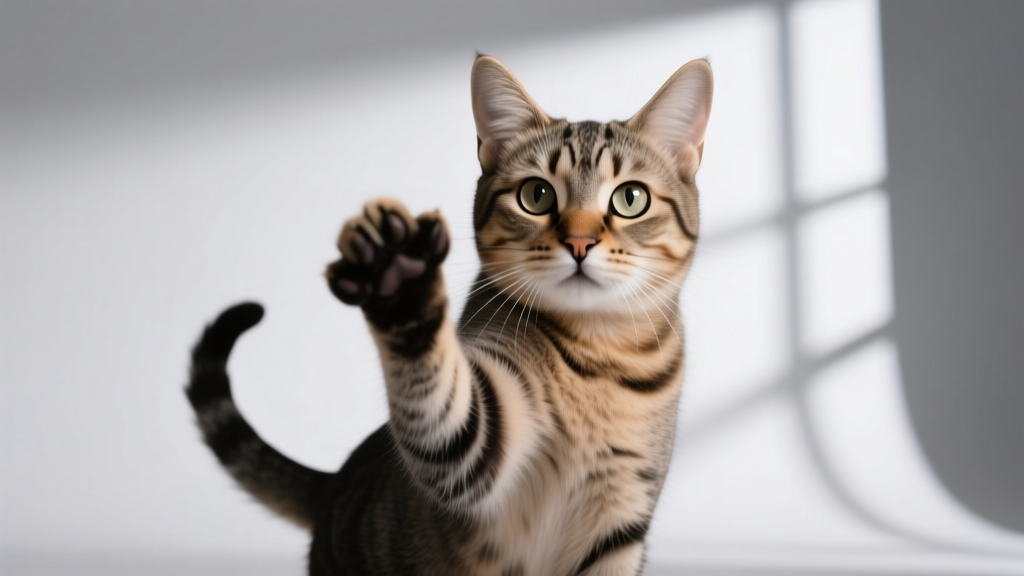
- ‘Yes, continue’ signals: Forward ear tilt, relaxed whiskers, gentle paw taps on the toy, following your hand with eyes.
- ‘Slow down’ signals: Brief head turn away, lip licking, sudden grooming, sitting upright with paws tucked.
- ‘Stop now’ signals: Tail lashing, skin rippling, flattened ears, low growl, freezing mid-motion.
Practice ‘consent testing’: Pause play, wait 2 seconds, then gently extend the toy. If your cat re-engages — proceed. If they walk away or groom — end the session. This builds trust faster than any treat. One shelter study found cats trained with consent-based play were adopted 2.8x faster than controls — proof that respectful interaction reshapes perception, not just behavior.
| Step | Action | Tools Needed | Expected Outcome (Within 7 Days) |
|---|---|---|---|
| 1. Baseline Audit | Record 3 play sessions (video or notes): note triggers, duration, escalation points, and your response. | Phone camera or notebook | Clear pattern recognition (e.g., ‘always bites after 90 sec’ or ‘attacks only when tired’) |
| 2. Timing Reset | End all sessions at first tail flick — no exceptions. Follow with 10-sec quiet time, then offer treat + new toy. | Timer app, high-value treats, 2+ rotating toys | 50% reduction in biting/scratching incidents |
| 3. Environmental Shift | Install vertical perch near favorite ambush spot; place automatic feeder for pre-dawn meal. | Wall shelf kit, timed feeder | Zero early-morning attacks for 5+ consecutive days |
| 4. Consent Integration | Pause every 45 sec; wait 2 sec; reintroduce toy only if cat initiates. | None — just observation & patience | Increased voluntary engagement time (+35% average session length) |
Frequently Asked Questions
Can I train an older cat to play differently?
Absolutely — and often more successfully than kittens. Senior cats have stronger impulse control and clearer communication signals. A 2020 study in Frontiers in Veterinary Science tracked 42 cats aged 7–14 who’d never used interactive toys. After 12 days of 3-minute, twice-daily consent-based wand sessions, 81% engaged voluntarily, and 63% initiated play themselves. Key: lower energy demands, higher-value rewards (e.g., tuna paste), and slower motion speed.
My cat only plays with my hands — how do I break that habit safely?
Never withdraw your hand mid-play — this mimics prey escape and intensifies chase instincts. Instead, use the ‘hand-to-toy bridge’: While your cat bats your fingers, slowly slide a wand toy under your hand so their focus transfers. Reward *immediately* when they bite the toy. Repeat for 5–7 sessions. If biting persists, wear lightweight gardening gloves during play — not to protect you, but to remove the tactile trigger (skin texture) that signals ‘prey.’ Within 10 days, most cats shift preference to the toy alone.
Is it okay to use laser pointers?
Laser pointers are controversial — and for good reason. While engaging, they violate the natural hunt sequence by denying the ‘kill’ and ‘chew’ phases, causing frustration and sometimes obsessive behavior. A 2023 UC Davis survey found 29% of laser-only players developed redirected aggression or nighttime vocalization. Safer alternative: use a laser *briefly* to direct attention to a physical toy (e.g., shine it onto a stuffed mouse, then let your cat ‘catch’ it), followed by a treat reward. Always end with a tangible capture.
What if my cat seems bored or uninterested in any toy?
Boredom is rarely the issue — lack of novelty or inappropriate stimulation level is. Try scent enrichment: rub catnip or silvervine on toys (70% of cats respond to silvervine, including many ‘catnip-resistant’ individuals). Or adjust physics: use lightweight, erratic-moving toys (e.g., ping-pong balls in a bathtub) instead of heavy plush mice. Also rule out pain: arthritis or dental disease reduces play motivation. If disinterest lasts >2 weeks, consult your vet for a full wellness exam — especially for cats over age 8.
Will neutering/spaying change my cat’s play behavior?
Not directly — but it often removes hormonal distractions (e.g., roaming, mounting) that compete for mental bandwidth. Post-spay/neuter cats frequently show *increased* play focus and stamina, particularly between ages 6–18 months. However, play drive remains individual: some cats remain highly predatory, others mellow naturally. Never assume sterilization ‘fixes’ play issues — it addresses reproductive behavior, not hunting instinct.
Common Myths About Changing Cat Play Behavior
Myth #1: “Cats will grow out of rough play.” False. Unchecked play biting becomes reinforced neural pathways. Kittens who bite hands without redirection learn that human skin = acceptable prey. This rarely fades — it escalates into adult aggression or fear-based avoidance. Early intervention is preventative medicine.
Myth #2: “If I ignore bad play, my cat will stop.” Incorrect. Ignoring often backfires: cats interpret stillness as ‘prey playing dead,’ triggering intensified attack. Worse, it erodes trust — your cat learns you’re unreliable during high-arousal moments. Consistent, kind redirection builds security.
Related Topics (Internal Link Suggestions)
- Understanding Cat Body Language — suggested anchor text: "how to read your cat's tail, ears, and eyes"
- Best Interactive Toys for Indoor Cats — suggested anchor text: "top 7 vet-recommended wand toys and puzzle feeders"
- Why Does My Cat Bite Me Gently? — suggested anchor text: "love bites vs. overstimulation bites explained"
- Creating a Cat-Friendly Home Environment — suggested anchor text: "vertical space, hiding spots, and safe zones for anxious cats"
- When to See a Veterinary Behaviorist — suggested anchor text: "signs your cat needs professional behavior support"
Your Next Step Starts With One 90-Second Session
You don’t need special tools, expensive gadgets, or hours of training. What transforms play behavior is consistency, observation, and respect — applied in micro-moments. Today, pick one tool from the intervention table above and commit to it for just 7 days. Film one session. Note one ‘yes’ signal your cat gave — and celebrate that. Because how to change cat behavior for play isn’t about fixing your cat — it’s about deepening your fluency in their world. Ready to begin? Grab your phone, a treat, and a wand toy — and start your first consent-based session tonight. Your cat isn’t waiting for perfection. They’re waiting for partnership.