How to Recognize Bully Cat Behavior at Home: 7 Subtle but Critical Signs You’re Missing (and What to Do Before It Escalates to Injury or Stress-Related Illness)
Why Spotting Bully Cat Behavior at Home Matters More Than Ever
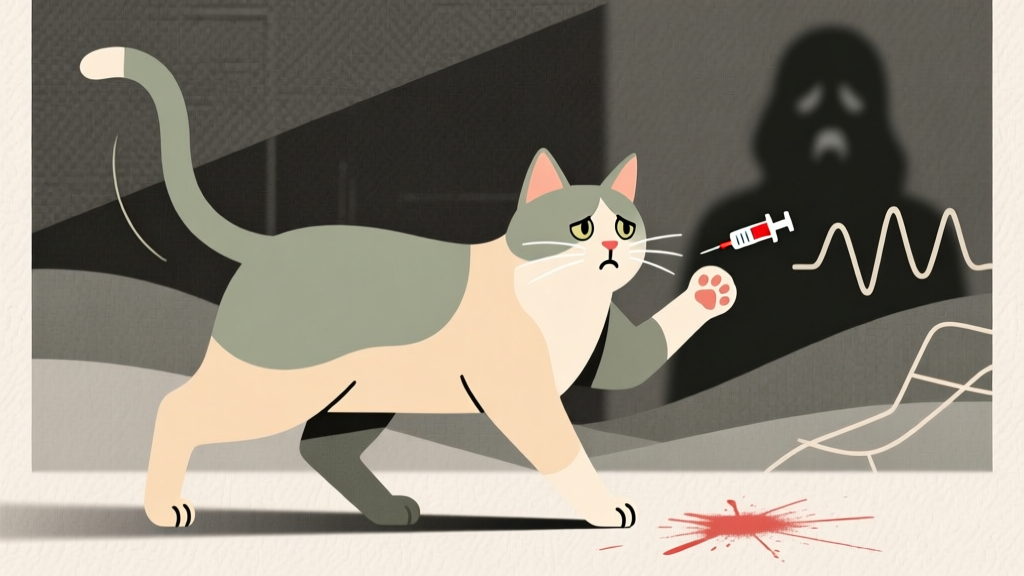
\nIf you've ever wondered how to recognize bully cat behavior at home, you're not alone—and you're already taking the most important first step toward safety and harmony. With over 65% of U.S. cat households now housing two or more cats (ASPCA, 2023), unrecognized bullying is quietly eroding feline well-being: stressed victims develop urinary tract issues, overgrooming, and immune suppression, while bullies often escalate into redirected aggression or chronic anxiety. This isn’t about 'personality clashes'—it’s about power dynamics with real physiological consequences. And crucially, most owners misinterpret bullying as 'normal cat hierarchy' until injuries, weight loss, or litter box avoidance force a crisis. Let’s change that—starting with what bullying actually looks like, not what we assume it should.
\n\nWhat Bullying Really Is (and Why 'Dominance' Is a Dangerous Misnomer)
\nFeline bullying isn’t about alpha status—it’s about persistent, one-sided coercion that compromises another cat’s access to safety, resources, or rest. Dr. Mikel Delgado, certified applied animal behaviorist and researcher at UC Davis, emphasizes: 'Cats don’t form linear hierarchies like wolves. What we call “bullying” is usually chronic resource guarding amplified by poor environmental design, unmet social needs, or untreated anxiety.' True bullying meets three criteria: (1) asymmetry (one cat consistently initiates; the other consistently flees/submits), (2) persistence (occurs daily or multiple times weekly for >2 weeks), and (3) function (the aggressor gains something tangible—space, food, attention—while the target shows measurable stress signs).
\nConsider Luna, a 4-year-old tabby in a Portland home with two other cats. Her owner thought Luna was 'just playful'—until surveillance footage revealed she’d stalk, block, and hiss at the youngest cat, Milo, every time he approached the window perch or water fountain. Milo stopped sleeping on furniture, developed cystitis, and began urinating outside the box. After a veterinary behavior consult, Luna was diagnosed with conflict-related anxiety—not dominance—and responded to environmental restructuring and targeted desensitization. This wasn’t ‘cat drama.’ It was preventable suffering.
\n\nThe 7 Under-the-Radar Signs (Not Just Hissing or Swatting)
\nMost owners wait for overt aggression—but bullying starts much earlier. Here’s what to watch for, ranked by clinical significance:
\n- \n
- Resource Blocking: A cat physically positions themselves between another cat and essential resources—even when not using them. Example: Sitting squarely in front of the litter box entrance for 12+ minutes while the other cat waits, tail twitching, ears flattened. \n
- Stalking Without Play Context: Slow, low-body movement with dilated pupils and fixed gaze—especially when the 'target' is resting or eating. Unlike play, there’s no bouncy posture, no tail flicking, no breaks in intensity. \n
- Interrupted Rest: One cat repeatedly jostles, paws, or noses another cat awake during naps—even gentle nudges become harassment when timed to prevent deep sleep cycles. Sleep deprivation elevates cortisol by up to 40% in cats (Journal of Feline Medicine & Surgery, 2022). \n
- Targeted Grooming Interruption: Aggressor interrupts grooming sessions with sharp bites to the neck or flank—not affectionate nibbles, but precise, pain-inducing snaps that cause the victim to freeze or flee. \n
- Victim’s 'Silent Withdrawal': The bullied cat stops initiating interaction entirely—not just avoiding the bully, but ceasing all social behaviors: no slow blinks, no head-butting even with humans, reduced vocalization. This is often mistaken for 'shyness.' \n
- Asymmetric Body Language: When together, the bully holds relaxed postures (loose tail, half-closed eyes) while the victim maintains 'frozen alertness'—tense muscles, wide eyes, ears rotated sideways—even during calm moments. \n
- Attention-Stealing Rituals: The bully inserts themselves between owner and other cat during petting, knocks toys out of the other cat’s mouth mid-play, or vocalizes loudly *only* when the victim approaches for lap time. \n
Immediate Intervention: The 3-Tier Response Framework
\nDon’t wait for escalation. Use this evidence-based framework within 24 hours of confirming bullying patterns:
\n- \n
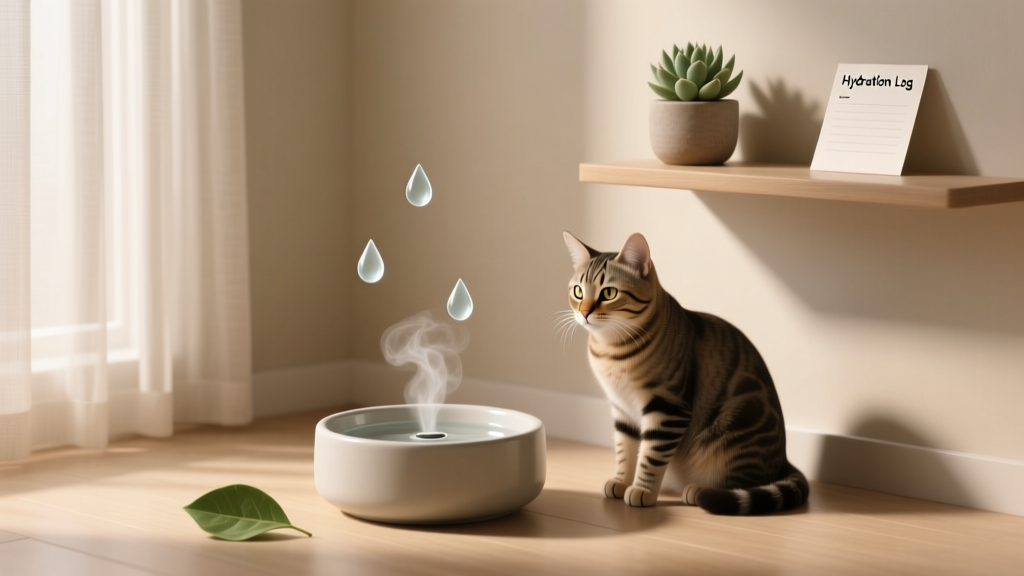
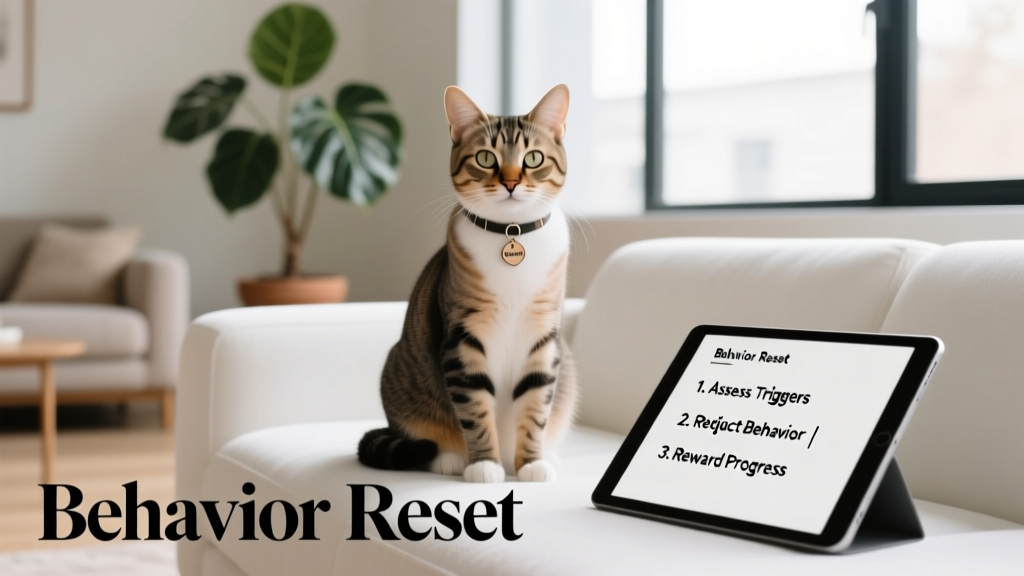
- Tier 1: Environmental Reset (Do Today) — Add 2+ vertical spaces per cat (cat trees, wall shelves), separate feeding stations (minimum 6 feet apart), and ≥1 litter box per cat + 1 extra—placed in quiet, low-traffic zones. According to the International Society of Feline Medicine (ISFM), 89% of mild-to-moderate bullying cases resolve within 10 days with proper resource distribution alone. \n
- Tier 2: Positive Association Training (Start Day 3) — Feed both cats high-value treats (e.g., tuna paste) simultaneously—but at opposite ends of the room, gradually decreasing distance over 7–14 days. Never force proximity. Reward calm, non-reactive body language—not eye contact. \n
- Tier 3: Professional Support (By Day 7 if No Improvement) — Consult a veterinarian to rule out pain-induced aggression (e.g., dental disease, arthritis), then seek a board-certified veterinary behaviorist (DACVB) or IAABC-certified cat behavior consultant. Medication (e.g., fluoxetine) may be appropriate for severe cases—but only alongside behavior modification. \n
When Is It Bullying vs. Normal Conflict? A Diagnostic Table
\n| Behavior Indicator | \nNormal Conflict/Play | \nTrue Bullying | \nKey Differentiator | \n
|---|---|---|---|
| Hissing/Growling | \nShort bursts (<10 sec); followed by mutual grooming or play bow | \nProlonged (>30 sec); occurs during victim’s rest or resource access | \nDuration + context: Bullying targets vulnerability, not challenge. | \n
| Chasing | \nReciprocal; roles switch frequently; includes pauses and play signals | \nOne-directional; victim shows escape behaviors (flat ears, sideways retreat) | \nReciprocity: Bullying lacks role reversal or shared initiation. | \n
| Litter Box Avoidance | \nAffects both cats equally; linked to box cleanliness or location | \nOnly the victim avoids boxes near the bully’s territory | \nPattern specificity: Bullying creates spatial fear, not general aversion. | \n
| Vocalization | \nYowling during mating season or brief disputes | \nVictim emits high-pitched, repetitive cries when bully enters room | \nTrigger specificity: Victim’s vocalizations are predictably tied to bully’s presence. | \n
| Body Language | \nBoth cats show fluid shifts: relaxed → alert → playful | \nBully remains loose; victim stays rigid, avoids eye contact, hides | \nPhysiological asymmetry: Chronic stress markers (dilated pupils, rapid breathing) only in victim. | \n
Frequently Asked Questions
\nCan a kitten bully an adult cat?
\nYes—and it’s more common than many realize. Kittens with insufficient socialization (especially those separated from littermates before 12 weeks) often lack bite inhibition and social cues. They may relentlessly chase, pounce on ears/tails, or interrupt sleep. While often dismissed as 'cute,' this teaches the adult cat that boundaries aren’t respected, potentially triggering defensive aggression later. Early intervention (redirecting to toys, time-outs in a quiet room) is critical.
\nIs neutering/spaying guaranteed to stop bullying?
\nNo. Hormones influence some aggression, but bullying is primarily learned and environmental. A 2021 study in Applied Animal Behaviour Science found that only 18% of intercat aggression cases improved post-neutering without concurrent behavior modification. Sterilization is essential for health and population control—but it’s not a behavior fix.
\nShould I punish the bully cat?
\nAbsolutely not. Punishment (yelling, spraying water, tapping) increases fear and redirects aggression—often toward humans or other pets. It also damages your bond. Instead, use positive reinforcement for incompatible behaviors: reward the bully for sitting calmly when the victim walks by, or for choosing a designated perch instead of blocking doorways.
\nWill getting a third cat help 'balance' the dynamic?
\nRarely—and often worsens it. Adding a new cat introduces fresh stressors and can fracture alliances unpredictably. ISFM guidelines state: 'Introducing a third cat to resolve existing conflict has a <12% success rate and carries a 63% risk of escalating tension.' Focus on repairing the existing relationship first.
\nMy bullied cat hides constantly. How do I rebuild trust?
\nStart with 'safe zone' enrichment: designate one room (with food, water, litter, hideout, and window view) exclusively for the victim. Spend 10 minutes daily there—no expectations, just quiet presence with treats. Gradually reintroduce shared spaces using scent swapping (rubbing towels on each cat, then placing them in the other’s safe zone). Patience is non-negotiable: full reintegration takes 4–12 weeks.
\nDebunking Common Myths
\nMyth #1: “Cats need to work out their own hierarchy.”
Reality: Cats are facultatively social—they choose companionship, not submission. Forced cohabitation without environmental support causes chronic stress, not healthy resolution. As Dr. Sarah Heath, RCVS Specialist in Veterinary Behavioral Medicine, states: 'There is no biological imperative for cats to establish dominance. What we see as hierarchy is often just coping strategies in suboptimal environments.'
Myth #2: “If they’re not drawing blood, it’s not serious.”
Reality: Psychological harm precedes physical injury. Victims experience elevated heart rates, suppressed immunity, and behavioral shutdown long before scratches appear. A 2020 Cornell Feline Health Center study found that 74% of cats showing 'non-injurious' bullying behaviors had abnormal cortisol levels in saliva tests—equivalent to clinical anxiety.
Related Topics (Internal Link Suggestions)
\n- \n
- Multi-Cat Household Resource Calculator — suggested anchor text: "how many litter boxes for 3 cats" \n
- Cat Body Language Decoder Guide — suggested anchor text: "what does slow blinking mean in cats" \n
- Safe Cat Introduction Protocol — suggested anchor text: "how to introduce a new cat to resident cats" \n
- Feline Anxiety Symptoms Checklist — suggested anchor text: "signs of stress in cats" \n
- Veterinary Behaviorist Directory — suggested anchor text: "find a certified cat behaviorist near me" \n
Your Next Step Starts Now
\nRecognizing bully cat behavior at home isn’t about assigning blame—it’s about compassionate intervention. You’ve already taken the hardest step: paying attention. Today, grab your phone and film 10 minutes of your cats’ interactions (focus on resource areas: food, litter, sleeping spots). Watch back without sound—look for asymmetry in posture, duration of avoidance, and who controls space. Then, implement Tier 1 environmental changes tonight. Most families see calmer dynamics within 48 hours. If stress signs persist beyond 7 days, reach out to a certified feline behavior professional—you deserve support, and your cats deserve peace. Your awareness is the first stitch in healing their world.