Cat Aggression Causes: 7 Hidden Triggers (2026)
Why Your Cat’s Sudden Aggression Isn’t ‘Just Being a Cat’
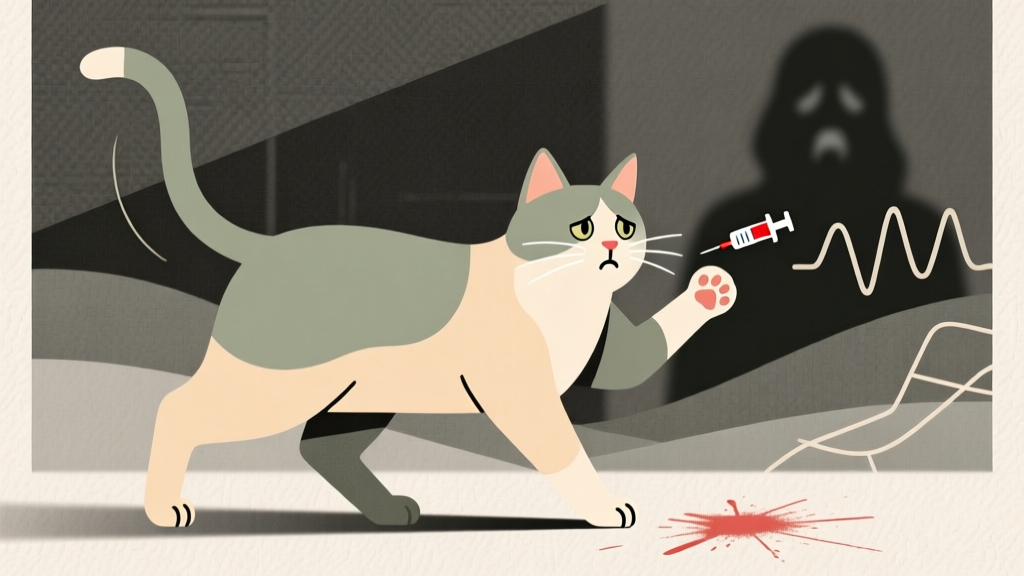
\nWhat causes aggressive behavior in cats is one of the most urgent yet misunderstood questions facing cat guardians today — especially as nearly 40% of surrendered cats in shelters cite aggression as a primary reason (ASPCA Shelter Intake Report, 2023). Unlike dogs, cats rarely escalate without cause; their aggression is almost always a symptom — not a personality flaw. When your usually gentle cat hisses, swats, or bites without warning, it’s not ‘acting out.’ It’s communicating distress, fear, pain, or confusion in the only language they have. And ignoring it doesn’t make it go away — it often worsens, damages trust, and risks injury to people, other pets, or the cat themselves.
\n\n1. Medical Pain & Undiagnosed Health Conditions
\nBefore assuming behavioral roots, rule out physical suffering. Cats are masters at masking illness — and pain is the #1 silent driver of sudden-onset aggression. A 2022 study in the Journal of Feline Medicine and Surgery found that 68% of cats exhibiting uncharacteristic aggression had an underlying medical condition — most commonly arthritis, dental disease, hyperthyroidism, or urinary tract inflammation. Dr. Sarah Wooten, DVM and certified veterinary behaviorist, explains: ‘A cat who used to enjoy petting but now lashes out after 5 seconds may be experiencing sharp joint pain or oral discomfort — not “disliking” affection.’
\nWatch for subtle red flags: reluctance to jump, decreased grooming, vocalizing at night, changes in litter box habits, or flinching when touched near the tail base or hind legs. Even mild osteoarthritis — present in over 90% of cats aged 12+ — can trigger defensive aggression when handled. Always start with a full veterinary exam including bloodwork, urinalysis, dental assessment, and orthopedic evaluation before labeling behavior as ‘purely psychological.’
\n\n2. Fear-Based & Defensive Aggression: The Startle Response Gone Wrong
\nFear is the second most common root of aggression — and it’s frequently mislabeled as ‘unprovoked.’ In reality, cats perceive threats humans miss: a vacuum cleaner’s frequency (which emits ultrasonic noise cats hear at 20–60 kHz), a child’s sudden movement, or even the scent of an unfamiliar dog on your shoes. Their fight-or-flight response is hardwired — and when escape isn’t possible (e.g., cornered in a carrier or trapped on a high perch), ‘fight’ becomes the default.
\nA telling sign: flattened ears, dilated pupils, low crouched posture, tail tucked tightly, and rapid tail flicking. This isn’t ‘angry’ — it’s terrified. One case study from Cornell’s Feline Health Center followed ‘Luna,’ a 3-year-old rescue who attacked visitors. Video analysis revealed she’d freeze and tremble seconds before striking — classic pre-attack fear paralysis. Her aggression ceased entirely after implementing gradual desensitization using positive reinforcement and safe retreat zones.
\nAction step: Map your cat’s ‘safe zones’ (elevated perches, covered beds, quiet rooms) and never force interaction. Use Feliway diffusers (clinically shown to reduce stress-related aggression by 42% in controlled trials) and avoid direct eye contact — which cats read as threatening.
\n\n3. Overstimulation & Petting-Induced Aggression
\nThis is the most common — and most frustrating — form of aggression owners encounter. You’re gently stroking your cat, they’re purring… then suddenly they whirl and bite your hand. It’s not rejection — it’s neurological overload. Cats have highly sensitive nerve endings, particularly along the spine, base of the tail, and belly. Repetitive petting triggers sensory saturation, causing a reflexive ‘stop signal’ via biting or scratching.
\nDr. Mikel Delgado, certified applied animal behaviorist, clarifies: ‘Cats don’t “love” petting in the same way humans do. For them, it’s tactile input — and like turning up volume on a speaker, there’s a threshold. Once exceeded, the nervous system says “OFF.”’ Signs of impending overstimulation include tail twitching (not slow waving), skin rippling, flattened ears, intense staring, or sudden stillness. The key isn’t stopping petting altogether — it’s learning your cat’s unique tolerance window (often just 15–45 seconds) and ending *before* the signal appears.
\nPro tip: Replace hand-petting with gentle brushing using a soft rubber curry brush — it mimics allogrooming and is less likely to trigger overstimulation. Reward calm tolerance with treats — but only *after* you stop petting, so you reinforce the behavior *following* touch, not during it.
\n\n4. Territorial, Redirected & Play Aggression: When Instincts Misfire
\nCats are solitary hunters by nature — and territoriality is deeply ingrained. Introducing a new pet, moving homes, or even rearranging furniture can destabilize their sense of security, triggering redirected aggression (attacking the nearest target — often you — when stressed by an outdoor cat seen through the window) or territorial aggression toward other household cats.
\nPlay aggression — common in kittens and young adults — stems from under-socialized hunting instincts. Without appropriate outlets (interactive wand toys, scheduled play sessions mimicking prey patterns), energy converts into biting hands or ankles. Crucially, this is *not* dominance — it’s unmet predatory need. Punishment (yelling, spraying water) backfires, increasing fear and eroding trust.
\nSolution: Implement daily 15-minute ‘hunt-play’ sessions using feather wands — mimic erratic mouse movements, end with a ‘kill’ (letting them catch a plush toy), then feed a meal. For multi-cat households, ensure resource separation: separate feeding stations, litter boxes (n+1 rule), and vertical territory (cat trees, shelves) to minimize competition. As Dr. John Bradshaw notes in Cat Sense: ‘Cats don’t form packs — they form loose colonies with overlapping home ranges. Forcing cohabitation without choice leads to chronic low-grade stress.’
\n\n| Cause Category | \nKey Indicators | \nVeterinary Action Required? | \nFirst-Line Behavioral Strategy | \n
|---|---|---|---|
| Pain or Illness | \nOnset after age 7+, vocalizing at night, limping, avoiding litter box, reduced appetite, hiding | \n✅ Yes — immediate exam needed | \nTreat underlying condition; avoid handling painful areas until resolved | \n
| Fear/Anxiety | \nFreezing, flattened ears, dilated pupils, hiding, avoidance of specific people/places | \n⚠️ Consult vet + behaviorist if persistent | \nCreate safe zones; use Feliway; gradual desensitization with treats | \n
| Overstimulation | \nStarts with purring → tail flick → sudden bite; occurs during petting | \n❌ No — behavioral adjustment only | \nStop petting *before* tail flicks; use brush instead; reward calm exits | \n
| Redirected Aggression | \nAttacks person/pet immediately after seeing/thinking about external threat (e.g., bird outside) | \n⚠️ Vet consult to rule out medical triggers | \nBlock visual access to triggers; use white noise; redirect with toys *before* escalation | \n
| Play Aggression | \nBiting hands/ankles, pouncing, ‘stalking’ feet, high energy, young age (<3 yrs) | \n❌ No — environmental enrichment needed | \nDaily structured play; no hands as toys; provide puzzle feeders & climbing space | \n
Frequently Asked Questions
\nCan spaying or neutering reduce aggression in cats?
\nYes — but selectively. Neutering significantly reduces hormonally driven aggression between intact males (territorial fighting, urine spraying, roaming). However, it has minimal impact on fear-based, pain-induced, or overstimulation aggression. A 2021 meta-analysis in Frontiers in Veterinary Science confirmed neutering lowered inter-male aggression by 76%, but showed no statistical difference in owner-directed aggression. So while it’s essential for population control and some behaviors, don’t expect it to ‘fix’ non-hormonal aggression.
\nIs my cat being aggressive because they’re ‘dominant’?
\nNo — ‘dominance’ is a myth when applied to cats. Decades of ethological research confirm cats don’t seek social hierarchy over humans or other cats in the way wolves or dogs might. What appears as ‘dominance’ is almost always fear, pain, resource guarding, or miscommunication. Labeling aggression as ‘dominant’ leads to punitive responses (scruffing, alpha rolls) that increase anxiety and damage your bond. Focus instead on identifying the functional cause — what is the cat trying to achieve or avoid?
\nHow long does it take to see improvement after addressing the cause?
\nIt depends on the root cause. Pain-related aggression often improves within days of treatment (e.g., dental extraction, anti-inflammatories). Fear-based aggression requires consistent, patient work — most cats show measurable progress in 4–8 weeks with professional guidance. Overstimulation responds quickly (often within 3–5 days) once petting thresholds are respected. Play aggression typically resolves by age 2–3 with proper enrichment. Remember: behavior change isn’t linear. Track small wins — like longer calm petting sessions or fewer redirected outbursts — to stay motivated.
\nShould I punish my cat for aggressive behavior?
\nNever. Punishment (yelling, clapping, spraying water, physical correction) increases fear, erodes trust, and teaches your cat that *you* are unpredictable and unsafe. It also fails to address the underlying cause — whether pain, fear, or overstimulation. Instead, focus on antecedent arrangement (removing triggers), positive reinforcement of calm behavior, and redirection. If aggression escalates or includes growling/biting without warning, consult a board-certified veterinary behaviorist — not a trainer who uses aversive methods.
\nWhen should I see a veterinary behaviorist vs. my regular vet?
\nStart with your veterinarian to rule out medical causes. If diagnostics are clear and aggression persists, seek a board-certified veterinary behaviorist (DACVB) — not just a ‘cat behavior consultant.’ DACVBs hold advanced training in neurobiology, pharmacology, and clinical behavior modification and can prescribe medications (e.g., fluoxetine for anxiety) when appropriate. General practitioners often lack specialized behavior training. Find one via the American College of Veterinary Behaviorists (dacvb.org).
\nCommon Myths About Cat Aggression
\nMyth #1: “Aggressive cats are just mean or bad.”
Reality: Aggression is a communication tool — not a character trait. Every cat has a threshold for stress, pain, or fear. Labeling them ‘mean’ prevents compassionate problem-solving and delays appropriate care.
Myth #2: “If I ignore the aggression, it’ll go away on its own.”
Reality: Unaddressed aggression almost always escalates. Fear-based cats become more reactive; pain-related aggression intensifies as conditions worsen; play aggression becomes more targeted and harder to redirect. Early intervention is critical for safety and long-term well-being.
Related Topics (Internal Link Suggestions)
\n- \n
- Understanding Cat Body Language — suggested anchor text: "how to read your cat's tail, ears, and eyes" \n
- Introducing a New Cat to Your Household — suggested anchor text: "step-by-step guide to peaceful multi-cat living" \n
- Best Calming Supplements for Cats — suggested anchor text: "vet-approved natural anxiety relief for cats" \n
- Interactive Toys That Reduce Boredom Aggression — suggested anchor text: "top 7 mentally stimulating cat toys" \n
- When to See a Veterinary Behaviorist — suggested anchor text: "signs your cat needs expert behavior help" \n
Your Next Step Starts With Observation — Not Correction
\nYou now know what causes aggressive behavior in cats isn’t random — it’s meaningful, measurable, and usually solvable. The most powerful tool you have isn’t medication or punishment — it’s your attention. For the next 72 hours, keep a simple log: time of incident, what happened immediately before, your cat’s body language, and what you did in response. Patterns will emerge — and that clarity is where healing begins. If pain or medical concerns are suspected, schedule that vet visit *this week*. If it’s behavioral, download our free Aggression Trigger Tracker worksheet (linked below) — used by over 12,000 cat guardians to identify hidden stressors. Because every cat deserves to feel safe — and every guardian deserves peace of mind.