Cat Paw Patting the Ceiling Fan Pull Chain
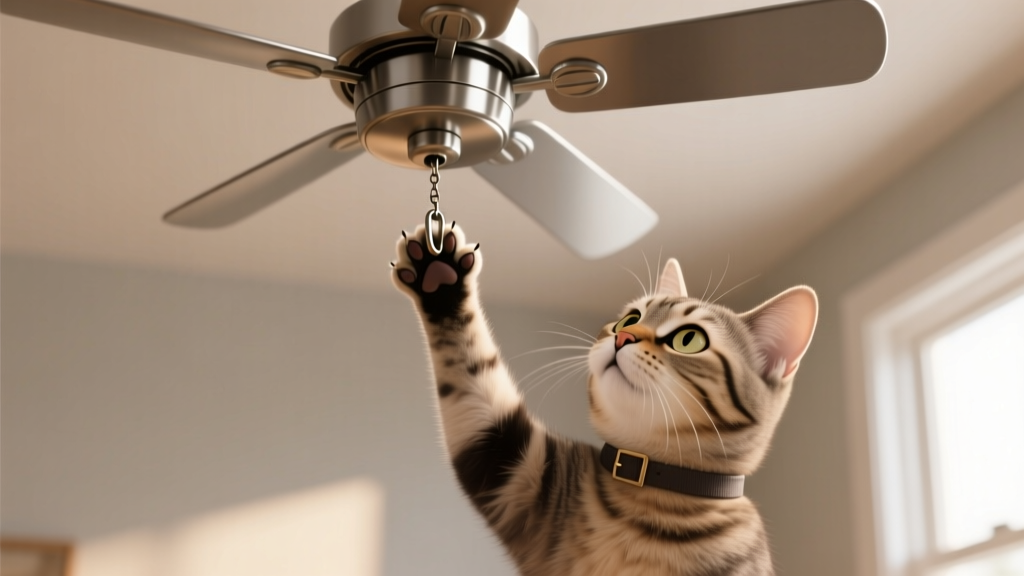
You’re finally settling in for the evening. The fan is humming softly, the room feels just right… and then you hear it: tap-tap… tap… tap-tap-tap. You look up to see your cat sitting like a tiny referee on the arm of the couch, eyes locked on the ceiling fan pull chain. One paw rises with solemn purpose—then bop. The chain swings. Your cat’s pupils widen. Another bop. The chain swings harder. Your peaceful evening turns into a one-cat percussion concert.
If you’ve ever watched your cat paw-pat that dangling chain and wondered, “Why is this so fascinating?” you’re not alone. This quirky habit makes perfect sense once you see it through a cat’s eyes—part hunter, part curious scientist, part mischievous roommate.
Why Cats Do This: The Science and the “Tiny Predator” Brain
Cats are built to notice and react to small, moving things. In nature, a cat’s survival depends on detecting subtle motion: the twitch of a tail in tall grass, the flutter of a bird wing, the skitter of a mouse. A ceiling fan pull chain is basically a pre-installed prey simulator.
Here’s what makes the pull chain so irresistible:
- It dangles. Hanging objects trigger stalking instincts. Dangling also mimics the way prey moves unpredictably.
- It moves when touched. Cats are big on cause-and-effect learning. “I tap it, it swings” is the kind of instant feedback that keeps them experimenting.
- It swings back. The chain “fights” a little. That bounce-back motion is like prey trying to escape, which can intensify the play-hunt loop.
- It’s vertical. Cats are natural climbers and vertical hunters. Anything above their head can feel like a challenge worth solving.
- It’s in a high-traffic “social” zone. Ceiling fans are usually in living rooms and bedrooms—places where you are. Some cats paw the chain partly because it reliably gets a reaction from their favorite human.
From an evolutionary standpoint, play and hunting practice are closely tied. Even well-fed indoor cats still have the brain wiring that says, “Moving object = important.” Your cat isn’t being “random.” They’re doing a very cat-appropriate activity with a very human-made toy.
Breaking Down the Behavior: Different Contexts You Might See
Not all pull-chain patting is the same. The context tells you what’s fueling it.
1) The “I’m Bored, Entertain Me” Tap
This is the classic scenario: you’re busy, your cat is under-stimulated, and the chain is… available. The tapping starts slowly, then escalates into more dramatic swats.
Common clues: wandering around, vocalizing, zoomies later, trying to play with anything that moves (shoelaces, phone cords, your ankles).
2) The “Predator Practice” Session
Your cat may settle into a focused routine: crouch, stare, slow reach, controlled swat, watch the chain swing, repeat. This looks a lot like a hunt sequence—just miniaturized and aimed at home décor.
Common clues: intense staring, butt wiggles before a jump, quick paw strikes, quiet concentration.
3) The “I Discovered Physics” Experiment
Some cats become little engineers. They’ll tap gently, then harder, then from different angles. They may even use both paws or alternate paws like they’re testing hypotheses.
Common clues: head tilts, changing paw choice, pausing to watch the chain’s arc, repeating the same motion to see what happens.
4) The “Turn the Fan On/Off for Me” Attempt
If the pull chain controls the fan or light, your cat might accidentally learn that pawing it changes the environment. A breeze starts, a light flicks on, or you jump up to stop them—any of these can reinforce the behavior.
Common clues: cat returns to the chain at specific times (bedtime, morning), looks at you after tapping, repeats the behavior until something changes.
5) The “Attention, Please” Performance
Some cats figure out that the chain is a reliable button for summoning humans. If you consistently talk, laugh, get up, or pet them when they do it, the chain becomes part of their communication toolkit.
Common clues: checking your face while patting, meowing between taps, doing it more when you’re on the phone or focused elsewhere.
What It Means: Your Cat’s Mood and Feelings
Pull-chain patting can reflect several emotional states, and your cat’s body language will tell you which one is in charge.
- Playful and energized: relaxed body, bouncy movements, quick recoveries after swatting, tail held neutrally or with a happy little flick at the tip.
- Curious and engaged: quiet focus, slow deliberate pawing, ears forward, lots of watching and thinking between taps.
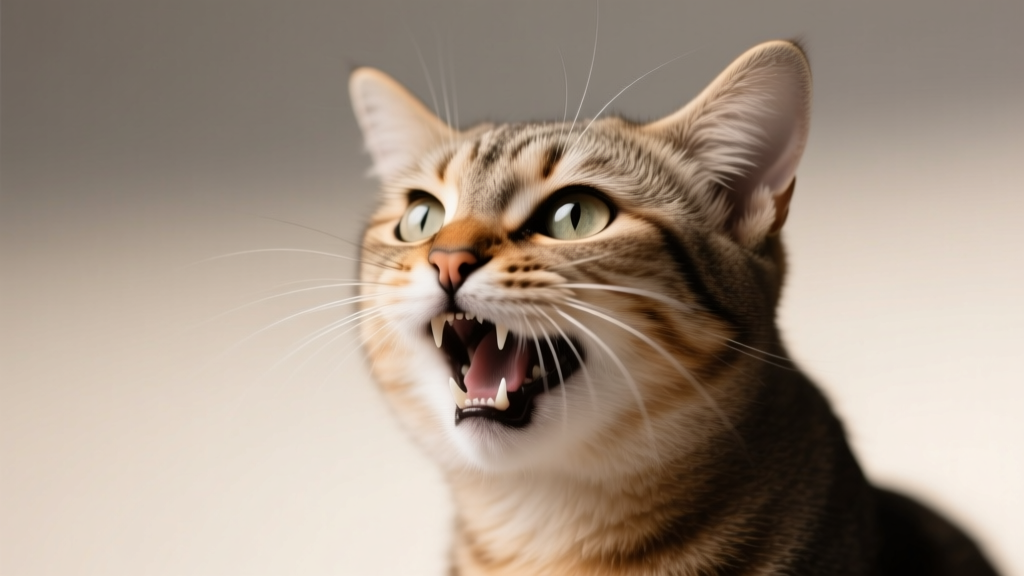
- Frustrated or over-stimulated: escalating intensity, whipping tail, growls or sharp meows, dilated pupils with tense posture, biting the chain if they can reach it.
- Seeking attention or interaction: frequent glances at you, vocalizing, doing it immediately after you stop engaging with them.
- Anxiety displacement (less common): repetitive tapping in a tense way, especially during stressful times (new pet, construction noises, schedule changes). This is more “I need to do something” than “This is fun.”
Most of the time, it’s healthy play and curiosity. But it’s also a useful clue: your cat might be telling you they need more enrichment, more routine, or simply a little social time.
Related Behaviors You Might Also Notice
If your cat is a pull-chain enthusiast, you may see a whole “dangly object” playlist of behaviors:
- Batting at cords, strings, and hoodie ties (especially when you’re wearing them)
- Attacking blinds cords or the little plastic toggles
- Smacking hanging plants (and watching the leaves bounce like prey)
- Swatting at doorstops that boing back
- Chasing dust motes in a sunbeam with great seriousness
- “Fishing” from a high perch—reaching down to bat at something below
These behaviors all share the same theme: movement + responsiveness + just the right amount of unpredictability.
When It’s Normal (and When to Be Concerned)
Normal: occasional tapping, playful stalking, short bursts of interest, easily redirected to a toy, no signs of distress. Many cats do this at certain times of day—often evening—because cats naturally have crepuscular energy peaks (most active around dawn and dusk).
Potential concern:
- Obsessive repetition for long periods, difficult to interrupt, happening daily with mounting intensity
- Risky climbing or jumping toward the fan housing or wobbling furniture to reach it
- Chewing or swallowing parts of the chain or attached tassel/connector (string ingestion can be dangerous)
- Sudden onset of restlessness paired with other changes: appetite shifts, hiding, aggression, nighttime yowling
- Signs of anxiety (tense posture, flattened ears, hypervigilance) while doing it
If you’re seeing the concern signs, it’s worth doing two things: (1) schedule a vet check to rule out pain or medical causes of agitation, and (2) increase enrichment and predictability at home. Compulsive behaviors can have both physical and emotional roots.
How to Respond: Encourage the Fun, Reduce the Risk
You don’t need to “stop” a normal playful cat from being a cat. You do want to keep it safe and channel it into better outlets.
Make the Pull Chain Less Tempting (If Needed)
- Shorten or secure it. Use a breakaway connector or tie it up out of reach when the fan isn’t being adjusted. Safety first if your cat is climbing to reach it.
- Remove tassels or strings. Anything string-like increases the risk of chewing and swallowing.
- Offer an alternative in the same “zone.” A cat tree near where they hang out can redirect climbing energy away from the fan.
Redirect With “Legal Prey”
If your cat is in hunt mode, give them something that scratches the same itch:
- Wand toys that flutter and “escape”
- Springs or lightweight balls that bounce unpredictably
- Kick toys if your cat likes to grab and bunny-kick
A great rule of thumb: two or three short play sessions per day (5–10 minutes each) can reduce a lot of “DIY entertainment” behaviors.
Use the Hunt Cycle to Your Advantage
Many cats calm down after they get to “catch” something. End play by letting your cat capture the toy, then offer a small snack or meal. That sequence—stalk, chase, catch, eat—often leads to grooming and resting, which is exactly what you want before bedtime.
Avoid Accidental Training
If your cat pats the chain and you rush over laughing and talking, you may be reinforcing it. If you’d rather they not do it, keep your reaction neutral and redirect them to an appropriate toy or activity instead.
Fun Facts and Research-Adjacent Nuggets
- Cats are motion specialists. Feline vision is especially tuned to detect movement, which is why a tiny swinging chain can outcompete an expensive toy lying still on the floor.
- Play is practice. In kittens, play behavior helps develop coordination and hunting skills. Adult cats keep playing as a form of mental and physical exercise—especially indoor cats with fewer natural hunting outlets.
- Cause-and-effect learning is powerful. Cats may not “obey” like dogs, but they’re excellent at repeating actions that produce interesting results (movement, sound, human attention, environmental changes).
- Vertical space matters. Studies and shelter observations consistently find that access to vertical perches reduces stress-related behaviors in many cats—partly because it gives them control over their environment. A ceiling-level moving object can be doubly captivating when your cat is craving vertical engagement.
FAQ: Cat Paw Patting the Ceiling Fan Pull Chain
1) Is my cat trying to turn the fan on?
Usually no—they’re reacting to the movement. That said, cats can learn patterns quickly. If pawing the chain sometimes leads to the fan changing speed, the light switching, or you getting up, your cat may repeat it because it “works.”
2) Should I stop my cat from playing with the pull chain?
If it’s occasional and safe, it’s normal curiosity. If your cat is climbing dangerously, chewing the chain, or getting overstimulated, it’s smart to limit access (tie it up/shorten it) and provide safer play alternatives.
3) Why does my cat only do it at night?
Many cats get a burst of energy in the evening. If your cat is under-stimulated during the day, nighttime becomes prime time for self-made entertainment. A play session followed by a small meal can help shift that energy into rest.
4) My cat meows while doing it—what does that mean?
Often it’s excitement or an invitation: “Look what I found!” Some cats vocalize when they’re stimulated by prey-like movement. If the meowing sounds frustrated or intense, your cat may need a more satisfying outlet (interactive play where they can truly “catch” something).
5) Could this be a sign of anxiety or a compulsive disorder?
Most of the time, no. It can be a concern if it becomes repetitive, hard to interrupt, or appears during stressful periods along with other anxiety signs (hiding, overgrooming, aggression, appetite changes). When in doubt, a vet visit plus a behavior plan is a good combo.
6) What’s the best toy to replace the pull chain?
Try a wand toy with a fluttery attachment (feathers or fabric strips) for “air prey,” or a spring toy for bounce-and-chase. Rotate toys every few days—novelty keeps cats interested.
Your cat paw patting the ceiling fan pull chain is one of those perfectly cat-like moments: a little hunting practice, a little curiosity, and possibly a sprinkle of “human, please pay attention to me.” With a few safety tweaks and better outlets for that brilliant predator brain, you can enjoy the show without worrying about risky leaps or swallowed strings.
Does your cat have a favorite “why are you like this?” household target—pull chains, doorstops, blinds cords, the one cabinet that must be opened at 2 a.m.? Share your story with the Cat Lovers Base community at catloversbase.com.