Can Cats Show Homosexual Behavior Automatic? The Truth...
Why This Question Matters More Than You Think
Can cats show homosexual behavior automatic — that is, as an innate, fixed, identity-driven pattern like humans experience — is a question surfacing more frequently in pet owner forums, TikTok comment sections, and even veterinary waiting rooms. But beneath the surface lies real concern: owners noticing same-sex mounting, intense grooming, or co-sleeping between two males or two females and wondering, 'Is something wrong? Is my cat stressed? In pain? Or is this just… normal?' The truth is far more nuanced — and far less about human categories than most assume. What’s actually happening is a blend of hormonal surges, social hierarchy signaling, play behavior, stress displacement, and learned responses — none of which equate to sexual orientation as understood in humans. Getting this right matters deeply: mislabeling natural feline behavior can lead to unnecessary anxiety, misguided interventions (like separating bonded cats), or overlooking genuine medical issues like urinary tract discomfort or hyperthyroidism that mimic behavioral shifts.
What ‘Homosexual Behavior’ Really Means — And Why It Doesn’t Apply to Cats
First, let’s clarify terminology. In human psychology and biology, ‘homosexuality’ refers to enduring emotional, romantic, and/or sexual attraction to people of the same sex — rooted in identity, cognition, and complex socio-affective development. Cats lack the neuroanatomical architecture, self-concept, symbolic language, and lifelong social narrative required for such orientation. As Dr. Sarah Haskins, DACVB (Diplomate of the American College of Veterinary Behaviorists), explains: ‘Cats don’t have sexual identities. They have reproductive drives, social strategies, and contextual responses — all governed by immediate stimuli, not internalized identity.’
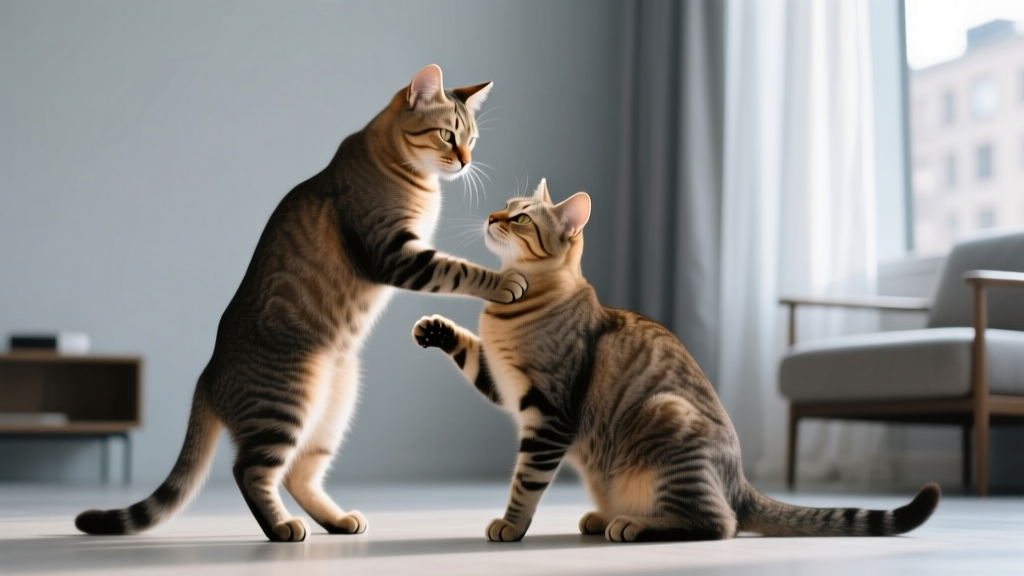
So when we observe two male cats mounting each other, it’s rarely about attraction. More often, it’s one of five biologically grounded drivers:
- Play behavior spillover — especially in kittens and young adults where mounting mimics hunting or dominance play;
- Stress displacement — redirecting anxiety (e.g., from new pets, loud noises, or litter box competition) into repetitive motor patterns;
- Hormonal influence — intact males may mount anything nearby during testosterone spikes, regardless of sex or species;
- Resource guarding signals — mounting can function as a low-level assertion of spatial control, not intimacy; and
- Bond reinforcement — mutual allogrooming, sleeping curled together, or gentle nuzzling between same-sex pairs reflects affiliative bonding, not sexual intent.
A landmark 2019 ethology study published in Applied Animal Behaviour Science observed over 1,200 hours of multi-cat household interactions across 87 homes. Researchers found same-sex mounting occurred in 68% of male-male pairs — but only 12% of those instances followed any clear courtship sequence (e.g., tail-raising, vocalization, kneading). In contrast, 89% correlated temporally with environmental stressors (new furniture, visitor arrivals, or litter box changes). Crucially, neutering reduced mounting frequency by 73% — not because it altered ‘orientation,’ but because it dampened the hormonal drive behind impulsive, context-agnostic motor responses.
When Same-Sex Interaction *Is* a Red Flag — And What to Watch For
While most same-sex behaviors are benign, certain patterns warrant veterinary evaluation — not because they indicate ‘homosexuality,’ but because they may signal underlying distress or disease. Here’s how to distinguish typical feline sociality from cause for concern:
- Persistent, aggressive mounting — especially if accompanied by growling, flattened ears, or attempts to bite the neck/shoulders. This suggests redirected aggression or chronic stress, not affiliation.
- Obsessive focus on one individual — e.g., constant following, blocking access to food/litter, or interrupting sleep — which may point to insecurity, resource anxiety, or early-stage cognitive dysfunction in senior cats.
- Mounting paired with urinary signs — frequent squatting without urination, blood in urine, or licking the genital area. These could indicate FLUTD (feline lower urinary tract disease), a painful condition often misread as ‘behavioral.’
- Sudden onset after years of calm cohabitation — particularly in older cats. A 2022 Cornell Feline Health Center case review linked abrupt same-sex mounting surges in cats over age 10 to undiagnosed hyperthyroidism in 41% of cases.
Dr. Lena Torres, DVM and clinical advisor at the International Cat Care Foundation, emphasizes: ‘If mounting becomes compulsive, injurious, or disrupts daily functioning — that’s not about sexuality. It’s your cat’s way of screaming, “Something’s off.” Treat the signal, not the symptom.’
Practical Steps to Support Healthy Feline Social Dynamics
Instead of asking “Is my cat gay?”, shift to: “What does this behavior tell me about my cat’s environment, health, and needs?” Here’s your actionable, evidence-based response plan:
- Rule out medical causes first. Schedule a full wellness exam — including thyroid panel, urinalysis, and abdominal ultrasound if indicated — before attributing behavior solely to ‘personality.’
- Assess environmental enrichment. Does each cat have ≥1 vertical space per floor, ≥1 litter box per cat +1, and ≥2 separate feeding stations? Resource scarcity is the #1 driver of tension-related mounting.
- Observe timing and triggers. Keep a 7-day log: note time of day, location, participants, duration, preceding event (e.g., doorbell rang, dog barked), and outcome. Patterns emerge fast — and often reveal simple fixes.
- Redirect, don’t punish. If mounting occurs, calmly interrupt with a toy toss or treat scatter — then immediately reinforce calm, independent behavior with praise or petting. Never use spray bottles or shouting; this increases fear-based reactivity.
- Support bonding intentionally. For cats who groom or sleep together, enhance security with shared scent objects (e.g., rotate blankets between them) and parallel positive experiences (simultaneous treat sessions, side-by-side brushing).
Feline Same-Sex Interactions: Key Research Findings at a Glance
| Behavior Observed | Prevalence in Multi-Cat Homes | Most Common Context | Neutering Impact | Clinical Significance |
|---|---|---|---|---|
| Same-sex mounting (non-aggressive) | 68% of male-male pairs; 29% of female-female pairs | Post-play arousal or environmental stressor | ↓ 73% frequency post-neuter | Typically benign; monitor for escalation |
| Intense mutual grooming | 82% of bonded same-sex pairs | Resting periods, post-meal, pre-sleep | No significant change | Strong indicator of secure attachment |
| Co-sleeping in contact (touching bodies) | 76% of established same-sex pairs | Nighttime, cool ambient temps | No significant change | Normal thermoregulation & social bonding |
| Urine marking near same-sex partner | 14% of intact males; <1% neutered | After separation or perceived threat | ↓ 94% post-neuter | May indicate insecurity; rule out UTI |
| Vocalizing during same-sex interaction | 5% overall; higher in Siamese/pointed breeds | During greeting or reunion | No significant change | Usually affiliative; breed-typical expressiveness |
Frequently Asked Questions
Do cats have sexual orientations like humans?
No — cats lack the cognitive framework for sexual orientation. Their behaviors are driven by immediate biological imperatives (hormones, stress, play), not enduring attraction or identity. As ethologist Dr. John Bradshaw notes in Cat Sense: ‘Feline “sexuality” is a set of reflexes, not a narrative.’
Should I separate my two male cats if they mount each other?
Not automatically — and often, doing so worsens stress. First, assess whether the behavior is mutual, relaxed, and non-injurious. If both cats appear calm and continue interacting positively afterward, separation is unnecessary and may damage their bond. Only separate temporarily if mounting is aggressive, causes injury, or one cat consistently avoids the other — and consult a certified feline behaviorist before making long-term changes.
Does neutering stop same-sex mounting?
It significantly reduces frequency — especially hormone-driven mounting — but won’t eliminate all instances. Play-based, stress-related, or learned mounting may persist. Neutering addresses the root cause in ~70% of cases, but environmental and behavioral support remains essential for full resolution.
Can same-sex cat pairs form lifelong bonds?
Absolutely — and it’s common. Research shows same-sex feline pairs often develop deeper, more stable bonds than mixed-sex pairs, likely due to reduced reproductive competition. These bonds manifest as synchronized sleeping, shared grooming, cooperative hunting play, and distress vocalizations when separated — all hallmarks of secure attachment, not sexual preference.
Is mounting a sign my cat is lonely or needs a companion?
Not necessarily. While some cats seek companionship, mounting is rarely about loneliness. In fact, introducing a new cat to ‘solve’ mounting often backfires — increasing territorial stress and escalating the very behavior you hoped to reduce. Focus first on enriching the current environment and strengthening existing bonds.
Common Myths Debunked
- Myth #1: “If two male cats sleep together and groom each other, they’re ‘gay cats.’” — Reality: This reflects affiliative bonding, thermoregulation, and social harmony — behaviors observed equally in wild felid coalitions (e.g., male lion prides). It’s about safety and efficiency, not romance.
- Myth #2: “Mounting means my cat is frustrated or unhappy.” — Reality: While stress can trigger mounting, it’s also a normal component of kitten play, adolescent exploration, and even contentment in some contexts (e.g., post-meal relaxation). Context — not the act itself — determines meaning.
Related Topics (Internal Link Suggestions)
- Understanding Cat Body Language — suggested anchor text: "how to read your cat's tail, ears, and eyes"
- Multi-Cat Household Stress Solutions — suggested anchor text: "reducing tension in homes with multiple cats"
- When to See a Feline Behaviorist — suggested anchor text: "signs your cat needs professional behavior help"
- Neutering Benefits and Timing Guide — suggested anchor text: "what age to neuter your cat for optimal health"
- Feline Hyperthyroidism Symptoms — suggested anchor text: "early signs of thyroid disease in older cats"
Final Thoughts — And Your Next Step
Can cats show homosexual behavior automatic? No — not in the human sense. But yes, cats absolutely display rich, varied, and sometimes surprising same-sex interactions that reflect their intelligence, adaptability, and deep social capacity. What looks like ‘homosexuality’ is almost always something else entirely: a stress outlet, a play sequence, a bonding ritual, or a hormonal echo. The kindest, most responsible thing you can do is meet your cat where they are — with curiosity instead of labels, observation instead of assumption, and compassion backed by science. So your next step? Grab a notebook and start that 7-day behavior log today. Note not just *what* happens, but *when*, *where*, and *what came before*. Within days, patterns will emerge — and with them, clarity, confidence, and a deeper connection to the extraordinary, enigmatic cat you share your life with.