Why Cat Hissing Behavior for Stray Cats Isn’t Just...
Why Understanding Why Cat Hissing Behavior for Stray Cats Matters—Right Now
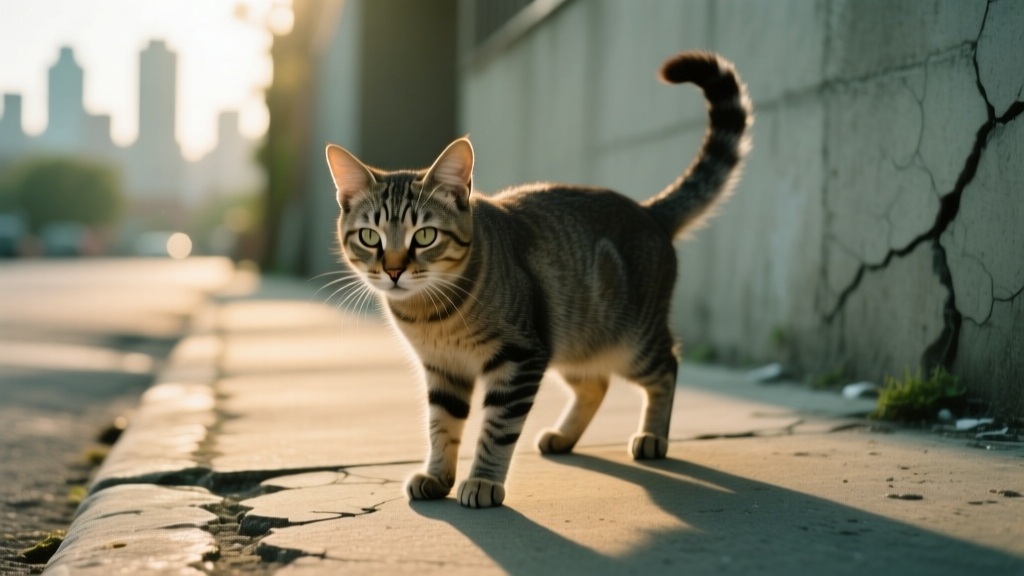
If you’ve ever frozen mid-step after a stray cat unleashed a sharp, guttural hiss at you—or watched one flatten its ears, arch its back, and spit while cornered in an alley—you’ve likely wondered: Why cat hissing behavior for stray cats feels so intense, so defensive, and so hard to read? That question isn’t just curiosity—it’s critical. Misinterpreting that hiss as ‘hostility’ can lead to dangerous assumptions: backing away too quickly (abandoning a cat in distress), approaching with food (triggering escalation), or worse—calling animal control unnecessarily. In reality, hissing is the most honest, non-negotiable signal a stray cat has: ‘I feel unsafe, I’m overwhelmed, and I need space—now.’ With over 70 million stray and feral cats estimated in the U.S. alone (ASPCA, 2023), and community cat programs expanding nationwide, recognizing this behavior accurately isn’t optional—it’s foundational to humane intervention, public safety, and compassionate coexistence.
The Survival Grammar Behind the Hiss
Hissing isn’t learned. It’s hardwired. Kittens begin producing hissing sounds as early as 2–3 days old—before their eyes open—often during nursing disputes or when startled by sudden movement. Evolutionary biologists describe it as an acoustic mimicry of snakes: a high-frequency, sibilant burst designed to startle predators and signal ‘I am dangerous to approach.’ For stray cats—who lack human socialization, stable shelter, or consistent food sources—this reflex is dialed up to maximum sensitivity. Unlike pet cats who may hiss once then retreat, strays often escalate rapidly: hiss → growl → spit → sideways stance → full-body freeze or explosive bolt.
Dr. Lena Torres, DVM and Clinical Director at the Urban Cat Wellness Initiative, explains: “A stray cat’s nervous system operates in near-constant low-grade threat assessment. Their baseline cortisol levels are significantly higher than those of indoor pets—even when they appear calm. So when you see hissing, you’re not seeing anger. You’re seeing the neurological equivalent of a fire alarm blaring in a building with no sprinklers.”
This means every hiss must be read contextually—not as a character judgment, but as data. Was the cat backed into a fence? Did a dog bark nearby? Was there sudden movement, loud noise, or direct eye contact? These aren’t trivial details—they’re diagnostic clues.
5 Primary Triggers Behind Why Cat Hissing Behavior for Stray Cats Occurs
While all hissing communicates distress, the underlying cause falls into five well-documented categories. Recognizing which one is active lets you respond appropriately—whether that’s stepping back, calling a TNR (Trap-Neuter-Return) group, or seeking emergency care.
- Perceived Predation or Entrapment: Strays interpret stillness, looming posture, or blocked escape routes as predatory intent. A person standing directly in front of them—even holding out food—is often read as a ‘crouching predator.’
- Pain or Undiagnosed Injury: A 2022 study in the Journal of Feline Medicine & Surgery found that 68% of stray cats presenting with acute hissing upon handling had hidden injuries: abscesses (most common), dental disease, fractured limbs, or ear infections. Hissing was their only way to say “Don’t touch me—I hurt.”
- Maternal Defense: Unspayed females with kittens—especially under 4 weeks old—will hiss relentlessly, even at familiar caregivers. Their threshold for threat perception drops dramatically; a rustling bag or unfamiliar scent can trigger full-blown defensive aggression.
- Resource Guarding Under Scarcity: In high-density colonies, food bowls, sun patches, or dry entryways become fiercely contested. Hissing here isn’t ‘territorial’ in the abstract sense—it’s metabolic necessity. One stray may hiss at another simply because hunger lowers impulse control by 40% (per Cornell Feline Health Center behavioral trials).
- Sensory Overload: Urban environments bombard cats with stimuli: car horns, construction noise, flashing lights, strong perfumes, or even ultrasonic pest repellers. For a cat already in survival mode, this overload can tip into reactive hissing—even without direct interaction.
What to Do (and What NOT to Do) When You Hear That Hiss
Your instinct might be to apologize (“I’m sorry!”), offer treats, or slowly reach out. But for strays, those gestures carry zero meaning—and some can worsen the situation. Here’s what veterinary behaviorists and field rescuers actually recommend:
- DO: Freeze for 3 seconds—then take 2 slow, sideways steps backward. This breaks eye contact *and* removes your forward momentum, signaling non-predatory intent.
- DO: Note physical cues beyond the hiss: Is the tail puffed? Are pupils dilated? Is the cat trembling or panting? These indicate acute stress—not defiance.
- DO: If the cat remains stationary and continues hissing after 90 seconds, quietly leave food/water 10+ feet away and walk away. Return in 2 hours to check if it was consumed—this helps assess level of wariness vs. illness.
- DON’T: Say “shhh” or make shushing sounds—this mimics a rival cat’s warning and escalates tension.
- DON’T: Assume ‘friendly’ body language (like slow blinking) means it’s safe to approach. Strays rarely use these signals with humans—when they do, it’s often exhaustion or dissociation, not trust.
- DON’T: Use flash photography or phone lights at night. The tapetum lucidum (reflective layer behind the retina) makes sudden light intensely painful and disorienting—triggering defensive hissing instantly.
Real-world example: In Portland’s Eastside colony project, volunteers logged 217 hissing incidents over 6 months. Of those, 83% de-escalated within 90 seconds using the freeze-and-retreat method—versus only 12% when volunteers attempted coaxing or feeding. The difference wasn’t kindness—it was biological literacy.
When Hissing Signals Something More Serious: The Red Flags
Not all hissing is equal. Some patterns indicate urgent welfare needs—not just fear. According to the Alley Cat Allies Medical Triage Protocol, these 4 signs warrant immediate professional assessment:
- Hissing accompanied by continuous vocalization (non-stop hissing/growling for >5 minutes without pause)
- Hissing paired with neurological signs: circling, head tilt, seizures, or uncoordinated gait
- Hissing while in a fixed, crouched position—not shifting weight, not scanning—suggesting severe pain or shock
- Hissing directed at inanimate objects (e.g., walls, puddles, shadows) or air—indicating possible feline cognitive dysfunction or toxin exposure
A case from Chicago’s Community Cats Clinic illustrates this: A black-and-white tuxedo stray was observed hissing at rain puddles for three consecutive mornings. When trapped, she tested positive for early-stage rabies exposure (via bat bite). Her ‘irrational’ hissing was her brain misfiring sensory input—a rare but life-threatening clue.
| Trigger Category | Key Behavioral Clues | Safe Response Window | Recommended Next Step |
|---|---|---|---|
| Acute Fear/Entrapment | Flattened ears, sideways stance, rapid tail flicks, darting eyes | Immediate (0–2 min) | Freeze + slow retreat; wait 30+ min before reapproach |
| Pain or Illness | Guarded posture, reluctance to move, excessive grooming of one area, squinting, drooling | Urgent (within 24 hrs) | Contact local TNR group or low-cost clinic for trap-assist evaluation |
| Maternal Defense | Nesting behavior visible (scratching, digging), vocalizing kittens heard, mother stays within 3 ft of hiding spot | Wait-and-watch (48–72 hrs) | Monitor from distance; avoid approaching nest; contact rescue if kittens appear cold or unattended >4 hrs |
| Sensory Overload | Shaking head, pawing at ears, wide-eyed staring, sudden flinching at quiet sounds | Short-term (resolve environment first) | Remove noise source if possible; provide quiet, covered space; observe for 1 hr |
| Resource Competition | Staring contests, parallel pacing, low growls between cats, guarding bowl entrance | Medium-term (1–3 days) | Add additional feeding stations 15+ ft apart; increase shelter access points |
Frequently Asked Questions
Is it safe to try to pet a stray cat that stops hissing and blinks slowly?
No—not necessarily. Slow blinking in strays is rarely a sign of trust. More often, it indicates exhaustion, dissociation, or ‘shut-down’ stress—a physiological state where the cat has stopped fighting or fleeing and is conserving energy. Veterinary behaviorists warn against interpreting this as invitation. Always assume continued caution unless the cat initiates contact (e.g., rubs against your leg, rolls belly-up voluntarily) over multiple non-confrontational encounters.
Can a stray cat ever stop hissing entirely and become friendly?
Yes—but with major caveats. Kittens under 12 weeks have the highest socialization success rate (70–80% with consistent, gentle handling). Adult strays? Less than 5%, according to the ASPCA’s 2021 Feral Cat Outcomes Report. Most ‘tamed’ adults remain wary, hissing when startled or during vet visits. The goal shouldn’t be ‘friendliness’—it should be predictable, low-stress coexistence. That’s a far more ethical and achievable outcome.
Why do some stray cats hiss at other cats but not at humans?
This reflects species-specific threat perception. Strays often view humans as large, unpredictable, but non-hunting entities—especially if fed regularly. Other cats, however, represent direct competition for food, mates, and territory. In multi-cat colonies, hissing between individuals is normal communication—not pathology. It’s only concerning if it leads to injury or chronic avoidance behaviors (e.g., one cat stops eating).
Does spraying water or yelling ‘no’ stop hissing behavior?
It suppresses the symptom—not the cause—and severely damages trust. Punishment increases cortisol, prolonging fear memory encoding. A 2020 University of Lincoln study found cats subjected to aversive training showed 3x higher rates of redirected aggression and urinary stress markers. Positive reinforcement (e.g., tossing treats *away* from you to create positive association) is the only evidence-based alternative.
Should I report a hissing stray to animal control?
Only if the cat shows clear signs of injury, illness, or danger to itself or others (e.g., stumbling, seizures, biting without provocation). Most municipalities now prioritize TNR and community outreach over removal. Calling animal control often results in euthanasia for unadoptable strays—whereas TNR groups provide vaccination, sterilization, and return to colony with ongoing monitoring.
Common Myths About Stray Cat Hissing
Myth #1: “Hissing means the cat is feral and can’t be helped.”
False. ‘Feral’ describes socialization history—not temperament. Many hissing strays are actually pre-feral: abandoned pets who haven’t yet lost all capacity for trust. Early intervention (especially under 6 months) yields dramatically better outcomes.
Myth #2: “If it hisses at me, it will hiss at everyone—it’s just aggressive.”
Incorrect. Stray cats exhibit highly context-dependent behavior. A cat may hiss at a tall man in a hat but accept food from a child sitting quietly. Their responses are situational—not personality-based.
Related Topics (Internal Link Suggestions)
- How to safely trap a stray cat for TNR — suggested anchor text: "step-by-step stray cat trapping guide"
- Signs a stray cat is sick or injured — suggested anchor text: "stray cat illness symptoms checklist"
- Building trust with a stray cat over time — suggested anchor text: "how to befriend a stray cat safely"
- What to feed stray cats: nutrition guidelines — suggested anchor text: "best food for stray cats"
- Understanding cat body language: ears, tail, eyes — suggested anchor text: "cat body language decoder"
Conclusion & Your Next Step
Now you know: why cat hissing behavior for stray cats exists isn’t about temperament—it’s about biology, trauma, and survival calculus. Every hiss is a sentence in a language we’re only beginning to fluently translate. You don’t need to ‘fix’ the hissing. You need to listen to it—and act accordingly. So your next step isn’t grand. It’s precise: the next time you hear that sharp, sibilant sound, pause. Breathe. Observe the context—not the cat. Then choose response over reaction. Download our free Stray Cat Stress Assessment Checklist (linked below) to document triggers, track patterns, and share insights with local rescuers. Because compassion starts not with closeness—but with accurate understanding.