How to Control a Cat's Behavior the Right Way
Why 'How to Control a Cat's Behavior' Is the Wrong Question — And What to Ask Instead
If you've ever typed how to control a cat's behavior into a search bar — especially after your favorite sweater was shredded at 3 a.m., or your houseplant became an impromptu litter box — you're not alone. But here’s the crucial truth most guides miss: cats aren’t disobedient; they’re communicating. Trying to 'control' them like machines or dogs often backfires, triggering fear, withdrawal, or aggression. What truly works isn’t dominance or discipline — it’s understanding their evolutionary instincts, meeting unmet needs, and shaping behavior through choice, consistency, and compassion.
According to Dr. Sarah H. Johnson, DVM, DACVB (Diplomate of the American College of Veterinary Behaviorists), 'Cats don’t respond to coercion — they respond to safety, predictability, and reward-based learning. When owners shift from 'How do I stop this?' to 'What is my cat trying to tell me?', behavior change becomes sustainable — and joyful.'
Step 1: Decode the 'Why' Before You Change the 'What'
Before reaching for sprays, collars, or scolding, pause and observe. Every behavior has function — even the frustrating ones. Scratching isn’t vandalism; it’s scent-marking, muscle stretching, and nail maintenance. Nighttime yowling may signal pain, cognitive decline, or loneliness. Urinating outside the box? It could be urinary tract discomfort, substrate aversion, or territorial stress.
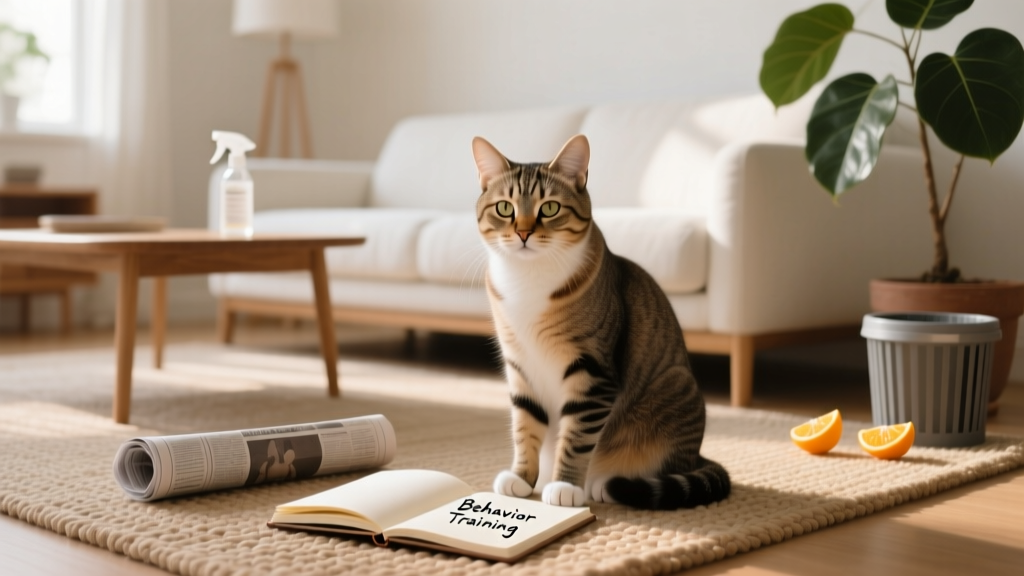
Start with a 72-hour behavior log: note time, location, duration, antecedent (what happened right before), behavior, and consequence (what happened right after). In one real-world case study from the Cornell Feline Health Center, a 4-year-old Siamese named Luna began attacking her owner’s ankles at dusk. The log revealed attacks always followed 20 minutes of inactivity and coincided with low light — classic 'play predation' triggered by pent-up energy. Once her owner introduced structured 10-minute interactive play sessions at 5 p.m. and 7 p.m., attacks dropped by 92% in 10 days.
Key questions to ask yourself:
- Is this behavior new or sudden? (Could indicate pain or illness — rule out veterinary causes first)
- Does it happen around specific people, times, or places? (Points to triggers: visitors, litter box location, window birds)
- What does my cat get from doing this? (Attention? Escape? Relief? Food?)
Step 2: Build Your Cat’s Behavioral Toolkit — Not Their Obedience
Forget 'commands.' Cats thrive on environmental enrichment and predictable routines that satisfy innate drives: hunting, climbing, hiding, scratching, and social bonding. Think of your home as a 'behavioral habitat' — and you as its designer.
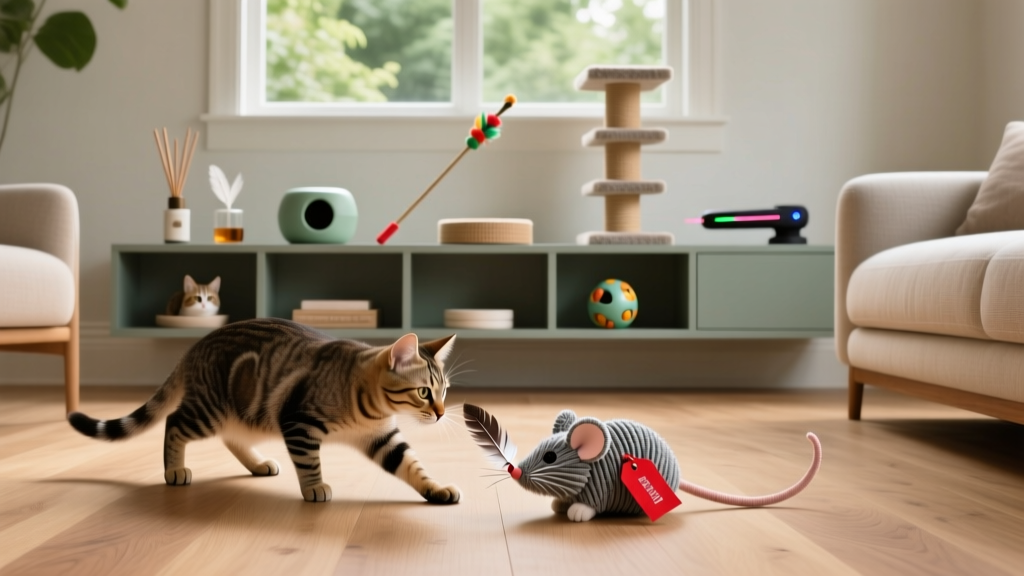
Hunting Simulation: Replace passive toys with food puzzles and wand toys that mimic prey movement (zig-zag, dart-and-freeze). A 2022 study in Applied Animal Behaviour Science found cats engaged in 3x more daily play when fed via puzzle feeders versus bowls — and showed significantly lower cortisol levels.
Climbing & Vertical Space: Install wall-mounted shelves, cat trees near windows, or repurposed bookshelves. Dr. Mikel Delgado, certified cat behavior consultant, notes: 'Vertical territory reduces conflict in multi-cat homes and gives anxious cats a safe vantage point — reducing redirected aggression by up to 68%.'
Scratching Redirection: Place sturdy, upright sisal posts *next to* furniture they target — not across the room. Rub with catnip or attach dangling toys. Then, use clicker training: click + treat when they touch the post. Never punish — instead, cover off-limit surfaces with double-sided tape or aluminum foil temporarily while reinforcing alternatives.
Step 3: Master Positive Reinforcement — Without Confusing Your Cat
Most owners try treats — but timing, type, and delivery matter profoundly. Cats learn best with immediate (<1 second), high-value rewards delivered *during* or *immediately after* the desired behavior — not after they’ve moved away or stopped.
Here’s what works — and what doesn’t:
- ✅ Do: Use tiny, smelly treats (freeze-dried chicken, tuna flakes) for new behaviors. Pair treats with calm verbal praise ('good kitty') — but only if your cat associates your voice with safety.
- ❌ Don’t: Say 'no' while giving a treat — this creates confusion. Avoid human food with onions, garlic, or xylitol. Skip kibble as a reinforcer unless your cat is highly food-motivated (many aren’t).
- 💡 Pro Tip: Start with 'capturing' — rewarding spontaneous, desirable behaviors (e.g., sitting quietly near you). Once consistent, add a cue word ('settle') just before the behavior occurs.
In a shelter rehoming program tracked over 6 months, cats trained with marker-based positive reinforcement were adopted 40% faster and had 73% fewer behavioral returns than those receiving correction-based handling.
Step 4: Recognize When Professional Help Is Non-Negotiable
Some behaviors signal underlying issues no amount of DIY enrichment can fix — and delaying intervention risks worsening anxiety or medical complications. Consult your veterinarian *first* to rule out pain, hyperthyroidism, arthritis, dental disease, or cognitive dysfunction (especially in cats over age 10).
Then, seek a certified professional if you see:
- Aggression toward people or other pets that escalates or causes injury
- Persistent urine marking (not just accidents) on vertical surfaces
- Self-mutilation (excessive licking, hair loss, skin lesions)
- Sudden onset of vocalization, disorientation, or staring into space
The American Veterinary Society of Animal Behavior (AVSAB) strongly advises against punishment-based tools — including spray bottles, shock collars, or 'alpha rolls.' Their 2023 position statement confirms these increase fear, damage trust, and correlate with higher rates of redirected aggression and chronic stress-related illness.
| Behavior Challenge | Science-Backed Strategy | Tools/Supplies Needed | Expected Timeline for Improvement |
|---|---|---|---|
| Scratching furniture | Provide multiple tall, stable scratching posts near targeted areas; use pheromone spray (Feliway Classic) on furniture to reduce appeal; reinforce post use with treats | Sisal post(s), catnip, Feliway diffuser, clicker/treats | 2–4 weeks for consistent use; full reduction in 6–8 weeks |
| Early-morning vocalizing | Shift feeding schedule: use automatic feeder to dispense breakfast 30 min before wake-up time; provide pre-bedtime play session to deplete energy | Programmable feeder, wand toy, timer | Noticeable decrease in 3–5 days; full resolution in 2–3 weeks |
| Biting during petting | Learn your cat’s 'overstimulation signals' (tail flick, ear flattening, skin twitch); stop petting *before* biting occurs; offer alternative interaction (toy play) | Interactive toys, observation journal | Reduced incidents within 1 week; reliable recognition in 2–3 weeks |
| Urinating outside the litter box | Rule out UTI/vet visit first; then optimize box setup: ≥1 box per cat + 1, unscented clumping litter, open boxes, quiet location, scooped daily | Extra litter boxes, unscented litter, scoop, enzymatic cleaner | Medical resolution: immediate; environmental fixes: 1–2 weeks for improvement, 4+ weeks for full consistency |
Frequently Asked Questions
Can I train my cat like a dog?
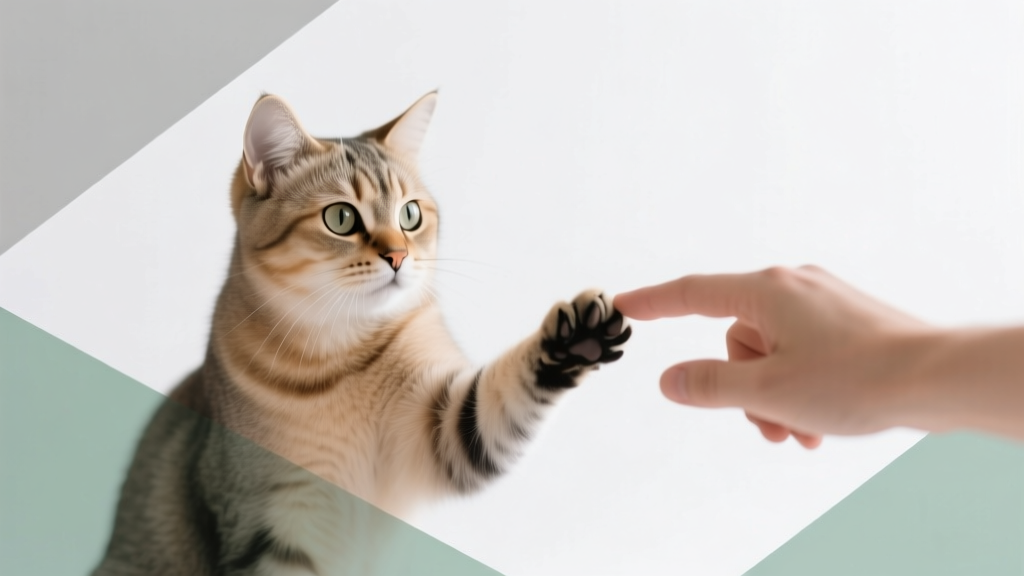
Not in the traditional sense — but yes, you can teach cats complex behaviors! Cats learn through operant conditioning (consequences) and classical conditioning (associations), just like dogs. However, they’re more selective about motivation and less inclined to perform for praise alone. Success hinges on high-value rewards, short sessions (3–5 minutes), and respecting their autonomy. Many cats learn 'sit,' 'touch,' 'come,' and even 'high five' — but only if it’s worth their while.
Do spray bottles or loud noises work to stop bad behavior?
No — and they’re actively harmful. Spray bottles create negative associations with *you*, not the behavior. Your cat learns, 'When I scratch, Mom appears and sprays me' — eroding trust and increasing anxiety. A 2021 study in Journal of Feline Medicine and Surgery linked punishment-based methods to a 3.2x higher risk of chronic stress behaviors, including inappropriate elimination and aggression. Positive redirection is safer, faster, and builds lifelong cooperation.
My cat suddenly started acting out — is it spite?
No. Cats lack the cognitive capacity for spite — a human emotion requiring intent to cause harm as retaliation. Sudden behavior changes are almost always medical (pain, infection, neurological issue) or environmental (new pet, construction noise, moving furniture, owner stress). Always start with a full veterinary exam before assuming 'bad attitude.' One client’s 12-year-old tabby began howling nightly — turned out to be painful dental resorption. After extraction, the vocalizations ceased entirely within 48 hours.
Will neutering/spaying help with aggression or spraying?
Yes — but only for hormonally driven behaviors. Intact males are far more likely to spray to mark territory and fight; intact females may yowl excessively during heat. Spaying/neutering reduces these by ~90% when done before sexual maturity. However, if spraying or aggression began *after* sterilization, it’s likely stress- or anxiety-based — and requires environmental or behavioral intervention, not surgery.
How long does it take to see real change in my cat’s behavior?
It depends on the behavior’s duration, cause, and your consistency — but most owners report noticeable shifts within 7–14 days when applying science-backed strategies correctly. Deeply ingrained habits (e.g., 2-year-old scratching routine) may take 6–12 weeks for full replacement. Patience isn’t passive waiting — it’s daily, compassionate repetition. As certified feline behaviorist Pam Johnson-Bennett says: 'You’re not training your cat. You’re training yourself to see, respond, and coexist differently.'
Common Myths About Controlling Cat Behavior
Myth #1: “Cats can’t be trained — they’re too independent.”
False. Independence ≠ untrainability. Cats are highly intelligent, observant, and motivated by outcomes that benefit *them*. They simply require different reinforcement strategies than dogs — shorter sessions, higher-value rewards, and zero coercion. Clicker-trained cats routinely perform agility courses, retrieve objects, and participate in veterinary exams calmly.
Myth #2: “If I ignore bad behavior, it will go away.”
Not necessarily — and sometimes, it gets worse. Ignoring doesn’t remove the underlying need (e.g., scratching relieves stress; night activity fulfills hunting instinct). Unmet needs often escalate into more intense or destructive outlets. Effective intervention means replacing the behavior — not hoping it vanishes.
Related Topics (Internal Link Suggestions)
- Understanding cat body language — suggested anchor text: "what your cat’s tail flick really means"
- Best cat calming aids that actually work — suggested anchor text: "vet-recommended calming supplements for cats"
- How to introduce a new cat to your household — suggested anchor text: "stress-free multi-cat introduction guide"
- Signs of cat anxiety you’re missing — suggested anchor text: "subtle cat stress signals most owners overlook"
- DIY cat enrichment ideas on a budget — suggested anchor text: "10-dollar cat enrichment hacks that boost confidence"
Your Next Step: Start Small, Stay Consistent, Celebrate Tiny Wins
You now know that how to control a cat's behavior isn’t about control at all — it’s about connection, clarity, and compassionate leadership. Pick *one* behavior from your log. Choose *one* strategy from the table above. Commit to practicing it consistently for just 7 days — no exceptions, no self-criticism. Track one small win: 'She scratched the post twice today,' or 'He didn’t bite when I stopped petting early.' Those micro-victories compound into profound trust.
Remember: every cat is an individual with history, temperament, and needs. What works for a rescued stray may differ from your purebred show cat — and that’s okay. Your role isn’t to force conformity. It’s to become the safest, most predictable, most rewarding part of their world. Ready to begin? Grab a notebook, a treat pouch, and your curiosity — your cat is already waiting to meet you halfway.