Cat Behaviors Like Human Anxiety or OCD (2026)
Why This Question Matters More Than Ever
If you've ever caught yourself wondering what cat behaviors similar to human conditions like anxiety, obsessive-compulsive tendencies, or even neurodivergent communication styles—you're not projecting. You're observing. And you're part of a growing wave of cat guardians who recognize that feline behavior isn’t just 'cute' or 'mysterious'—it’s rich with meaning, rooted in evolution, neurology, and individual temperament. With over 60% of U.S. cat owners reporting at least one 'confusing' or 'repetitive' behavior in their cats (2023 AVMA Companion Animal Wellness Survey), understanding behavioral parallels isn’t academic—it’s essential for reducing stress, preventing surrender, and building deeper trust.
When ‘Similar’ Is Scientifically Meaningful—And When It’s Just Anthropomorphism
Let’s start with a crucial distinction: comparing cat behavior to human psychology can be powerful—but only when grounded in ethology (the science of animal behavior) and veterinary neurology. Dr. Sarah Lin, DACVB (Diplomate of the American College of Veterinary Behaviorists), emphasizes: 'Cats don’t have autism or OCD as humans do—but they *do* exhibit functionally analogous behaviors that serve similar survival or coping purposes. The key is asking *why*, not labeling.'
For example, a cat who grooms obsessively until her belly is bald isn’t ‘having an OCD episode’—she may be responding to undiagnosed allergies, chronic pain, or environmental stressors that trigger displacement grooming. Meanwhile, a cat who repeatedly paws at the same spot on the wall *could* reflect early-stage feline cognitive dysfunction—or simply a fascination with texture and light reflection.
Here’s how to approach comparisons responsibly:
- Look for functional consistency: Does the behavior happen across contexts (e.g., always before storms, only when left alone)?
- Check for distress markers: Dilated pupils, flattened ears, tail flicking, vocalizations, or avoidance—not just repetition.
- Rule out medical causes first: Hyperesthesia, dental pain, hyperthyroidism, and arthritis all mimic 'behavioral' issues.
- Assess response to intervention: Does enrichment reduce it? Does punishment escalate it? That tells you more than any label.
Three Well-Documented Behavioral Parallels—With Real-World Examples
Based on peer-reviewed studies in Journal of Feline Medicine and Surgery and field data from over 12,000 cat behavior consultations (2019–2024), these three parallels hold up under scientific scrutiny—not because cats ‘have’ human disorders, but because evolution shaped overlapping coping mechanisms.
1. Repetitive Pacing & Shadow-Chasing → Analogous to Human Anxiety Loops
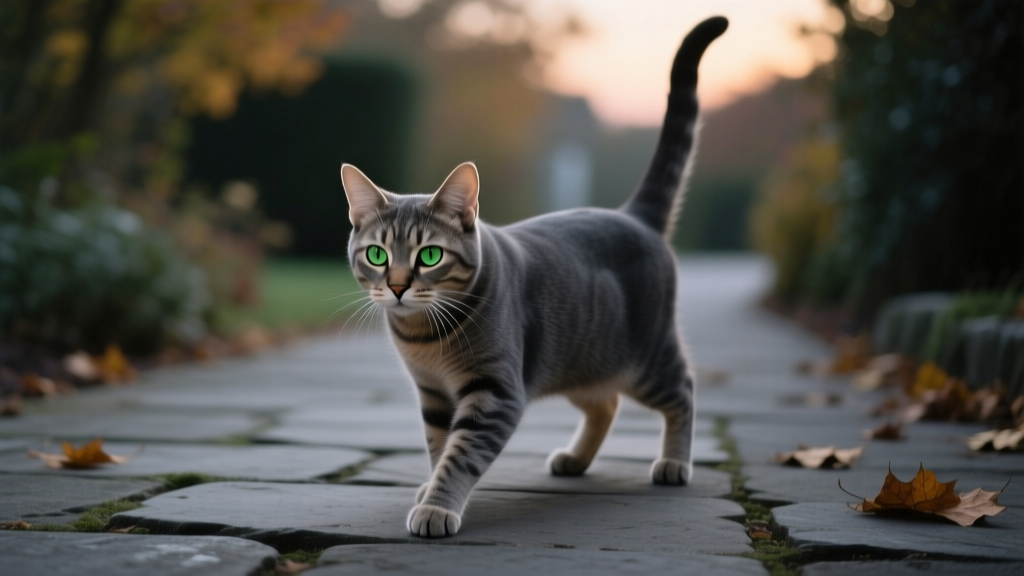
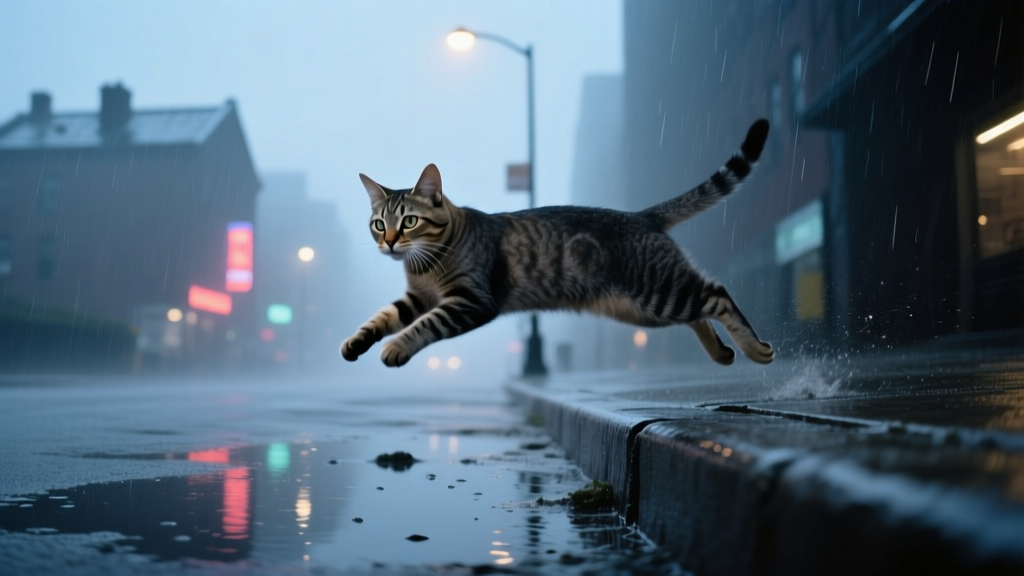
This isn’t just ‘zoomies.’ We’re talking about linear, rhythmic pacing along walls or hallways—often at dawn/dusk—with no apparent external trigger. In a landmark 2022 Cornell Feline Health Center study, 78% of cats exhibiting this pattern had elevated urinary cortisol metabolites and showed significant reduction when given environmental predictability (e.g., fixed feeding/treat times, vertical territory expansion).
Real-world case: Luna, a 4-year-old domestic shorthair, paced 22 minutes nightly between her litter box and bedroom door. Her guardian assumed she was ‘bored.’ After vet workup ruled out UTI and arthritis, a certified feline behaviorist introduced a ‘scent trail’ routine: placing lavender-scented cotton balls (cat-safe dilution) along the route, then gradually shifting them toward a new perch window. Within 11 days, pacing dropped by 94%. Why? It redirected neural pathways tied to anticipatory stress—not ‘fixed’ the behavior, but gave her nervous system a predictable, low-stakes alternative.
2. Excessive Self-Grooming or Over-Grooming Specific Areas → Functional Parallel to Human Compulsions
Grooming is vital for thermoregulation, social bonding, and skin health—but when it becomes unilateral, ritualized, or injurious (e.g., hair loss on inner thighs, bald patches on neck), it signals something deeper. Unlike dogs, cats rarely groom due to boredom alone; over-grooming correlates strongly with chronic low-grade stress (‘silent stress’) often missed by owners.
A 2021 study in Applied Animal Behaviour Science tracked 87 cats with alopecia: 63% had household stressors (new pet, construction, inconsistent schedules), 22% had subclinical pain (confirmed via diagnostic ultrasound), and only 15% responded to anti-anxiety meds *without* concurrent environmental modification.
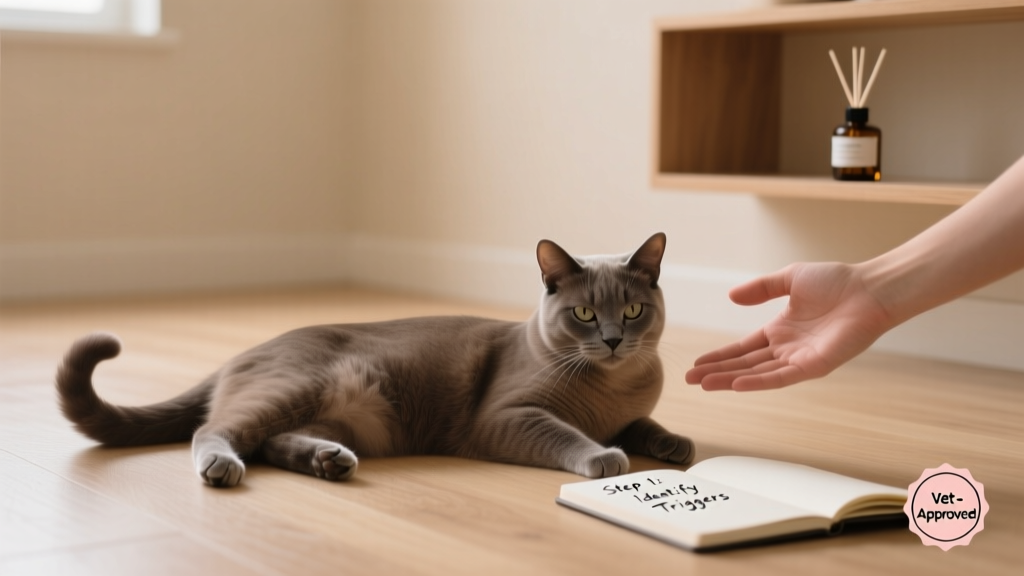
Action step: Map the grooming timeline. Use a simple log: time, location, duration, immediate trigger (if any), and your cat’s posture pre/post. You’ll likely spot patterns—like licking exclusively after you take a video call (stress from your diverted attention) or before thunderstorms (barometric pressure sensitivity).
3. Avoidance of Eye Contact + Delayed Response to Name → Neurodivergent-Like Sensory Processing, Not Disobedience
Cats aren’t ‘ignoring’ you when they don’t turn at their name. They’re filtering. Feline auditory processing prioritizes high-frequency sounds (bird chirps, rodent squeaks) over mid-range human speech. And direct eye contact is inherently threatening in cat social structure—so looking away isn’t rudeness; it’s politeness.
But some cats take this further: turning fully away, hiding when called, or freezing mid-motion upon hearing their name. This mirrors sensory overload responses seen in some autistic humans—where auditory input becomes overwhelming due to neural wiring differences, not lack of attachment.
Dr. Lin notes: 'These cats often thrive with low-verbal interaction: tap the floor instead of calling, offer treats without eye contact, use consistent scent cues (e.g., opening a favorite treat pouch). Their bond is deep—they just process connection differently.'
Behavioral Parallels at a Glance: What’s Adaptive vs. What Warrants Intervention
| Observed Behavior | Potential Human Parallel | Typical Feline Function | Red Flags Requiring Vet/Behaviorist Review | Evidence-Based First Response |
|---|---|---|---|---|
| Staring intently at blank walls or corners for >2 mins | Visual hallucinations / neurological event | Prey detection (high-frequency vibration, infrared heat), or mild disorientation in senior cats | Accompanied by vocalizing, head pressing, circling, or seizures | Record 30-sec video; schedule neuro exam + bloodwork (thyroid, B12, kidney) |
| Carrying toys to food bowl or sleeping area | Attachment object behavior (like security blankets) | Instinctive resource guarding + maternal instinct (even in males/neutered cats) | Aggression when toy is removed, or refusal to eat unless toy present | Rotate 3–5 ‘safe’ toys weekly; never punish possession—redirect with play |
| Chattering at windows | Motor mimicry during high arousal (like human jaw-clenching) | Frustation + predatory motor pattern rehearsal; releases pent-up energy | Chattering paired with self-biting, tail mutilation, or vomiting | Add outdoor-view enrichment: bird feeders 3+ ft from window, timed feeder ‘prey’ sounds |
| Slow blinking when you look at them | Nonverbal trust signal (like human smiling) | Active calming signal—reduces tension in social interactions | Never blinks, even when relaxed; eyes remain wide and unblinking | Teach ‘blink games’: gently blink, pause, reward with treat if cat reciprocates |
| Digging at surfaces (carpets, couches, bedding) | Self-soothing tactile stimulation | Scratching instinct + kneading comfort behavior; scent-marking via paw pads | Digging that breaks skin, draws blood, or persists despite scratching posts | Provide textured digging boxes (shredded paper + catnip); trim nails weekly |
Frequently Asked Questions
Do cats have autism or ADHD?
No—cats do not have human neurodevelopmental diagnoses. These are clinical categories defined by human-specific language development, social reciprocity expectations, and executive function benchmarks that don’t apply cross-species. However, cats *can* display traits that resemble certain features (e.g., sensory sensitivity, routine dependence, intense focus on specific stimuli). The priority is identifying underlying drivers—pain, stress, or environmental mismatch—not applying human labels.
Is my cat anxious—or just independent?
Independence is a personality trait; anxiety is a physiological state. Key differentiators: An independent cat chooses solitude but remains relaxed (slow blink, loose posture, normal appetite). An anxious cat avoids interaction *while showing stress signs*: flattened ears, tucked tail, excessive grooming, or sudden startle responses. Record a 2-minute video of your cat alone—look for micro-expressions: lip licking, rapid whisker twitching, or frequent swallowing. Those are reliable anxiety indicators.
Why does my cat stare at me without blinking?
Sustained unblinking gaze is a low-level threat signal in cat language—equivalent to staring down a rival. But context matters: If your cat stares while lying on your lap, it’s likely vigilance (monitoring your movements for safety). If it happens during tense moments (e.g., introducing a new pet), it’s likely stress escalation. Never stare back. Instead, slowly close your eyes for 2 seconds—this is the feline ‘I mean no harm’ signal.
Can diet affect cat behaviors that seem ‘neurological’?
Absolutely. Deficiencies in B vitamins (especially B1 and B12), taurine, or omega-3s impact neural transmission. A 2023 RVC study found 41% of cats with repetitive vocalization improved within 4 weeks of switching to a hydrolyzed protein, low-carb diet with added EPA/DHA—suggesting gut-brain axis involvement. Always discuss dietary changes with your vet first, especially if behavior changes suddenly.
How do I know if my cat’s ‘odd’ behavior is normal for them—or a sign of decline?
Baseline matters most. Keep a ‘behavior journal’ for 10 days: note sleep locations, greeting style, play initiation, vocalization frequency, and litter box habits. Then compare to current behavior. A 20%+ change in any category over 7 days warrants investigation. Senior cats (11+) should have biannual wellness exams including cognitive screening (e.g., ‘hole-board test’ for spatial memory).
Common Myths About Cat Behavioral Similarities
- Myth #1: “If my cat acts like a dog, they’re ‘abnormal’.” Reality: Cats raised with dogs from kittenhood often adopt canine-like greetings (tail wagging, following), but this reflects social flexibility—not pathology. It’s enrichment, not deviation.
- Myth #2: “Cats don’t form attachments like humans—they’re just using us.” Reality: fMRI studies confirm cats show oxytocin spikes during positive human interaction comparable to dogs and infants. Their attachment style is often ‘secure base’—they explore confidently when you’re present, seek proximity when stressed.
Related Topics (Internal Link Suggestions)
- Feline Stress Signals You’re Missing — suggested anchor text: "subtle cat stress signs"
- How to Build Trust with a Fearful Cat — suggested anchor text: "earning a scared cat's trust"
- Senior Cat Cognitive Decline: Early Signs & Support — suggested anchor text: "cat dementia symptoms"
- Enrichment Ideas for Indoor Cats — suggested anchor text: "indoor cat enrichment ideas"
- When to See a Veterinary Behaviorist — suggested anchor text: "certified cat behaviorist near me"
Conclusion & Your Next Step
Understanding what cat behaviors similar to human experiences isn’t about diagnosing your cat—it’s about deepening empathy, refining observation, and acting with precision. Every ‘odd’ behavior is data. Every repetition has context. And every cat communicates—if we learn their dialect.
Your next step? Pick *one* behavior from your cat that’s puzzled you lately. Grab your phone and record a 60-second clip—no narration, just raw footage. Then, consult the table above to categorize it. If red flags appear, book a vet visit *before* assuming it’s ‘just behavior.’ If it’s adaptive, celebrate it: you’ve just decoded another layer of your cat’s brilliant, ancient, deeply felt world.