Why Cats Choose Sitting on Your Shoes
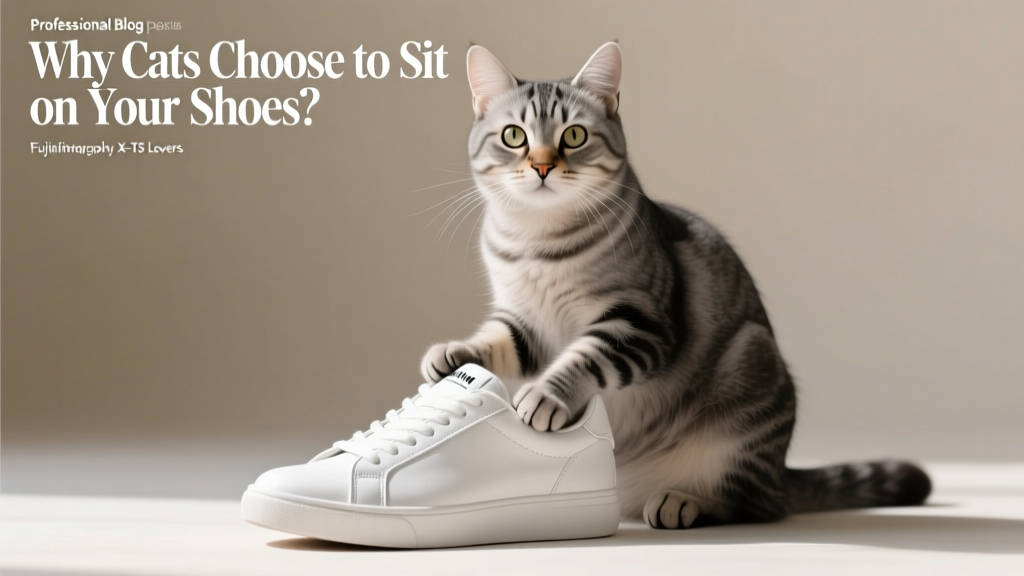
You’re halfway out the door—keys in hand, bag on your shoulder—when you feel that tiny speed bump in your path. There’s your cat. Not just near your shoes, but on your shoes. Sometimes it’s a delicate loaf perched on your sneakers like they’re a designer cat bed. Other times it’s a full-body sprawl across both slippers, as if your cat has personally scheduled a delay to your entire morning.
If you’ve ever wondered, “Why shoes?” you’re in excellent company. This odd little habit is one of the most common (and strangely emotional) cat behaviors I hear about. The short version: shoes are a warm, scent-soaked, strategically placed “message board” that tells your cat a lot about you—and offers your cat a lot of control over their environment.
1) The scientific (and evolutionary) reason shoes are irresistible
Cats experience the world through scent the way humans experience it through sight. Your shoes are basically a portable, concentrated biography: where you’ve been, who you walked past, what you stepped on, whether you visited another animal, and even whether you’ve been stressed (yes, humans have stress-related scent changes, and cats can notice).
From an evolutionary perspective, cats are both predators and potential prey. That means they’re wired to gather information constantly and position themselves in places that feel safe and strategic. Shoes tend to sit:
- Near entry points (high-traffic, information-rich zones)
- On the floor (stable, predictable surfaces)
- In pairs (two cozy “walls” that can feel like a nook)
- Full of familiar scent (comforting and socially meaningful)
In multi-cat colonies (including the “colony” that is your home), scent is social glue. Cats rub, rest, and sleep on objects partly to mingle scents and create a shared “group smell.” Sitting on your shoes is one way your cat participates in the household scent community—especially in a spot that smells strongly like you.
2) A detailed breakdown: what “shoe sitting” can mean in different contexts
Same behavior, different motivation. Here are the most common scenarios cat owners recognize:
The “You’re leaving? I live here.” shoe sit
You put on shoes, and your cat appears instantly. This is often a mix of:
- Attention-seeking (“Hey. You forgot something: me.”)
- Routine tracking (cats love patterns; shoes predict a major event)
- Mild protest (not spite—more like “I prefer when you’re in the same room”)
Some cats learn that shoe sitting makes humans pause, talk, pet, or delay departure. If it works even twice, it’s basically a proven strategy.
The “Welcome home” shoe sit
You come home, and your cat beelines for your shoes and flops onto them like a fainting Victorian. This is often social bonding. Your shoes smell like outside and you, and your cat may be doing a quick scent-check plus a comforting “reclaim.”
The “This is the warmest spot” shoe sit
If your shoes are fresh off your feet, they’re warm. Cats are heat-seekers with fur coats that still appreciate a good radiator-level moment. The curved shape of shoes can also feel like a supportive nest—especially for smaller cats or kittens.
The “I’m guarding the gate” shoe sit
Entryways are fascinating because they’re transitional zones where new scents and sounds arrive. Some cats naturally station themselves there to monitor the household perimeter. Shoes become part of that “gatekeeping” station—comfortable, familiar, and right where the action is.
The “New shoes, who dis?” shoe sit
New shoes are a scent novelty bomb. Many cats will sniff, rub, sit, or roll near them. This is normal investigative behavior: cats like to catalogue changes in their territory.
The “I’m anxious, and this smells like my person” shoe sit
If your cat seems a bit tense—ears swiveling, body tucked, staying low—shoes can be an emotional anchor. Familiar scent can help a cat self-soothe, similar to how some humans find comfort in a loved one’s hoodie.
3) What shoe sitting says about your cat’s mood and feelings
Your cat’s body language gives the real headline. Here are common “translations”:
- Loose, relaxed loaf or side-sprawl: Comfort, contentment, security. Your shoes are the feline equivalent of a favorite couch corner.
- Slow blinks while sitting on shoes: Trust and affection. Your cat feels safe enough to be soft and vulnerable.
- Purring + kneading near shoes: Deep comfort and emotional regulation. Kneading can show relaxation, self-soothing, or excitement.
- Tail flicking, alert posture, ears rotating: Vigilance. Your cat may be “on duty” watching the door or reacting to hallway sounds.
- Blocking your foot or repositioning as you move: Social control, playfulness, or “please don’t go.” Not dominance in a human sense—more like leveraging proximity to influence the situation.
One sweet interpretation: sitting on your shoes can be a form of “scent cuddling.” Cats can’t hug like humans, but they absolutely use scent-sharing as closeness.
4) Related behaviors you might also notice
If your cat is a shoe sitter, you might see a few of these cousins behaviors too:
- Sleeping on your laundry (especially worn shirts or gym clothes): high-concentration “you” scent.
- Rubbing cheeks on your bag or coat: facial pheromones used for marking safe, familiar objects.
- Rolling on the floor where you walked: mingling scent and getting attention.
- Sitting on your keyboard or book: proximity + control of your attention + warmth.
- Greeting at the door, then leading you to food/toys: ritualized social routine plus needs communication.
These all point to a cat who’s socially engaged and tuned in to your movements—sometimes more than you realize.
5) When shoe sitting is normal… and when it might be a concern
Most of the time, a cat on your shoes is simply being a cat: cozy, curious, and a little theatrical. Still, there are a few situations where it’s worth paying attention.
Normal shoe sitting
- Happens occasionally or as part of a routine (when you get home, when you’re getting ready)
- Your cat remains relaxed and otherwise behaves normally
- No destructive chewing or frantic behavior
Potential concern signs
- Sudden clinginess paired with hiding, appetite changes, or increased vocalizing
- Compulsive behavior (obsessive shoe guarding, intense distress if shoes are moved)
- Chewing/eating shoe material (could be pica, dental discomfort, stress, or boredom—also a choking/obstruction hazard)
- Aggression around shoes (swatting or biting when approached) which may signal anxiety, pain, or resource-guarding tendencies
If the shoe fixation is new and intense, or if it comes with other changes (litter box habits, appetite, energy level), it’s smart to rule out medical issues with your vet first. Stress and pain can make cats seek comfort objects more urgently.
6) Tips for responding to (or encouraging) the behavior
You don’t have to “fix” shoe sitting unless it’s unsafe or inconvenient. In many homes, it’s a harmless little bonding quirk. Here’s how to handle it thoughtfully:
If you find it adorable and want to encourage it
- Create a safe “shoe zone”: Place a small mat or a cozy bed near where shoes live. Your cat may still choose the shoes, but you’ll be offering a cat-approved alternative.
- Pair it with calm attention: A gentle greeting, a few chin scratches, or a slow blink reinforces that the entryway is a positive social place.
- Use it as enrichment: Rotate a paper bag or a small box near the shoe area (supervised). Cats love “stations.”
If it’s making you late (or you’d prefer your cat not block your feet)
- Teach a “go to mat” routine: Put a small mat by the door. Each time your cat approaches, toss a treat onto the mat. Over time, shoes predict “mat rewards,” and your cat relocates.
- Avoid pushing with your foot: It can startle or confuse, and some cats escalate by darting in front again. Use a calm hand redirect or lure with a treat/toy.
- Keep a decoy item: A worn sock inside a small fabric pouch (secured) can provide your scent without the tripping hazard.
If your cat chews shoes
- Manage access: Put shoes in a closed closet or lidded bin.
- Add appropriate chew outlets: Dental toys, food puzzles, or more play sessions can reduce oral boredom.
- Address stress: More predictable routines, additional resting spots, and (in multi-cat homes) more resources can help.
One important note: avoid using citrus sprays or harsh deterrents right where your cat greets you. You want the entryway to feel emotionally safe, not like a punishment zone.
7) Fun facts and research-flavored insights
- Cats have scent glands in their cheeks, lips, and paws. When they rub or knead near your shoes, they’re not just being cute—they’re leaving chemical “this is familiar” notes.
- Familiar scent can reduce stress behaviors. In behavior work, we often use scent continuity (keeping a caregiver’s worn shirt near a nervous cat, for example) to support adjustment during transitions.
- Cats map their world in “scent layers”. Shoes are like a daily newspaper: updated constantly, loaded with social and environmental headlines.
- Entryways are hotspot territories. They concentrate novelty (outside smells) and routines (departures/returns), making them prime real estate for cats who like to monitor change.
FAQ: Cats sitting on shoes
1) Does my cat sit on my shoes because they miss me?
Often, yes—especially if it happens when you’re leaving or right after you return. It can be a comfort behavior tied to your scent and your routine. Look for relaxed body language and affectionate greetings to support the “I like you” interpretation.
2) Is my cat trying to stop me from leaving?
Your cat isn’t plotting in the human sense, but they may have learned that shoe-sitting gets your attention and slows you down. It can also be a mild protest against routine changes. If it’s constant and distressed, consider adding enrichment and a predictable pre-departure ritual (treat puzzle, short play session).
3) Why does my cat prefer my shoes over a comfy cat bed?
Your shoes are saturated with your scent and often placed in a socially important location (the doorway). Many cat beds don’t smell like anything interesting, are too open, or are in low-activity zones. Try placing a bed near the entryway and rubbing a soft cloth on your cat’s cheeks (then on the bed) to “pre-mark” it.
4) Should I worry about germs if my cat sits on shoes?
Shoes can carry outdoor residues. If that concerns you, keep shoes in a closed cabinet and offer a “scent substitute” (a worn sock in a secured pouch) or a designated entryway bed. Also consider a no-shoes household policy indoors if practical.
5) My cat rolls on my shoes and then bites them—what does that mean?
Rolling is often social and scent-related; biting can be playful overstimulation, excitement, or (sometimes) stress. If the biting is gentle and brief, it’s usually normal. If they’re chewing intensely or ingesting material, manage access and talk with your vet—especially if it’s a new behavior.
6) Why does my cat sit on guests’ shoes too?
Because guests bring the best gossip. New shoes carry fresh scents, and some cats are bold investigators. If your cat is shy but still targets guest shoes, it may be “safe investigating” from a comfortable distance.
What your cat is really saying
When your cat chooses your shoes, they’re choosing a combination of warmth, scent, routine, and connection. It’s part comfort blanket, part information hub, and part social gesture—like your cat is signing the guest book of your daily life with their whole body.
Does your cat have a favorite shoe (or a specific person’s shoe they insist on “borrowing”)? Share your funniest shoe-sitting stories and photos with the Cat Lovers Base community at catloversbase.com—these tiny quirks are often where the biggest bonds show up.