Taurine for Cats: Essential Nutrition Facts & Feeding Tips
Why Taurine Is Non-Negotiable for Cats
Cats are obligate carnivores and cannot synthesize sufficient taurine from other amino acids. Unlike dogs or humans, they lack the hepatic enzymes to convert cysteine and methionine into taurine efficiently. Deficiency leads to irreversible damage—including dilated cardiomyopathy (DCM) and central retinal degeneration—often within months. The AAFCO mandates minimum taurine levels in cat foods because of this biological imperative.
Taurine Requirements by Life Stage
Kittens require higher taurine concentrations to support rapid growth and neural development. AAFCO (2021) sets the minimum at 0.20% on a dry matter basis for growth and reproduction diets, versus 0.10% for adult maintenance. Pregnant and lactating queens need ≥0.25% DM, per NRC guidelines (2006). A 4 kg adult cat consuming 60 g of dry food daily needs ~60 mg taurine—roughly equivalent to what’s found in 30 g of raw chicken breast.
Commercial Food: What Labels Really Mean
Not all labeled "complete and balanced" foods deliver bioavailable taurine. In 2022, the FDA reported that 90% of grain-free diets linked to DCM cases had adequate taurine on paper—but many used heat-sensitive synthetic forms or low-quality animal proteins with degraded taurine. Look for products listing taurine separately in the guaranteed analysis (e.g., Blue Buffalo Indoor Adult Dry Cat Food lists 0.12% taurine as of its April 2023 reformulation).
Homemade Diets: Risks and Reliable Protocols
Homemade meals pose high taurine-deficiency risk without precise supplementation. Dr. Lisa Weidner’s Feline Nutrition Foundation protocol (2019) recommends adding 250 mg taurine per 1 kg of raw meat mixture. A real-world case: A Maine Coon owner fed unsupplemented ground turkey for 11 weeks; her vet diagnosed early-stage retinal changes via ERG testing in June 2022. Another scenario involved a breeder using a popular online recipe lacking taurine—three kittens developed DCM by 16 weeks.
Supplements and When They’re Necessary
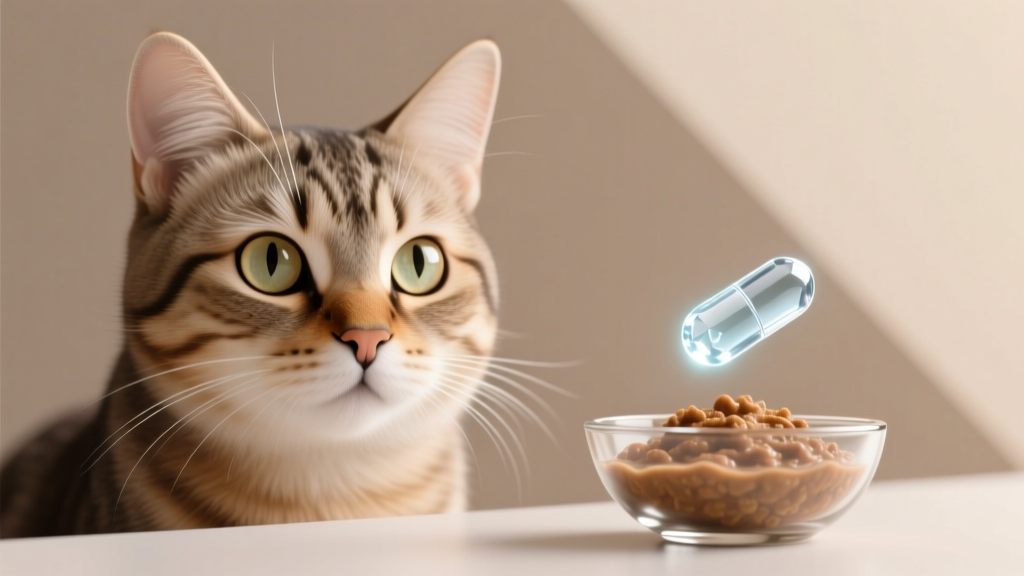
Taurine supplements like NOW Foods Taurine Powder (500 mg/capsule, verified by NSF in 2022) are safe but rarely needed if feeding AAFCO-compliant commercial food. They become essential when feeding raw, cooked, or vegetarian-adjacent diets—even small amounts of plant-based ingredients dilute taurine density. Always consult a board-certified veterinary nutritionist before adding supplements; excess taurine is excreted, but improper dosing may mask underlying formulation flaws.
The table below compares taurine content across common protein sources (per 100 g raw weight):
| Food Source | Taurine (mg) | Notes |
|---|---|---|
| Chicken heart | 110 | Highest natural source; widely used in raw diets |
| Beef liver | 38 | Lower than heart; high vitamin A requires moderation |
| Salmon fillet | 70 | Heat-sensitive—cooking reduces taurine by up to 50% |
| Dry kibble (typical) | 0.25–0.35 | Per gram; varies by brand and processing method |
| Canned tuna in water | 40 | Not nutritionally complete; avoid as sole diet |
AAFCO standards were updated in January 2024 to include stricter taurine bioavailability testing for new formulations. This follows increased reports of subclinical deficiency in indoor-only cats fed exclusively on older-generation dry foods. Veterinarians now recommend annual plasma taurine screening for cats with unexplained lethargy or vision changes—even when eating premium brands.
Remember: Taurine isn’t just about heart or eyes. It supports bile salt formation, immune function, and fetal development. Skipping it risks more than one system—it undermines feline physiology at its core. Always verify your food’s taurine level against current AAFCO benchmarks, not marketing claims alone.
"A taurine-deficient diet is never 'good enough'—it’s biologically incomplete, regardless of palatability or price." — Dr. Jennifer Coates, VCA Animal Hospitals, 2021