Why Cats Need Vitamin A From Animal Sources Only
1) Why this nutrition topic matters for cat health
Vitamin A is a small nutrient with oversized consequences in cat health. It supports vision, immune function, skin and coat integrity, normal growth, and reproduction. The catch: cats can’t reliably make vitamin A from plant pigments the way people (and many dogs) can. That biological constraint is one reason cats are classified as obligate carnivores.
For cat owners trying to “add more veggies,” choose plant-based supplements, or prepare homemade diets, vitamin A is a common place where good intentions can go wrong. Too little can cause serious deficiency problems; too much (especially from liver or over-supplementation) can be toxic. Understanding why cats require preformed vitamin A from animal sources helps you make safer food choices—whether you feed commercial food, homemade diets, or a combination.
2) Scientific background: feline nutritional needs and obligate carnivore biology
Cats evolved eating prey—animals that already contain fat-soluble vitamins in a form cats can use. Their metabolism reflects that evolutionary history:
- Obligate carnivores: cats rely on nutrients naturally present in animal tissues (taurine, arachidonic acid, preformed vitamin A, and others).
- Limited conversion pathways: cats have reduced activity of certain enzymes needed to convert plant precursors into active nutrients.
- Higher protein and certain fat needs: compared with omnivores, cats have higher baseline requirements for specific amino acids and fatty acids, and they handle macronutrients differently.
Vitamin A exists in different forms:
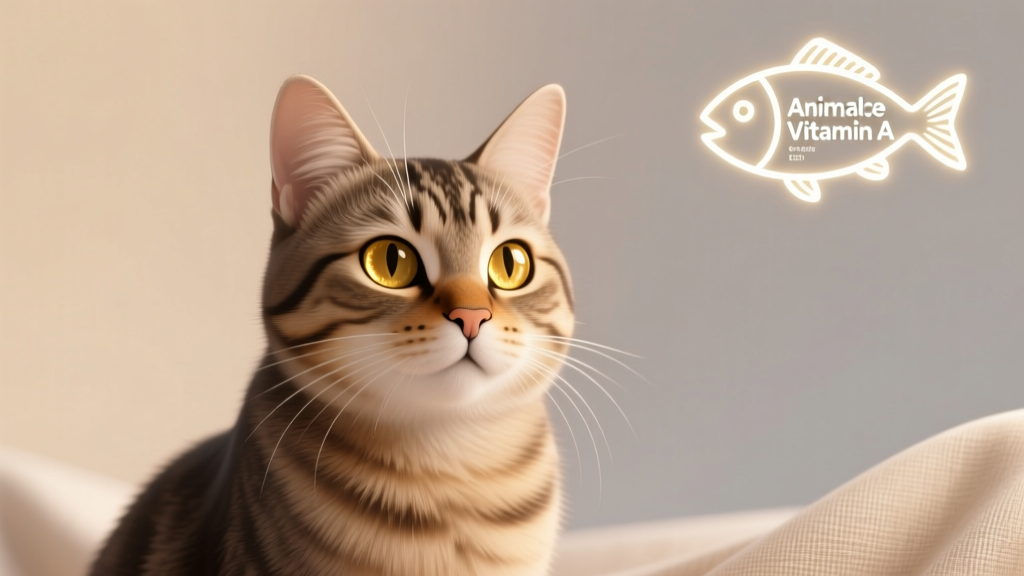
- Preformed vitamin A (retinoids): retinol and retinyl esters found in animal tissues (especially liver, egg yolk, and dairy fats). This is the biologically “ready-to-use” form for cats.
- Provitamin A carotenoids: beta-carotene and similar pigments found in plants. Many species can convert beta-carotene to retinol in the intestinal lining.
Cats have a limited ability to convert beta-carotene into retinol due to low intestinal enzyme activity (notably beta-carotene 15,15’-monooxygenase). In practical terms: plant sources of “vitamin A” do not reliably meet a cat’s requirement. Current veterinary nutrition guidance recognizes that cats require preformed vitamin A in the diet.
3) Detailed analysis: why animal-source vitamin A is essential (and why plant sources aren’t enough)
What vitamin A does in a cat’s body
- Vision: retinal (a vitamin A derivative) is a key component of rhodopsin in the retina. Deficiency can impair low-light vision and eye health.
- Skin and coat: helps regulate epithelial cells; deficiency may contribute to dry skin, poor coat quality, and higher susceptibility to skin issues.
- Immune support: supports mucosal barriers and immune cell function.
- Growth and reproduction: required for normal fetal development and growth in kittens.
Why cats can’t “just eat carrots” for vitamin A
Carrots and leafy greens contain beta-carotene (a provitamin A carotenoid). Humans convert beta-carotene to retinol efficiently enough to use plants as a vitamin A source. Cats do not. They may absorb some carotenoids, but conversion to active vitamin A is too limited to depend on for meeting requirements. Even if a cat enjoys small amounts of veggies, that’s not a vitamin A strategy.
Deficiency vs. toxicity: both are real risks
Vitamin A is fat-soluble, meaning it can accumulate. The goal is “enough,” not “as much as possible.”
| Issue | How it happens | Possible signs | Why it matters |
|---|---|---|---|
| Vitamin A deficiency | Unbalanced homemade diets; vegan/vegetarian feeding; relying on plant beta-carotene; inadequate commercial formulation | Poor coat/skin, impaired vision, weakened immunity, growth issues in kittens | Can become severe and affect multiple body systems |
| Vitamin A toxicity (hypervitaminosis A) | Overfeeding liver or liver treats; high-dose supplements; unbalanced raw/homemade diets with frequent organ meat | Bone/joint pain, stiffness, abnormal bone growth, lethargy, constipation; in severe cases, serious skeletal changes | Can be permanent; requires veterinary care and diet correction |
Where cats naturally get preformed vitamin A
- Commercial complete-and-balanced cat foods: formulated to meet vitamin A requirements using preformed vitamin A sources.
- Animal tissues: liver is extremely rich; muscle meats contain much less; egg yolk contains some.
Key point: Meeting a cat’s vitamin A needs with animal sources is straightforward, but meeting them safely requires appropriate amounts—especially if you feed homemade food.
4) Practical recommendations for cat owners
Best baseline approach for most cats
- Choose a complete-and-balanced diet (look for an AAFCO or equivalent statement for your region) appropriate for your cat’s life stage (kitten, adult, senior).
- Avoid DIY supplementation with vitamin A unless specifically directed by a veterinarian or a board-certified veterinary nutritionist.
- Treat liver as “potent,” not routine: small amounts can be fine in some contexts, but frequent liver feeding is a common path to excess.
If you feed homemade (cooked or raw)
- Use a veterinary-formulated recipe or consult a board-certified veterinary nutritionist (Dipl. ACVIM Nutrition or ECVCN).
- Don’t guess organ ratios: “A little liver” can become “too much” quickly. Precision matters with fat-soluble vitamins.
- Use a balanced supplement system designed for homemade cat diets if recommended by your veterinary nutrition professional.
5) Comparison of options/products/approaches
| Approach | How vitamin A is provided | Pros | Cons / cautions | Best for |
|---|---|---|---|---|
| Complete commercial cat food (wet or dry) | Preformed vitamin A included at formulated levels | Consistent; balanced; safest for most households | Quality varies by brand; choose reputable manufacturers | Most cats, most owners |
| Commercial “complementary” foods (toppers, broths, treat foods) | May contain some vitamin A but usually not complete | Palatability; variety; can help hydration (wet toppers) | Not a balanced vitamin source; can dilute nutrition if overused | Picky eaters (as a small add-on) |
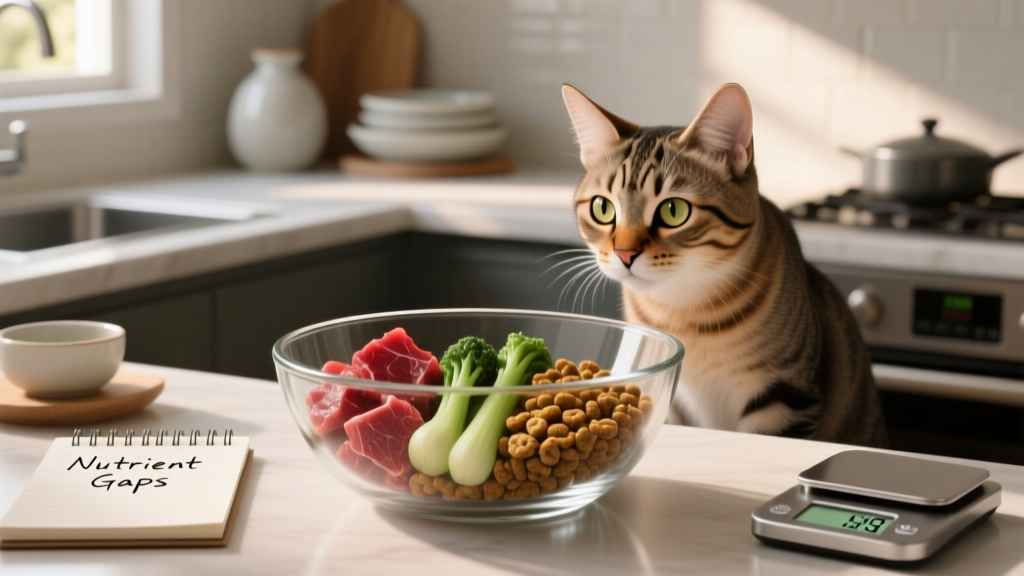
| Homemade cooked/raw (non-veterinary recipe) | Often relies on organ meat or supplements inconsistently | Owner control over ingredients | High risk of deficiency or toxicity; vitamin A errors are common | Not recommended without professional formulation |
| Homemade with veterinary formulation | Calculated preformed vitamin A (often via supplement + controlled organ inclusion) | Can be balanced; can address medical needs with oversight | Requires precision, commitment, and monitoring | Cats with special needs when formulated by a professional |
| Plant-based or vegan diets | Primarily carotenoids or synthetic sources not aligned with feline biology | Ethical goals for humans | High nutritional risk; vitamin A, taurine, arachidonic acid concerns; requires close veterinary supervision | Only under strict veterinary guidance (not recommended as routine) |
6) Common mistakes and misconceptions to avoid (myths debunked)
-
Myth: “Beta-carotene is vitamin A, so veggies cover it.”
Reality: Beta-carotene is a precursor. Cats have limited conversion and require preformed vitamin A from animal sources to reliably meet needs. -
Myth: “If some vitamin A is good, more is better.”
Reality: Vitamin A is fat-soluble and stored. Excess can accumulate and cause toxicity, including painful skeletal changes. -
Myth: “Feeding liver daily is a natural way to boost nutrients.”
Reality: Liver is extremely high in vitamin A. Frequent feeding can overshoot safe levels, especially in small cats. -
Myth: “A human multivitamin or cod liver oil is a safe shortcut.”
Reality: Human supplements can deliver inappropriate doses and may include ingredients unsuitable for cats. Cod liver oil is notably high in vitamins A and D—two nutrients that can be dangerous in excess. -
Myth: “A homemade diet is automatically healthier.”
Reality: Homemade can be excellent when professionally formulated, but many online recipes are incomplete, with vitamin A being a frequent imbalance.
7) How to implement changes safely (transition tips)
If you’re switching foods or correcting a diet, move gradually to protect your cat’s digestive comfort and reduce refusal.
- Transition over 7–10 days (longer for sensitive cats): start with 75% old food/25% new, then 50/50, then 25/75, then 100%.
- Keep treats under 10% of calories so they don’t dilute balanced nutrition.
- Avoid stacking supplements while switching foods. If the new diet is complete-and-balanced, extra vitamin A is rarely needed and can be harmful.
- Monitor stool, appetite, coat, and energy during the change. If your cat stops eating for 24 hours (or even sooner in kittens), contact your veterinarian—cats can develop hepatic lipidosis when they don’t eat.
- If you suspect vitamin A excess from liver-heavy feeding, stop high-liver treats and consult your vet for a plan. Do not attempt “detox” supplements.
8) Special considerations (age, health conditions, activity level)
| Situation | Vitamin A angle | Practical guidance |
|---|---|---|
| Kittens | Higher nutrient demands for growth; deficiencies can have lasting effects | Feed a diet labeled for growth/kitten per AAFCO (or “all life stages”). Avoid homemade unless professionally formulated. |
| Pregnant/nursing cats | Vitamin A supports fetal development, but excess can also be harmful | Use a veterinary-approved growth/reproduction diet; avoid high-liver feeding and unvetted supplements. |
| Seniors | May have concurrent issues (kidney disease, appetite changes) that complicate nutrition choices | Choose senior-appropriate diets as advised by your vet; don’t add supplements “for aging” without guidance. |
| IBD/chronic GI issues | Malabsorption can affect fat-soluble vitamin handling; diet changes can trigger flares | Work with your vet on a therapeutic diet plan; transition slowly; avoid random oils and supplements. |
| Overweight/low-activity cats | Owners may restrict food volume and unintentionally reduce nutrient intake if feeding unbalanced diets | Use portion control with a complete-and-balanced food; choose a veterinary weight-management diet if needed. |
| Cats on homemade/raw | Highest risk for vitamin A extremes (too low or too high) | Use a recipe formulated by a veterinary nutritionist; measure ingredients; schedule periodic vet check-ins. |
9) FAQ: common questions about cats and vitamin A
1) Can cats get vitamin A from carrots or sweet potato?
Not reliably. Those foods provide beta-carotene (a precursor), and cats convert it poorly. Small amounts of these foods can be safe as occasional extras for some cats, but they should not be used to meet vitamin A requirements. A complete-and-balanced cat food provides preformed vitamin A in the right form.
2) Is liver good for cats?
Liver is nutrient-dense and very high in vitamin A. That makes it a double-edged sword: small, controlled amounts may fit into a properly formulated diet, but frequent liver feeding (or lots of liver treats) can push vitamin A into toxic ranges. If you want to include organ meats, do it under veterinary nutrition guidance.
3) Do cats need vitamin A supplements?
Most cats eating a complete-and-balanced commercial diet do not need any vitamin A supplement. Supplementing without a diagnosed deficiency can create toxicity risk. If your veterinarian suspects a deficiency or malabsorption issue, they’ll recommend appropriate testing and a targeted plan.
4) What are signs my cat might have too much vitamin A?
Possible signs include stiffness, neck pain, reluctance to jump, lethargy, constipation, or abnormal posture. These signs are not specific to vitamin A toxicity, so veterinary evaluation is essential. Bring details about diet history, treats, and any supplements (including oils).
5) What if I want to feed a plant-based diet for ethical reasons?
Cats are obligate carnivores and have hard nutritional requirements that are difficult to meet safely with plant-based feeding, including the need for preformed vitamin A. If you’re considering this route, involve your veterinarian and ideally a board-certified veterinary nutritionist from the start, and be prepared for close monitoring and strict formulation. For most cats, it’s not recommended as a routine diet choice.
6) Does wet food vs. dry food change vitamin A needs?
The requirement is the same, but the diet must be complete-and-balanced. Both wet and dry foods can meet vitamin A needs when properly formulated. Choose the format that best supports your cat’s hydration, preferences, dental needs, and veterinary guidance.
Best takeaway: Cats need preformed vitamin A from animal sources because their bodies can’t dependably convert plant carotenoids into active vitamin A. The safest path for most cats is a reputable complete-and-balanced diet—without extra vitamin A supplements or frequent liver feeding.
For any major diet change, homemade feeding plan, or supplement question, consult your veterinarian (and consider a board-certified veterinary nutritionist for recipe formulation). Explore more practical feline nutrition guides at catloversbase.com to keep building a smarter, safer diet for your cat.